



TOURNAI, Belgium — Back in 2016, a freak storm destroyed the entire strawberry crop on Hugues Falys’ farm in the province of Hainaut in west Belgium.
It was one of a long string of unusual natural calamities that have ravaged his farm, and which he says are becoming more frequent because of climate change.
Falys now wants those responsible for the climate crisis to pay him for the damage done — and he’s chosen as his target one of the world’s biggest oil companies: TotalEnergies.
In a packed courtroom in the local town of Tournai, backed by a group of NGOs and a team of lawyers, Falys last week made his case to the judges that the French fossil fuel giant should be held responsible for the climate disasters that have decimated his yields.
It’s likely to be a tricky case to make. TotalEnergies, which has yet to present its side of the case in court, told POLITICO in a statement that making a single producer responsible for the collective impact of centuries of fossil fuel use “makes no sense.”
But the stakes are undeniably high: If Falys is successful, it could create a massive legal precedent and open a floodgate for similar litigation against other fossil fuel companies across Europe and beyond.
“It’s a historic day,” Falys told a crowd outside the courtroom. “The courts could force multinationals to change their practices.”
A tough row to hoe
While burning fossil fuels is almost universally accepted as the chief cause of global warming, the impact is cumulative and global, the responsibility of innumerable groups over more than two centuries. Pinning the blame on one company — even one as huge as TotalEnergies, which emits as much CO2 every year as the whole of the U.K. combined — is difficult, and most legal attempts to do so have failed.
Citing these arguments, TotalEnergies denies it’s responsible for worsening the droughts and storms that Falys has experienced on his farm in recent years.
The case is part of a broader movement of strategic litigation that aims to test the courts and their ability to enforce changes on the oil and gas industry. More than 2,900 climate litigation cases have been filed globally to date.
“It’s the first time that a court, at least in Belgium, can recognize the legal responsibility, the accountability of one of those carbon polluters in the climate damages that citizens, and also farmers like Hugues, are suffering and have already suffered in the previous decade,” Joeri Thijs, a spokesperson for Greenpeace Belgium, told POLITICO in front of the courtroom.
Making history
Previous attempts to pin the effects of climate change on a single emitter have mostly failed, like when a Peruvian farmer sued German energy company RWE arguing its emissions contributed to melting glaciers putting his village at risk of flooding.
But Thijs said that “the legal context internationally has changed over the past year” and pointed to the recent “game-changer” legal opinion of the International Court of Justice, which establishes the obligations of countries in the fight against climate change.
“There have been several … opinions that clearly give this accountability to companies and to governments; and so we really hope that the judge will also take this into account in his judgment,” he said.
Because “there are various actors who maintain this status quo of a fossil-based economy … it is important that there are different lawsuits in different parts of the world, for different victims, against different companies,” said Matthias Petel, a member of the environment committee of the Human Rights League, an NGO that is also one of the plaintiffs in the case.
Falys’ lawsuit is “building on the successes” of recent cases like the one pitting Friends of the Earth Netherlands against oil giant Shell, he told POLITICO.
But it’s also trying to go “one step further” by not only looking backward at the historical contribution of private actors to climate change to seek financial compensation, he explained, but also looking forward to force these companies to change their investment policies and align them with the goal of net-zero emissions by 2050.
“We are not just asking them to compensate the victim, we are asking them to transform their entire investment model in the years to come,” Petel said.
Direct impacts
In recent years, Falys, who has been a cattle farmer for more than 35 years, has had to put up with more frequent extreme weather events.
The 2016 storm that decimated his strawberry crop also destroyed most of his potatoes. In 2018, 2020 and 2022, heat waves and droughts affected his yields and his cows, preventing him from harvesting enough fodder for his animals and forcing him to buy feed from elsewhere.
These events also started affecting his mental health on top of his finances, he told POLITICO.
“I have experienced climate change first-hand,” he said. “It impacted my farm, but also my everyday life and even my morale.”
Falys says he’s tried to adapt to the changing climate. He transitioned to organic farming, stopped using chemical pesticides and fertilizers on his farm, and even had to reduce the size of his herd to keep it sustainable.
Yet he feels that his efforts are being “undermined by the fact that carbon majors like TotalEnergies continue to explore for new [fossil fuel] fields, further increasing their harmful impact on the climate.”
Five faults
Falys’ lawyers spent more than six hours last Wednesday quoting scientific reports and climate studies aimed at showing the judges the direct link between TotalEnergies’ fossil fuel production, the greenhouse gas emissions resulting from their use, and their contribution to climate change and the extreme weather events that hit Falys’ farm.
They want TotalEnergies to pay reparations for the damages Falys suffered. But they’re also asking the court to order the company to stop investing in new fossil fuel projects, to drastically reduce its emissions, and to adopt a transition plan that is in line with the 2015 Paris climate agreement.
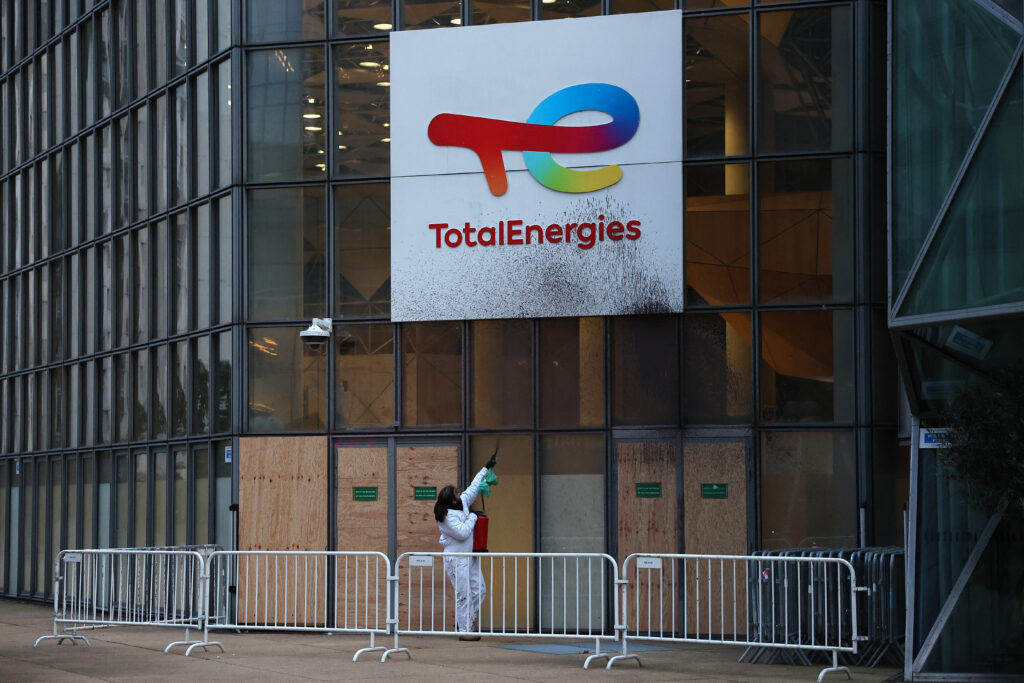
TotalEnergies’ culpability derives from five main faults, the lawyers argued.
They claimed the French oil giant continued to exploit fossil fuels despite knowing the impact of their related emissions on climate change; it fabricated doubt about scientific findings establishing this connection; it lobbied against stricter measures to tackle global warming; it adopted a transition strategy that is not aligned with the goals of the Paris agreement; and it engaged in greenwashing, misleading its customers when promoting its activities in Belgium.
“Every ton [of CO2 emissions] counts, every fraction of warming matters” to stop climate change, the lawyers hammered all day on Wednesday.
“Imposing these orders would have direct impacts on alleviating Mr. Falys’ climate anxiety,” lawyer Marie Doutrepont told the court, urging the judges “to be brave,” follow through on their responsibilities to protect human rights, and ensure that if polluters don’t want to change their practices voluntarily, “one must force them to.”
Total’s response
But the French oil major retorted that Falys’ action “is not legitimate” and has “no legal basis.”
In a statement shared with POLITICO, TotalEnergies said that trying to “make a single, long-standing oil and gas producer (which accounts for just under 2 percent of the oil and gas sector and is not active in coal) bear a responsibility that would be associated with the way in which the European and global energy system has been built over more than a century … makes no sense.”
Because climate change is a global issue and multiple actors contribute to it, TotalEnergies cannot hold individual responsibility for it, the fossil fuel giant argues.
It also said that the company is reducing its emissions and investing in renewable energy, and that targeted, sector-specific regulations would be a more appropriate way to advance the energy transition rather than legal action.
The French company challenges the assertion that it committed any faults, saying its activities “are perfectly lawful” and that the firm “strictly complies with the applicable national and European regulations in this area.”
TotalEnergies’ legal counsel will have six hours to present their arguments during a second round of hearings on Nov. 26 in Tournai.
The court is expected to rule in the first half of next year.



Follow