



LONDON — Nigel Farage was beaming about his newest recruit Thursday. But the defection from the Tories of frontbench star Robert Jenrick hints at sizable problems for Farage’s insurgent right-wing party too.
By securing his highest-profile defection from the Conservatives yet, Reform UK gains one of its rival party’s best communicators — a pugnacious and energetic hardliner, capable of shaping the narrative in Westminster and beyond.
But Jenrick — preemptively kicked out of the Tories earlier on Thursday by Leader Kemi Badenoch after she got wind of his looming defection — presents his own problems for Farage’s insurgent party as it tries to redraw Britain’s political map.
Jenrick’s vaulting ambition, eagerness to rebel and to challenge the leadership are now Farage’s problem. And Reform’s critics have been handed more ammunition to claim the party is little more than the Conservatives 2.0, as they embrace a serial minister Tory administrations that crashed to a hefty defeat in the 2024 general election.
Farage underlined that problem himself as he unveiled his new acquisition at a chaotic press conference Thursday. The event was hastily repurposed because Badenoch got the jump on their secret plot hours earlier.
“Our biggest weakness is we haven’t had people who’ve actually been there in cabinet, in No.10, understand how these things work,” Farage said —before pausing and backtracking. “Maybe understand why the system doesn’t work,” Farage clarified.
Reform’s critics can now add Jenrick to the long list of high-profile Conservatives to join Farage’s ranks after serving in a government that voters turfed out of power just 18 months ago. Among them are former Chancellor Nadhim Zahawi, who joined Reform earlier this week, and former Culture Secretary Nadine Dorries.
Jenrick was there in government when Liz Truss detonated the economy, and when Boris Johnson conceived a wave of post-Brexit migration.
Jenrick was immigration minister as the number of small boats crossing the Channel carrying asylum seekers surged. He opened many of the asylum hotels that now house them, and which are so hated by Reform voters.
Farage himself appears live to the risks posed by adopting former Conservative ministers. At that same late afternoon press conference he set a deadline of the May 7 local elections for any further defections of MPs.
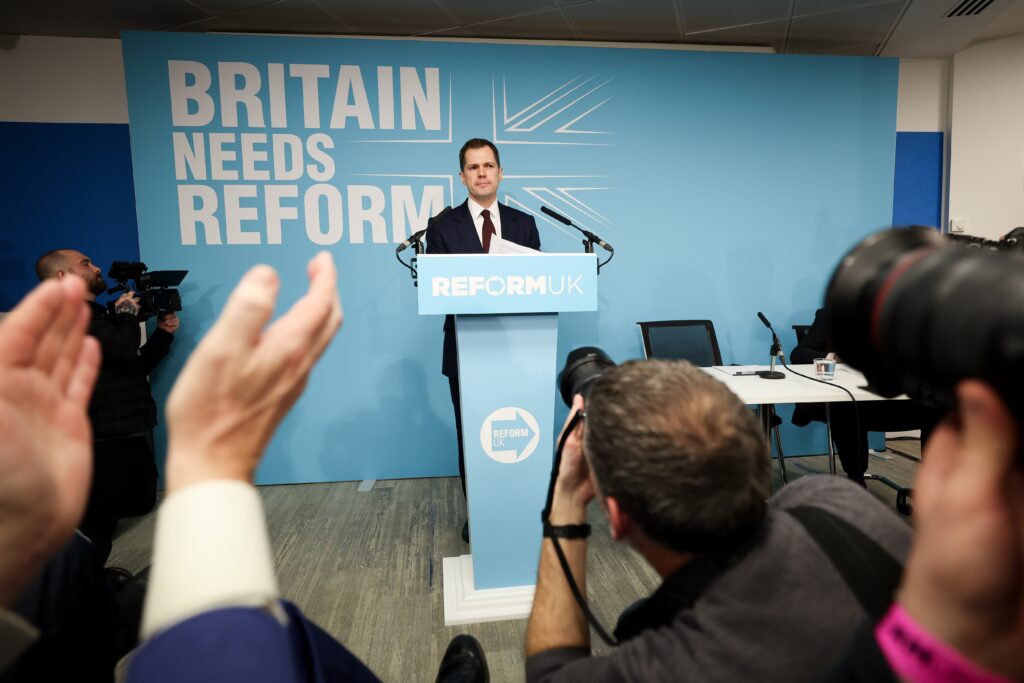
Jenrick counters criticisms by pointing out he resigned from Rishi Sunak’s doomed government in 2023 because of his disagreements over migration policy. Former colleagues still suspect his burning ambition to lead the Conservatives was a factor too.
He lost to Badenoch in the leadership election that followed his former party’s crushing 2024 defeat. Despite joining her top team as shadow justice secretary, he never really stopped waging the next leadership battle behind the scenes.
Jenrick would often float different policy positions to Badenoch. He angered Conservative colleagues with what was perceived by some critics to be “racist” rhetoric — an allegation he always strongly denied.
If a wave of Tory defections do not rapidly follow Jenrick’s then Badenoch also can argue she’s come out stronger from Thursday’s dramatic departure.
She got the march on Farage by preemptively ejecting her great rival from the party, and spoiling the Reform leader’s surprise. She also looked decisive in kicking out her would-be leadership rival.
Badenoch’s own personality and policy clash with Jenrick could signal trouble ahead as the ex-Tory competes with Reform’s many egos.
Farage has frequently traded barbs with Jenrick, who he has branded a “fraud” and a “hypocrite” — but the potential rift Jenrick’s former Conservative colleagues are most closely watching is with Reform Head of Policy Zia Yusuf. Jenrick branded him “Zia Useless” during one online slanging match — although he name-checked Yusuf Thursday in a roll-call paying tribute to his new colleagues.
“All I would say to Nigel is Rob’s not my problem any more — he’s your problem,” Badenoch quipped in an interview with GB News.
While Badenoch has publicly ruled out any pacts with Reform to reunite the right ahead of the next general election, Jenrick was always more ambiguous about a potential deal.
With Jenrick out of the Tory tent, an alliance looks less likely.
In welcoming Jenrick, Farage has gone for the Conservative jugular, and committed to absorbing and overthrowing the establishment party in his quest to become the dominant force in right-wing politics.
For Keir Starmer’s struggling Labour Party it offers a glimmer of hope.
If splits remain on the right, then Starmer — or whoever is prime minister at the the time of the next U.K. general election — is in a far better position to rally the sizable anti-Farage sentiment that counterbalances his popularity.



Follow