



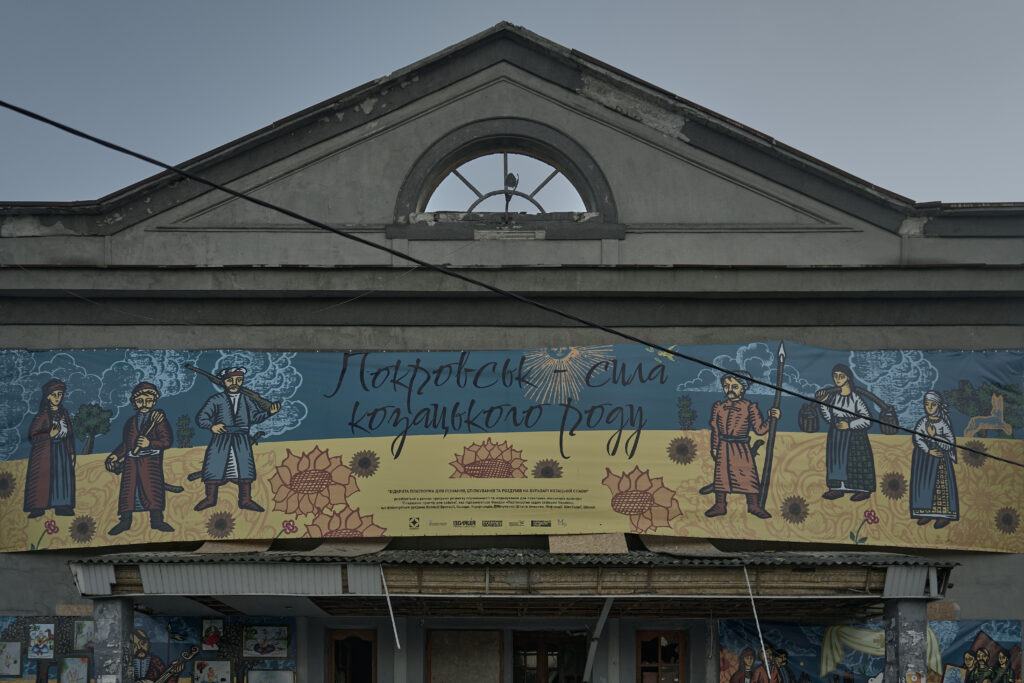
KYIV — For Ukrainians, the shattered eastern city of Pokrovsk — where troops are locked in battle with the Russians this Christmas — conjures up associations with one of their country’s most enduring cultural legacies: the Carol of the Bells.
Western audiences may know the haunting, repeated melody from the Hollywood film Home Alone and the TV series Ted Lasso, but there are more poignant and political resonances for Ukrainians this winter as Pokrovsk is so closely connected with the carol’s composer, Mykola Leontovych.
Leontovych did not — as widely believed — compose the carol in Pokrovsk but the city played a crucial role in the development of both his music and the patriotic Ukrainian politics that led to his persecution by the Russians and ultimately his murder by Soviet agents in 1921.
Leontovych was based in Pokrovsk in the first decade of the 20th century, teaching at a music school and running a railway workers’ choir. He drew inspiration there from distinctively Ukrainian folk traditions, and he would later base the Carol of the Bells on a seasonal chant called Shchedryk. (Pokrovsk is dubbed the hometown of Shchedryk.)
“Leontovych came to Pokrovsk with only the bag on his back, but it was there that he developed as a composer, and caught the attention of gendarmes as he stood up for the rights of workers. He even sang the Marseillaise with the local choir that he ran,” said Larysa Semenko, author of the book “Our Silent Genius, Leontovych.”
Semenko was also quick to point out that the Ukrainian political dimension to the Carol of the Bells was nothing new.
“It was never just a Christmas song, but a Ukrainian cultural message to the world, a greeting card of the nation’s deep-rooted spirituality and resilience in the face of threat. The same threat our nation is fighting today,” she said.
Song of an independent Ukraine
Leontovych is widely seen as a hero who took on Russia with his music a century ago, just as Ukrainians today are turning to guns, shells and drones to preserve their national identity from devastation by Moscow.
As soon as Leontovych’s version of Shchedryk premiered in Kyiv in 1916, it was spotted as a potential hit by the leaders of the Ukrainian National Republic, the country’s short-lived attempt to break free from Moscow after World War I. The new government decided to send a national choir on tour across Europe with Leontovych’s choral songs in 1919 to promote recognition of the Ukrainian National Republic.
The world did not recognize the new nation, but Shchedryk won it a place in global culture. “Even before the translation, it was a hit. In Paris, in Prague, all around Europe, princes and kings were fascinated to find out such a rich and old culture existed on their continent,” Semenko said.
Before the European tour, the singers from the Ukrainian choir had to evacuate to the West of Ukraine as Bolsheviks overran Kyiv. After their European success, they went to Canada and the United States, already as the Ukrainian National Chorus, bringing Shchedryk to the North America in 1922.
“Shchedryk, which was a hit and always played as an encore, enchanted Europe and America, and helped Ukrainians to declare their nation and state to the world, said Anatoliy Paladiychuk, researcher and author of the project “Kamianets Notes and Wings of Shchedryk.”
In 1936, the American composer Peter J. Wilhousky wrote English lyrics, adapting Shchedryk into the version familiar in West as the Carol of the Bells for an NBC radio performance.
Leontovych did not live to see this worldwide success. Under the pretext that they were fighting bandits, the Soviet secret service killed him in January 1921 in his parents’ house in the western region of Vinnytsia. Ukrainians only learned the truth about his death after the opening of Soviet archives in the 1990s.
“Just like they do in occupied territories of Ukraine now, Russian authorities saw a threat in Ukrainian culture. That was the start of great terror against Ukrainian freedom fighters, politicians, and educators. Leontovych was one of many who were killed,” Semenko said.
History repeats itself
Almost 105 years after Leontovych’s death, Russia is once again trying to snuff out Ukrainian nationhood.
While fighting has raged over Pokrovsk for more than 18 months, Moscow now claims it has occupied it.
The Ukrainian army insists its forces are back in parts of Pokrovsk after withdrawal in November. Kyiv also says small groups of Russian soldiers are infiltrating to pose for pictures with flags for propaganda purposes, but don’t fully control the ruins.
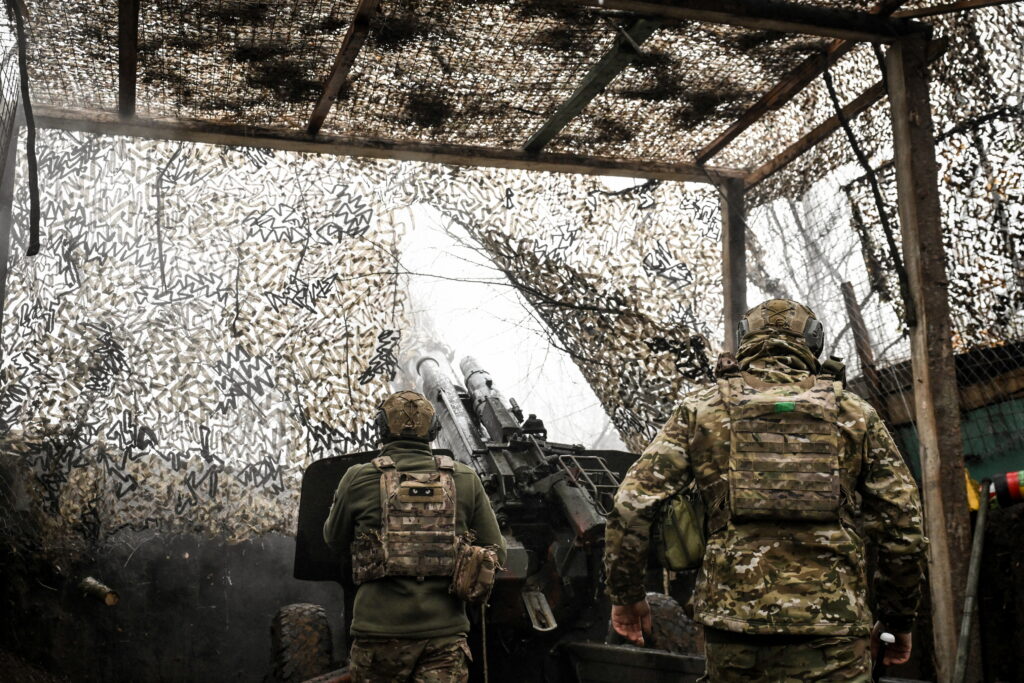
“Our active operations in the Pokrovsko-Myrnoрrad agglomeration area continue. In Pokrovsk itself, in the past few weeks, we were able to regain control of about 16 square kilometers in the northern part of the city,” Ukrainian Army Commander Gen. Oleksandr Syrskyi said in a post on Telegram.
Syrskyi vowed Ukraine would continue to fight for Pokrovsk and bolster its forces in the ruined city against hundreds of thousands of Kremlin soldiers.
American historian Timothy Snyder — a leading expert on Ukraine — also drew on the Carol of the Bells to stress the continuity between Russian colonialism a century ago and President Vladimir Putin’s onslaught against the country.
“Ukrainian culture is very significant in our world, but our awareness of it is minimal: the assassination of Leontovych and the transformation of Shchedryk is just one minor example of this colonial history, one that is continued during Russia’s present invasion of Ukraine,” Snyder said in a post on Substack on Dec 14.



Follow