



BRUSSELS — It reads like Washington’s worst nightmare: a European tech regulator independent of the Brussels institutions and armed to crack down on the violations of U.S. companies.
But that’s exactly what some in Brussels say is now needed as the EU struggles to get a grip on how to implement and enforce its digital laws amid repeated political attacks from the White House.
The attacks are reviving a long-held goal among EU legislators: to establish an independent, well-resourced regulator that sits outside EU institutions to enforce its many tech rulebooks.
While the dream faces hurdles to becoming a reality, the timing of its resurrection reflects growing concerns that the EU has failed to underpin its ambition to be the world’s digital policeman with adequate enforcement structures that can resist U.S. attacks.
After years of lawmaking, Brussels governs through a patchwork of rules and institutions that clash with the reality of U.S. politics.
The EU’s maze of rules and regulators has also been thrown into sharp focus by the ongoing Grok scandal, which saw the artificial intelligence tool allow users of Elon Musk’s X to generate sexualized deepfakes.
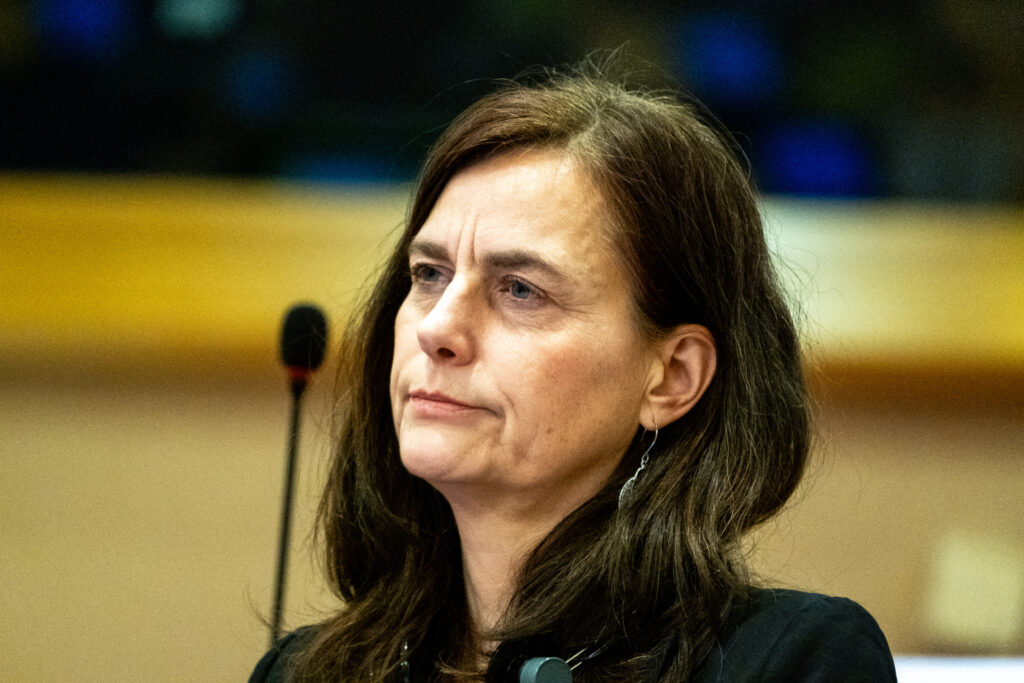
“The enforcement is not happening because there’s too much pressure from the Trump administration,” said Alexandra Geese, a German Greens European Parliament lawmaker who negotiated the EU’s platform law, the Digital Services Act.
For Geese, it’s an “I told you so” moment after EU legislators floated the possibility of creating a standalone agency to enforce the digital rulebooks when they were being negotiated.
A group of EU countries, led by Portugal, also tinkered with the idea late last year.
Blackmail
The Digital Services Act sits at the center of the U.S.-EU feud over how Brussels is enforcing its tech rules.
The European Commission is responsible for enforcing these rules on platforms with over 45 million users in the EU, among them some of the most powerful U.S. companies including Elon Musk’s X, Mark Zuckerberg’s Meta and Alphabet’s Google.
As the bloc’s executive arm, the Commission also needs buy-in from the White House for negotiations on tariffs, security guarantees for Ukraine, and a host of other major political topics.
The Commission last month slapped a €120 million fine on Musk’s X, its first under the DSA, which prompted a fierce rebuke from Washington. Just weeks later the U.S. imposed a travel ban on Thierry Breton, a former EU commissioner and one of the officials behind the law.
It topped off a year in which the U.S. repeatedly attacked the DSA, branding it “censorship” and treating it as a bargaining chip in trade talks.
This fueled concerns that the Commission was exposed and that digital fines were, as a result, being delayed or disrupted. Among the evidence was a last-minute intervention by the EU’s trade chief to delay a Google antitrust penalty at what would have been a sensitive time for talks. The fine eventually landed some months later.
“Delegating digital enforcement to an independent body would strengthen the EU’s bargaining position against the U.S.,” Mario Mariniello, a non-resident fellow at think tank Bruegel, argued in a September piece on how the Commission could protect itself against blackmail.
The need to separate enforcement powers is highest for the bloc’s online content law, he argued. “There, the level of politicization is so high that you would have a significant benefit.”
“It’s so political, there’s no real enforcement, there’s no independent enforcement, independent from politics,” Geese said.
Meanwhile, the recent controversy around X’s AI tool Grok, which allowed users to generate sexualized fakes based on real-life images, has illustrated the complexity of the EU’s existing structures and laws.
As a platform, X has to address systemic risks arising from the spread of illegal content under the DSA, while it also faces obligations regarding its AI tool — such as watermarking deepfakes — under the EU’s AI Act.
National authorities or prosecutors took an interest in the matter alongside Brussels, because in some countries it’s illegal to share nudes without consent, and because the spread of child sexual abuse material is governed by separate laws involving national regulators.
Having a single powerful digital authority could address the fragmented enforcement carried out by several authorities under different EU rulebooks, according to Geese.
“It’s absolutely true that the rulebooks are scattered, that enforcement is scattered [and] that it would be easier to have one agency,” Geese said.
“It would have made sense … to do that right away [when the laws were being drafted], as an independent agency, a little bit out of the realm of day-to-day politics,” she added.
“Europe urgently needs a single digital enforcement agency to provide legal certainty and ensure EU laws work consistently across the Union,” said German Greens European Parliament lawmaker Sergey Lagodinsky, who added that the current enforcement landscape is “siloed, with weak coordination.”
Hurdles
A proposal to establish such a regulator would likely face opposition from EU governments.
Last year Portugal launched a debate on whether EU countries should be able to appoint a single digital regulator themselves, as they grappled with the enforcement of several rulebooks.
“The central question is whether a single digital regulator should be established, at national level, coordinating responsibilities currently spread across multiple authorities whilst ensuring a more integrated consistent approach to enforcement,” Portuguese Minister for State Reform Gonçalo Matias wrote in an invitation for an October summit with 13 countries, seen by POLITICO.
Although the pitch proved controversial, it received some support in the summit’s final declaration. “The potential establishment of a single digital regulator at national or EU level can consolidate responsibilities, ensure coherent enforcement of EU digital legislation and foster an innovation-friendly regulatory culture,” the 13 countries said.
That group didn’t include countries that are traditionally skeptical of handing power to a Brussels-backed agency, such as Hungary, Slovakia and Poland.
Isolating tech enforcement in an independent agency could also limit the interplay with the Commission’s other enforcement powers, such as on antitrust matters, Mariniello argued.
Even for advocates such as Geese, there is a potential downside to reopening the debate at such a critical moment for digital enforcement.
“The world is watching Europe to see how it responds to one of the most egregious episodes of a large language model perpetuating gender based violence,” she wrote in a recent opinion.
As for a new agency, “You’re gonna debate this for two or three years, with the Council, and Hungary and Slovakia are going to say: No way. And in the meantime, nothing happens, because that becomes the excuse: The agency is going to do it,” Geese said.



Follow