



BRUSSELS — Mark Rutte has one overriding mission as NATO secretary-general: Stop Donald Trump from blowing up the alliance.
That focus is now putting the former Dutch prime minister on a collision course with the very European capitals he once worked alongside — and has left NATO bruised even after he successfully talked Trump down from his threats to annex Greenland.
The strain was on full display Monday in the European Parliament, where Rutte bluntly defended the superpower’s primacy in the alliance. “If anyone thinks here … that the European Union or Europe as a whole can defend itself without the U.S., keep on dreaming,” he told lawmakers. “You can’t.”
The reaction was swift — and angry. “No, dear Mark Rutte,” France’s Foreign Minister Jean-Noël Barrot shot back on X. “Europeans can and must take charge of their own security. This is the European pillar of NATO.”
“It was a disgraceful moment,” said Nathalie Loiseau, a former French Europe minister and now an MEP. “We don’t need a Trump zealot. NATO needs to rebalance between U.S. and European efforts.”
Spain’s Nacho Sánchez Amor was even more direct. “Are you the [U.S.] ambassador to [NATO],” the Socialist MEP asked Rutte in a heated exchange, “or the secretary-general representing the alliance and its members?”
The clash is also exposing a growing fault line inside NATO: Rutte’s conviction that keeping Trump onside is the only way to keep the alliance intact — and Europe’s rising alarm that this strategy is hollowing it out.
As the secretary-general strains to keep the Americans as close as possible, those efforts are opening up a rift with his EU counterparts who are increasingly calling for European security bodies and a continental army beyond NATO.
POLITICO spoke to more than a dozen NATO insiders, diplomats and current and former Rutte colleagues, many of whom were granted anonymity to speak candidly. They described a leader admired as a skilled crisis manager who recently pulled off a win on Greenland, but at the cost of deepening European unease about NATO’s long-term future.
But Rutte’s defenders say he has delivered on keeping the alliance together, a task so difficult he cannot always ensure all 32 members of the alliance are satisfied. Officials familiar with how he works also insist he talks more frankly to Trump in private.
Still, the Greenland standoff “did a lot of damage,” said one NATO diplomat. Rutte’s approach is a “band-aid” that has “alienated allies,” they added. “We’re an alliance of 32, not a U.S.-plus-31 club.”
More equal than others
Although Rutte insists that he represents all NATO allies, it’s clear that his overriding priority is to keep the United States under Trump from walking away from Europe. That’s opening him to criticism that the focus is now overshadowing the rest of his job.
Even the secretary-general’s successful effort in helping to get Trump to back off his Greenland threats at the Jan. 19-23 Davos summit in Switzerland is raising questions about whether it’s just a temporary reprieve and if the U.S. will still attempt to take control of parts of the Arctic island.
“What supposed deal have you made with President Trump?” Greens MEP and former Danish Foreign Minister Villy Søvndal asked on Monday. “Did you have a mandate as a secretary-general to negotiate on behalf of Greenland and Denmark?”
Rutte denied he went outside his remit. “Of course, I have no mandate to negotiate on behalf of Denmark, so I didn’t and I will not,” he said in Parliament.
Lionizing Trump also risks creating a credibility problem for the alliance.
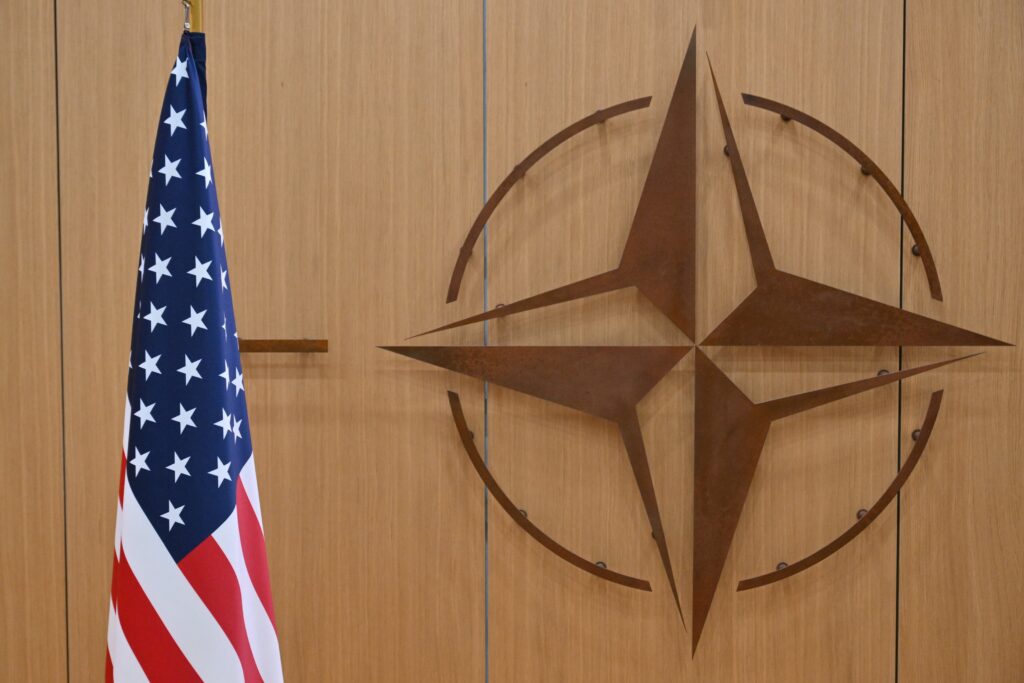
NATO is well known for its collective defense commitment — Article 5 — but the alliance is also bound by Articles 2 and 3, which ask countries to promote economic cooperation and mutual rearmament. With his threats to impose tariffs on Europe and seize Greenland, Trump has violated both, the same NATO diplomat said.
Adding to that unease, Trump has previously cast doubt on his support for Article 5, and belittled the military commitments of other allies, falsely claiming last week that Europeans had stayed “a little off the front lines” in the U.S.-led war in Afghanistan.
Responding to the criticism, a NATO official said: “As secretaries-general before him, NATO Secretary-General Rutte is convinced that our collective security is best served by Europe and North America working together through NATO.”
Trump card at the ready
Despite that, Rutte has been sticking firmly to his strategy of buttering up Trump in public, insisting he is a positive for the alliance.
Last year, NATO agreed to dramatically step up military spending to 5 percent of GDP by 2035 — a result many in the alliance also see as helping Europe stand on its own two feet. The secretary-general on Monday said there was “no way” that would have happened without pressure from the U.S. president.
The White House is in full agreement with that characterization.
“President Trump has done more for NATO than anyone,” White House Deputy Press Secretary Anna Kelly told POLITICO. “America’s contributions to NATO dwarf that of other countries, and his success in delivering a five percent spending pledge from NATO allies is helping Europe take greater responsibility for its own defense.”
Kelly said that Trump has “a great relationship” with Rutte, and then added: “The United States is the only NATO partner who can protect Greenland, and the President is advancing NATO interests in doing so.”
His hard-nosed approach is honed by 14 years of managing often fractious coalitions as the Netherlands’ longest-serving prime minister. “He’s anything but an idealist,” said a former colleague. “He’s pragmatic.”
Immediately striking up a good rapport with Trump during his first term in the White House, Rutte realized that public flattery was the key to keeping the U.S. president onside.
“He can make himself very small and humble to reach his goal,” said Petra de Koning, who wrote a 2020 biography on Rutte. That’s often taken to extremes: The Dutchman described Trump as “daddy” during last year’s NATO summit in The Hague, and lavished praise on him in messages leaked by the U.S. president.
But in private, he is more forthright with Trump, according to a person familiar with Rutte’s thinking. “The relationship is trustful,” they said, but “if pushed, he will be direct.” Meanwhile, keeping all 32 NATO members aligned with every decision is “nearly impossible,” the person insisted.
Although the deal to get Trump to back off his Greenland threats may have left a bad taste in Europe, NATO wasn’t destroyed.
“The reality is, Rutte is delivering,” said a senior NATO diplomat. “Unlike some other leaders, he never doubted the alliance — I chalk it up to experience,” added a second senior alliance diplomat.
But keeping Trump sweet risks emboldening the U.S. president to be still bolder in future. “Politicians around the world and in this country ignore Trump’s ego at their peril,” said Stephen Farnsworth, a political scientist at Virginia’s University of Mary Washington.
That could also create issues for the alliance down the line. “For the benefit of the alliance, [he’s] sucking up” to Trump, the first NATO diplomat said. “But the question is, where does it end?”
Esther Webber and Laura Kayali contributed to this report.



Follow