



Mujtaba Rahman is the head of Eurasia Group’s Europe practice. He posts at @Mij_Europe.
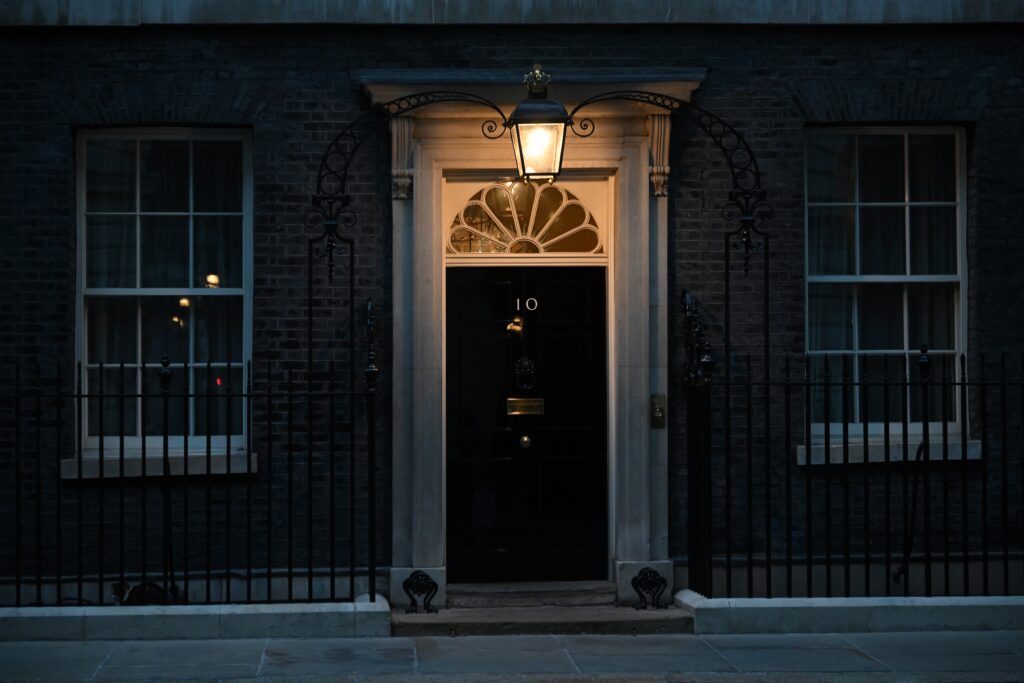
British Prime Minister Keir Starmer has only four months to save his premiership.
After the U.K. parliament’s return from Christmas recess, Starmer marked his first 18 months in Downing Street with a speech touting his Labour party’s efforts to ease the cost-of-living crisis. But behind the scenes, anxiety is growing that voters won’t feel any meaningful relief before the decisive regional and local elections on May 7, which could seal the prime minister’s political fate.
And the outlook is bleak: After placing third in the Welsh Parliament elections behind Plaid Cymru and far-right leader Nigel Farage’s Reform UK, failing to unseat the Scottish National Party in Scotland, and bleeding support to both the Greens and Reform UK in English council contests, Labour risks humiliation across the U.K. And national polling only underscores the danger, with Reform UK now averaging close to 30 percent, and Labour languishing in the teens alongside the Greens and the Conservatives.
Still, Starmer’s advisers privately argue that “less bad than expected” results might be enough to save him. But many Labour MPs expect a leadership challenge regardless, as it would require only 81 out of 404 MPs to initiate one — and Starmer is hardly popular with the wider party.
Then there’s the unfolding scandal over Labour stalwart and former U.K. ambassador to the U.S. Peter Mandelson. Mandelson was appointed by Starmer before being removed from his position in September once the extent of his friendship with convicted sex offender Jeffrey Epstein became clear. Under mounting pressure, Starmer has been strong in his criticism and push for transparency — but that may not be enough, as Mandelson’s now under investigation for misconduct while in public office.
A challenge may not come immediately, or even right after polling day in May. But the sense that Starmer’s authority is waning is unmistakable.
For one, the prime minister is already preparing his defense. A King’s speech designed to reset the agenda ,outlining proposals on special education needs and digital ID, is now penciled in for mid-May. A cabinet reshuffle may follow, and some in Labour believe Starmer might even sacrifice his chancellor if he thinks it would placate restive backbenchers. He’s also expected to recall former Deputy Prime Minister Angela Rayner to the cabinet, hoping her return could blunt any leadership ambitions.
Labour’s traditions may offer Starmer only limited protection.While the party prides itself on avoiding the “regicide” that’s plagued the rival Conservatives, this instinct will weaken if electoral defeat looms. Labour MPs may dread a destabilizing leadership contest, but many have already concluded Starmer won’t lead them into the next general election. And privately, some ministers believe it’s no longer a question of if the prime minister falls, but when.
Their concerns are understandable: Energized by new leadership, the Greens are siphoning some progressive voters, while Reform UK is eroding Labour’s traditional working-class base. Meanwhile, the Conservatives have stabilized enough under Kemi Badenoch’s leadership to reduce the likelihood of another revolt — a development that leaves Starmer more exposed.
So, if a contest is triggered, he’s unlikely to survive it. Party members — roughly 250,000-strong — tend to favor the soft left. And that dynamic would advantage Rayner, should she stand.
Last week’s events in Greater Manchester only further crystallized this perception of Starmer’s weakness. His decision to block Mayor Andy Burnham from contesting a parliamentary by-election was a lose-lose proposition: Either deny Burnham a Westminster platform and risk a party backlash, or enable a future leadership challenger. And Starmer chose the former, provoking fury while reinforcing the perception that he’s defensive and frail.
Then came news of Mandelson. Starmer was elected on the promise of ending the chaos of government sleaze, and this saga will only foment questions about his judgement when appointing Mandelson ambassador. And the prime minister may well end up having to sacrifice his beloved advisor Morgan McSweeney, who lobbied for Mandelson to be picked for the plum Washington post.
Meanwhile, foreign policy — the one area where Starmer’s performance has proven more assured — is offering Number 10 no relief either. U.S. President Donald Trump’s return to the White House has distracted him from and sometimes undermined his domestic agenda, particularly in the case of tariffs. And the latest crisis over Greenland was no exception.
Managing relations with the U.S. under Trump has forced Starmer into awkward contortions, attempting to respond to provocations while trying to preserve his strategy of staying close to both Washington and Brussels, where his government is trying to reset relations.
As it stands, the debate inside Labour over whether to pivot toward the EU is intensifying, and there’s now growing support within the party for a customs union with the bloc. But Starmer’s preference for incremental sector-by-sector alignment risks satisfying no one, viewed in Brussels as cherry-picking and at home as timid. Even loyalists concede a damaging story has taken hold: A prime minister unable to impose a vision or discipline, haunted by his early decisions, buffeted by U-turns and trapped by his own party.
Starmer wanted to avoid a Tory-style drama. Instead, he’s now heading one of Labour’s own — slower, quieter but no less brutal. And four months isn’t long to change the narrative, especially when so many in his own party have already turned the page.



Follow