



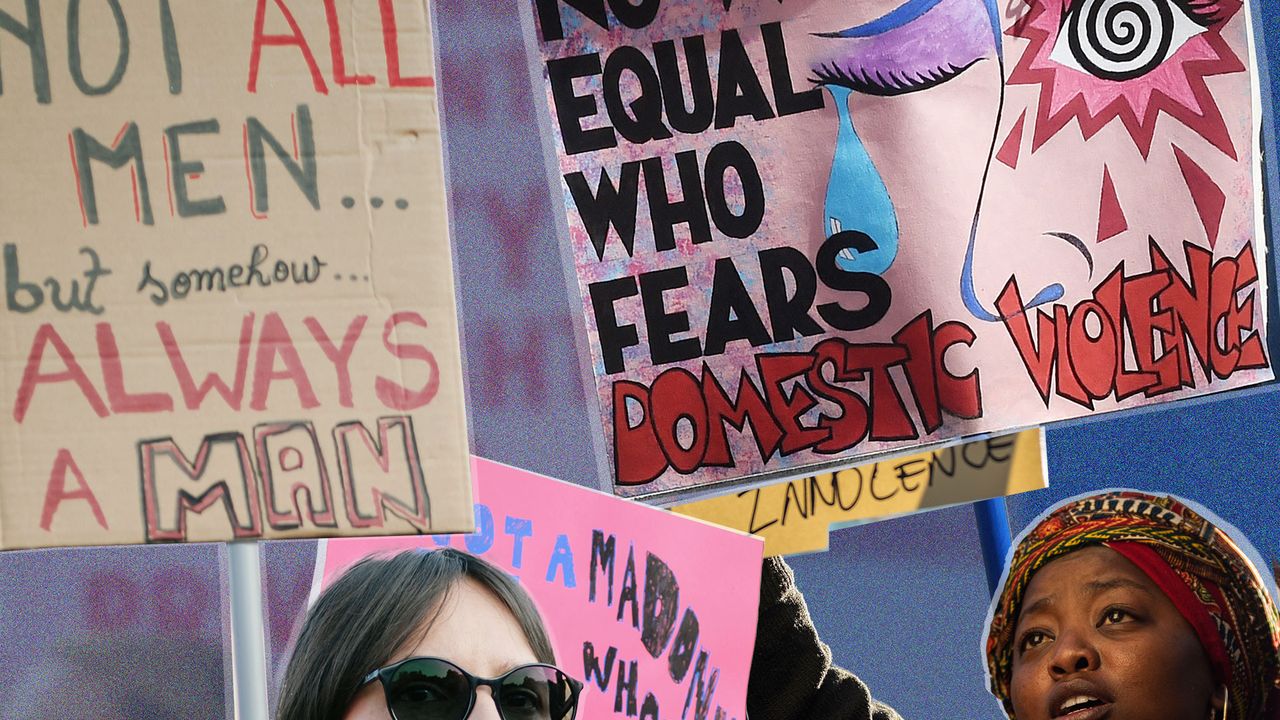
A strategy to eliminate violence against women and girls (VAWG) should be met with rounds of tumultuous applause. Yet, while there is much to celebrate in the Freedom from Violence and Abuse Strategy, we must press pause on the plaudits.
When the strategy was published on December 18, 2025, the organisation End Violence Against Women, or EVAW, released a statement welcoming many of the changes and implementations proposed. However, it’s clear that, even at this early stage, the ten-year strategy is likely to run into problems.
Among concerns raised on funding clarity and undercover policing, EVAW calls for a “more robust firewall for migrant survivors that would meaningfully ensure data is not shared with immigration enforcement.”
Further warnings were raised by the organisation Decrim Now, who tell Glamour that, while they are pleased to see that the VAWG strategy (volume two) commits to a review of laws on prostitution and how they protect women, the implementation of the strategy must place the voices of sex workers at the centre of policies and laws on sex work.
“Policy and law development must be intersectional, reflecting the increased risk of harm faced by LGBTQ people, particularly trans people, migrant women, and women of colour, who are all overrepresented in sex work,” a spokesperson for Decrim Now explains.
This view is echoed by Madelaine Thomas, founder of Image Angel, and sex worker.
“Ultimately, [the government] need to support decrim,” she tells Glamour, “Because when people who do this job aren’t seen as valid, then our experiences aren’t considered valid. So our concerns around that experience aren’t considered a concern.”
Galop, an LGBT+ charity specialising in support for domestic abuse, sexual violence, hate crime, and conversion practices, warned that “The strategy’s focus on support and prevention must involve and include LGBT+ victims and survivors if the government is to be effective in reaching its aim of halving VAWG in ten years.”
It’s noteworthy that, while there may be overlaps with other strategic intentions in both government strategy documents, Trans+ people aren’t mentioned once, and LGBT+ people are only mentioned once in both documents directly.
“The government speaks of providing clarity, and the new VAWG strategy speaks of education. But instead, we’re met with erasure,” says Marty Davies, founder of Trans+ History Week.
She tells Glamour that, while Trans+ History Week is pleased to see a focus on violence against women and girls, they’d further welcome a strategy that seeks to understand gender-based violence not through a binary lens, “but through the lens of misogyny and how that informs violence against all of us, including trans women and girls and non-binary people.”
An urgent recommendation, considering a 2025 study reported that Trans+ people consistently experience more discrimination than cisgender LGB folks across Europe. Furthermore, the Journal of Gender Studies in 2025 pointed out that, while Trans+ people make up a small percentage of the population, they experience disproportionate levels of sexual violence.
Marginalised women are society’s shock absorbers; this has to change
This renewed focus on eliminating VAWG is an exciting prospect for the many campaigners and organisations who have been tirelessly working behind the scenes for decades to improve the lives of women and girls across the nation. However, there is an undercurrent to this cautious optimism and tentative celebration.
“As we have seen with the recent case of Grok, VAWG is not about porn or nudity: it’s about power,” says Dr Carolia Are, digital criminologist at the London School of Economics and Political Science.



Follow