



BRUSSELS — Loopholes in the European Union’s new interim climate target increase the danger of missing the 2050 net-zero goal, the bloc’s top scientific advisor warned.
The EU’s 27 governments on Wednesday agreed to reduce their planet-warming emissions by up to 90 percent below 1990 levels by 2040, but riddled the legislation with offsetting options and revision clauses that could significantly weaken the target.
“I see this as a political compromise that at least keeps the 2050 target within reach,” said Ottmar Edenhofer, an economist at the Potsdam Institute for Climate Impact Research in an interview with POLITICO. “But the risk of not achieving it has, of course, now increased rather than decreased.”
Edenhofer chairs the EU’s scientific advisory board on climate change, an independent body tasked with making policy recommendations on global warming, which first suggested the bloc reduce its emissions by 90 to 95 percent by 2040.
While the deal reached Wednesday keeps the headline 90 percent figure, it sets the EU’s domestic emissions cuts at 85 percent, allowing the bloc to meet the remainder by paying other countries to reduce pollution through purchases of so-called carbon credits.
Governments also introduced a clause requiring the EU to reassess the target every five years in light of economic conditions or high energy prices, with the option to allow member countries to purchase additional carbon credits.
The board took issue with the use of credits, warning that outsourcing pollution cuts would divert much-needed investments abroad and slow the domestic pace of decarbonization.
Edenhofer reiterated the concerns about credits, but singled out the revision clause as potentially jeopardizing the bloc’s net-zero target.
“If the targets are constantly being watered down via the revision clause, that’s not a good idea, because then the 2050 target will also not be achievable,” he warned.
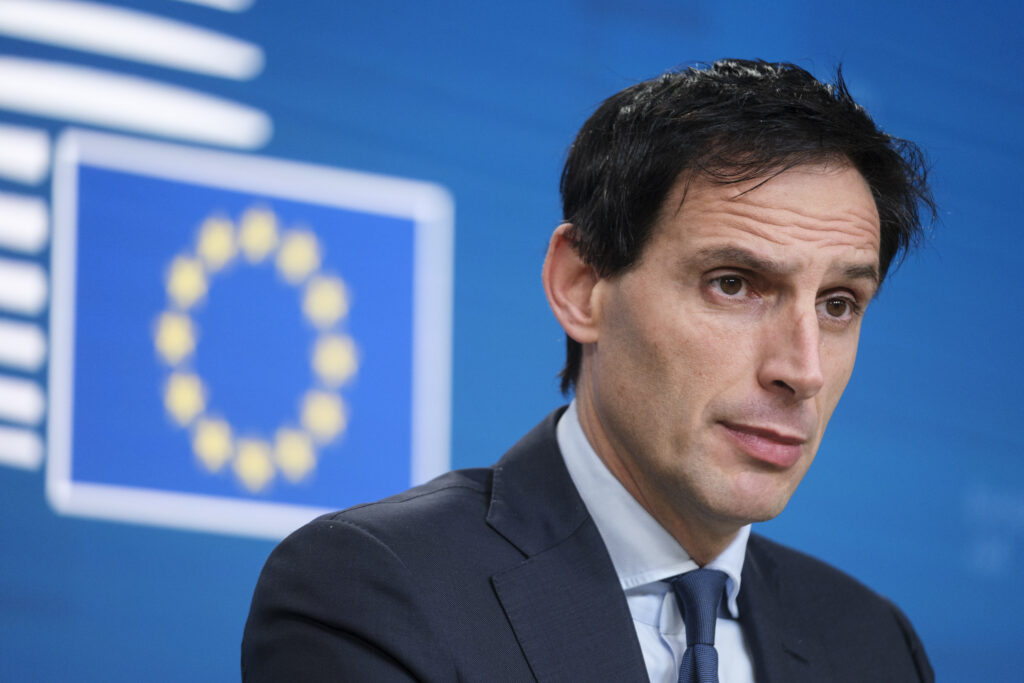
The European Commission’s climate chief Wopke Hoekstra described the deal on Wednesday as “absolutely science-based.”
Asked whether he agrees, Edenhofer said: “The 90 percent are certainly science-based, but the 5 percentage points [of credits] depend on the circumstances… 85 percent is certainly below the limit. I would say it is a political compromise and should be seen as such.”
Edenhofer also warned against scapegoating climate efforts for the EU’s economic woes.
“The European economy certainly has a competitiveness problem,” particularly in high-polluting industries and car manufacturers, he acknowledged. “But climate policy is very often blamed for a lack of industrial policy.”
He was particularly critical of a recent campaign by parts of the German chemical industry to abolish the EU’s carbon market, the heart of its climate legislation.
“I find that utterly ridiculous,” he said.
The industry’s concerns about the carbon market’s current trajectory, which requires companies to hit net-zero before 2040, are valid, he added, which is why he supports limited reforms. But demands to abolish the EU’s CO2 price are “unhelpful” in his view.
“Fundamentally, messages that climate policy is a nice luxury and now it’s time to get back to the important things are absurd,” he added. “It’s grotesque. Climate impacts are real. And this is not some trivial matter — it’s about securing long-term prosperity.”



Follow