



ANTWERP, Belgium — Ursula von der Leyen has come to the defense of the European Union’s embattled carbon market, hitting back at complaints that the bloc’s flagship climate policy is threatening factories and jobs.
But the European Commission president immediately faced a counter-push from the leaders of Germany and France, who suggested that high carbon prices were a problem, and further industry demands to bring down carbon costs.
On Wednesday, at a gathering in Antwerp, industry CEOs issued a fresh set of demands for European policymakers to ease regulation. Such calls tend to find a sympathetic ear in Brussels, with von der Leyen overseeing a massive deregulation drive and other policy changes in response to industry criticism.
But when manufacturers and leaders piled pressure on the Commission to take an axe to its bedrock climate policy — the Emissions Trading System, a carbon market that regulates around half the bloc’s planet-warming pollution — von der Leyen pushed back.
“I know there’s a lot of discussion,” she told an audience of CEOs, industry reps and the leaders of Austria, Belgium, the Netherlands, France and Germany at Antwerp’s historic stock exchange building.
But she insisted: “The Emissions Trading System, the ETS, brings clear benefits. Since it was introduced in 2005, the emissions dropped by 39 percent, while the economy in sectors covered by ETS has grown by 71 percent. So this shows that decarbonization and competitiveness can go hand in hand.”
In a further pushback against the idea that scrapping green policies will help EU industry, von der Leyen pointed out that only slashing fossil fuel use will alleviate high energy prices, which most manufacturers cite as their core problem.
“Gas prices drive the energy prices up. Renewables and nuclear drive the price down,” she said. “The next few years are crucial because the International Energy Agency tells us that gas prices … will stay down in the next three to four years. So we should use this time to invest in low-carbon energy systems that will protect us when fossil fuel prices go up again.”
Yet a few hours later, German Chancellor Friedrich Merz took to the same stage in Antwerp to suggest that the ETS needs to be rethought.
“This system is implemented to reduce CO2 emissions, and at the same time to enable the companies to come to CO2-free production lines. So if this is not achievable, and if this is not the right instrument, we should be very open to revising it, or at least to postpone it,” he said to loud applause from industry representatives.
“We should avoid everything that is jeopardizing the competitiveness of our industry. I’m fully in line with all those who are saying we have to do more on climate change,” he added, but if policies come “at the cost of our industries, at the cost of the [jobs] in our industry, this is unacceptable. And that’s the reason why I’m in line with everyone who says if this is not the right instrument, we have to talk about that and we have to change it if it doesn’t work.”
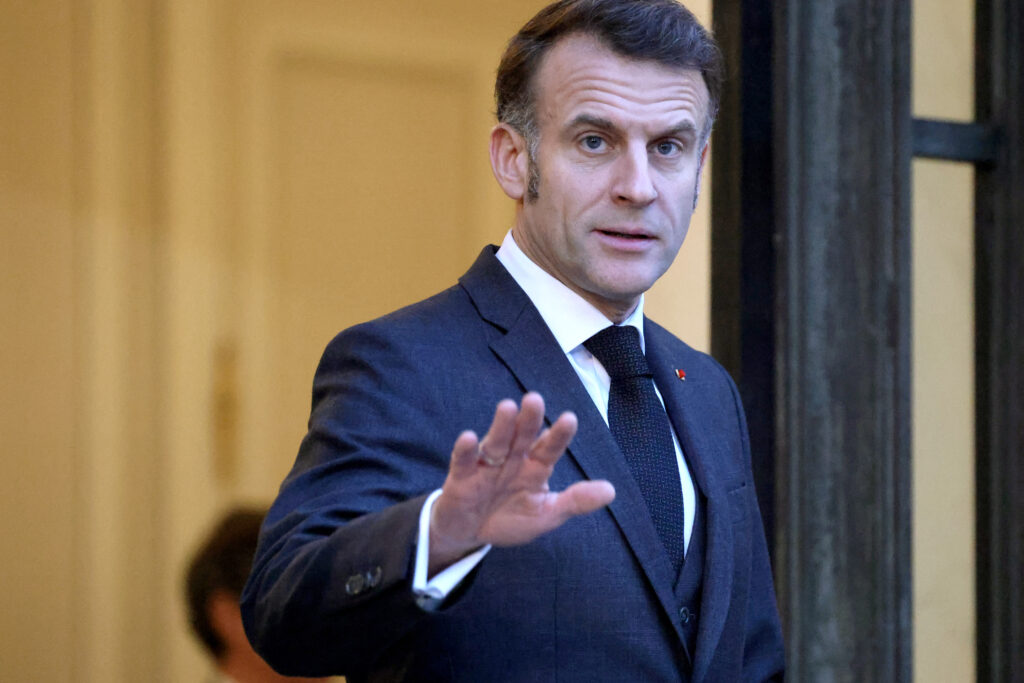
And while in a separate session, French President Emmanuel Macron warned against “killing” the ETS, he insisted: “Europe cannot define ambitious climate objectives while allowing its industrial base to disappear. High energy prices, combined with carbon costs, are accelerating deindustrialization and not decarbonization.”
ETS under attack
The ETS requires heavy industry, power plants, airlines and shipping companies to pay a price — currently around €80 — for every ton of CO2 they emit, a fee meant to incentivize investments in clean manufacturing, energy and transport projects. A declining portion of permits are currently handed out to companies for free to support them.
The carbon price has been rising gradually as the number of pollution permits available for purchase — and thus the emissions of the sectors covered by the ETS — reduces every year. While a growing number of countries are introducing similar carbon markets, the EU’s price is the highest in the world, with most other national systems trailing far behind.
In the run-up to the Antwerp event, the Austrian and Czech leaders as well as the CEO of Germany’s BASF chemicals giant and the Italian business lobby Confindustria had demanded measures to dampen the ETS price, arguing the fee puts EU industry at a competitive disadvantage.
Wednesday’s industry declaration ended with a call to “bring energy and carbon costs down” even as summit moderator Ilham Kadri insisted that “this is not an EU ETS event.”
Many companies also want to slow or pause the phaseout of free permits, which critics warn would undermine the system’s decarbonization incentive, and some companies have even called for an end to the ETS.
The Commission, however, won’t hear of it — for now, at least: The ETS legislation is up for review before July this year.
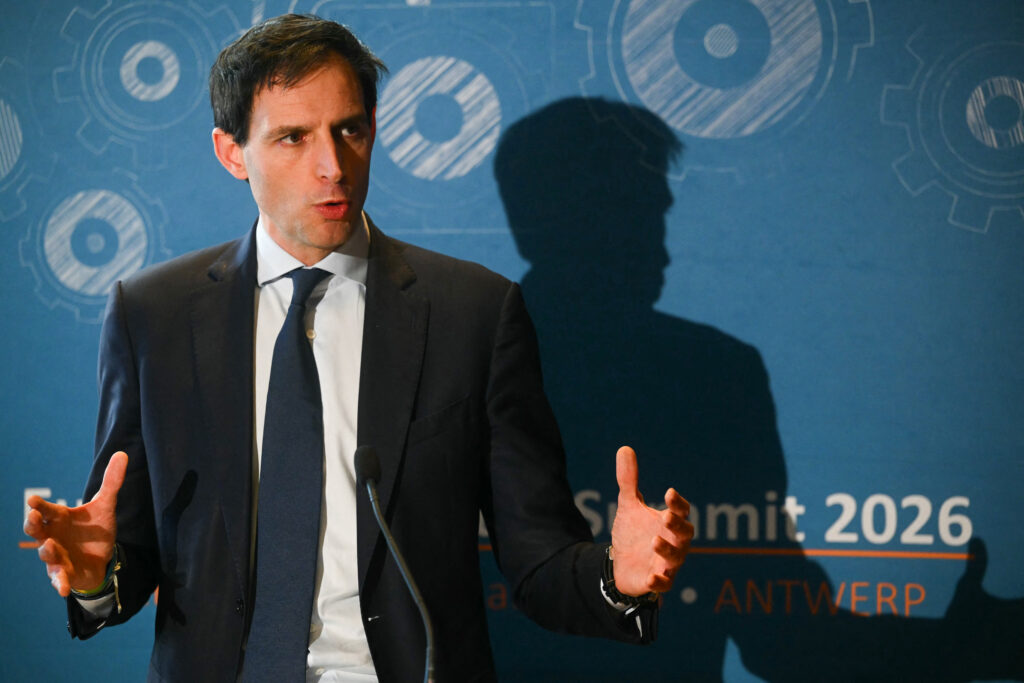
“I’m more than happy to have conversations about how we can make [the ETS] better, but I think we do need to continue with it,” Climate Commissioner Wopke Hoekstra told a panel of industry representatives in Antwerp on Wednesday.
He added a jab at industry’s green laggards: “Some companies have invested heavily” in the clean transition while “others have enjoyed the free [permits] but done little with it.”
Pointing the finger at member states
The one ETS reform von der Leyen and Hoekstra promised was ensuring that more of the carbon pricing revenues — the majority of which go into the 27 governments’ pockets, with the remainder financing EU-level funds — are redistributed to industry.
“On the European level, 100 percent of these revenues were reinvested in industrial innovation,” von der Leyen said. “But member states invest less than 5 percent of the ETS revenues in industrial decarbonization. So I believe it is high time … that member states step up and match our level of support… This will therefore be a core focus also of the upcoming reform of our Emission Trading System this summer.”
The Commission president promised to raise the matter with EU leaders when they meet in a Belgian chateau on Thursday to discuss the bloc’s economic competitiveness.
Her comments also fit into a broader attempt to shift the burden to fix Europe’s competitiveness away from the Commission and onto governments. Von der Leyen criticized countries for excessive bureaucracy at the national level both in her Antwerp speech and an earlier address to the European Parliament on Wednesday.
In a similar vein, she called on governments to tackle energy taxation. “While energy costs are going down, national taxes on energy are going up. And the taxes that industry pays on electricity are 15 times higher than taxes on gas. This is just wrong,” she said.
Green groups welcomed Hoekstra and von der Leyen’s defense of the ETS, but fretted about the increasingly vocal attacks on the policy from industry and EU leaders.
“This is a week for big thinking — from Antwerp to the leaders’ retreat — and it’s understandable that in that atmosphere participants may feel that no idea is off the table,” said Manon Dufour, Brussels director of climate-focused think tank E3G. “But we should be clear: Scrapping or weakening the EU ETS is a terrible idea and a serious mistake.”



Follow