



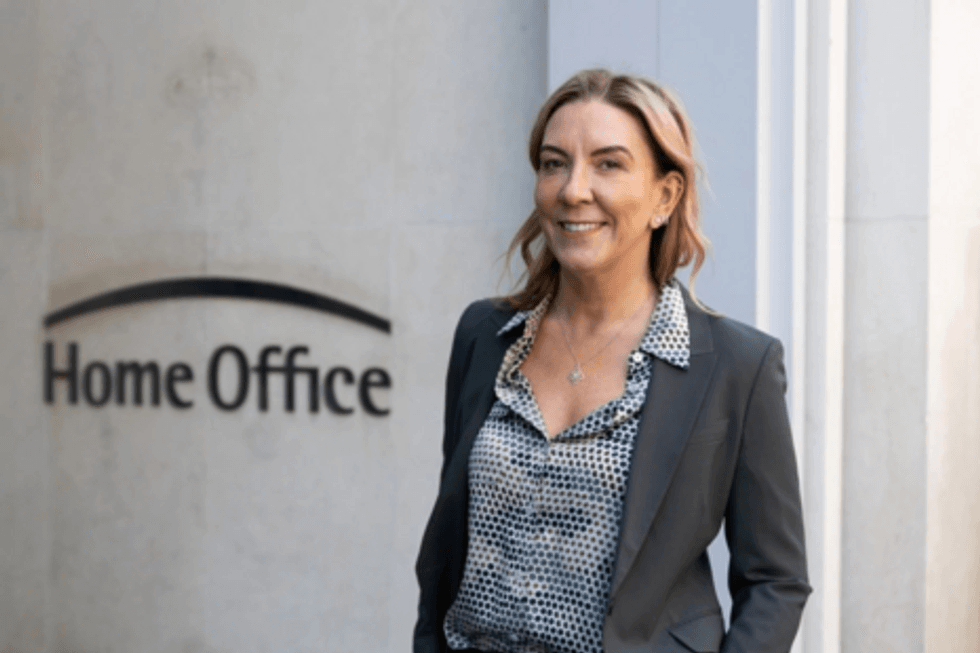
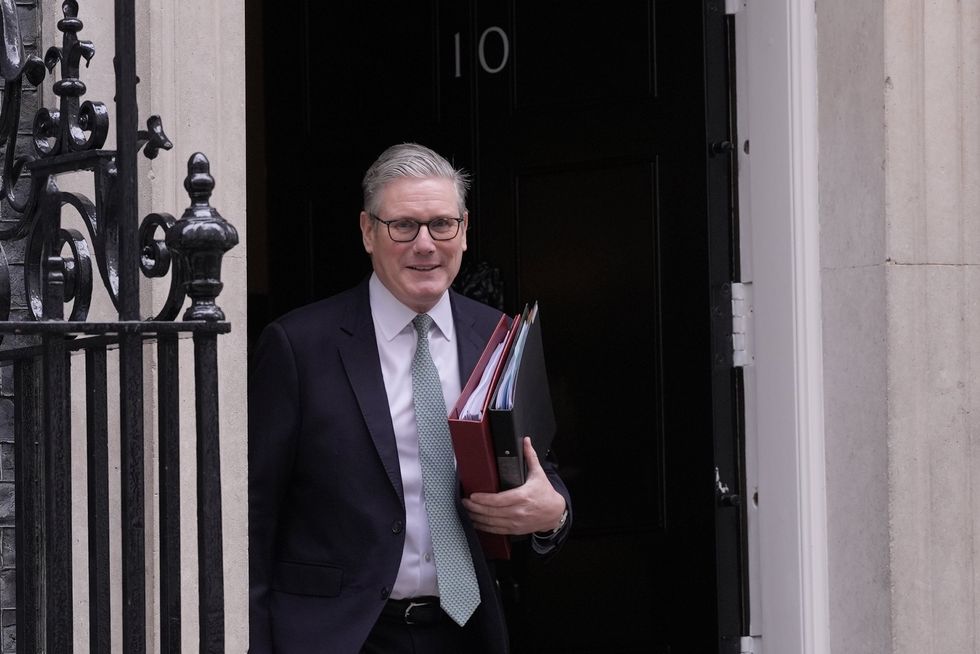
If Keir Starmer wishes to demonstrate that his Government is serious about restoring discipline to the British state, appointing Dame Antonia Romeo as Cabinet Secretary would be an unusual way to go about it.
Romeo is currently the Permanent Secretary at the Home Office. Since her appointment in April 2025, Labour’s promises to “smash the gangs” and close migrant hotels have yet to be fulfilled.
In fact, more illegal migrants have entered Britain under Keir Starmer than under any other prime minister; More than 65,000 migrants have broken into the country under Starmer and Romeo’s watch.
According to reporting in The Times, the mandarin’s record in the Home Office has so impressed the Prime Minister that he wishes to elevate her to lead the entire Civil Service.
“Allies” of Dame Antonia have briefed various newspapers, heaping praise on her as a civil servant who is “very focused on delivery”, and even describe her as a “disruptor”. However, when it comes to the small boats crisis, little has been disrupted.
Much of the reporting around her likely appointment to lead the Civil Service has focused on the fact she would be the first woman to do so. Yet obsessing over such matters is surely an exercise in decadent naval gazing, especially when so much is at stake.
Dominic Cummings, former chief of staff to Boris Johnson, has said the Cabinet Secretary has “something like 100X, perhaps 1000X, more true power than the average minister”. Therefore, it is worth investigating who Antonia Romeo is and analysing her record.
The Cabinet Secretary is not some ceremonial HR director. The role sits at the apex of Whitehall. It oversees the entire Civil Service, shapes the culture of the state and acts as the Prime Minister’s principal adviser.
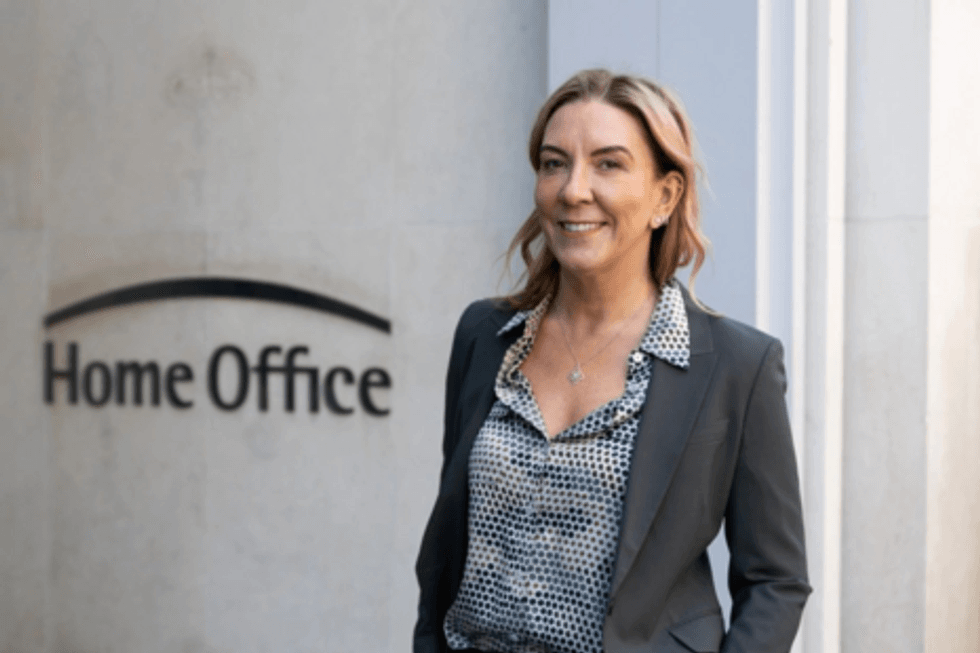
Romeo’s defenders point to her formidable CV. Educated at Oxford, a career economist, she has led three Whitehall departments at the age of 51, rising through the ranks with speed. There is no question she understands Whitehall. But what exactly has she achieved?
Let’s start in New York, where she served as Britain’s Consul General from 2016 to 2017.
There, Dame Antonia cultivated a glittering profile among Manhattan’s elite. Photographs emerged of her mingling with celebrities and power brokers, including Harvey Weinstein, Joanna Lumley, and Anna Wintour. Reporting in the Daily Mail revealed heavy criticism of Romeo’s lavish spending of taxpayer funds during her time in the United States.
Among the alleged waste was a “last-minute flight booked to London in February 2017 so that Mrs Romeo could attend that year’s Bafta awards”, and sending “bouquets of flowers to British celebrities, including Victoria Beckham”.
In March 2017, Dame Antonia was promoted to a position back in Britain. Yet rather than immediately relocating to London, she remained in New York while her children completed the school year.
During this period, taxpayers funded approximately £31,000 worth of transatlantic flights, some of them business class, to facilitate her commute between Manhattan and Whitehall.
A Government source maintained that all travel was conducted within the rules and properly declared in the usual way, and allies of Dame Antonia say it is untrue to suggest she flew from New York to London primarily to attend the Baftas.
LATEST DEVELOPMENTS:
- Andy Burnham wants to be able to FORCE homeowners to sell up
- Peter Mandelson ordered to testify in US investigation into Jeffrey Epstein links
- ‘Jog on!’ Laila Cunningham hits out at critics amid claims Reform is ‘pro-hate’
Claims of bullying have surfaced at various points during her Civil Service career. Staff surveys in New York reportedly showed elevated levels of officials reporting bullying, and further complaints emerged during her time at the Department for International Trade (DIT). Allies counter that the allegations were investigated and not upheld, and note that self-reported bullying fell by three per cent during her leadership at DIT, remaining broadly in line with Civil Service averages.
After New York, Romeo was promoted to lead a brand new department, the Department for International Trade, or DIT. Britain had just voted for Brexit. The country needed trade deals. It needed hard-nosed negotiators.
Instead, insiders described a department increasingly preoccupied with identity politics and culture wars.
Romeo was dubbed the “Queen of woke” by one senior mandarin who worked closely with her. Dame Antonia wrote weekly updates to staff, during which she highlighted Non-Binary Awareness Week and Transgender Awareness Week.
One message featured a non-binary official based at the British Embassy in China who encouraged colleagues to place their preferred pronouns in email signatures and adopt gender-neutral language in official communications. Another email urged staff to watch a film called Seahorse, which told “the story of a trans man’s path to parenthood”. She also drew attention to the Trans flag being flown above DIT headquarters.
In one update, she wrote of her ambition to make DIT “the most inclusive place to work in Government”. That objective involved close engagement with the Trans activist group Stonewall, at the time embedded in various Government diversity schemes (though later banned from Whitehall), and the installation of gender-neutral facilities within the department.
Other internal communications reflected a similar tone. One note promoted a Guardian article by the dancer Akram Khan arguing that Brexit and debates over immigration “threaten to turn our diversity into division.”
Following the Black Lives Matter protests in 2020, she wrote to staff declaring: “I want to double down on our work to ensure everything we do internally and externally is supporting the diversity, collaboration and inclusion agenda.”
Under her watch, civil servants attended Tai Chi and Japanese calligraphy workshops during office hours. All the while, Britain’s much-heralded post-Brexit trade revolution amounted largely to roll-over deals replicating EU agreements.
The grand promises of sweeping new economic partnerships, including with the United States, never materialised. For all the talk of disruption, there was little sign of it.
In 2021, Dame Antonia was elevated to Permanent Secretary at the Ministry of Justice (MoJ). Some years before, she had served as Director General at the MoJ. During this time, the Mail on Sunday reported she was the senior responsible officer for a disastrous privatisation programme of probation services that collapsed at the cost of hundreds of millions to the taxpayer.
Supporters argue it was ministerial policy and that civil servants merely implemented it. However, when Romeo was later promoted to DIT, then Liberal Democrat leader Tim Farron said: “The chief behind the botched probation scheme is now being asked to organise the biggest series of simultaneous trade negotiations in history. Only this Government could give a promotion for failure.”
When she returned to the MoJ in 2021 as Permanent Secretary, prisons were overcrowded and the courts backlog ballooned. Under her stewardship, the justice system lurched from crisis to crisis. Early release schemes were introduced to ease pressure on the prison estate. Administrative errors led to the mistaken release of offenders. Confidence in the system continued to erode.
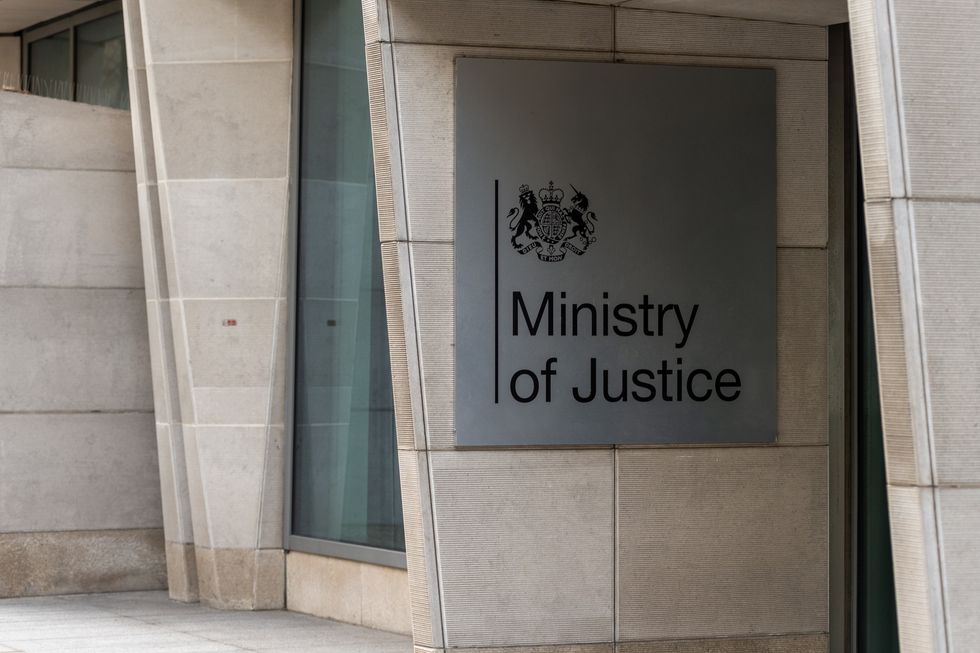
Alongside these operational failures, Romeo held the title of Civil Service “Gender Champion” and established leadership groups on gender equality. While prison cells overflowed, Whitehall’s senior official found time to blog about “menopause awareness” and “male allyship”.
Now she sits atop the Home Office, the department responsible for borders, migration and policing. Readers can judge whether the Home Office has handled these issues competently since her appointment last year.
Far from being a disruptor, Dame Antonia has embodied Whitehall’s obsession with diversity and inclusion. More importantly, she has overseen some of the worst-run departments in the country.
If rising migration, prison overcrowding, court backlogs and a failure to secure meaningful new trade deals are the new gold standard, then she would indeed make the perfect Cabinet Secretary.
If those tenures are judged to be models of success, she would represent continuity in its purest form.
Instead of discussing any of this, the media has focused on one thing: her sex. But the symbolism of being the first woman Cabinet Secretary does not secure borders. It does not clear courtrooms. It does not restore public confidence in the state.
The Cabinet Secretary is not appointed to make history. The role exists to make Government work.
If Keir Starmer is serious about restoring discipline to the British state, he must look beyond optics. The question is not whether Dame Antonia will be the first woman in the role. The question is whether she would be the reformer Whitehall, and Britain, so desperately need.
GB News has contacted Dame Antonia Romeo for comment.
Our Standards:
The GB News Editorial Charter



Follow