



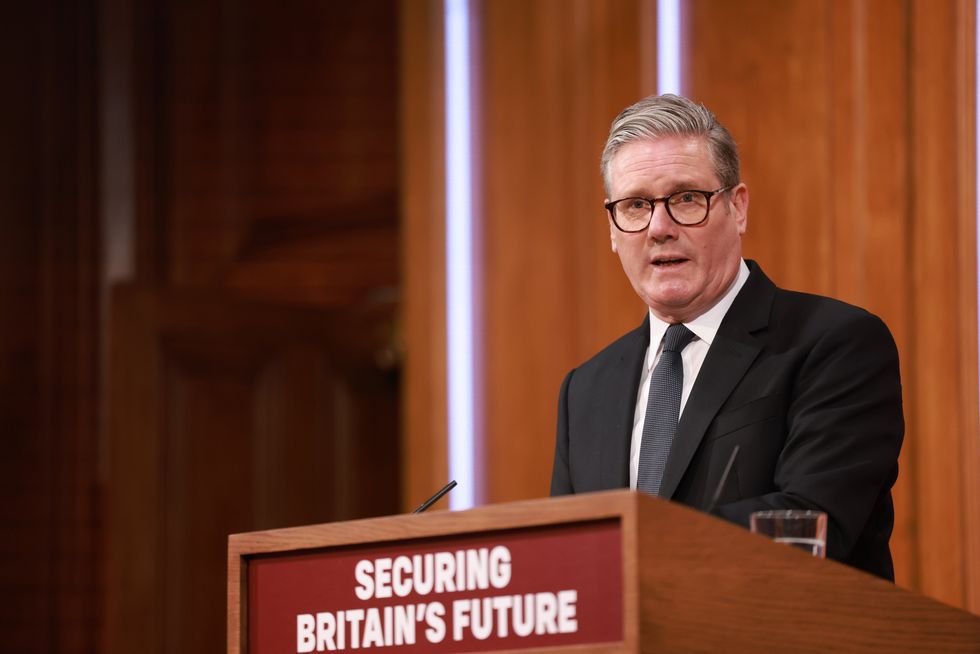
Sir Keir Starmer has been warned he risks torpedoing his own migration plan if the EU gets its way on a youth mobility scheme.
The Prime Minister, who today unveiled a White Paper to fix Britain’s “broken” borders, pledged to force migrants to spend 10 years in the UK before being able to apply for citizenship.
However, so-called “high-contributing” individuals can be fast-tracked through the scheme, including doctors and nurses.
Language requirements have also been ramped up to ensure a higher level of English proficiency, with rules also impacting dependants.
The plans also include a commitment to end overseas recruitment for social care visas, banning foreign workers from applying for visas to work in the sector.
However, proposals put forward by the European Union demand a relaxed arrangement for 18 to 30-year-olds to relocate across the Channel.
The Commission went on to say this agreement “could be usefully supported by a parallel discussion on the possible association of the UK to Erasmus+”.
It added that “to enable young people to move without being tied to a purpose (i.e. to allow for studying, training or working), or quota-bound”.
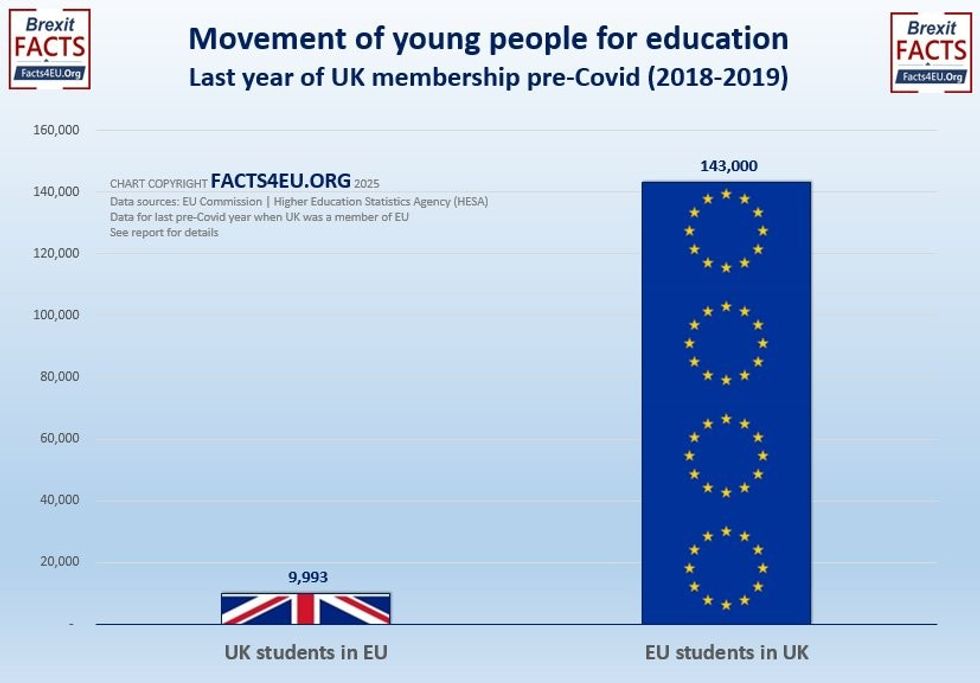
Research conducted by Facts4EU showed that the previous Erasmus+ exchange was a one-way street when it came to migration flows.
Erasmus+ was used by only 9,993 UK students in the pre-Covid year of 2019, figures compiled by the EU Commission have shown.
In contrast, more than 143,000 EU students relocated to the United Kingdom, potentially wiping out the numbers saved by restricting visas almost immediately (see graph above).
And it was not just in terms of migration flows that Britain was getting a bad deal.
British taxpayers paid an eyewatering £266million per year, averaging around £26,000 per UK student who was part of the scheme in 2019.
And Eurosceptics also remain concerned about the impact of opening up a similar arrangement when it comes to national sovereignty.
The European Commission is looking to introduce a European Education Area by 2025, adding: “Initiatives will inter alia look at ways to enhance quality, notably with regard to basic and digital skills and to make school education more inclusive and gender sensitive and improve school success.”
“They will help strengthen understanding of climate change and sustainability, foster the greening of education infrastructure, support the teaching profession, further roll out European Universities and enhance connectivity among education and training institutions,” the top brass of Brussels bureaucrats added.



Follow