



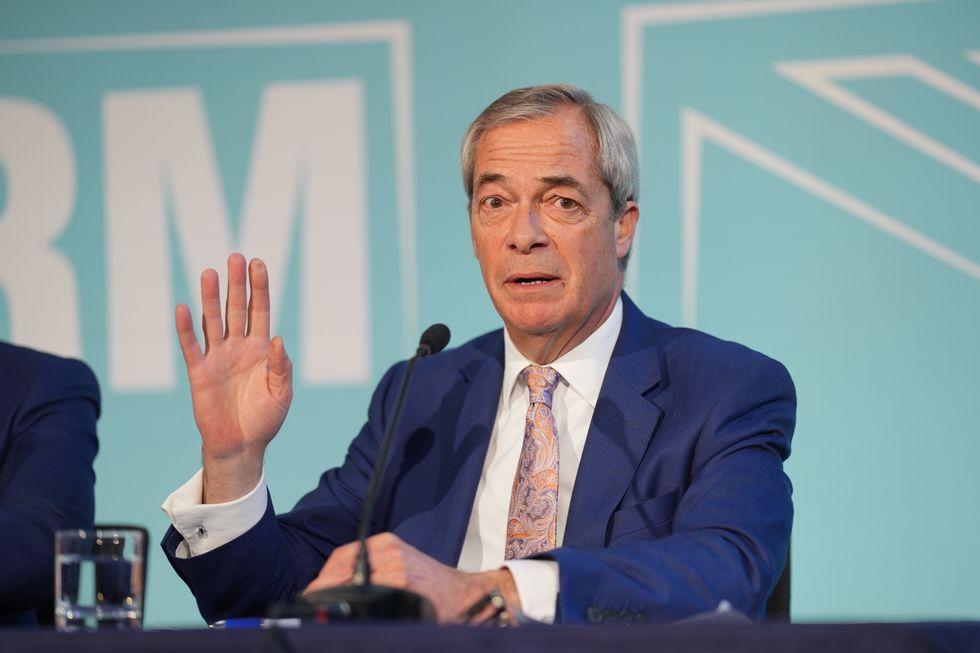
Nigel Farage and Reform UK’s path to Government could be in peril as fresh polling data suggests voter habits are “shifting”.
The latest polling suggests the race for No10 may be becoming more complicated, with the rise of tactical voting potentially coming at the expense of Reform’s turquoise tidal wave.
The hitch can be found hidden in what appears to be another round of excellent polling for Reform, with More in Common’s latest count showing the party consolidating its position as the leading force in voting intention.
Reform dominated with an impressive 31 per cent of support, far ahead of Labour’s 21 per cent and the Conservatives’ meagre 18 per cent.
The pollsters also conducted a negative voting intention poll, recording who Britons would choose to vote against.
Labour held the unenviable top spot, with 38 per cent of respondents admitting they would seek to vote against the Government.
This represented a shocking 15-point increase since the Summer.
Reform held second place with 29 per cent, an increase of seven points over the same period.
The growth in the divisiveness of Reform came as no surprise to veteran pollster George Buchan.
“As Reform is increasingly seen as a plausible contender, it is natural that those who oppose its agenda become more vocal or motivated,” he told GB News.
“This is a common pattern for insurgent parties as they move from protest to potential power,” Mr Buchan added.
However, the true significance of the latest data could be found in what More in Common’s Deputy Director for Research, Ed Hodgson, identified as a “collapse in anti-Tory Reform supporters and a fall in anti-Reform Conservative voters”.
He suggested the ire Reform or Conservative voters may have once had for each other was now more “clearly directed” at Labour.
In June, 12 per cent of Reform voters said they would vote against the Conservatives. By November, it sat at just 5 per cent.
Some 25 per cent of Tory voters said they would cast their ballot against Reform in June. Now, it sits at just 18 per cent.
A further 80 per cent of Reform voters and 59 per cent of Conservatives backers told More in Common they would vote against Labour.

While this may at first glance seem like yet another boon for Reform’s imperious polling, Mr Hodgson said it may suggest the beginning of “tactical voting on the right to get Labour out”.
Mr Buchan concurred with this analysis, explaining that “with the Conservatives no longer seen as a credible contender for Government, fewer voters feel compelled to vote tactically to keep them out”.
“Instead, the focus of tactical voting appears to be shifting, with some evidence that right-leaning voters are now weighing up whether to back Reform or the Conservatives depending on local dynamics.
“This could signal the early stages of tactical voting on the right,” Mr Buchan suggested.
This could spell doom for the Labour Government, echoing the mighty electoral pact of the 2019 election that delivered a humiliating rebuke of Jeremy Corbyn.
While both Mr Farage and Tory leader Kemi Badenoch have ruled out any kind of formal coalition to defeat Labour, their voters may be beginning to pick and choose on whoever is most likely to win in their local area.
Ultimately, this may threaten Reform targets in areas where the Tories retain sizeable support.
Mr Buchan stressed it was “too soon to say how widespread or decisive this trend will become”, especially as the numbers did not suggest true enthusiasm for the Tory party.
“The decline in anti-Tory sentiment may also reflect a broader sense of fatigue or apathy towards the Conservatives, rather than active forgiveness.
“After nearly 18 months out of office, some of the anger at their record may be fading, but there is little sign of renewed enthusiasm or trust in the party,” Mr Buchan told The People’s Channel.
Our Standards:
The GB News Editorial Charter



Follow