



Ban Ki-moon is the eighth secretary-general of the U.N. and the co-chair of the Ban Ki-moon Centre for Global Citizens. Ana Toni is the CEO of COP30.
As world leaders gather in Belém, Brazil for this year’s United Nations Climate Change Conference (COP30), we are standing at a global tipping point. 2024 broke temperature records, as the world temporarily surpassed the 1.5 degrees Celsius target for the first time. And now, we’re on track to cross it permanently within just five years.
This means adaptation action has never been more vital for our survival.
From the year 2000 to 2019, climate change already cost the world’s most vulnerable countries an estimated $525 billion. This burden only continues to rise, putting lives at risk and undoing hard-won development gains, with global annual damages likely to land somewhere between $19 trillion and $59 trillion in 2050. Even more sobering, the world economy is already locked into a 19 percent loss of income by 2050 due to climate change, no matter how successful today’s mitigation efforts are.
This makes one thing clear: The consequence of inaction is far greater than the consequence of action. The world must stop seeing adaptation as a cost to bear but as an investment that strengthens economies and builds healthier, more secure communities.
Every dollar invested in adaptation can generate more than 10 times that in benefits through avoided losses, as well as induced economic, social and environmental benefits. Every dollar invested in agricultural research and development generates similar returns for smallholder farmers, vulnerable communities and ecosystems too.
This remains true even if climate-related disasters don’t occur. Effective adaptation does more than save lives — it makes the economic case for resilience. And if we really want to tackle the crises of today’s world, we need to put people — especially those most vulnerable — at the center of all our conversations and efforts. Those least responsible for climate change are the ones our financing must reach.
Here, locally led adaptation provides a path forward, focusing on giving communities agency over their futures, addressing structural inequalities and enhancing local capacities.
Today, more than 2 billion people depend on smallholder farms for their livelihoods, but as little as 1.7 percent of climate finance reaches Indigenous communities and locally operated farms. Small-scale agri-food systems, which are essential to many in developing countries, receive a mere 0.8 percent of international climate finance.
This is deeply unjust. These are the people and systems most threatened by climate impacts — and they’re often the best-placed ones to deliver locally effective and regionally adaptive solutions.
To that end, appropriate investments in global networks like the Consultative Group on International Agricultural Research (CGIAR) could accelerate and scale technologies that can be adopted by these local systems. These tools could then be used to improve resilience and increase productivity in low- and middle-income countries, while also reducing inequalities and advancing gender equity and social inclusion.
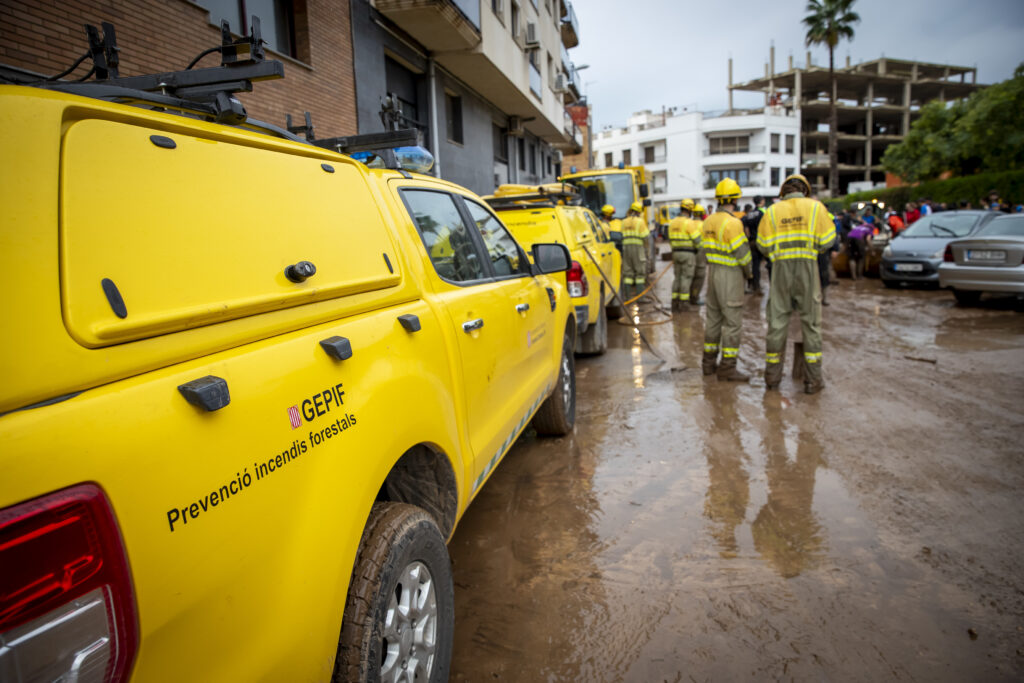
Scaling such efforts will be crucial in moving toward systemic climate solutions. Our ambition is to move from negotiation to implementation to protect lives, safeguard assets and advance equity.
But it’s important to remember that adaptation is distinct — it is inherently local; shaped by geography, communities and governance systems. Meeting this challenge will require more than just pledges. It will necessitate high-quality public and private adaptation finance that is accessible to vulnerable countries and communities.
That’s why governments around the world — especially those in high-income countries — must design institutional arrangements and policies that raise additional public funds, incentivize markets and embed resilience into every investment decision.
The decade since the Paris Agreement laid the foundations for a world at peace with the planet. And with COP30 now taking place in the heart of the Amazon, we must make adaptation a global priority and see resilience as the investment agenda of the 21st century.
At its core, climate finance should be driving development pathways that put people first. In Belém, leaders must now close the adaptation finance gap and ensure funding reaches those on the front lines. They need to back investable national resilience strategies, replicate successful initiatives and put resilience at the center of financial decision-making.
COP30 needs to be transformative and lead to markets that reward resilience, communities that are better protected and economies built on firmer, more climate-resilient foundations. Let this be the moment we finally move from awareness to alignment, and from ambition to action.
Our collective survival depends on it. Question is, will our leaders have the political will to seize it?



Follow