



Lucas Guttenberg is the director of the Europe program at Bertelsmann Stiftung. Nils Redeker is acting co-director of the Jacques Delors Centre. Sander Tordoir is chief economist at the Centre for European Reform.
Europe’s economy needs more growth — and fast. Without it, the continent risks eroding its economic foundations, destabilizing its political systems and being left without the strength to resist foreign coercion.
And yet, despite inviting former Italian prime ministers Mario Draghi and Enrico Letta to discuss their blueprints to revive the bloc’s dynamism, member countries have cherry-picked from the pair’s recommendations and remain firmly focused on the wrong diagnosis.
Europe, the current consensus goes, has smothered itself in unnecessary regulation, and growth will return once red tape is cut. The policy response that naturally follows is deregulation rebranded as “simplification,” with a rollback of the Green Deal at its core. This is then combined with promises that new trade agreements will lift growth, and ritual invocations of the need to deepen the internal market.
But this agenda is bound to disappoint.
Of course, cutting unnecessary red tape is always sensible. However, this truism does little to solve Europe’s current malaise. According to the latest Economic Outlook from the Organisation for Economic Co-operation and Development, the regulatory burden on European business has risen only modestly over the past 15 years. There has been no explosion of red tape that could plausibly account for the widening growth gap with the U.S. And even the European Commission estimates that the cost savings from its regulatory simplifications — the so-called omnibuses — will amount to just €12 billion per year, or around 0.07 percent of EU GDP.
That isn’t a growth strategy, it’s a rounding error.
New free trade agreements (FTAs) won’t provide a quick fix either. The EU already has FTAs with 76 countries — far more than either the U.S. or China. Moreover, a recent Bertelsmann Stiftung study showed that even concluding pending deals and simultaneously deepening all existing ones would lift EU’s GDP by only 0.6 percent over five years.
From Mercosur to India, there’s a strong geopolitical imperative to pursue agreements, and in the long run they can, indeed, help secure access to both supply and future growth markets. But as a short-term growth strategy, the numbers simply don’t add up.
The same illusion shapes the debate on deepening the single market. Listening to national politicians, one might think it’s an orchard of low-hanging fruit just waiting to be turned into jars of growth marmalade, which past generations simply missed. But the remaining gaps — in services, capital markets, company law and energy — are all politically sensitive, technically complex and protected by powerful vested interests.
The push for a Europe-wide corporate structure — a “28th regime” — is a telling admission: Rather than pursue genuine cross-border regulatory harmonization, policymakers are trying to sidestep national rules and hope no one notices. But while this might help some young firms scale up, a market integration agenda at this level of ambition won’t move the macroeconomic needle.
A credible growth strategy must start with a more honest evaluation: Europe’s economic weakness doesn’t originate in Brussels, it reflects a fundamental shift in the global economy.
Russia’s invasion of Ukraine delivered a massive energy price shock to our fossil-fuel-dependent continent. At the same time, China’s state-driven overcapacity is striking at the core of Europe’s industrial base, with Chinese firms now outcompeting European companies in sectors that were once crown jewels. Meanwhile, the U.S. — long Europe’s most important economic partner — is retreating behind protectionism while wielding coercive threats.
With no large market willing to absorb Europe’s output, cutting EU reporting requirements won’t fix the underlying problem. The continent’s old growth model, built on external demand, no longer works in this new world. And the question EU leaders should be asking is whether they have a plan that matches the scale of this shift.
Here is what that could look like:
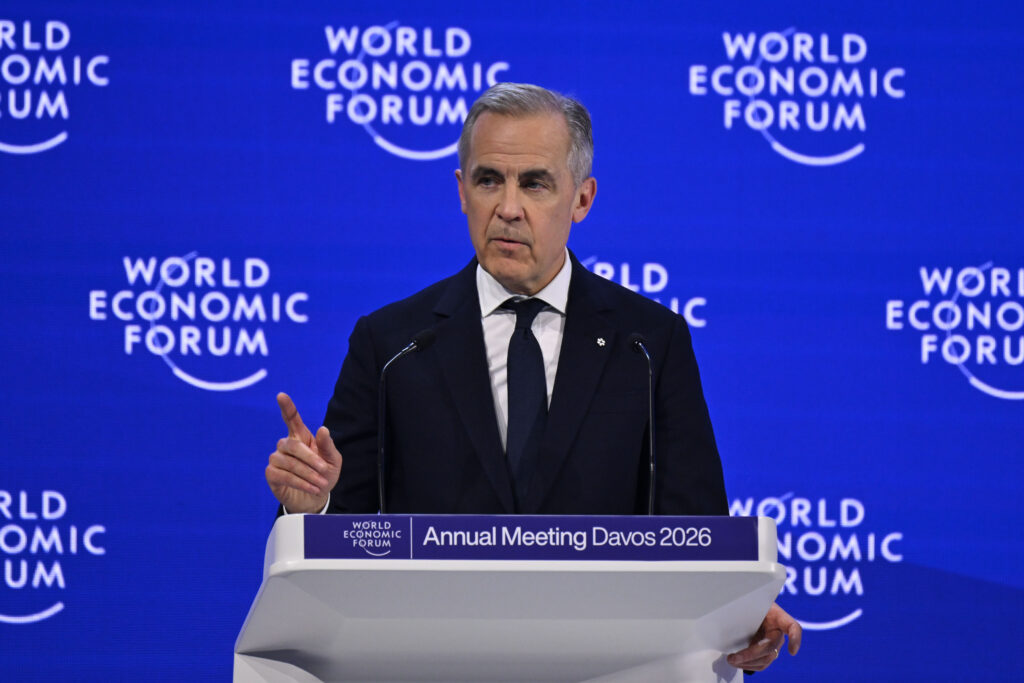
First, as Canadian Prime Minister Mark Carney argued at Davos, economic strength starts at home — and “home” means national capitals. Poland, Spain and the Netherlands are growing solidly, while Germany is stagnating, and France and Italy are continuing to underperform. What is seen as a European failure is actually a national one, as many of the most binding growth constraints — rigid labor markets, demographic pressure on welfare systems and fossilized bureaucracies — firmly remain in national hands. And that is where they must be fixed.
It’s time to stop hiding behind Brussels.
Next, Europe needs a trade policy that meets the moment. Product-by-product trade defense can’t keep pace with the scale and speed of China’s export surge, which is threatening to kill some of Europe’s most profitable and innovative sectors. The EU must move beyond microscopic remedies toward broader horizontal instruments that protect its industrial base without triggering blunt retaliation.
This is difficult, and it will come with costs that capitals will have to be ready to bear. But without it, Europe’s core industries will remain under acute threat of disappearing.
Moreover, trade defense must be paired with a rigorous industrial policy. The Green Deal remains the most plausible growth strategy for a hydrocarbon-poor continent with a highly educated workforce. But it needs clarity, prioritization and sufficient funding in the next EU budget at the expense of traditional spending.
“Made in Europe” preferences can make sense — but only if they’re applied with discipline. Europe must be ruthless in defining the industries it can compete in and be prepared to abandon the rest. That was the Draghi report’s core argument. And it boggles the mind that the continent is still debating European preferences in areas like solar panels, which were lost a decade ago.
Finally, deepening the single market in earnest isn’t a technocratic tweak but a federalizing choice. It means going for full harmonization in areas that are crucial for growth. It means taking power away from national regimes that serve domestic interests. Any serious reform will create losers, and they will scream. That isn’t a bug — it’s how you know the reform matters.
In areas like capital markets supervision or the regulation of services, leaders now have to show they’re willing to act regardless. And unanimity is no alibi: The rules allow for qualified majorities. EU leaders must learn to build them — and to live with losing votes.
EU leaders face a clear choice tomorrow: They can pursue a growth agenda that won’t deliver, reinforcing the false narrative that the EU shackles national economies and giving the Euroskeptic extreme right a free electoral boost. Or they can confront reality and make the hard choices a bold agenda calls for.
The answer should be obvious.



Follow