



Mark Ward is retired from the U.S. Foreign Service and worked for USAID for over 30 years.
As news reports on the recent cyclone in Sri Lanka began pouring in, something caught my attention — something was missing from the reporting.
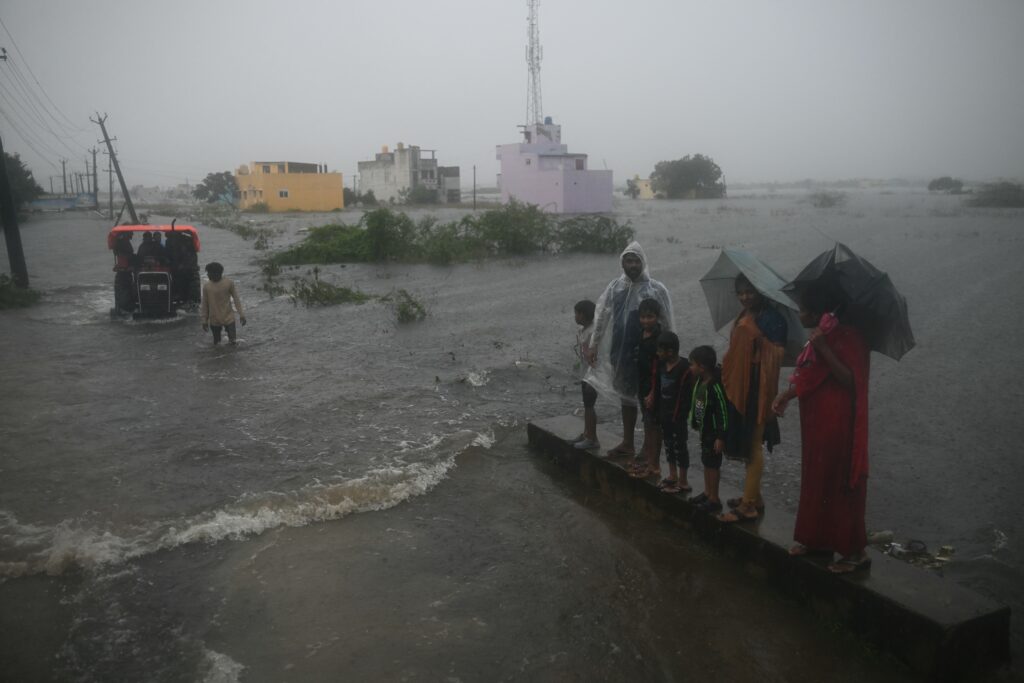
Cyclone Ditwah has killed hundreds, destroying rice fields and rail lines over vast parts of the island, and the Sri Lankan government is still desperately trying to line up international aid.
Closely following the coverage, I thought back to when I was one of the first in the U.S. government to receive alerts about natural disasters — no matter the hour. When I was head of the Asia Bureau for the U.S. Agency for International Development and later, head of its Disaster Assistance Office.
I thought back to the Indian Ocean earthquake and tsunami that hit the day after Christmas in 2004, which Cyclone Ditwah is being compared to.
At the time, the U.S. summoned all its assets, both military and civilian, to help four countries that had asked for assistance. The USS Abraham Lincoln, a nuclear-powered aircraft carrier, raced to Indonesia and sat in the mist off the earthquake’s epicenter in Aceh. The disaster had rendered the airports on land unusable, and the “Gray Angel” — as survivors came to call this huge ship — provided a desperately needed deck for helicopters to load life-saving supplies and deliver them to villages otherwise cut off.
Both USAID and the humanitarian organizations it funded were working on that deck. Civilians who knew what was needed were directing the military operation, and Top Guns, with their F-16s parked at the other end, were loading bags of rice and clean drinking water onto helicopters, asking me how they could join USAID.
They said they were never so proud to be American.
I thought back to 2006, when I received a Service to America Medal — they’re called SAMMIEs — for helping lead this U.S. response to one of the greatest natural disasters in history. I thought back to when we led.
That’s when I realized what was missing from the news reports about the cyclone in Sri Lanka: There was nothing about America’s response — because there wasn’t one.
The U.S. response to the 2004 disaster was extraordinary. Thanks to generous support from Congress, USAID’s efforts were unprecedented. And when I saw U.S. humanitarian organizations directing the helicopters on that deck, our military taking orders from them, I was awed by what we could accomplish when working together.
But those dedicated, brave humanitarian workers — both Indonesian and American — are now out of work because our foreign aid program was cut by more than 80 percent earlier this year.
In 2004, then-President George W. Bush saw the strategic importance of providing as much help as we could to a region critical to U.S. foreign policy. He directed USAID to pull out all the stops. He asked his father, former President George H.W. Bush, and former President Bill Clinton to shelve their political differences and collaborate to help raise awareness and private funds.
I then traveled with the two former presidents to Indonesia, Thailand, Sri Lanka and the Maldives, and their message was clear: The U.S. doesn’t let politics stand in the way when disasters strike. Help is bipartisan. Help is American.
We took them to visit USAID projects near the country’s devastated east coast, where our American and Sri Lankan staff proudly showed them how we were helping orphaned children in a beautiful camp under the palm trees. My team cheered when they saw Bush proudly wearing a USAID hat and as Clinton reminded everyone that the aid we provided was from the American people. Those children were in good hands, thanks to the expertise and compassion USAID brought.
That team is out of work now.
Ultimately, I stopped reminiscing and read more about Sri Lanka’s cyclone. The damage to farms and infrastructure is greater than what we saw two decades ago. But the U.S. is doing nothing. That’s what’s been missing from the articles.
We were always there before. You could count on it. No matter who was in the Oval Office, no matter which party held the majority in Congress, you could count on America. Not anymore.
Now, our foreign policy seems to be purely transactional. It asks, what’s in it for us? That’s bad luck for Sri Lanka — it doesn’t have any natural resources we need, like oil or critical minerals. Garments and tea aren’t strategic enough. But wait — if the Sri Lankan government needs our help, maybe it could create a new peace prize and offer it to our president.
Maybe then we would lead again.



Follow