



Dalibor Rohac is a senior fellow at the American Enterprise Institute in Washington DC.
As we approach the 10th anniversary of the Brexit referendum, the time has come to rebuild ties between the U.K. and the EU. In the words of European Parliament President Roberta Metsola, “in a world that has changed so profoundly,” the two parties must “exorcize the ghosts of the past.” They must work together on trade, defense, research and the many other matters disrupted by the U.K.’s withdrawal.
But while letting bygones be bygones is certainly the right approach for the EU, the U.K. needs to have an explicit reckoning with the abysmal failure the Brexit project has been — both for the sake of improving its European policies but, more importantly, for the sake of getting its domestic politics on firm footing.
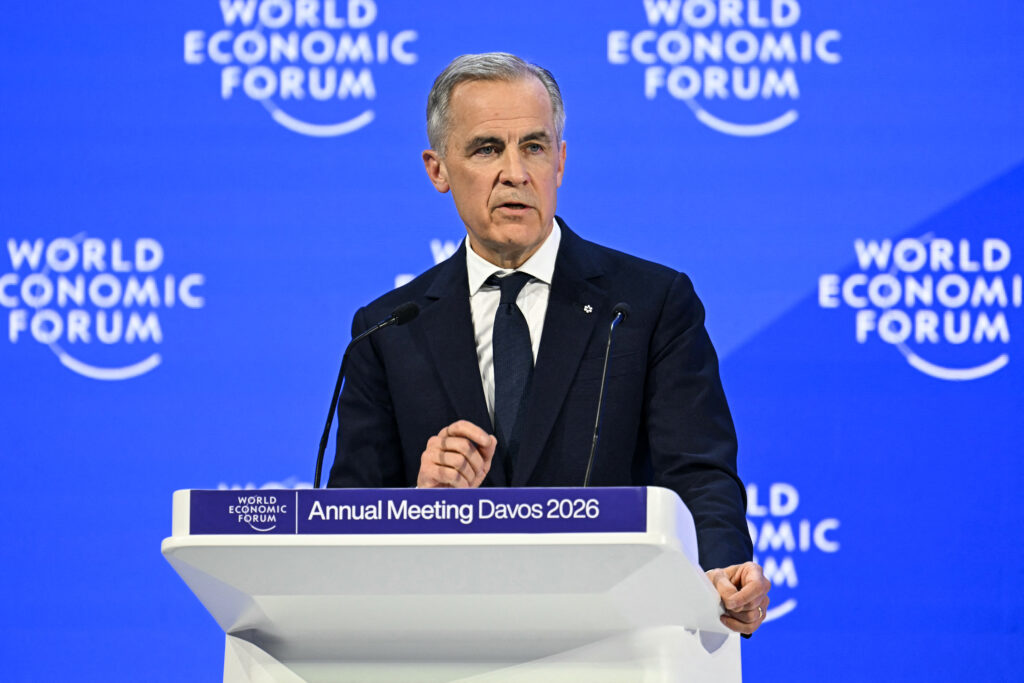
Canadian Prime Minister Mark Carney recently received a lot of acclaim for citing Czech playwright and former President Václav Havel’s “The Power of the Powerless” in his speech at the World Economic Forum, inviting the world’s nations and businesses to stop living in the lie of the rules-based international order. And that lesson applies here too: For the U.K. to finally move on, it must choose not to live in lies — especially the ones that fueled Brexit.
And yet, both of the U.K.’s main political parties, Labour and the Conservatives, are treating Brexit as a sacred cow rather than grappling with the enormity of its failure.
The Conservative leadership that oversaw the U.K.’s shambolic withdrawal from start to finish, and purged any internal dissenters in the process, are now owning its dismal results. The current Labour government, meanwhile, is taking baby steps to reintegrate the U.K. into the eminently valuable parts of Europe’s architecture, like the Erasmus program.
However, both groups are too afraid to explain why Brexit was a colossal mistake. And it leaves them vulnerable to the populist Reform UK party’s claim that the real error was opting for a departure that wasn’t sharp enough.
It’s true that on all the fronts that motivated the vote in 2016, Brexit has failed to deliver: Britain’s departure was followed by a dramatic rise in immigration, reaching over 900,000 net in 2023. There’s no indication that extricating the U.K. from the EU’s regulations has injected the country with any economic dynamism. Since 2020, the British economy has grown more slowly than both the eurozone and the EU as a whole. And with a debt-to-GDP ratio over 100 percent, its fiscal outlook is just as depressing, if not more so, than its highly indebted European neighbors.
Part of this is because during their time in power after the referendum, the Conservatives wasted precious political bandwidth on tertiary Brexit-related fights, like the Irish “backstop” protocol or the status of EU law in the British legal system. That was time that could have been used to undertake deep structural reforms, which would make the U.K. a more competitive economy. And of course, EU membership never prevented the U.K. from changing its zoning laws, cutting taxes, improving secondary education or pursuing any number of other supply-side reforms in the first place.
To be fair, though, not everything was a lie. There were also some elementary miscalculations. The Brexit project of pursuing deep economic ties with rapidly growing economies in Asia and America did make some sense — in a predictable rules-based global trade system, that is. But that’s not the world we find ourselves in today.
One would be hard pressed to find a worse time to embark upon a free-trade global Britain, turning its back on Europe to seize exciting opportunities overseas. The U.S. has gone from having paralyzed the World Trade Organization under both presidents Donald Trump and Joe Biden to extracting extravagant concessions and “remuneration” — as the former puts it — from partners under duress. And instead of a coveted free-trade deal that would solidify the “special relationship,” the U.K. was pressed to accept 10-percent base tariffs just to access the U.S. market.
All the while, rather than leveraging fast economic growth in Asia, the U.K. has been confronted with an increasingly predatory China, and a global rush to secure and onshore supply chains.
Of course, the U.K. continues to play a constructive role in European security — especially when it comes to aiding Ukraine — but its absence from the bloc also makes it harder for British companies to take part in the defense build-up currently underway. For example, the U.K. stayed out of the first iteration of the EU’s loan scheme, Security Action for Europe, and it may need to pay to participate in the second.
Metsola is right — Europeans have every reason to seek a closer relationship with the U.K. But the real obstacle to closer ties lies on the other side of the English Channel.
It’s a chorus of deafeningly loud voices shouting that the real Brexit, like Communism, was never tried, on the one hand, and the pusillanimity of those who understand Brexit was a failure but won’t openly say so for fear of political reaction on the other. And as the U.K.’s political establishment — including its current government — continues to follow Reform UK’s factually inaccurate bad-faith framing, they’ll simply empower its far-right leader Nigel Farage and his followers.
Paradoxically, while support for Reform UK is now surging, the modest popular majority that delivered the Brexit result almost 10 years ago is now gone — in the case of older voters, quite literally so.
Instead of treating Brexit as axiomatic, Britain’s political elites must refuse to continue living in the lie fabricated by its advocates. The point here isn’t necessarily to get mainstream political leaders to advocate for the U.K.’s return to the EU — that’s a story for another day. It’s simply to acknowledge the reality of how much this political gamble made the U.K. a lesser country.
And until that moment comes, one must fear Britain’s relationship with Brussels will continue to be precarious, and its national politics dangerously unhinged.



Follow