



Mark T. Kimmitt is a retired U.S. Army brigadier general and has also served as the U.S. assistant secretary of state for political-military affairs.
Twenty-two years ago, I found myself in a small conference room, which was hastily organized to conduct a ceremony passing sovereignty from the U.S.-led Coalition Provisional Authority to the newly appointed interim government of Iraq. Held with little pomp and circumstance, the event was carried out two days prior to its originally announced date, as there were security concerns that insurgents would attempt an attack.
This was hardly an auspicious start for Iraq’s democratic transition. And subsequent decades demonstrated the fragility of the decisions that had led to that very ceremony.
Years later, U.S. President Donald Trump has now pronounced that America “will run Venezuela,” implying that the U.S. has similar sovereign control over the country. But one can only hope this administration is careful to avoid similar minefields.
Going forward, any U.S. strategy needs to be driven by the philosophical just as much as the practical. And unlike two decades ago, the U.S. must approach the mission in Venezuela with a lighter hand, a shorter timeline, a healthy dose of humility and lower expectations.
A lighter hand would recognize the major criticisms that followed the fall of the Saddam regime in Iraq. In retrospect, the decision to disband the Iraqi military under the argument that it was a tool of oppression became a self-fulfilling prophecy. Hundreds of thousands of young, well-armed fighting age men found themselves out of work, unable to support their families and ready to conduct a counterrevolution.
A lighter hand would also be careful to avoid a meat-axe approach to eliminating existing governmental structures. Just because mid- and upper-level bureaucrats voiced support for now-ousted President Nicolás Maduro doesn’t necessarily mean they should be fired. Despite their ideological convictions, they are still experts on managing the thousands of non-ideological activities required of public administration.
While generally maintaining both military and government structures, however, there must be no absolution for the individuals who committed crimes, human rights abuses or significant corruption. And Venezuela’s authorities must be required to bring these perpetrators to justice.
To be clear, a lighter hand doesn’t mean totally hands-off. So far, the Trump administration seems to want to shape events in Venezuela from a distance, but it remains unclear whether it will continue to do so or be able to do so — especially if the country plunges into anarchy. And if the U.S. is drawn further in, then Iraq holds lessons.
A major error in the months following combat operations In Iraq was a breakdown of law and order. Lawlessness was pervasive, looting was endemic and public order nearly evaporated, only for militias step in until coalition troops were given the mission to restore peace. But by then, it may have been too late, as the delay led to subsequent civil war and the institutionalization of extra-governmental militias that exist to this day.
So, while the U.S. wishes to avoid boots on the ground, a breakdown in public order, or a brutal crackdown by illegal factions, may well necessitate the introduction of some outside police or paramilitary forces to regulate the situation. However, they won’t be seen as liberators, and their presence must be minimal and time-limited.
The U.S. must also be careful to avoid imposing any significant political or cultural changes. Venezuela is a country with a long history, and a heritage recognizing the anti-colonial and anti-imperialist efforts of Simón Bolívar and others. There is no need to pull down his statues, erase Venezuela’s legacy or attempt to turn the country into an analog of America.
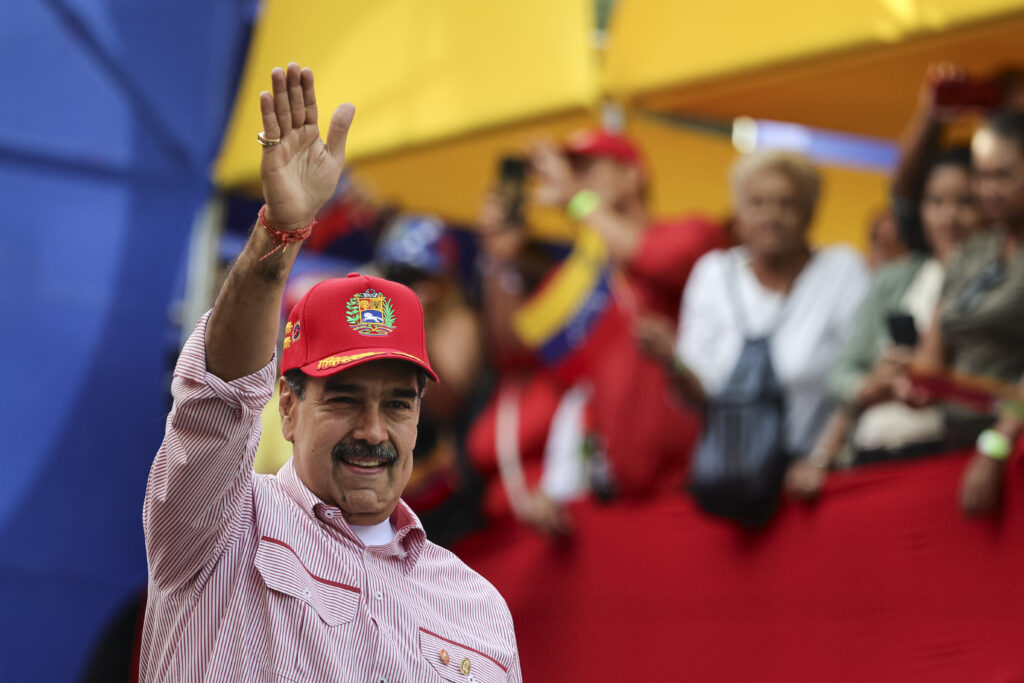
This is a country that has survived eras of strongmen, dictators like Juan Vicente Gómez, democratic presidents like Rómulo Betancourt and socialist movements under Maduro and former President Hugo Chávez. No matter how askance Americans may look at “warm collectivism,” if that is a freely and fairly decided choice by Venezuelans, the U.S. must be broadly accepting of it. After all, few other oil-rich nations around the world look like America. So, why must Venezuela be the exception?
Furthermore, the Trump administration needs to be explicit about a conditions-based timeline — one perhaps shorter than needed.
Mission outcomes need not be perfect, as perfection is the enemy of good enough. It will be important for post-Maduro efforts to be seen as legitimate by the Venezuelan people as well as the international community, and an extended period of external control would diminish mission legitimacy.
Plus, any prolonged claim of indirect sovereignty by the U.S. would be used by opponents of the new status quo. For example, a small contingent of U.S. forces is still fueling a rationale for resistance by Iran-backed militias in Iraq, justifying their existence as defenders of the Iraqi people from foreign occupation. One could expect these same arguments to be embedded in outreaches by China, Russia and Iran to counter U.S. influence.
Lastly, the U.S. must be humble in its approach and clear in its intentions. Messaging will be key in persuading the people of Venezuela that the U.S. is a force for good, an agent for change and committed to returning the national patrimony to its rightful owners. These messages must also emphasize that acrimony between Venezuela and the U.S. didn’t come about from ideological disputes with the country’s citizens, but from a series of dictators that ruined the richest nation in South America, impoverished its people and engaged in activities resulting in the deaths of thousands of North Americans.
The Trump administration has wrested sovereignty from the government of Venezuela — at least indirectly so far. This is a burden, a responsibility and an opportunity. There are now clear paths to restore the country to its pre-Chávez and pre-Maduro prosperity, and Washington should carefully consider each of them.
The military operation conducted on the night of Jan. 3 was a model of precision, discipline and limited objectives that no other military in the world could pull off. Yet, that operation was built on a foundation of previous military failures and mistakes like the Bay of Pigs in 1961, the Son Tay raid to rescue U.S. prisoners of war in Hanoi in 1970, Desert One in Iran in 1980, and any number of smaller, more classified operations that went wrong but were never made public.
While this next mission — restoring sovereignty and wealth to the people of Venezuela — may be less dangerous, it will certainly be more complex. Like the foundational military missions that, with all their shortcomings and missteps, informed the success of bringing Maduro to justice, the task of restoring Venezuela to its previous prosperity comes with a similarly checkered history in post-combat stabilization. And one would hope the administration draws upon lessons from that history to accomplish it.



Follow