



Want to get a sense of how the next French presidential vote will play out? Then pay attention to the upcoming local elections.
They start in 50 days, and voters in more than 35,000 communes will head to the polls to elect city councils and mayors.
Those races will give an important insight into French politics running into the all-important 2027 presidential contest that threatens to reshape both France and the European Union.
The elections, which will take place over two rounds on March 15 and March 22, will confirm whether the far-right National Rally can cement its status as the country’s predominant political force. They will also offer signs of whether the left is able to overcome its internal divisions to be a serious challenger. The center has to prove it’s not in a death spiral.
POLITICO traveled to four cities for an on-the-ground look at key races that will be fought on policy issues that resonate nationally such as public safety, housing, climate change and social services. These are topics that could very well determine the fortunes of the leading parties next year.
France in miniature
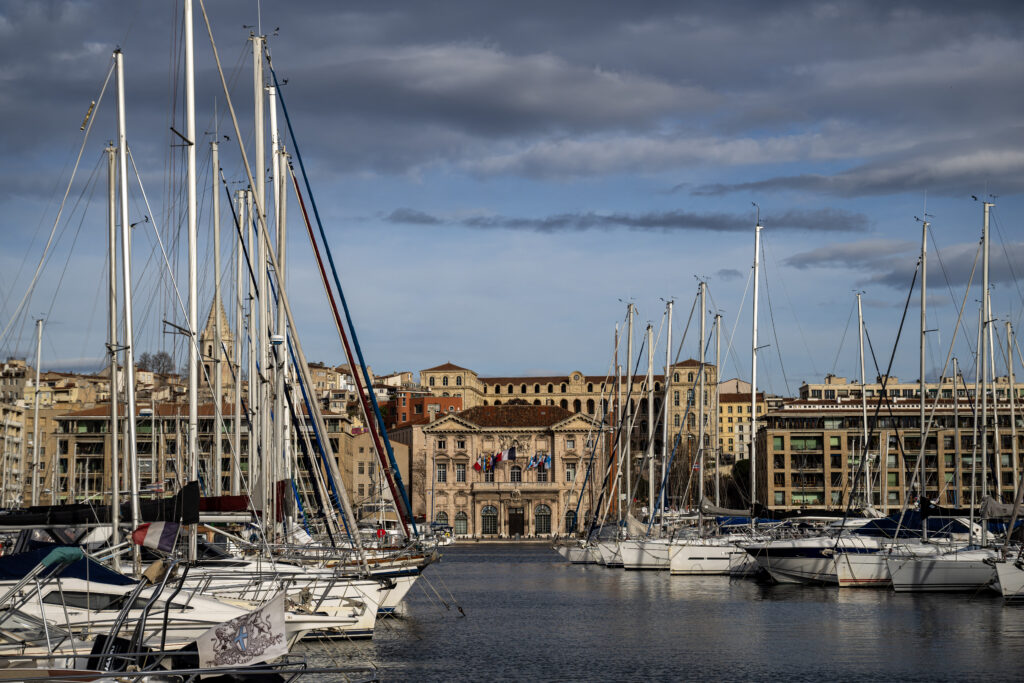
MARSEILLE — France’s second city is a microcosm of the nationwide electoral picture.
Marseille’s sprawl is comprised of poorer, multicultural areas, middle-to-upper-class residential zones and bustling, student-filled districts. All make up the city’s unique fabric.
Though Marseille has long struggled with crime, a surge in violence tied to drug trafficking in the city and nationwide has seen security rocket up voters’ priority list. In Marseille, as elsewhere, the far right has tied the uptick in violence and crime to immigration.
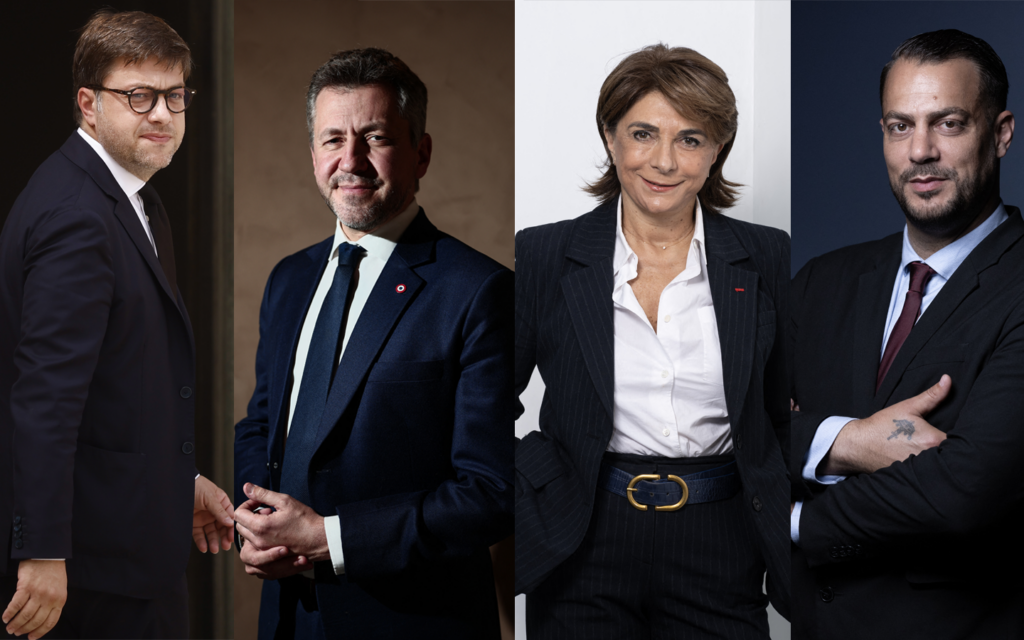
The strategy appears to be working. Recent polling shows National Rally candidate Franck Allisio neck-and-neck with incumbent Benoît Payan, who enjoys the support of most center-left and left-wing parties.
Trailing them are the center-right hopeful Martine Vassal — who is backed by French President Emmanuel Macron’s party Renaissance — and the hard-left France Unbowed candidate Sébastien Delogu, a close ally of three-time presidential candidate Jean-Luc Mélenchon.
Those four candidates are all polling well enough to make the second round. That could set up an unprecedented and unpredictable four-way runoff to lead the Mediterranean port city of more than 850,000 people.
A National Rally win here would rank among the biggest victories in the history of the French far right. Party leader Marine Le Pen traveled to Marseille herself on Jan. 17 to stump for Allisio, describing the city as a “a symbol of France’s divisions” and slamming Payan for “denying that there is a connection between immigration and insecurity.”
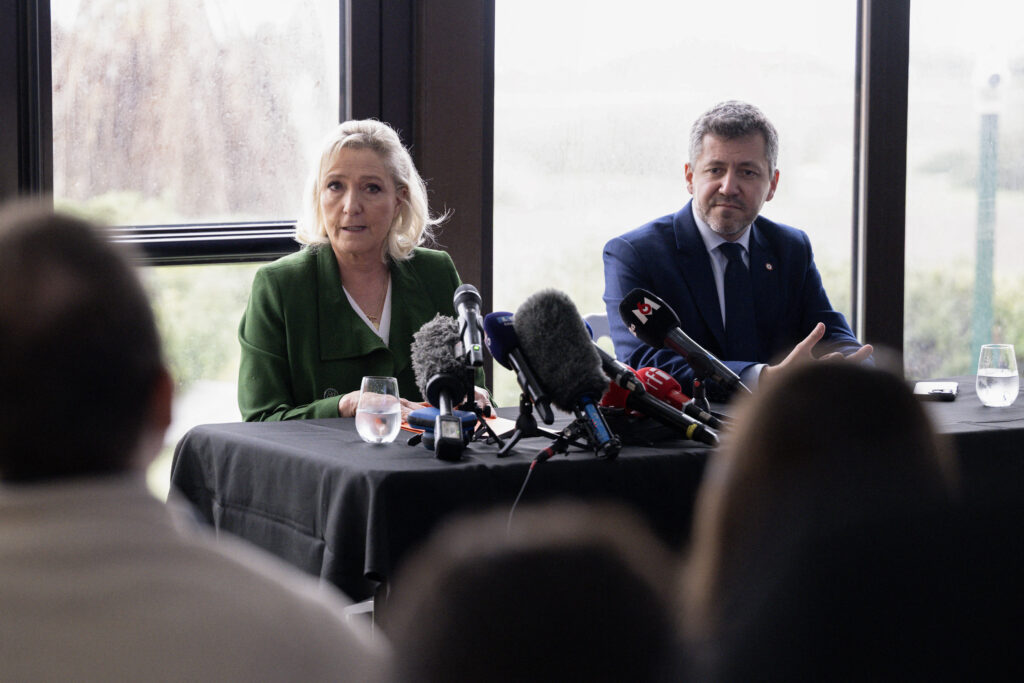
The center-right candidate Vassal told POLITICO said she would increase security by recruiting more local police and installing video surveillance.
But she also regretted that Marseille was so often represented by its struggles.
“We’re always making headlines on problems like drug trafficking … It puts all the city’s assets and qualities to the side and erases everything else which goes on,” Vassal said.
Payan, whose administration took over in 2020 after decades of conservative rule, has tried to tread a line that is uncompromising on policing while also acknowledging the roots of the city’s problems require holistic solutions. He’s offered to double the number of local cops as part of a push for more community policing and pledged free meals for 15,000 students to get them back in school.
Delogu is the only major candidate not offering typical law-and-order investments. Though he acknowledges the city’s crime problems, he proposes any new spending should be on poverty reduction, housing supply and the local public health sector rather than of more security forces and equipment.
Crime is sure to dominate the debate in Marseille. This election will test which of these competing approaches resonates most in a country where security is increasingly a top concern.
LATEST POLLING: Payan 30 percent – Allisio 30 percent- Vassal 23 percent – Delogu 14 percent
Can a united left block a far-right takeover?
NÎMES — Nîmes’ stunningly well-preserved second-century Roman amphitheater attracts global superstars for blockbuster concerts. But even the glamour of Taylor Swift or Dua Lipa can’t hide the recent scares in this city of more than 150,000 people.
Nîmes has in recent years suffered from violence tied to drug trafficking long associated with Marseille, located just a short train ride away.
Pissevin, a high-rise neighborhood just a 15-minute streetcar ride from the landmark amphitheater, seized national headlines in 2024 when 10-year-old was killed by a stray bullet in a case that remains under investigation but which prosecutors believe was linked to drug trafficking.
“Ten to 15 years ago, a lot of crime came from petty theft and burglaries. But some of the population in underprivileged areas, looking for economic opportunities, turned to the drug trade, which offered a lot more money and the same amount of prison time if they were caught,” said Salim El Jihad, a Nîmes resident who leads the local nongovernmental organization Suburban.
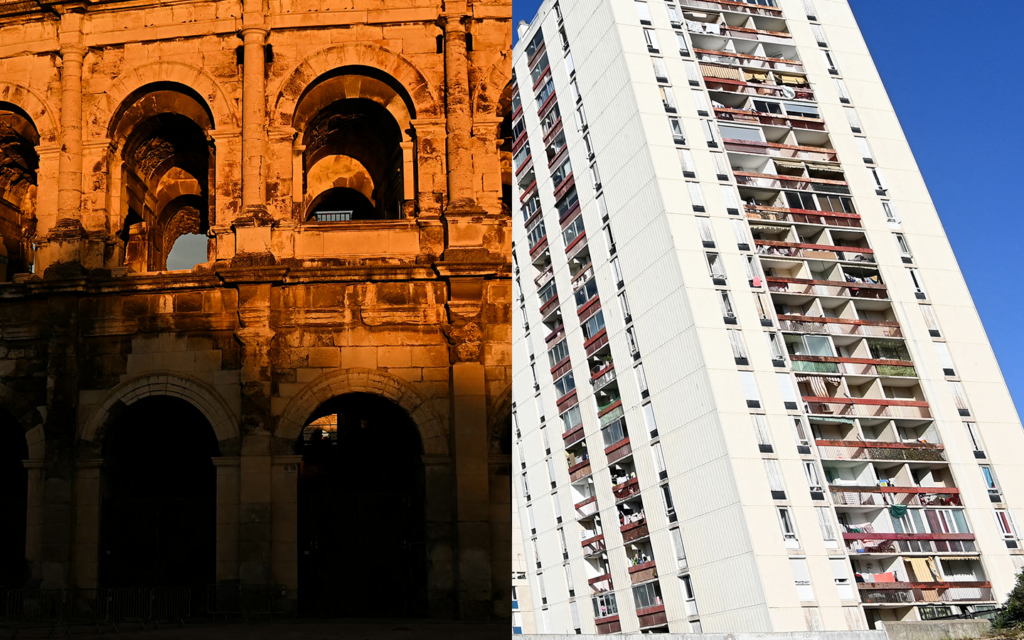
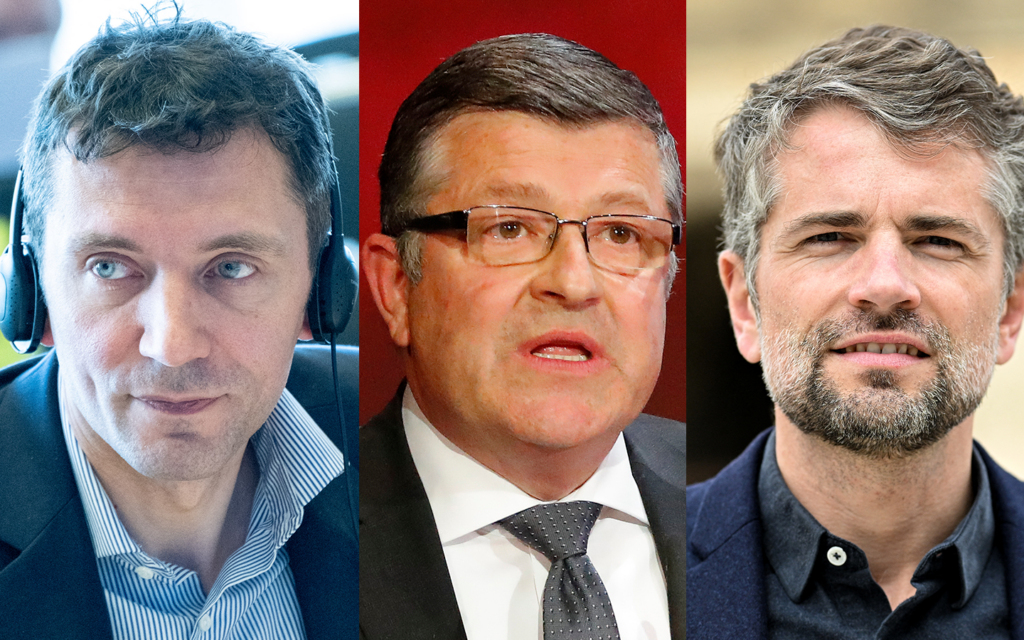
The National Rally is betting on Nîmes as a symbolic pickup. The race is shaping up to be a close three-way contest between Communist Vincent Bouget, the National Rally’s Julien Sanchez and conservative Franck Proust, Nîmes’ deputy mayor from 2016 to 2020.
Bouget — who is backed by most other left-wing parties, including moderate forces like the Socialist Party — told POLITICO that while security is shaping up to be a big theme in the contest, it raises “a broader question around social structures.”
“What citizens are asking for is more human presence, including public services and social workers,” Bouget said.
Whoever wins will take the reins from Jean-Paul Fournier, the 80-year-old conservative mayor who has kept Nîmes on the right without pause for the past quarter century.
But Fournier’s decision not to seek another term and infighting within his own party, Les Républicains, have sharply diminished Proust’s chances of victory. Proust may very well end splitting votes with Julien Plantier, another right-leaning former deputy mayor, who has the support of Macron’s Renaissance.
Sanchez, meanwhile, is appealing to former Fournier voters with pledges to bolster local police units and with red scare tactics.
“Jean-Paul Fournier managed to keep this city on the right for 25 years,” Sanchez said in his candidacy announcement clip. “Because of the stupidity of his heirs, there’s a strong chance the communists and the far left could win.”
LATEST POLLING: Bouget 28 percent – Sanchez 27 percent- Proust 22 percent
The last Green hope
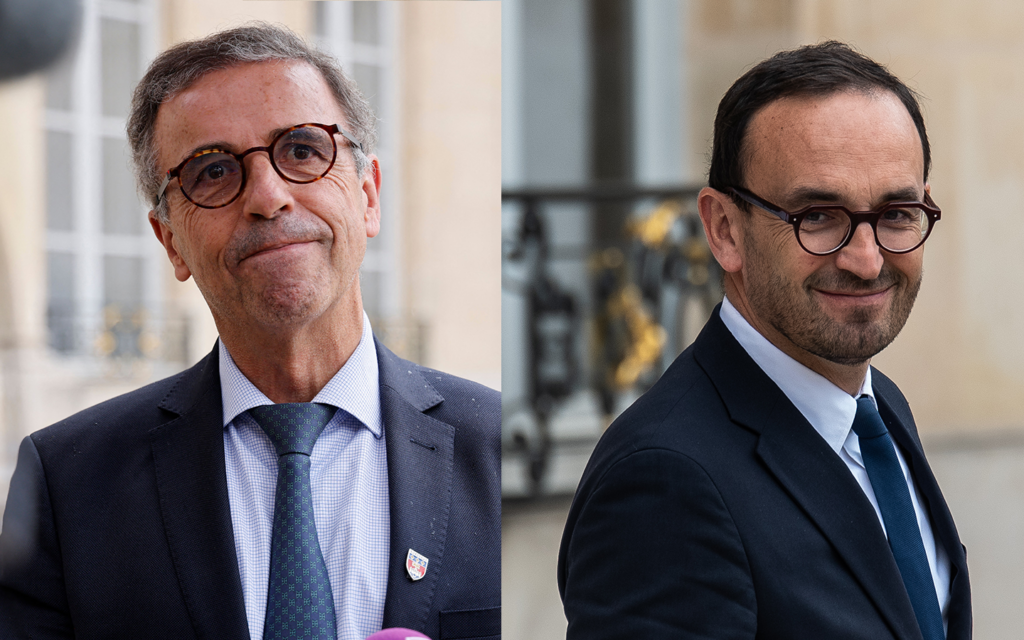
BORDEAUX — Everyone loves a Bordeaux red. So can a Green really last in French wine country?
Pierre Hurmic rode the green wave to Bordeaux city hall during France’s last nationwide municipal elections in 2020. That year the Greens, which had seldom held power other than as a junior coalition partner, won the race for mayor in three of France’s 10 most populous cities — Strasbourg, Lyon and Bordeaux — along with smaller but noteworthy municipalities including Poitiers and Besançon.
Six years later, the most recent polling suggests the Greens are on track to lose all of them.
Except Bordeaux.
Green mayors have faced intense scrutiny over efforts to make cities less car-centric and more eco-friendly, largely from right-wing opponents who depict those policies as out of touch with working-class citizens who are priced out of expensive city centers and must rely on cars to get to their jobs.
The view from Paris is that Hurmic has escaped some of that backlash by being less ideological and, crucially, adopting a tougher stance on crime than some of his peers.
Notably, Hurmic decided to arm part of the city’s local police units — departing from some of his party’s base, which argues that firearms should be reserved for national forces rather than less-experienced municipal units.
In an interview with POLITICO, Hurmic refused to compare himself to other Green mayors. He defended his decision to double the number of local police, alongside those he armed, saying it had led to a tangible drop in crime.
“Everyone does politics based on their own temperament and local circumstances,” he said.
Hurmic insists that being tough on crime doesn’t mean going soft on climate change. He argues the Greens’ weak polling wasn’t a backlash against local ecological policies, pointing to recent polling showing 63 percent of voters would be “reluctant to vote for a candidate who questions the ecological transition measures already underway in their municipality.”
Pursuing a city’s transition on issues like mobility and energy is all the more necessary because at the national level, “the state is completely lacking,” Hurmic said, pointing to what he described as insufficient investment in recent budgets.
That was also a clear swipe at his main opponent — pro-Macron centrist Thomas Cazenave — who spent a year as budget minister from 2023 to 2024.
Cazenave has joined forces with other center-right and conservative figures in a bid to reclaim a city that spent 73 years under right-leaning mayors, two of whom served as prime minister — Alain Juppé and Jacques Chaban-Delmas.
But according Ludovic Renard, a political scientist at the Bordeaux Institute of Political Science, Hurmic’s ascent speaks to how the city has changed.
“The sociology of the city is no longer the same, and Hurmic’s politics are more in tune with its population,” said Renard.
LATEST POLLING: Hurmic 32 percent – Cazenave 26 percent – Nordine Raymond (France Unbowed) 15 percent – Julie Rechagneux (National Rally) 13 percent – Philippe Dessertine (independent) 12 percent
Gentrification and the future of the left
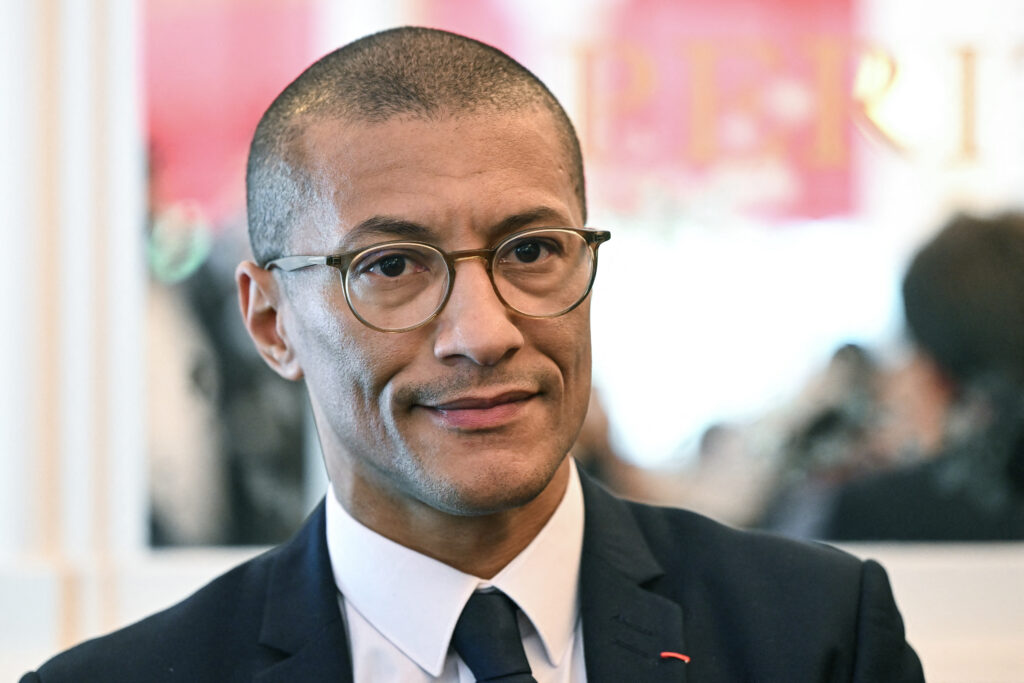
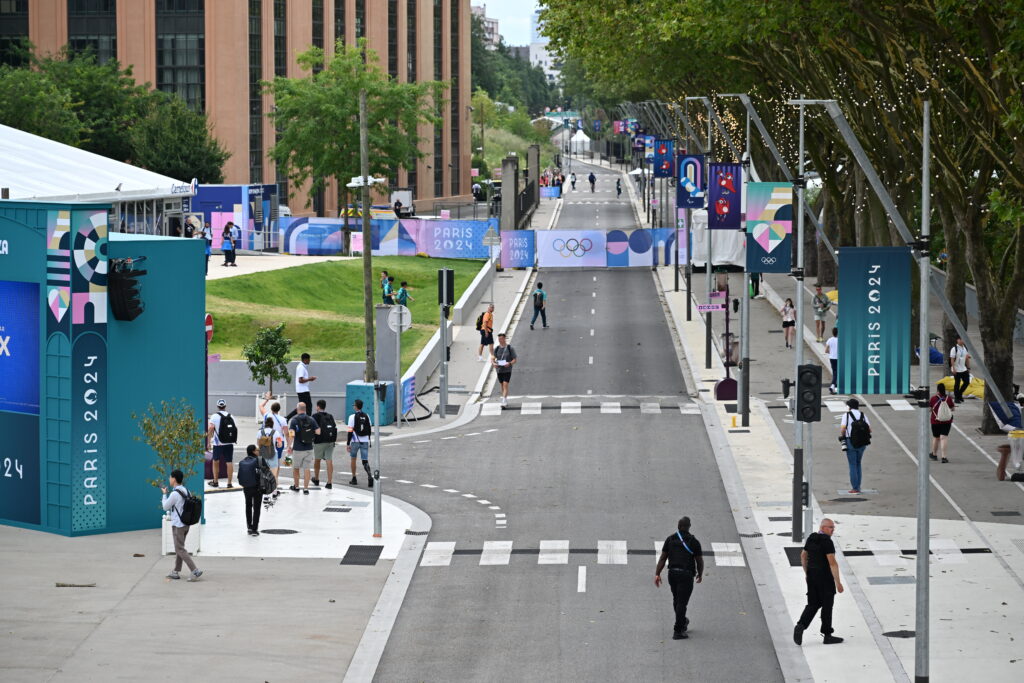
SAINT-OUEN-SUR-SEINE — The future of the French left could be decided on the grounds of the former Olympic village.
The Parisian suburb of Saint-Ouen-sur-Seine, which borders the French capital, is a case study in the waves of gentrification that have transformed the outskirts of major European cities. Think New York’s Williamsburg, London’s Hackney or Berlin’s Neukölln.
Saint-Ouen, as it’s usually called, has long been known for its massive flea market, which draws millions of visitors each year. But the city, particularly its areas closest to Paris, was long seen as unsafe and struggled with entrenched poverty.
That changed over time, as more affluent Parisians began moving into the well-connected suburb in search of cheaper rents or property.
A 2023 report from the local court of auditors underlined that “the population of this rapidly growing municipality … has both a high poverty rate (28 percent) and a phenomenon of ‘gentrification’ linked to the rapid increase in the proportion of executives and higher intellectual professions.”
Mayor Karim Bouamrane, a Socialist, has said the arrival of new, wealthier residents and the ensuing gentrification could be a net positive for the city, as long as “excellence is shared.”
Bouamrane has also said he would continue pushing for the inclusion of social housing when issuing building permits, and for existing residents not to be displaced when urban renewal programs are put in place.
His main challenger, France Unbowed’s Manon Monmirel, hopes to build enough social housing to make it 40 percent of the city’s total housing stock. She’s also pledged to crack down on real estate speculation.
The race between the two could shed light on whether the future of the French left lies in the center or at the extremes.
In Boumrane, the Socialists have a charismatic leader. He is 52 years old, with a beat-the-odds story that lends itself well to a national campaign. His journey from child of Moroccan immigrants growing up in a rough part of Saint-Ouen to city leader certainly caught attention of the foreign press in the run-up to the Olympics.
Bouamrane’s moderate politics include a push for his party to stop fighting Macron’s decision to raise the retirement age in 2023 and he supports more cross-partisan work with the current center-right government.
That approach stands in sharp contrast to the ideologically rigid France Unbowed. The party’s firebrand leader Mélenchon scored 51.82 percent of the vote in Saint-Ouen during his last presidential run in 2022, and France Unbowed landed over 35 percent — more than three times its national average — there in the European election two years later, a race in which it usually struggles.
Mélenchon and France Unbowed’s campaign tactics are laser-focused on specific segments that support him en masse despite his divisive nature: a mix of educated, green-minded young voters and working-class urban populations, often of immigrant descent.
In other words: the yuppies moving to Saint-Ouen and the people who were their before gentrification.
France Unbowed needs their continued support to become a durable force, or it may crumble like the grassroots movements born in the early 2010s, including Spain’s Podemos or Greece’s Syriza.
But if the Socialists can’t win a left-leaning suburb with a popular incumbent on the ballot, where can they win?



Follow