



The biggest loser of this weekend’s presidential election in Portugal was European Council President António Costa.
Not only was Costa’s former rival in the Socialist Party, António José Seguro, elected the new head of state, the results also cemented the far-right Chega party as the country’s second-largest political force.
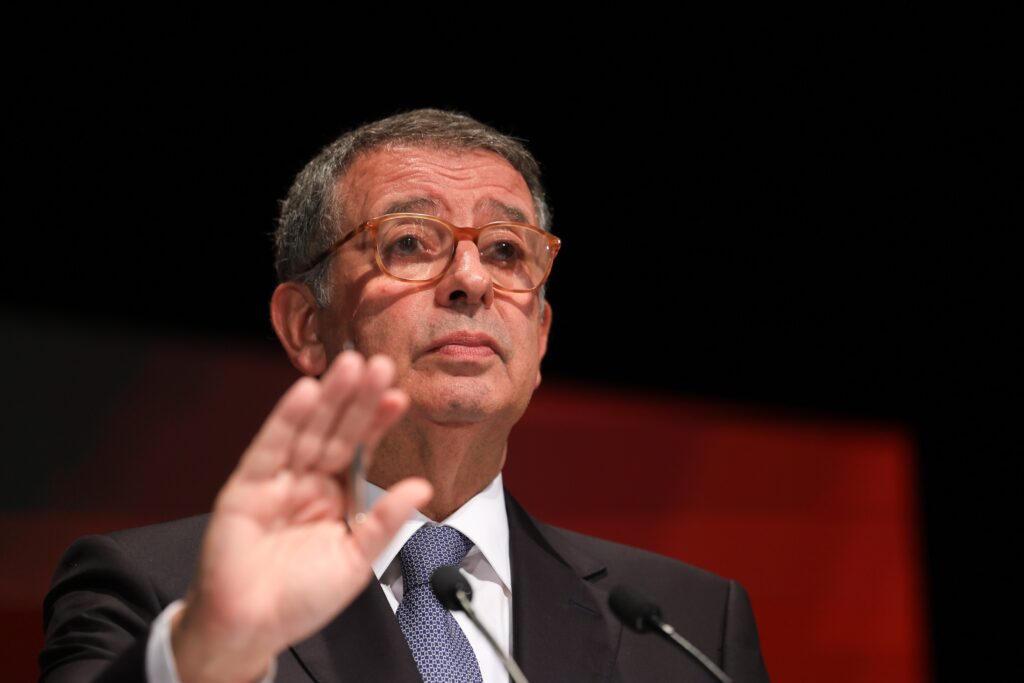
Seguro — a moderate, center-left former member of the European Parliament and minister who was ousted as Socialist Party leader by Costa in 2014 — originally said his decision to launch a long-shot run for the presidency was motivated by his “perplexion” with the direction the country had taken during Costa’s eight-year stint as prime minister.
Based on Sunday’s results, voters appear to share Seguro’s concern that the country is on the wrong course.
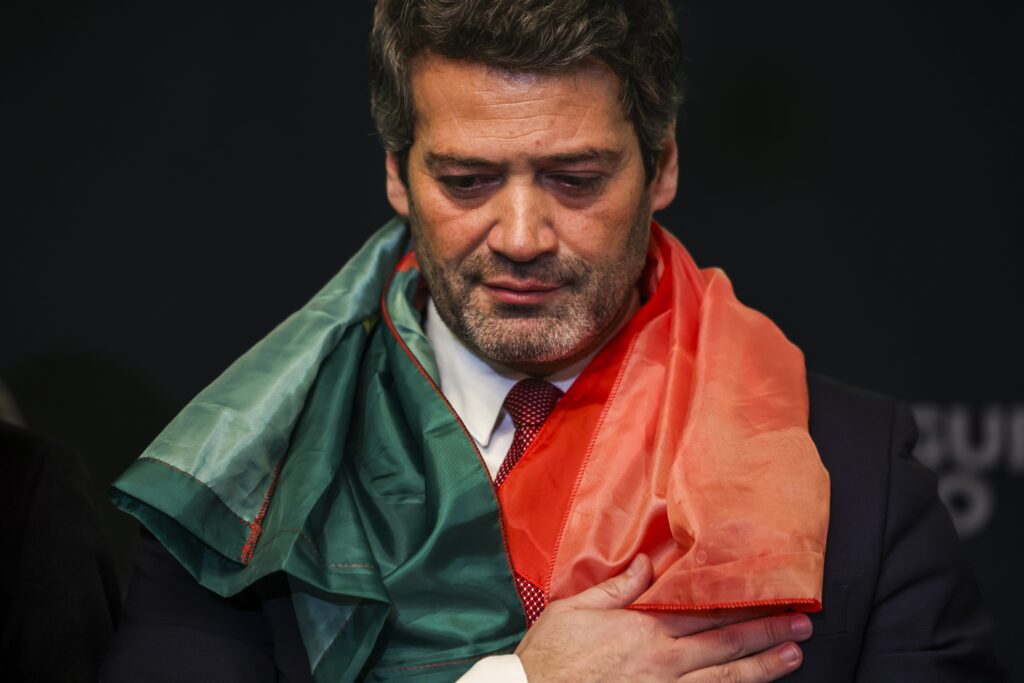
When Costa became prime minister in 2015, Portugal prided itself on being the only country in Europe with no far-right political presence. But this weekend, Chega leader André Ventura took in a third of the vote thanks to the support of a substantial chunk of the electorate exasperated by the affordability crisis, rising immigration rates and political corruption — issues many link to Costa’s time in office.
“It’s completely legitimate to tie this phenomenon to the economic and social model implemented here during the past 10 years — an economy based on low-skilled labor and low wages in a context when prices were increasing dramatically,” said Riccardo Marchi, an expert on right-wing radicalism at Lisbon’s ISCTE-IUL Center of International Studies. “And Costa is the face of that model.”
Trouble in paradise
When Ventura first appeared on the political scene in 2017, Portugal was enjoying a renaissance of sorts.
Just five years prior, the country was on the brink of declaring bankruptcy and was obliged to seek a €78 billion bailout package. In exchange for the cash, citizens faced brutal tax hikes and the severe curtailment of public services. But in 2015, Costa — then the charismatic mayor of Lisbon — cobbled together a parliamentary alliance of left-wing parties, unseating center-right Prime Minister Pedro Passos Coelho and forming a minority government that promised to “turn the page on austerity.”
While maintaining fiscal discipline, Costa unveiled progressive policies to improve conditions for the lowest-income citizens and rolled back some of the most severe cost-cutting measures. The economy steadily improved as existing golden tourism schemes and new digital nomad visas attracted foreign investment, and new jobs were created thanks to a successful rebrand that saw the impoverished Atlantic country recast as a trendy new travel destination. After years of pessimism, the future looked bright for Portugal, and many saw Costa as a leader worth emulating.
In that context, Ventura launched a campaign for local office on behalf of the center-right Social Democratic Party, and garnered national attention by running on a platform focused on the alleged threat posed by the Roma community. Condemned by his own party, Ventura lost the race. But he noted his rhetoric received more notice — and popular support — than a standard conservative politician would receive.
Despite the popularly held belief that far-right sentiment had vanished from Portugal after the Estado Novo dictatorship ended in 1974, António Costa Pinto, a political scientist at the University of Lisbon’s Institute of Social Sciences, said “there’s plenty of data that shows that around 18 percent of the electorate embraces authoritarian values, but in the past, they either voted for mainstream conservative parties or didn’t vote at all.”
Focusing on that dormant electorate’s potential, Ventura left the mainstream center-right to create Chega — or Enough — ahead of the 2019 European Parliament elections. He ran on an anti-establishment message, taking on the persona of a straight-talking common man taking on the country’s out-of-touch political elites. The tactic failed to win him a seat in Brussels, but when legislative elections were held later that year, he secured a single seat in the national parliament — and proved Portugal wasn’t immune to right-wing populism.
The rise of Chega
One seat in parliament is hardly the harbinger of future political dominance, yet Ventura went from being Chega’s sole elected representative to running the country’s leading opposition party — and making it to the second round of the presidential election — in just seven years.
Pedro Magalhães, an electoral behavior specialist at the University of Lisbon’s Institute of Social Sciences, links Chega’s growth to the perception that Portugal’s establishment parties are part of a “failed party system that’s seen as being frozen and unable to respond to the crises the country faces.”
The crises that Chega has thrived on developed during Costa’s years in office. One major issue is the soaring cost of living in major cities like Lisbon and Porto, which is directly tied to Portugal’s consolidation as an international destination. Costa’s government took pains to grant residency permits to foreign celebrities like Madonna in a bid to spur tourism and create service-sector jobs.
The tourism economy flourished, but it came at the cost of local residents, who were ejected from apartments hastily converted into short-term rentals and priced out of their local tascas. Home prices across the country jumped more than 124 percent between 2015 and 2025, and the median price-per-square meter in Lisbon now hovers around €5,914.
“There are pluses and minuses to tourism, and it’s helped rehabilitate many of our cities,” said Sérgio Sousa Pinto, a Socialist Party lawmaker who served in the national parliament from 2011 to 2025. “But that’s not top of mind for a family that can no longer afford to pay rent.”
As European Council president, Costa has urged leaders to tackle Europe’s housing crisis. But during his time as prime minister, he failed to adopt major policies to expand supply or curb rising costs. For years he denied short-term rentals were having an impact on home prices, and he only moved to end the controversial golden visa scheme in 2023.
Frustration over cost of living has overlapped with anger regarding the state of public services. As Costa’s government ramped down many austerity measures, it ensured fiscal stability by keeping public spending in check. But that lack of public investment has drawn more scrutiny as migration has skyrocketed, with the number of foreign residents in Portugal jumped from 388,700 in 2015 to 1.5 million in 2024.
Chega has gained supporters by blaming immigrants for the lackluster public services, accusing them of overwhelming hospitals and enriching themselves with public subsidies. “It’s the same stuff he used against the Roma community,” said Magalhães. “It’s an economically irrational line, but one that plays well with electors who are frustrated about higher costs and taxes.”
The party has also made strides by harnessing resentment grounded in the widespread perception that the country’s political elites are corrupt. Magalhães said Portugal’s citizens are among the most skeptical in Europe when it comes to the integrity of its ruling classes. “We once did a survey in which we asked participants to think of 100 politicians and tell us how many they thought were corrupt,” he recalled. “On average, respondents said 90 of them were.”
Ventura has spent years crusading against this alleged rot. And the far-right leader was finally vindicated in 2023, when police raided the prime minister’s residence in Lisbon as part of a wide-ranging influence-peddling probe and arrested Costa’s chief of staff, Vítor Escária, who was found to have €75,800 in undeclared cash stashed in his office. Costa himself was named as a subject in the investigation, prompting his resignation.
Both Costa and Escária have always maintained their innocence, and no evidence linking the former prime minister to any wrongdoing has been revealed. Despite that, the case that brought down his government remains active, and has inevitably contributed to Chega’s growth. In the 2024 elections held in the aftermath of his resignation, the party jumped from 12 to 50 seats. Chega then grew to 60 seats in 2025’s repeat elections, held after Costa’s successor — center-right Prime Minister Luís Montenegro — was embroiled in a separate corruption scandal.
Costa declined POLITICO’s requests for comment through a spokesperson, who said the president of the Council has a policy of not discussing national politics.
Leading the right
When Costa stood down in 2024, his Socialist Party enjoyed an absolute majority in parliament. Lawmaker Sousa Pinto believes the government failed to use that power to carry out the structural reforms that could have addressed the grievances fueling Chega’s growth.
“Costa’s tenure leading the Socialist Party is characterized by a lack of imagination,” he said, adding his last government was composed of “mediocre” figures that match “a general degradation in the quality of our politicians.”
He also lamented that as Chega emerged on the scene, the Socialists cast themselves as the left’s sole legitimate representatives, facing off against an allegedly uniform right.
“They pushed the idea that democratic center-right parties were the same thing as one that’s illiberal,” he said. “That gained traction among many people, and ultimately helped normalize Chega as an option that’s just as acceptable as any establishment party.”
Magalhães expressed doubts that Chega’s assent could be blamed on Costa, arguing the party’s growth was due to a “mummified” national political landscape. “What we have today is a better reflection of the diversity of the public’s opinions than it was in the past — whether we like it or not.”
While Chega’s electoral base was originally overwhelmingly composed of young men with little formal education, the ultranationalist group is now becoming “a catch-all for right-wing voters,” political scientist Costa Pinto explained. That’s significant in a political landscape that’s been dominated by the right since Costa’s resignation — something Ventura himself underscored on Sunday.
“We lead the right-wing space in Portugal,” the far-right leader told supporters. “And we will soon govern this country.



Follow