



BRUSSELS — Countries that have waited years to join the EU are divided over plans being drawn up in Brussels to let them become members without the customary full voting rights.
Among the handful of nations in Eastern Europe and the Western Balkans in line to join the bloc, a split is emerging over the conditions attached to their applications. Some insist they should get the bloc’s full benefits — whereas others are happy just to be around the table.
To appease concerns from existing members that a bigger EU would make it harder to take unanimous decisions, the European Commission is mulling granting new members full voting rights only after the EU has overhauled the way it functions.
The push would make it more difficult for individual countries to wield their vetoes and would stop policies from being derailed. At present, new members get full voting rights straightaway, as happened when the most recent country to join the EU, Croatia, entered in 2013.
Among the powers that could initially be limited is the right of new entrants to block sanctions, among other issues that currently require every EU country to be on board. Navigating around veto threats from populist governments in Hungary and Slovakia has proven time-consuming for leaders.
The prospect of joining without full voting rights is drawing mixed reactions from candidate countries.
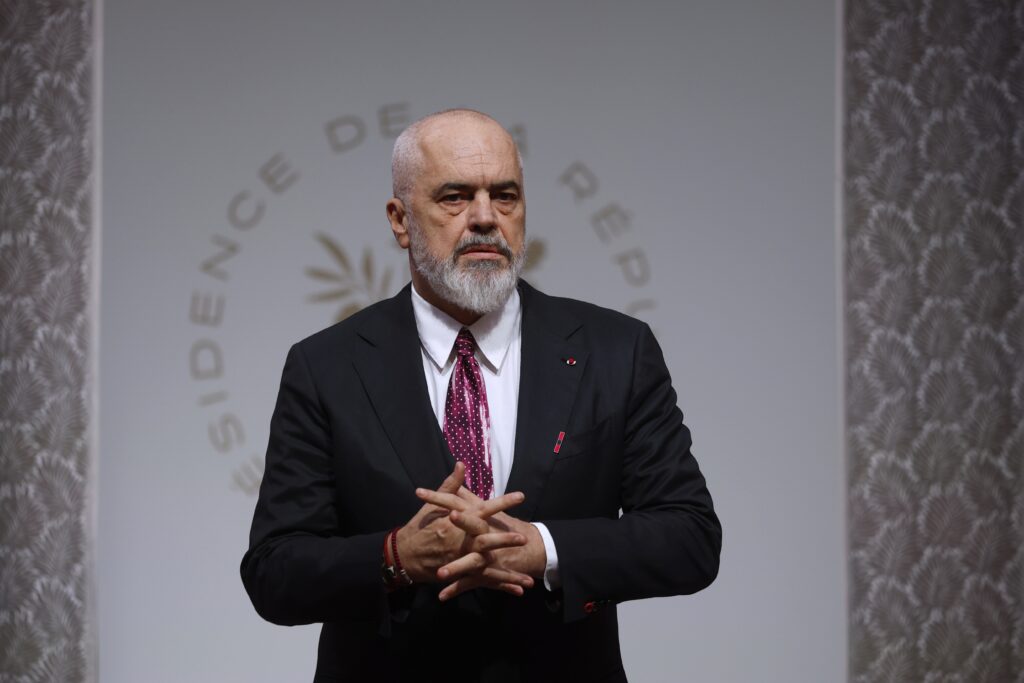
Edi Rama, prime minister of Albania — which has now opened all of the so-called negotiating clusters it will have to work through — told POLITICO the measures are a “good idea” and that his country would even accept for a period of time not having a commissioner of its own in Brussels.
Albania, he said, did not want to challenge the will of big founding members such as France and Germany. “At the end, they are the adults in the family who make the important decisions,” he said, adding that one advantage for smaller EU members is that if the bigger countries “fuck up,” it’s not the new members’ fault.
Salome Zourabichvili, the last directly elected president of Georgia, said she had long advocated such a move in discussions with EU officials. Her role was abolished by the ruling Georgian Dream party in a move decried by Brussels, and accession talks have now ground to a halt amid warnings of democratic backsliding.
“As a small country, it’s very clear our interest is to be part of a community, of a family, and be part of the programs that make up the EU, and not at all to be an equal decision-maker as countries that have been at the origin of this organization and are much more powerful,” Zourabichvili told POLITICO. “I think it’s very logical if you want to have an organization that can take decisions efficiently.”
Moldova, whose membership application is twinned with that of Ukraine, has said it wants to see the details of the proposals.
“We stand ready to assume responsibilities at an early stage and would welcome the opportunity to participate in, and help shape, these discussions,” said a senior Moldovan official, granted anonymity to speak frankly. “At the same time, full membership — with equal rights and full participation in EU decision-making — must remain the clear and ultimate objective.”
Ukraine, which has conducted wide-ranging reforms as part of the accession process even as it faces Russia’s aggression, has been reluctant to support the idea.
“If we speak about EU membership, it has to be fully-fledged,” President Volodymyr Zelenskyy said in November.
Montenegro, the candidate country most advanced on its accession path, also insists there is no need to revisit the terms under which it is granted membership, and expects to conclude the vetting process this year.
“The fact is that the EU already consisted of 28 member states,” Montenegrin President Jakov Milatović told POLITICO. “And currently, we have 27 because of Brexit. So in that regard, if Montenegro becomes the 28th member state of the EU by 2028, then the answer [to whether there is a need for reforms] is no, right? … But this is definitely the question that should be answered by the EU leaders.”
The plan regarding reduced voting rights was floated late last year by officials and pro-EU governments to breathe life into an expansion process that is also being blocked by Hungary and a few other capitals over fears it could bring unwanted competition for local markets or compromise security interests. Hungary has repeatedly threatened to veto Ukraine’s joining the EU.
The EU’s enlargement commissioner, Marta Kos, told POLITICO that concrete proposals will be put forward “in February or March.”
She added that “a completely new element” is driving a new sense of urgency: “We have external destructive forces that would like to see us fail — they are working against our candidate countries, but we are the main target.”
The plan will need to be developed in detail by the Commission before being presented to national leaders and likely discussed at future European Council summits, as well as assessed by lawyers to see how it fits in with the EU’s foundational treaties.
While the candidates are deep into the reforms needed to become members of the bloc, Kos said there is still work to be done to convince existing members that sufficient safeguards will be in place. “Negotiations are a technical part; we have to consider the political part, which is the member states,” she said.



Follow