



DETROIT (AP) — The Environmental Protection Agency announced an end Thursday to credits to automakers who install automatic start-stop ignition systems in their vehicles, a device intended to reduce emissions that EPA Administrator Lee Zeldin said “everyone hates.”
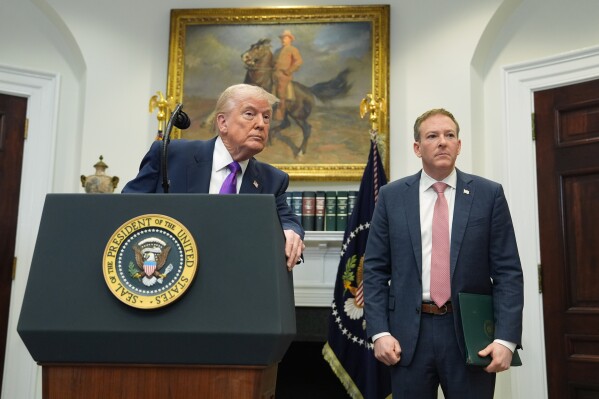
In remarks with President Donald Trump on Thursday at the White House, Zeldin called start-stop technology the “Obama switch” and said it makes vehicles “die” at every red light and stop sign. He said the credits, which also applied to options like improved air conditioning systems, are now “over, done, finished.”
Zeldin repeated the generally-debunked claims that start-stop systems — which are mostly useful for city driving — are harmful to vehicles, asserting Thursday that “it kills the battery of your car without any significant benefit to the environment.”
This latest Trump administration move to cut automotive industry efforts to clean up their cars and reduce transportation-driven emissions came as Zeldin and Trump also announced a broader repeal of the scientific finding known as endangerment that has been the central basis for regulating U.S. greenhouse gas emissions.
Start-stop is a technology that automatically shuts down a vehicle’s engine when a driver comes to a complete stop, and then automatically restarts the engine when the driver takes their foot off the brake pedal. Developed in response to the 1970s oil crisis, the feature was intended to cut vehicle idling, fuel consumption and emissions.
1 MIN READ
2 MIN READ
3 MIN READ
About two-thirds of vehicles now have it, providing drivers with anywhere from 7% to 26% in fuel economy savings, according to the Society of Automotive Engineers. Start-stop also causes a split-second lag in acceleration, a point of irritation for some consumers and automotive enthusiasts.
Burning gasoline and diesel fuel for transportation is a major contributor to planet-warming gases such as carbon dioxide, methane and more, according to the EPA. By implementing the systems, automakers could earn credits toward meeting federal emissions reduction rules.
“Countless Americans passionately despise the start/stop feature in cars,” Zeldin wrote in a post on X on Tuesday teasing the announcement. “So many have spoken out against this absurd start-stop-start-stop-start-stop concept.”
The announcement made good on Zeldin’s promises last year to “fix” the feature. Start-stop is “where your car dies at every red light so companies get a climate participation trophy,” Zeldin said in a post on X last May. “EPA approved it, and everyone hates it, so we’re fixing it,” he wrote at the time.
Zeldin’s announcement aligns with the administration’s broader attacks on cleaner-vehicle efforts. Trump eliminated the Biden administration’s target for half of all new vehicle sales in the U.S. to be electric by 2030, and signed Congress’ tax and spending bill that ended federal tax credits for new and used electric vehicle purchases.
The administration is also weakening rules for how far new vehicles must travel on average on a gallon of gasoline as it undermines the climate regulation at the core of auto tailpipe emissions.
Jeep-maker Stellantis welcomes the deregulatory effort, a spokesperson’s statement said: “We remain supportive of a rational, achievable approach on fuel economy standards that preserves our customers’ freedom of choice.”
A Ford Motor Co. statement said: “We appreciate the work of President Trump and Administrator Zeldin to address the imbalance between current emissions standards and customer choice.”
General Motors deferred comment to the auto industry group Alliance for Automotive Innovation.
“I’ve said it before: Automotive emissions regulations finalized in the previous administration are extremely challenging for automakers to achieve given the current marketplace demand for EVs,” said John Bozzella, president of the alliance. “The auto industry in America remains focused on preserving vehicle choice for consumers, keeping the industry competitive, and staying on a long-term path of emissions reductions and cleaner vehicles.”
___
Alexa St. John is an Associated Press climate reporter. Follow her on X: @alexa_stjohn. Reach her at [email protected].
___
Read more of AP’s climate coverage.
___
The Associated Press’ climate and environmental coverage receives financial support from multiple private foundations. AP is solely responsible for all content. Find AP’s standards for working with philanthropies, a list of supporters and funded coverage areas at AP.org.



Follow