



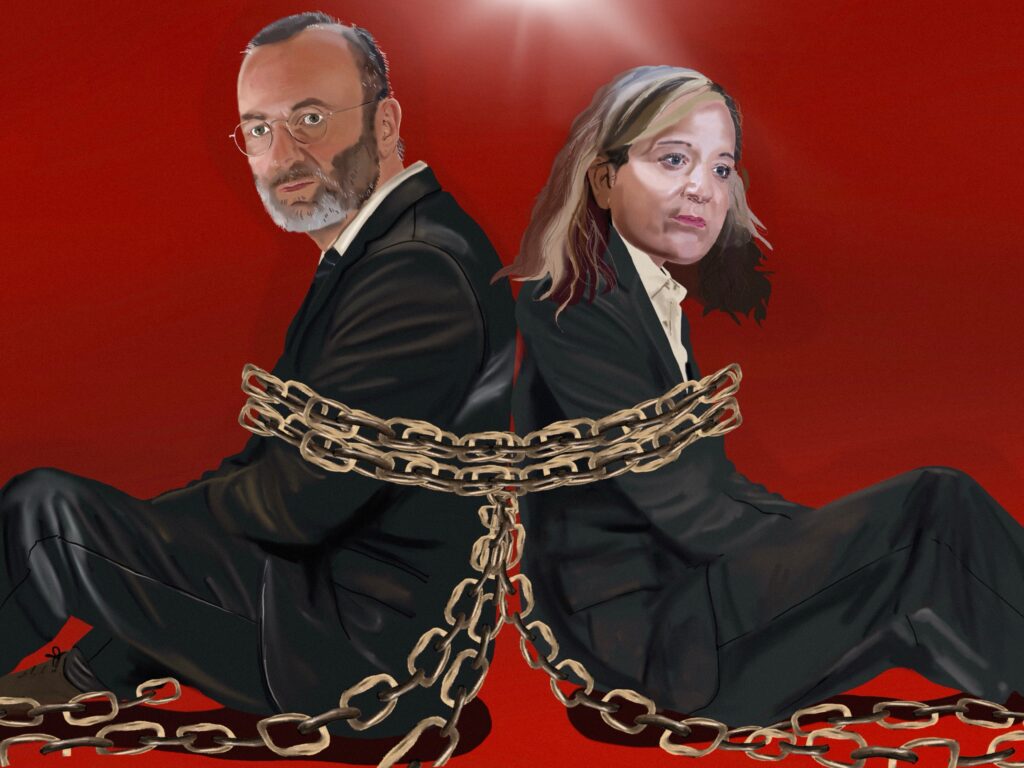
A confrontation six years ago poisoned a relationship at the heart of the EU that remains toxic to this day.
Manfred Weber, the powerful German head of the center-right European People’s Party, the largest political family in Europe, knew something was wrong when Iratxe García walked into his office shortly after the 2019 EU election.
García, a Spanish MEP who leads the center-left Socialists and Democrats group in the Parliament, was accompanied by Romanian former liberal chief Dacian Cioloș. The pair told Weber that they wouldn’t support his bid to become president of the European Commission, despite the Parliament’s longstanding position that the head of the party receiving the most votes in the election should get the job.
While Cioloș is long gone from the EU political scene, García and Weber remain in post — and the animosity between them has only grown, especially now that the EPP is aligning with the far right to pass legislation.
García’s move killed Weber’s Commission ambitions, souring relations between the two and threatening Commission chief Ursula von der Leyen’s ability to deliver her second-term agenda, as she needs the support of senior MEPs to pass legislation.
The pair are like “two toxic exes who had a good relationship, but Weber cheated on García with the far right, and this makes it hard for the Socialists,” said Manon Aubry, co-chair of The Left group in the Parliament.
Today, the dire relationship between Weber and García is the talk of the town. For decades, the EPP and S&D — the two largest political families in Europe — have worked hand in hand to provide stable majorities in the Parliament, including backing a second term for von der Leyen at a time of unprecedented crises facing the bloc. Now that stability is in doubt.
POLITICO spoke to 12 officials and lawmakers who are or have been close to the pair. Some say the problem is personal, while others blame politics and argue that anyone in their position would have the same relationship issues.
“Weber and García have become a problem for von der Leyen,” said a senior Commission official, granted anonymity to speak freely, as were others in this piece.
That’s because disagreements between their two groups could lead to less predictable voting in the Parliament, as happened in November with the simplification bill on green reporting rules for businesses, when the EPP sided with the far right rather than with the centrists.
Tensions have also spilled toward von der Leyen herself, with García accusing her of “buying into Trump’s agenda” by pushing deregulation. Center-left MEPs have urged the Commission president to rein in Weber over his cooperation with the far right.
Relationship takes a downturn
Verbal attacks in the Parliament’s hemicycle, tensions over Spanish politics, opposing views on the EU’s green ambitions and migration policy, and the fact that the EPP is voting for laws with the far right have eroded what started as a promising relationship.
Weber “will never get over the big treason when Iratxe backstabbed him on the Commission presidency,” said a senior EPP MEP.
“Everyone needs to stay calm and keep emotions out of it,” said a senior Socialist MEP, noting that many lawmakers, including commissioners, often express concern about the emotional undertones of the relationship.
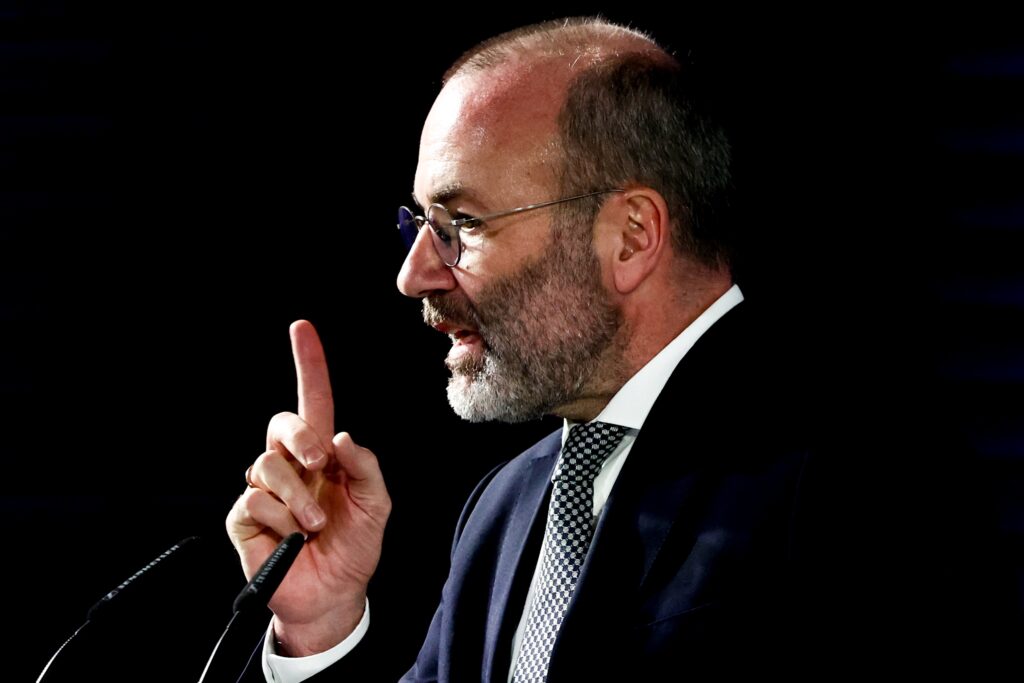
Publicly, both insist relations are just fine. “I really appreciate the strong leadership of Iratxe, she’s a tough representative,” Weber told POLITICO, describing the relationship as in a “great state.”
“I can confirm that we have good and regular talks to each other, but we also see our different political positioning,” he added.
García also played down the perceived friction, saying the pair have a “working relationship” and “try to understand each other,” while stressing that despite their differences, it is “much more normalized than you might think from the outside.”
The reality, according to MEPs and staffers close to the pair, is that six years of working side by side have eroded trust.
Weber sees García as incapable of delivering on her promises due to the S&D’s internal divisions and weakness, as it has lost power and influence across Europe; García views Weber as power-hungry and willing to empower the far right at the expense of the center.
Personal attacks
In her September 2025 State of the Union address, von der Leyen tried to bridge the widening rifts between the EPP and the Socialists by giving policy wins to both sides and calling for unity.
But her efforts came to nothing as Weber and García exchanged personal attacks on the hemicycle floor, each blaming the other for the instability of the pro-European coalition.
Weber accused Garcia and the Socialists of “harming the European agenda.” During her remarks, the S&D chief shot back: “You know who is responsible for the fact that this pro-European alliance … does not work in this Parliament? It has a name and surname. It is called Manfred Weber.”
The exchange reflected a relationship under strain, as the EPP pushed deregulation, weaker green rules, and a crackdown on migration backed by far-right votes after the 2024 election shifted the Parliament to the right.
Sidelined by that new math, the Socialists have increasingly felt alienated and have hardened their attacks on von der Leyen for embracing a right-wing deregulation agenda, and on Weber for empowering the far right in general.
“The only way for Iratxe to survive is to be more aggressive with EPP and with Manfred,” said a former centrist lawmaker, who argued that García is leaning on rhetoric to rally her base as concrete wins are in such short supply.
For his part, Weber is unapologetic about sidelining traditional centrist allies, arguing that the end — tackling policy issues the far right has weaponized against the EU, notably migration and overregulation — justifies the means.
“He could not be Commission president so he has been pushing to be a power broker from the Parliament, which means he needs to show he can push for whatever EPP wants, which includes using the far right,” a second senior EPP MEP said of Weber.
Betrayal
Weber and García started their collaboration after the election in 2019, when the latter was chosen as the group leader of S&D after serving as an MEP since 2004 and chair of the committee on women’s rights between 2014 and 2019.
For the first two years they were united in their goals of delivering on the Green Deal and addressing the Covid-19 pandemic, but the relationship began to deteriorate in the second half of the term.
In a mid-term reshuffle of the Parliament’s top posts, Weber struck a backroom deal with the liberals of Renew and The Left to keep the powerful position of the Parliament’s secretary-general in the hands of the EPP. García had wanted the job for S&D because the previous secretary-general was from the EPP, as is Roberta Metsola, who was about to become the Parliament’s president.

“This was a moment of tension because she really thought she would get it … she took it very personally,” said the senior Socialist MEP. “Her position in the group was also affected by that; she got a lot of criticism.”
Spanish Prime Minister Pedro Sánchez’s reelection in 2023 further strained relations. Weber has for years been betting on the fall of Sánchez, backing Spain’s EPP-aligned opposition (the People’s Party, or PP) and giving them free rein in the Parliament to attack the Spanish Socialist Party, knowing that the EPP would be boosted with an EPP party in power in Madrid.
“He does everything the People’s Party wants,” said a liberal Parliament official, who added that “every time Spain is on the agenda, it becomes a nightmare, everyone screaming.”
The most recent example came in November, when the EPP sided with far-right groups to cancel a parliamentary visit to Italy to monitor the rule of law in the country, while approving one to Spain — sparking an outcry from García, whom EPP MEPs frame as Sánchez’s lieutenant in Brussels.
“It generates a toxic dynamic,” echoed the first senior EPP MEP.
Breaking point
The Spanish issue came to the fore during the 2024 hearings for commissioners, when MEPs grill prospective office-holders to see if they are up to the task.
Under pressure from his Spanish peers, Weber and the EPP went in hard on Sánchez’s deputy Teresa Ribera, blaming her for deadly floods in Valencia in October 2024.
While the EPP wanted to take down Ribera, the Socialists hoped to make life difficult for Italy’s Raffaele Fitto, who was put forward by Prime Minister Giorgia Meloni. While Fitto is not from the EPP (he’s from the European Conservatives and Reformists), his nomination was supported by Weber. In the end, the S&D went easier on Fitto in order to save Ribera from further attacks.
After weeks of tensions — with both Weber and García visibly furious and blasting each other in briefings to the press — both Ribera and Fitto were confirmed as commissioners.
The struggle highlighted that the old alliance between the EPP and the S&D was cracking, with Weber snubbing García and instead teaming up with the far right.
While they still meet to coordinate parliamentary business — often alongside Renew leader Valérie Hayer and von der Leyen — the partnership is far less effective than before.
“It’s very clear they’re no longer running Parliament the way they used to,” said The Left’s Aubry.
The breakdown has injected instability into the Parliament, with the once well-oiled duo no longer pre-cooking decisions, making outcomes more unpredictable. Aubry said meetings of group leaders used to take place with a deal already struck — “political theater,” as she put it.
“Now we walk in and don’t know where we’ll end up,” Aubry added.
“While they get along personally, the results of that cooperation are not that good,” said the second EPP MEP, adding that the alliance between the EPP and the S&D has “not really delivered.”
Looking ahead to yet more battles
The next reshuffle of top Parliament jobs is in 2027, and Weber and García are already haggling over who will get to nominate the next Parliament president.
The EPP is expected to try to push for Metsola getting a third term, but the Socialists claim it’s their turn per a power-sharing agreement after the 2024 election. Officials from the EPP deny such an agreement exists while officials from Renew and the S&D say it does, although no one could show POLITICO any documentation.
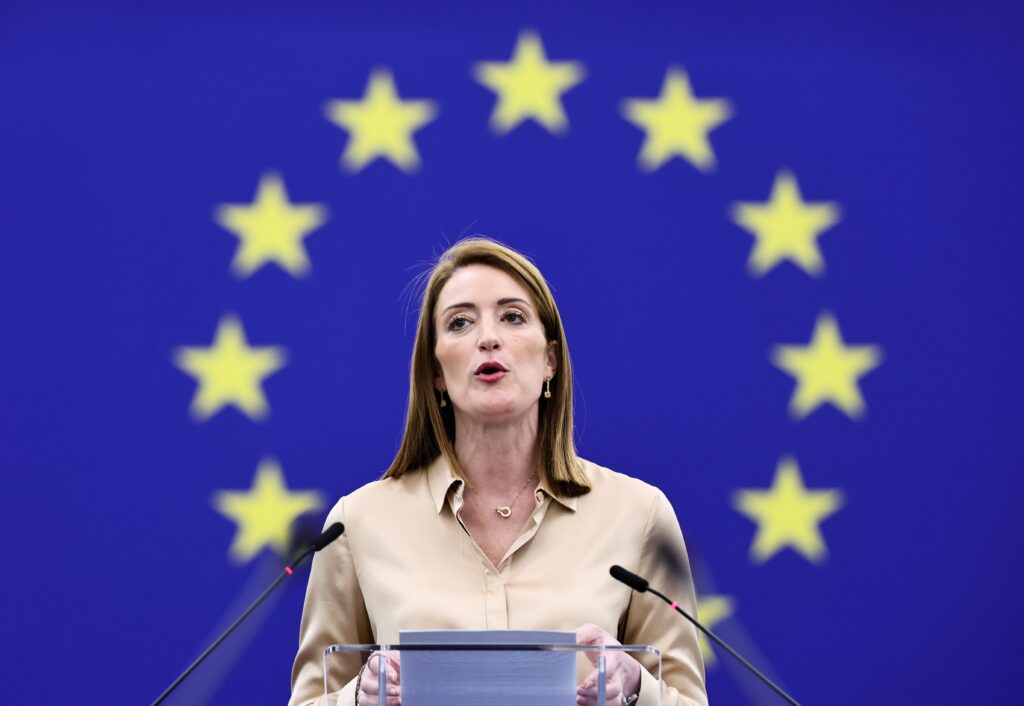
That’s a major headache for García. The S&D’s Italian and German delegations are itching to get leadership positions, and if the Parliament presidency is off the table they could try to replace her as party chief.
With tensions simmering, one Parliament official close to the pair half-joked that García and Weber should settle things over an after-work drink — but it seems the détente will have to wait.
“I’d definitely go for a drink,” Weber said with a nervous laugh before noting that both are “so busy” it probably won’t happen. García, also laughing, was even less committal: “I’ve become a real homebody. I don’t go out for drinks anymore.”



Follow