



PARIS — Europe and the U.S. presented a united front for Ukraine in Paris on Tuesday, hailing security guarantees with American backing and laying out a detailed plan for bolstering Kyiv long-term.
In a notable show of support, U.S. envoy Steve Witkoff and Donald Trump’s son-in-law Jared Kushner praised European work to hash out a plan that would provide a security guarantee to ongoing peace talks with Russia.
“We have largely finished the security protocols,” said Witkoff, standing alongside the leaders of France, Germany, the U.K. and Ukraine at the Elysée Palace. “This is important so that when this war ends, it ends forever,” he added, after praising Ukrainian President Volodymyr Zelenskyy and his “outstanding team.”
Europeans, Americans and Ukrainians had agreed on “robust” security guarantees for Ukraine, French President Emmanuel Macron said.
Those guarantees include the U.S.-led monitoring of a ceasefire and the deployment of a multinational force in Ukraine in case of a peace deal with Russia, according to the joint statement put out by the so-called coalition of the willing — a loose group of Ukraine allies that doesn’t include Washington.
Security guarantees are “the key to ensuring that a peace agreement can never mean a Ukrainian surrender and that a peace agreement can never mean a new threat to Ukraine,” Macron said.
But the upbeat declarations in Paris will not allay the doubts swirling over the U.S. commitment to supporting Ukraine and the European continent. While it was initially hoped that Washington would commit to a joint statement on the security guarantees, the final declaration was ultimately only signed by the coalition of the willing.
Details of American participation in the multinational force for Ukraine were removed from an earlier draft, seen by POLITICO. That version had stipulated the U.S. would commit to “support the force if it is attacked” and assist with intelligence and logistics.
Leaders also did not want to be drawn on the credibility of U.S. commitments in the wake of the capture by U.S. forces of Venezuela’s President Nicolás Maduro and President Donald Trump’s threat to seize Greenland.
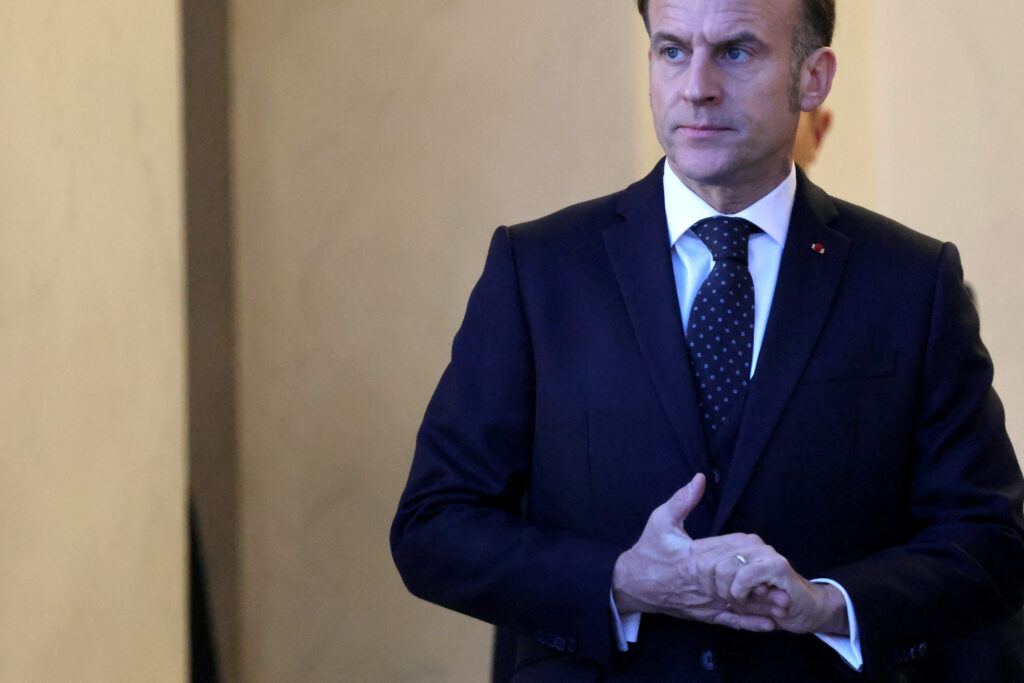
Witkoff refused to comment on Greenland, instead turning his focus to Kyiv and insisting that Trump “strongly stands behind security protocols.”
“The president does not back down from his commitments … we will be there for Ukraine,” he said.
Responding to a question on Washington’s credibility, Zelenskyy said the security guarantees must be backed by the U.S. Congress. “We are counting a lot on that, the documents are ready,” he said.
A plan for Ukraine
The statement from Kyiv’s European allies says they stand ready to commit to “legally binding” security guarantees to support Ukraine in the event of a peace deal with Russia.
Crucially, the monitoring and verification of a future ceasefire would be led by the U.S., with contributions from countries including the U.K. and Germany.
The plan also sets out security guarantees that would include long-term support for the Ukrainian armed forces, the deployment of a European-led multinational force in Ukraine in case of a peace settlement, and “binding” commitments to support Ukraine should there be a future Russian attack.
“The coalition of the willing declaration for a solid and lasting peace … for the first time recognizes an operational convergence between the 35 countries, Ukraine and the U.S. to build robust security guarantees,” Macron told reporters. Washington will participate in those guarantees, including with the “backstop” that Europeans wanted, he added.
British Prime Minister Keir Starmer said that after a ceasefire, the U.K. and France will set up military hubs across Ukraine and “build protected facilities for weapons and military equipment to support Ukraine’s defense needs.”
France, the U.K. and Ukraine signed a separate declaration on Tuesday laying out these commitments.
The European-led multinational force will cover land, air and sea and will be stationed in Western Ukraine, far from the contact line, Macron said. France and the U.K. have previously said they would be willing to put boots on the ground — but most other coalition members, including Germany, have so far shied away from joining that commitment.
Other nations have suggested deploying aircraft based in neighboring NATO countries to monitor Ukrainian skies, and Turkey has agreed to lead the coalition’s maritime segment to secure the Black Sea.
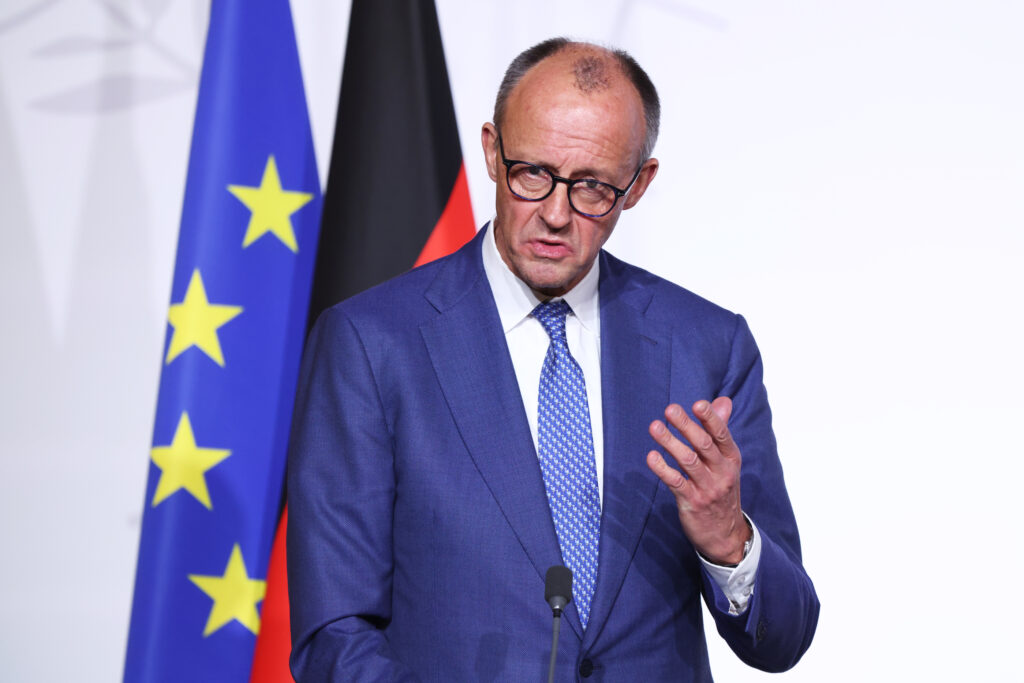
German Chancellor Friedrich Merz said Berlin was open to deploying its troops in a neighboring NATO country that would act in case of Russian aggression, telling reporters “we are not ruling anything out.” But he stressed that the final decision would be up to Germany’s parliament.
“I will only make proposals to the Bundestag once there is a ceasefire and the coalition of the willing has agreed on the procedure to be followed,” he told reporters. “The prerequisite is a ceasefire.”
Some European countries, however, remain reluctant to deploy military assets in a post-war Ukraine. Greek Prime Minister Kyriakos Mitsotakis repeated that Greece will not participate in a European military force in Ukraine. However, Greek government officials said Mitsotakis has not ruled out other forms of assistance, such as in maritime surveillance.
Nektaria Stamouli contributed reporting.



Follow