




In recent elections, voters in Europe have given hope to embattled centrist politicians across the Western world.
Donald Trump may have romped back into the White House, but the international movement of MAGA-aligned populists has run into trouble across the Atlantic. At elections in the U.K., France, Germany, the Netherlands, Romania — and in a sprawling vote across 27 EU countries for the European Parliament — mainstream candidates defeated populist hardliners and far-right nationalists.
“There remains a majority in the center for a strong Europe, and that is crucial for stability,” European Commission President Ursula von der Leyen said, after the EU Parliament elections last year. “In other words, the center is holding.”
Sixteen months later, that hold is looking anything but secure.
Hard-right and far-right politicians are now leading the polls in France, the U.K. and even Germany. British Prime Minister Keir Starmer’s approval rating is a dire 21 percent. His French counterpart, Emmanuel Macron, is even lower, at 11 percent — and the mood is so grim that this fall’s spectacular theft at the Louvre is being treated by some as a giant metaphor for a country unable to manage its challenges.
Even von der Leyen’s own EU conservatives now rely on the votes of far right lawmakers to get her plans approved in Brussels. One outraged centrist likened the shift to those German politicians who enabled Adolf Hitler to take power.
Populists at the extremes, meanwhile, cast themselves as the obvious alternative for populations that want change. And now they can expect Trump to help: In a brutal rupture of transatlantic norms, a new U.S. National Security Strategy aims to use American diplomacy to cultivate “resistance” to political correctness in Europe — especially on migration — and to support parties it describes as “patriotic.” Trump himself told POLITICO he would endorse candidates he believed would move Europe in the right direction.
On that rightward trajectory, in the next four years the political map of the West faces its most dramatic upheaval since the Cold War. The implications for geopolitics, from trade to defense, could be profound.
“What [Europeans are] getting from Trump is the strategy of maximum polarization that hollows out the center,” said Will Marshall from the Progressive Policy Institute, the centrist American think tank that backed Bill Clinton in the 1990s. “The old established parties of left and right that dominated the post war era have gotten weaker,” he said. “The nationalist or populist right’s revolt is against them.”
Nowhere is this recent transformation more dramatic than in the U.K.
As the sun sinks toward the horizon over a calm sea one Thursday evening in November, half a dozen regulars huddle around the bar in the Never Say Die pub, a few yards from the beach at Jaywick Sands, on the east coast of England.
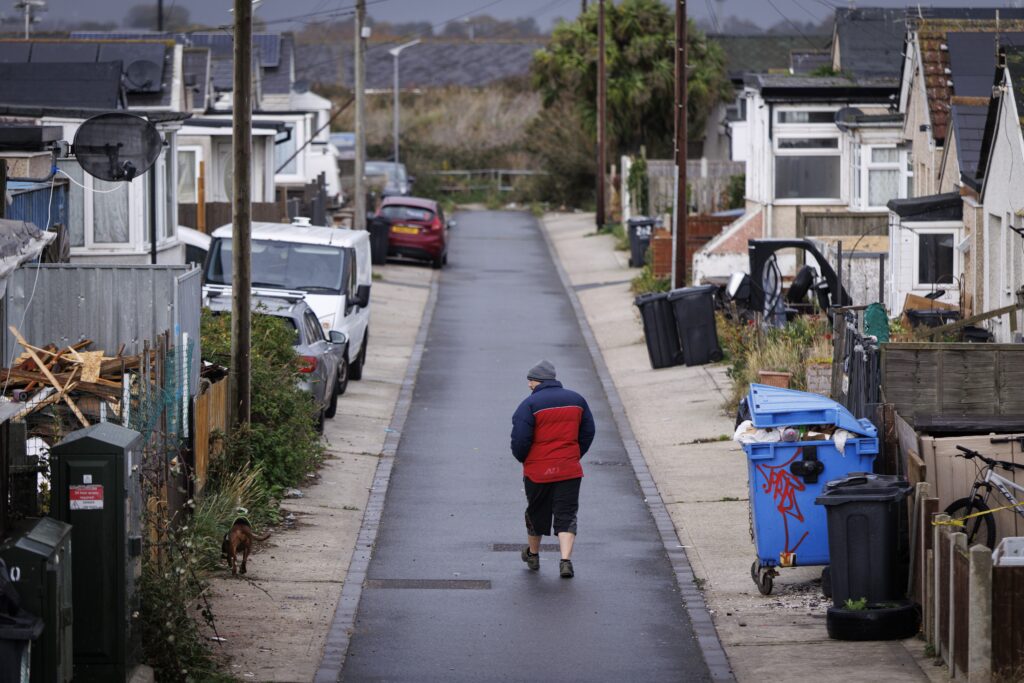
Built in the 1930s as a resort 70 miles from London, Jaywick is now the most deprived neighborhood in the country. The area had such a bad image that in 2018 a U.S. MAGA ad used a photograph of a dilapidated Jaywick street to warn of the apocalyptic future facing America if Trump’s candidates were not elected.
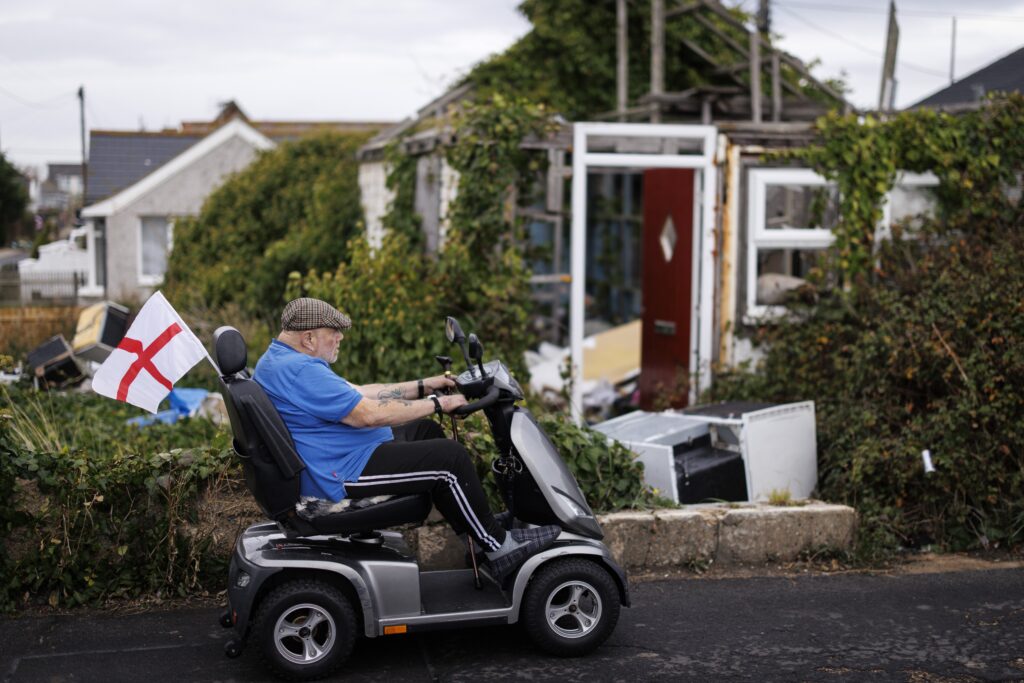
It is here among the pebbledashed bungalows and England flags hanging limp from lampposts that a new political force — Nigel Farage’s rightwing Reform UK — has built its heartland.
At the bar, Dave Laurence, 82, says he doesn’t vote, as a rule, but made an exception for Farage, who was elected to represent the area last year. “I quite like him. He’s doing the best he can,” Laurence says as he sips his pint of lager, with ’80s pop hits playing in the background. “I’ll vote for him again.”
Laurence freely describes himself as “racist” and says he would never vote for a Black person, such as the center-right Conservative Party’s leader Kemi Badenoch. What troubles him most, he says, is the number of immigrants who have arrived in the U.K. during his lifetime, especially those crossing the Channel in small boats. Soon, Laurence fears, the country will be “full of Muslims and they’ll fucking rebel against us.”
With its anti-establishment, immigration-fighting agenda, Farage’s Reform UK offers voters a program tightly in tune with far-right parties that have gained ground across the West. According to opinion polls, Farage now has a real chance of becoming the U.K.’s next prime minister if the vote were held today. (A general election is not due until 2029).
It’s startling to note that as recently as July 2024, Starmer’s Labour Party won a historic landslide and some of his triumphant election aides traveled to the U.S. to advise Democrats on strategy. Today, Starmer is derided as “First Gear Keir” as he fights off leadership rivals rumored to be trying to oust him. And Reform isn’t the only force remaking British party politics. To the left of Labour, the Greens have also made recent gains in the polls under a new leader calling himself an “eco-populist.”
Farage’s stunning rise from the sidelines to the front of a political revolution carries lessons well beyond Britain’s borders. Europeans raised in the old school of mainstream politics fear that the traditional centerground — their home turf — will not hold.
‘Durably unstable’
Macron, for his part, tried to counter the rise of the hard right by calling a snap election for the French National Assembly last year. The gamble backfired, delivering a hung parliament that has been unable to agree on key economic policies ever since. Macron is now historically unpopular.
French lawmakers’ clashes over the budget have toppled three of Macron’s picks as prime minister since the summer of 2024. A backlash against his plan to raise the pension age has forced ratings agencies to mull a damaging downgrade. Macron, who himself became president by launching a new centrist movement to rival the political establishment, now has no traditional party machinery to help bolster his position. “He’ll leave a political landscape that is perhaps durably unstable. It’s unforgivable,” said Alain Minc, an influential adviser and former mentor to the French president.
The chaos gives populists their chance. The main politicians making any running in conversations about the next presidential election belong to the far-right National Rally of Marine Le Pen and its youthful party president Jordan Bardella, who are riding high in the polls at 34 percent.
In Germany, too, the center ground is steadily eroding.
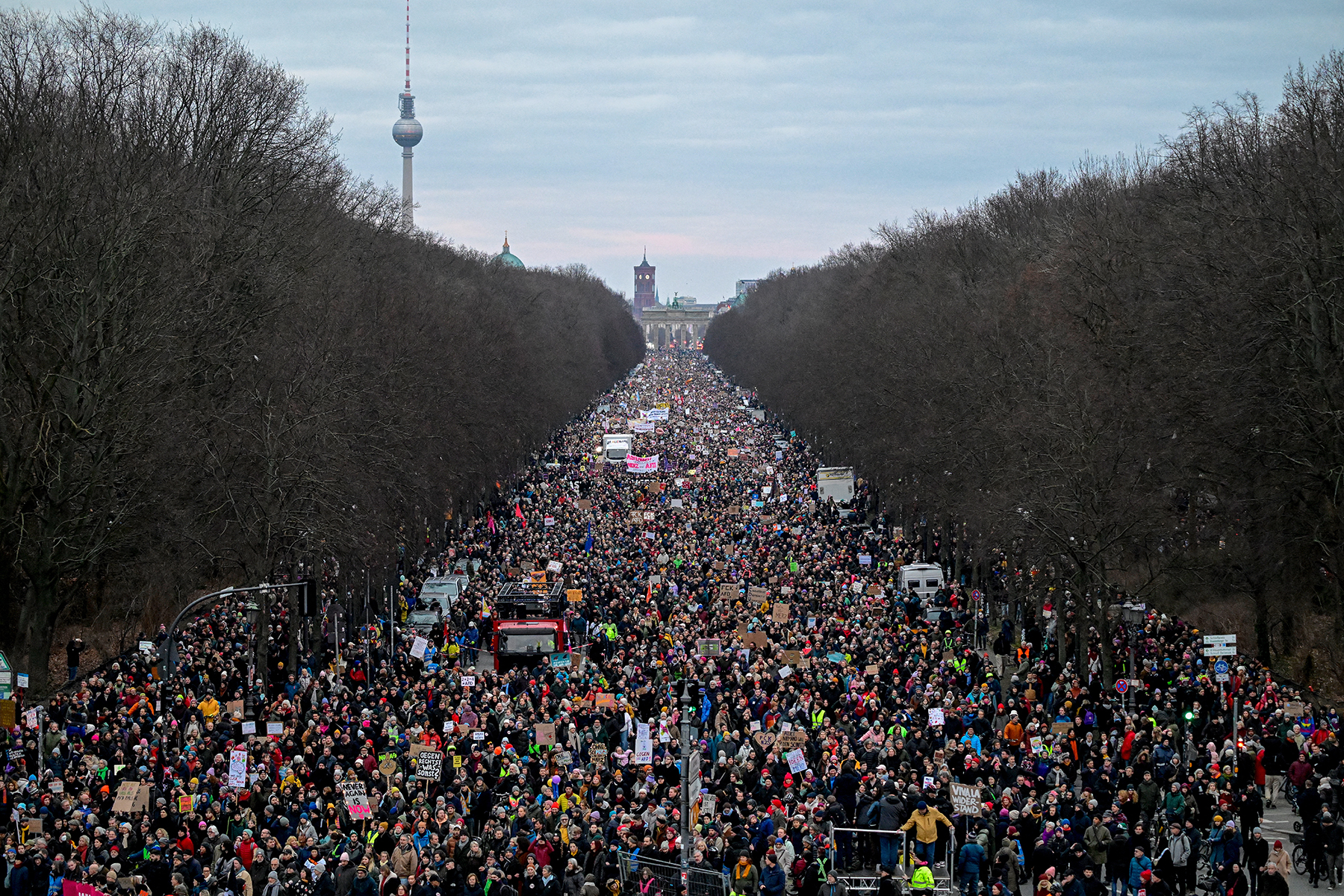
Though Chancellor Friedrich Merz’s conservatives won a snap election in February, his ideologically uneasy coalition, which consists of his own conservative bloc and the center-left Social Democratic Party (SPD), holds one of the slimmest parliamentary majorities for a government since 1945, with just 52 percent of seats. That leaves the Merz coalition vulnerable to small defections within the ranks and makes it hard for him to achieve anything ambitious in government. The far-left Die Linke party and the far-right Alternative for Germany (AfD) both surged at the last election, too, with AfD winning the best result in a national election for any far-right party since World War II.
Merz’s attempt to defang the AfD by moving his conservatives sharply to the right on the issue of migration seems to have backfired. The AfD has only continued its rise, surpassing Merz’s conservatives in many polls.
The rise of the far-right is a cultural shock to many centrist Germans, given the country’s deeply entrenched desire to avoid repeating its past. “For a long time in Germany we thought with our history, and the way we teach in our schools, we would be a bit more immune to that,” one concerned German official said. “It turned out we are not.”
Even in the Netherlands, where centrist Rob Jetten won a famous but narrow victory over the far-right firebrand Geert Wilders in October, there are reasons for mainstream politicians to worry. Wilders’ Freedom Party is still one of the biggest forces in the land, winning the same number of seats as Jetten’s D66. He could well return next time, just as Trump did in the U.S.
Where did all the voters go?
According to polling firm Ipsos, a large proportion of voters in many Western democracies now have little faith in the political process. While they still believe in democratic values, they are dissatisfied with the way democracy is working for them.
A large survey questioning around 10,000 voters across nine countries found 45 percent were dissatisfied, fueling support for the extremes. Among voters on the far left (57 percent) and the far right (54 percent), levels of dissatisfaction were highest of all.
The countries with the highest rates of dissatisfaction in the Ipsos study were France and the Netherlands, where political upheaval has taken its toll on faith in the system.
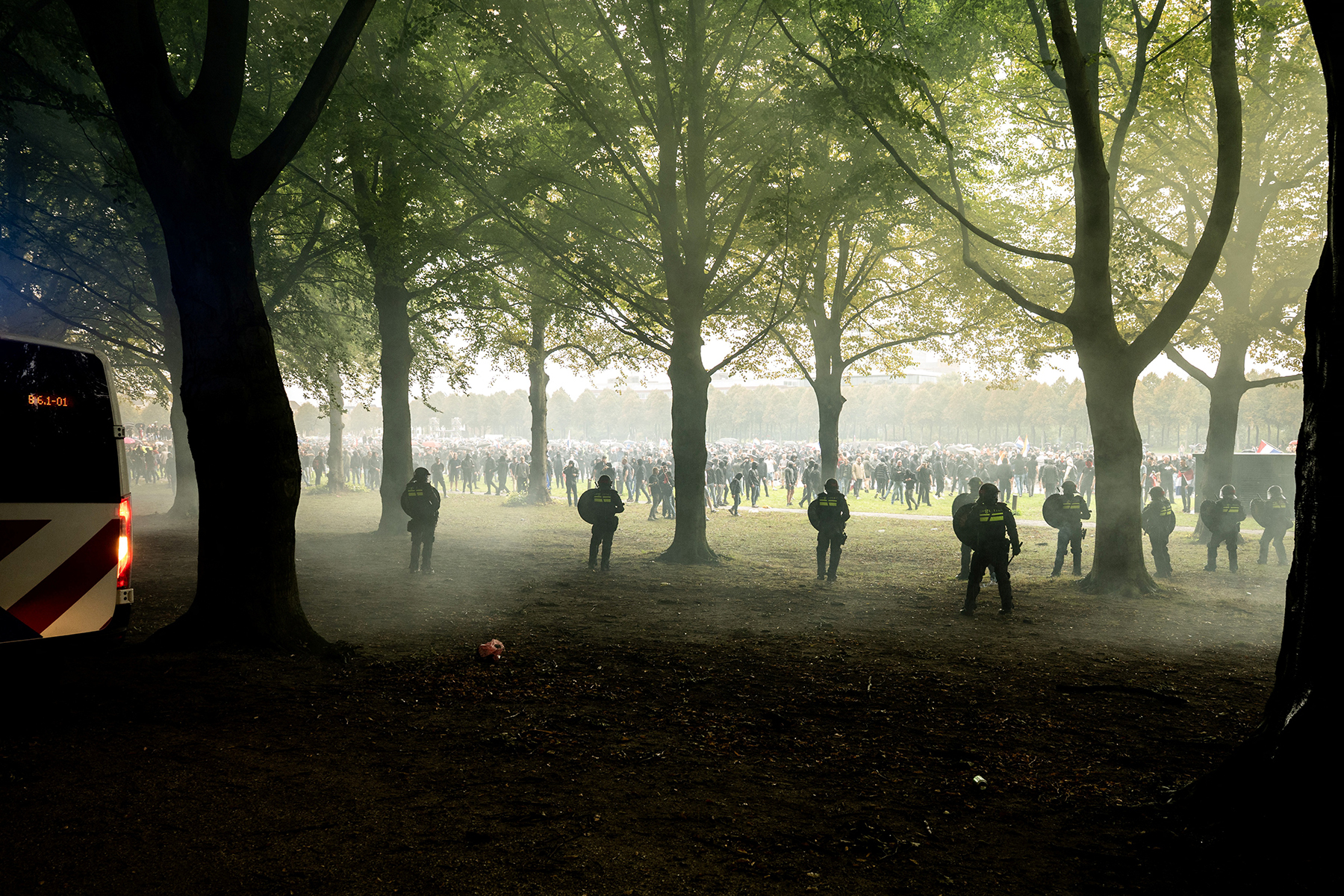

Alongside the coronavirus pandemic and the aftermath of lockdowns, the biggest drivers of dissatisfaction were the cost of living, immigration and crime, according to Gideon Skinner from Ipsos. Trust in politics fell in the 90s and took another hit in the late 2000s at the time of the financial crash, he said.
“There may be specific things that have made it worse over the last couple of years but it’s also a long-term condition,” Skinner told POLITICO. “It’s something we do need to worry about and there is not a silver bullet that can fix it all.”
Perhaps the greatest problem for incumbent centrists is that in most cases their economies are so moribund that they lack the fiscal firepower to spend money addressing the issues disillusioned voters care about most — like high living costs, ailing public services and migration.
The inequality emergency
The financial crisis of 2008 and the coronavirus lockdowns of 2020-21 left many governments strapped for cash. In the U.K., for example, the economy was 16 percent smaller than it should have been a decade after the 2008 crash if prior growth trends had continued, according to Anand Menon, professor of European politics at King’s College London.
“Crucially, the impact of the financial crisis, like the impact of so much else in our politics, was massively unequal,” Menon said. “Prosperous places with high productivity, with well-educated workforces suffered far, far less than poorer parts of the country.”
Nobel Prize-winning economist Joseph Stiglitz submitted a study to the G20 in November warning that the world was facing an “inequality emergency.” Fueled by war, pandemic and trade disruptions, the crisis risks preparing the ground for more authoritarian leaders, his report said.
In many Western countries, the centerground is more than just a metaphor. It is in capital cities like London, Paris and Washington that power and money accumulate and the economic and political elites seek to maintain their grip on the status quo.
The further you travel from these centers out to areas in decline, the more likely you are to find support for radical politics.
As Menon notes, Britain’s 2016 revolution — the referendum vote to leave the European Union after almost half a century of membership — can be mapped onto the culinary geography of the country.
“Pret a Manger” is a smart national chain of sandwich and coffee shops, catering for hungry commuters and office workers in wealthy, successful British cities. “Places that had a Pret voted Remain,” Menon said. Parts of the U.K. where median wages were lower were disproportionately likely to vote to leave the EU.
Immigration, immigration, immigration
After the Brexit vote in 2016, immigration slid from the top of the priority list for British voters and Farage himself took a step back. Both have now returned, as Farage rides a wave of headlines about irregular migrants landing in small boats from France.
From January to May this year, there were a record 14,800 small boat crossings, 42 percent more than in the same period in the previous year, according to Oxford University’s Migration Observatory.
For Laurence, in the Never Say Die pub, the small boats represent the biggest issue of all. “What’s going to happen in 10 years’ time? What’s going to happen in 20 years’ time when the boat people are still coming over?” he asked.
A decade ago, German Chancellor Angela Merkel opened the doors to hundreds of thousands of refugees arriving into Europe from Syria, as well as Afghanistan and Iraq. The AfD surged in the months that followed, permanently changing German politics. At February’s election, the AfD won a record 21 percent of the vote, finishing in second place behind Merz’s conservative bloc.
“The fundamental failure that is common to the whole [centrist] transatlantic community is on immigration,” said Marshall from the Progressive Policy Institute. “All of the far-right movements have made it their top issue.”
It is the perceived threat that waves of migration pose to traditional national cultures which drives much of the support for the far right. Trump’s White House is now primed to join the European nationalists’ fight.
According to a new U.S. National Security Strategy document released in December, Europe is facing “civilisational erasure” from unrestricted immigration, as well as falling birthrates. The analysis draws on the so-called great replacement theory, a racist conspiracy theory. Free speech — in the MAGA definition, at least — is another casualty of conventional centrist rule in Europe, as political correctness veers into “censorship,” the U.S. document said.
In his interview with POLITICO earlier this week, Trump aligned himself fully with the strategy paper. European nations are “decaying” and their “weak” leaders can expect to be challenged by rivals with American support, he said. “I’d endorse,” he added.
In Brussels, the double-punch of the president’s interview and the strategy document left diplomats and officials feeling bruised and alarmed all over again, after a period in which they allowed themselves to hope that the transatlantic alliance wasn’t dying. One EU diplomat was blunt in assessing Trump’s new method: “It’s autocracy.”
The stolen jewels
Sometimes, it takes a random news event — ostensibly unconnected to politics — to crystalize the national mood. In Paris, the theft of France’s priceless crown jewels from the Louvre provided just such an opportunity, morphing into an indictment of an establishment that can’t get the job done, even when the job simply involves thoroughly locking the windows at the world’s most famous museum. National Rally leader Jordan Bardella called the incident a “humiliation” before asking: “How far will the breakdown of the state go?”
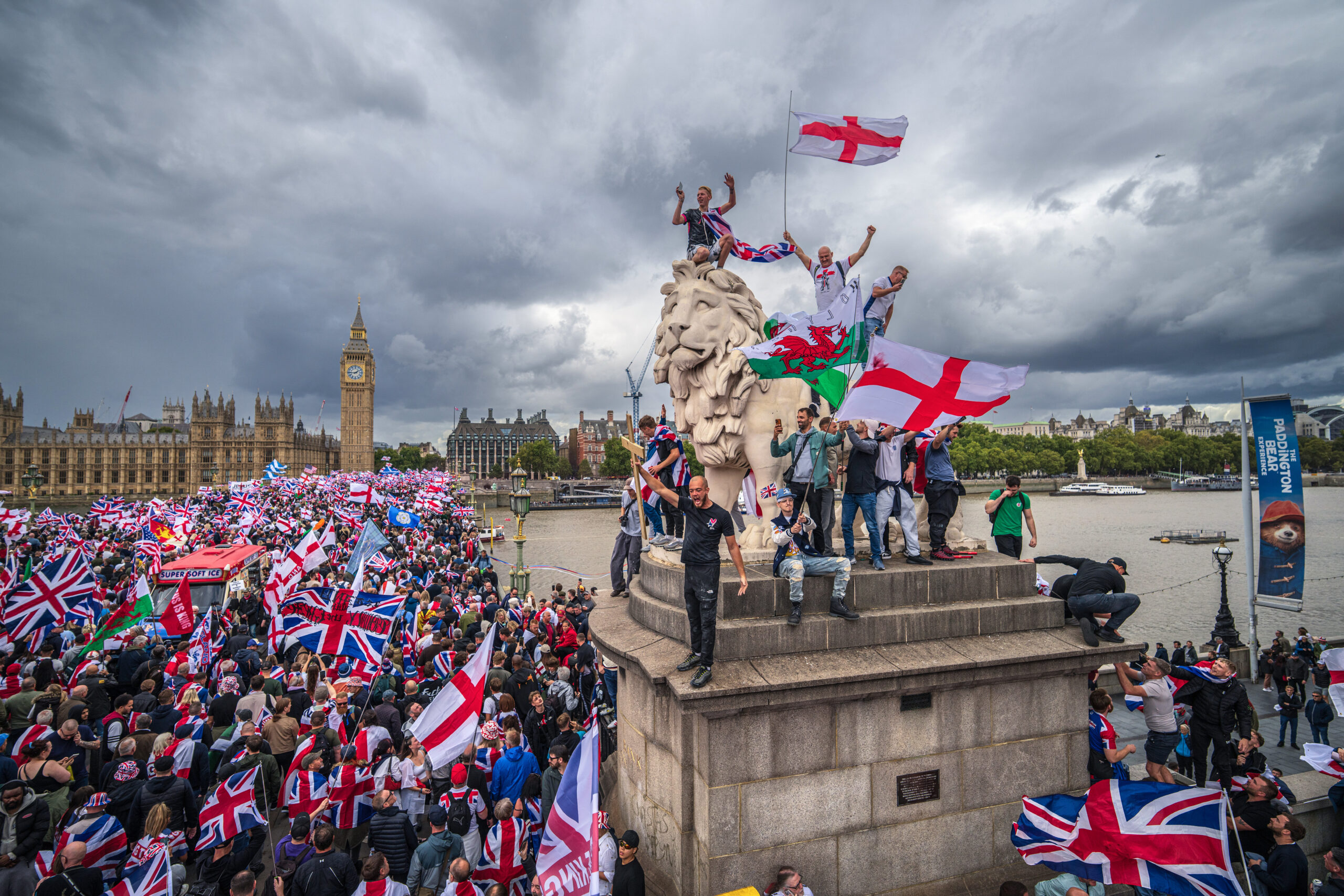
In Britain, just a month after Starmer’s victory last year, riots broke out across the country, fueled by far-right extremists. The catalyst was the murder of three young girls aged 6, 7 and 9, in Southport, northwest England, by a Black teenager wrongly identified at the time on social media — in posts amplified by the far-right — as a Muslim.
At the time, Farage suggested the police were withholding the truth about the suspect, earning him the fury of mainstream politicians. While stressing he did not support violence, Farage railed against what he called “two-tier policing,” a phrase popular among far-right commentators who claim police treat right-wing protesters more harshly than those on the left.
It’s an opinion that resonates in Jaywick. Chennelle Rutland, 56, is walking her two dogs along the beachfront, admiring the view as the sun sets, flaring the sky orange, then purple. The colors catch the surface of the flat sea. “It’s one rule for one and one rule for the other,” she says. “The whites have got to shut up because if you do say anything, you’re ‘racist’ and ‘far right.’”
It would be wrong to characterise residents of Jaywick as simply ignorant or full of rage. Many who spoke to POLITICO there were cheerful, happy with their community and up to speed with the news. But, just as they’d soured on their country’s centrist establishment, they were also tuning out its favored news sources.
In Jaywick, some of Farage’s voters prefer GB News, Britain’s answer to Fox News, which launched in 2021, or learn about current affairs from YouTube and other social media. The BBC — for decades the mainstay of the British media landscape — has lost a portion of its audience here. Right-wing commentators and politicians attack it as biased. Trump has lately joined in, threatening to sue over a BBC edit that he said deceptively made it look as if he was explicitly inciting violence. The BBC’s director general and head of news both resigned. In the process, another piece of Britain’s onetime centerground was giving way.
What next?
There are reasons for centrists to hope. In Rome, Giorgia Meloni’s hard-right Brothers of Italy party has become less extreme in power, and the worst fears of moderates about a group with its historic roots in neo-fascism have not come to pass. She remains popular, and while pushing a culture war at home, she has avoided the wrath of the EU leadership and kept Trump onside.
Populists and nationalists don’t always win. Trump lost in 2020. In the Netherlands, Wilders lost in October this year, though only by a whisker. Romania’s Nicușor Dan won the presidency as a centrist in May, but again only narrowly defeating his far-right opponent.
Structural obstacles may also slow the radicals’ progress. The U.K.’s first-past-the-post voting system makes it hard for new parties to do well. The two-round French system has so far stopped Le Pen’s National Rally from gaining power as centrists combine to back moderates. In Germany, a similar “firewall” exists under which center parties keep the far-right out.
Even as he enjoys a sustained lead in the polls and wins local elections in the U.K., Farage has not convinced voters that Reform would do a good job. Even some of his supporters worry he will be out of his depth in government.
The problem, for the centrists who are in power, is that a lot of voters seem to think they, too, are out of their depth. And, whether that involves dealing with migration, combatting inequality, or just boosting the security around the Mona Lisa, it’s a reputation they’ll need to fix in order to survive — no easy task given the intractability of the challenges facing the rich world.
The next year will see more elections at which the centrists — and their populists rivals — will be tested. In Hungary Prime Minister Viktor Orbán, long seen as the far-right bad boy of EU politics, is fighting to keep power at an election expected in April. There are regional votes in Germany where the AfD is on track to prosper. France may require yet another snap election to end its political paralysis. Trump’s diplomats and officials will be ready to intervene.
Farage’s party, too, will be on the ballot in 2026: It is expected to make gains in Wales, Scotland and local votes elsewhere next spring. After that, his sights will be on the U.K. general election expected in 2029, by which time European politics may look very different.
“Of course I know Mr. Orban and of course I know Giorgia Meloni, of course I know these people,” Farage told POLITICO at a recent Reform rally. “I suspect that after the next election cycle in Europe there will be even more that I know.”
Natalie Fertig in Washington, Clea Caulcutt in Paris and James Angelos in Berlin contributed to this report.



Follow