


BRUSSELS ― The EU’s conservatives are convening for the second time in a week as they increase internal coordination after a tough first year of Ursula von der Leyen’s second term at the head of the European Commission.
After last weekend’s meeting of European People’s Party leaders in Croatia, this week sees EPP members of the European Parliament gather in Slovenia, where they will discuss policy with the bloc’s commissioners in charge of defense and regional development. The party has powerful national chiefs, including German Chancellor Friedrich Merz and Polish Prime Minister Donald Tusk, but is up against surging opposition figures across the political spectrum.
“Populists on the left and right oppose everything without proposing anything,” said European People’s Party Vice Chair Romana Tomc in a statement. The party “will discuss who we will work with to deliver real change in Europe.”
Von der Leyen has seen off four no-confidence votes since the start of her second term on Dec. 1, 2024 while the EPP has been boosted since May by the return of a German chancellor from its ranks. But the group’s traditional Brussels allies from the center left and liberal center have distanced themselves from some EPP policies, especially those supported by the far right such as the rollback of EU green rules, including cuts to corporate sustainability and deforestation legislation.
The Ljubljana meeting is another example of how Manfred Weber, chair of the EPP and head of its European Parliament faction, is trying to tighten decision-making and bring more central control over policy in the Commission, the Parliament and the Council of the EU, which represents national governments, according to two EPP officials. Weber wants to use the different iterations of EPP gatherings to increase the number of touch points for center-right leaders and senior EU officials to meet and coordinate policies ahead of big moments on the calendar, they said.
Next week’s EU diplomacy is particularly intense, with a meeting of defense ministers in Brussels on Wednesday, a summit of EU leaders in the Belgian countryside on Thursday, and the Munich Security Conference, which brings together some of the world’s most powerful decisionmakers, from Friday to Sunday.
Coming together
The EPP is well represented in Brussels, with von der Leyen and Parliament President Roberta Metsola its two leading figures.
In addition to regular pre-summit gatherings, where EPP leaders meet on the morning of European Councils, Weber has inaugurated annual meetings of national chiefs, of which last weekend’s gathering in Zagreb was the most recent.
“The more coordination we can have between various groups of people, the better,” said an EU official granted anonymity to speak freely, like others in this story. “Because then you have the relationships and the format to stop the wheels coming off completely.”
At informal dinners held on the Tuesday ahead of the Parliament’s plenary session in Strasbourg, the EPP’s commissioners, among them von der Leyen, as well as economy chief Valdis Dombrovskis and tech boss Henna Virkkunen, sit down with Weber and his Parliament vice presidents.
These dinners “were set at the beginning of the term and structured in a way that allowed [the party] to have greater influence on the work of the Commission,” said an EPP official.
“The goal — I won’t hide it — is to know in advance the direction the Commission is heading and to have an impact already at the preparatory stage, even before proposals are formally presented,” they added.
Ironclad security
The summit of MEPs in the Slovene capital, which kicked off Wednesday and runs until Friday, is aimed at what the organizers call “strategic planning.”
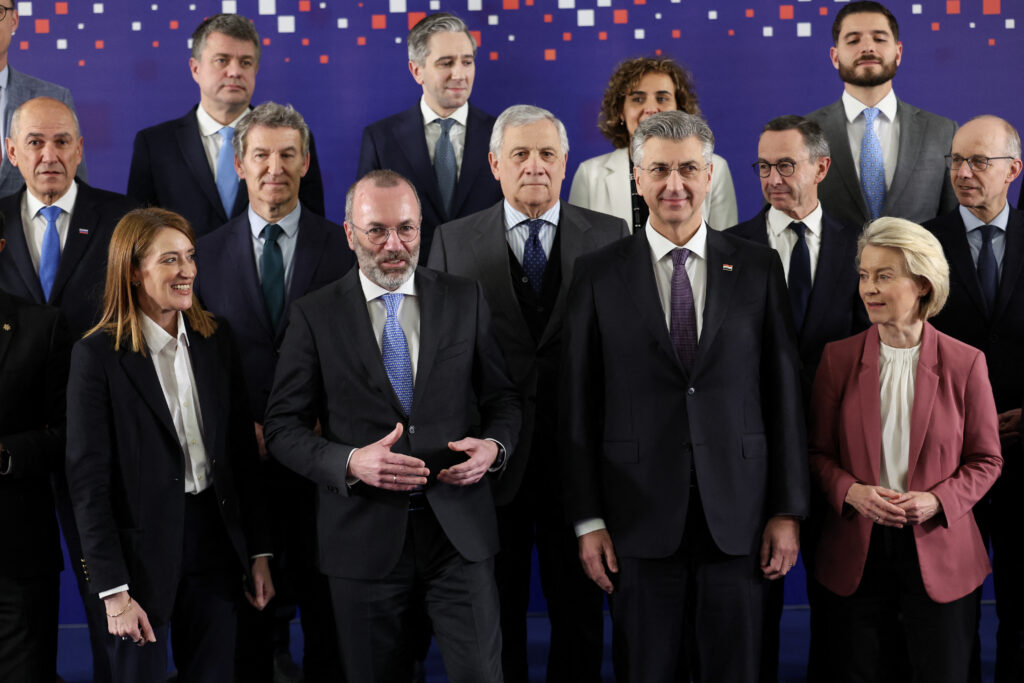
In Zagreb last weekend, leaders agreed to work on making the EU’s mutual-defense clause operational, and tasked two national leaders, as yet unidentified, with spelling out how to make it an ironclad security guarantee. It’s never been used because NATO has a similar provision, but leaders are worried U.S. President Donald Trump will make that obsolete.
Such moves highlight how the EPP is trying to influence wider EU policy and get ahead of security or economic decisions taken by the Commission or by leaders, where opinions from parties opposed to the center right have to be taken into account.
Party members also pointed to the increasingly important role of policy position papers that the EPP now regularly publishes, which give direction to the party’s senior officials and leaders.
The push to water down planks of the Green Deal, as well as an ongoing deregulation drive, both originated in policy papers drafted by the EPP following coordination meetings, two party officials said.
In its 2024 manifesto the party called for the creation of a defense commissioner role, which von der Leyen made a reality when she took office. The party also called for deregulation and watering down the EU Green Deal, which became a central part of von der Leyen’s policy agenda during her second mandate.
Gerardo Fortuna contributed reporting.


Follow