



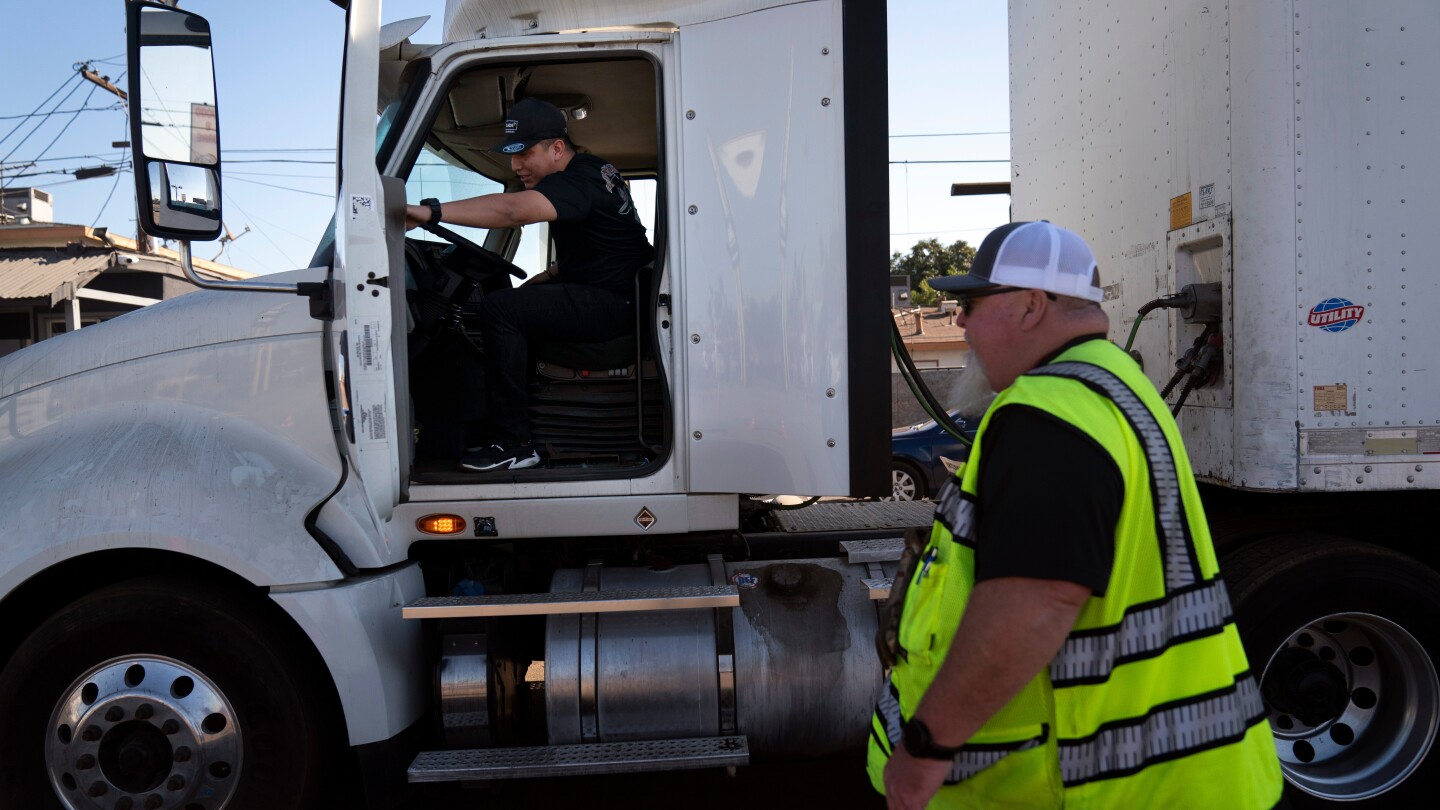
Nearly 44% of the 16,000 truck driving schools in the U.S. may be forced to close if they lose their students after a review by the federal Transportation Department found they may not be complying with government requirements.
The Transportation Department said Monday that it plans to revoke the accreditation of nearly 3,000 schools unless they can comply with training requirements in the next 30 days. The targeted schools must notify students that their accreditation is in jeopardy. Another 4,500 schools are being warned they may face similar action.
Schools that lose accreditation will no longer be able to issue the certificates showing a driver completed training that are required to get a license, so students are likely to abandon those schools.
Separately, the Department of Homeland Security is auditing trucking firms in California owned by immigrants to verify the status of their drivers and whether they are qualified to hold a commercial driver’s license.
This crackdown on trucking schools and companies is the latest step in the government’s effort to ensure that truck drivers are qualified and eligible to hold a commercial license. This began after a truck driver that Transportation Secretary Sean Duffy says was not authorized to be in the U.S. made an illegal U-turn and caused a crash in Florida that killed three people. Duffy has threatened to pull federal funding from California and Pennsylvania over the issue, and he proposed significant new restrictions on which immigrants can get a commercial driver’s license but a court put those new rules on hold.
“We are reigning in illegal and reckless practices that let poorly trained drivers get behind the wheel of semi-trucks and school buses,” Duffy said.
Trucking schools fail to meet standards
It’s not clear how this action against these trucking schools could affect the existing shortage of drivers. The American Trucking Association estimates there were 3.58 million truck drivers out on the roads last year.
The Transportation Department said the 3,000 schools it is taking action against failed to meet training standards and didn’t maintain accurate and complete records. The schools are also accused of falsifying or manipulating training data.
The list of schools being targeted wasn’t immediately released.
Trucking industry groups have praised the effort to tighten up licensing standards and ensure that drivers can meet basic English proficiency requirements the Trump administration began enforcing this summer. But groups that represent immigrant truck drivers say they believe many qualified drivers and companies are being targeted simply because of their citizenship status.
“Bad actors who exploit loopholes in our regulatory systems are putting everyone at risk. This is unacceptable,” said Paul J. Enos, CEO of the Nevada Trucking Association. “We are focused on solutions and resolute on seeing them implemented.”
Todd Spencer, President of the Owner Operator Independent Drivers Association, said the industry has long warned about the potential for problems if trucking schools are allowed to certify themselves.
“When training standards are weak, or in some instances totally non-existent, drivers are unprepared, and everyone on the road pays the price,” Spencer said.
Immigrant drivers say they are being unfairly targeted
Truck drivers of the Sikh faith have been been caught in the crossfire and faced harassment because the drivers in the Florida crash and another deadly crash in California this fall were both Sikhs. The North American Punjabi Truckers Association estimates that the Sikh workforce makes up about 40% of truck driving on the West Coast and about 20% nationwide. Advocacy groups estimate about 150,000 Sikh truck drivers work in the U.S.
The Department of Homeland Security didn’t respond immediately to questions about the effort to verify the immigration status of truck drivers, but the United Sikhs advocacy group said they have heard directly from Punjabi company owners about these aggressive audits of immigration records.
“Sikh and immigrant truckers with spotless records are being treated like suspects while they keep America’s freight moving,” the United Sikhs group said. “When federal agencies frame lawful, licensed drivers as risks, it doesn’t improve safety — it fuels xenophobia, harassment, and even violence on the road. Any policy built on fear instead of facts endangers families, civil rights, and the national supply chain.”
California moved to revoke 17,000 commercial driver’s licenses after federal officials raised concerns that they had been issued improperly to immigrants or allowed to remain valid long after a driver’s work permit expired.



Follow