



LONDON — If you thought U.K. politics was a rollercoaster this year, grip tight for 2026.
Less than two years after his landslide victory, Keir Starmer faces an internal threat to his leadership following major elections next May. The center-left prime minister will pin his hopes not just on his internal rivals’ disarray, but also a fresh legislative agenda — also in May — to “turn renewal into reality.”
Best of luck. There are no easy answers, as a growth-hunting visit to China will show painfully, and lawmakers in Starmer’s ruling Labour Party are as impatient as the public. Newbie MPs are squeezed between rising popularity for the left-wing Greens and Nigel Farage’s right-wing populist party Reform UK, which has led opinion polls consistently since April.
To turn it around, Starmer’s aides want to tackle problems baked into the state for years —on welfare, social care, backlogged courts, special needs support and glacial infrastructure development. Ministers will have to enact reforms they promised to the migration system, a political landmine that has wounded so many predecessors.
Endless hurdles stand in Starmer’s way. Some, like his own leadership, are down to him. Others, like Ukraine and Donald Trump’s mercurial trade policy, will feel out of his grasp.
Below, POLITICO whips through the key dates for your diary in a year that will test whether Starmer can survive. And you can listen to an audio tour of the year ahead (with special guests) in POLITICO’s Westminster Insider podcast, presented by Patrick Baker.
Is Keir Starmer doomed?
Elections on May 7 should show big gains for Reform UK and test if Britain’s two mainstream parties are in freefall. With the Scottish and Welsh parliaments, all 32 London boroughs and 100 other English councils up for grabs, these are the closest thing to “midterms” before a general election in 2029. Scottish Labour fears third place behind the Scottish National Party and Reform, while polls project Welsh Labour (after a century in power) could be the junior partner in a coalition with left-wing nationalists Plaid Cymru. Labour figures in London fear the Greens will eat them from the left.
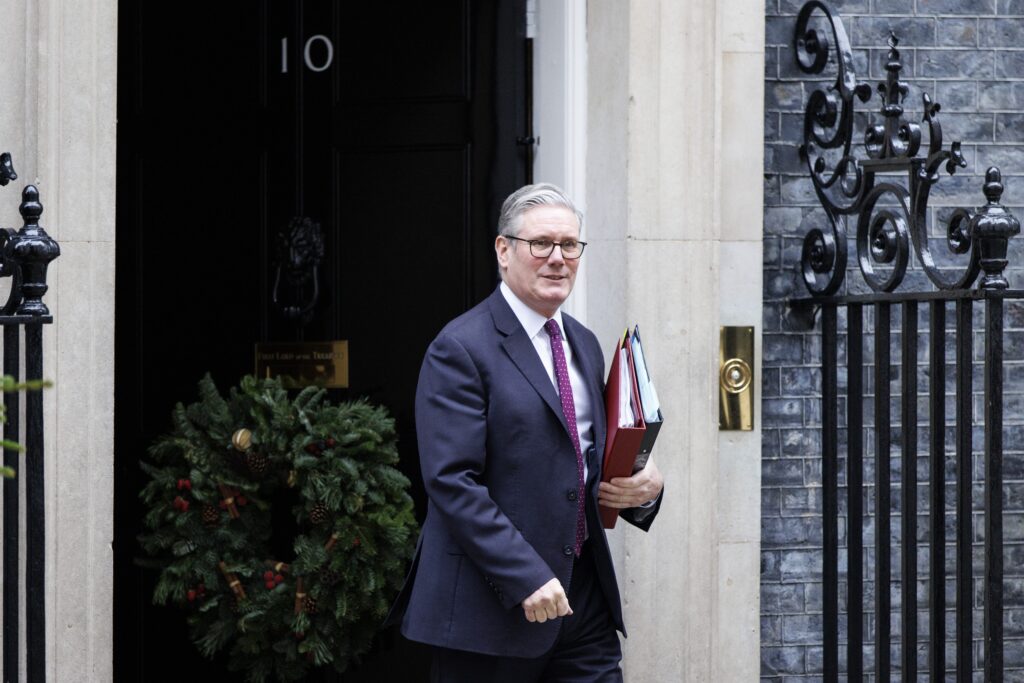
Can Keir Starmer survive? This will depend if 80 Labour MPs are willing to put their names to a public leadership putsch, and whether the faction-ridden party then unites around a candidate. MPs whisper that Health Secretary Wes Streeting, the most ambitious son of the “Labour right,” is struggling to convince a figure of the “soft left,” such as former Deputy PM Angela Rayner, to run on a joint ticket. (Naturally, both teams deny maneuvering). Other names include Defence Secretary John Healey and Home Secretary Shabana Mahmood, but whether either would get the numbers is unclear. Greater Manchester Mayor Andy Burnham has paraded his ambitions but would need to win a by-election to become an MP, and Labour’s ruling body may block him.
It will be a big year for the future of the left. The Greens have surged in the polls under their new leader, hypnotist Zack Polanski, who abandoned any offer to Conservatives in favor of left-wing populism. May will test whether the Greens can capitalize or find their vote split by Your Party, a troubled left-wing outfit linked to ex-Labour leader Jeremy Corbyn.
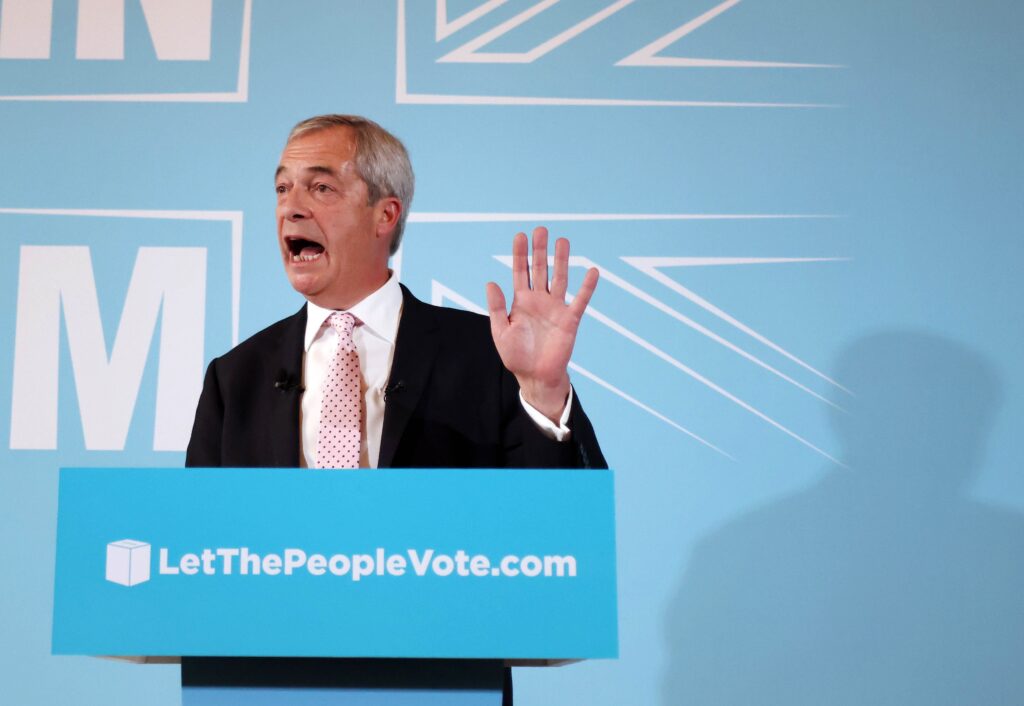
Reform UK will need to get a policy agenda. Farage spent the second half of 2025 putting flesh on the bones, but there are still huge gaps. Aides are promising a busy January and many will watch for May, when six-month policy reviews on City regulation, tax and pensions — commissioned by Deputy Leader Richard Tice — are due to end. Having rocketed in the first half of 2025, Reform’s poll rating has levelled off (albeit at a comfortable first place). Has Farage’s party hit a ceiling?
Kemi Badenoch’s future as Conservative leader will be under discussion again after May. Will her recent improvement be enough to hold off a challenge if election results are grim?
Migration dominates all
Labour promised hardline migration reforms in November — now it must actually deliver them. But while officials hope to make progress on Home Secretary Shabana Mahmood’s package in the first half of the year, parts will require legislation in the King’s speech (more on which below). Most Labour MPs appear to be behind reform but there is vocal opposition from the left, the devil will be in the detail and some MPs fear it won’t recapture voters from Farage.
The future of the European Convention on Human Rights (ECHR) will reach a crunch point on May 15, when foreign ministers from 46 European states meet in Moldova. They want to agree a political declaration on how the ECHR is applied. Britain wants to reshape the application of Article 3 (on “inhuman or degrading” treatment) so it blocks fewer migrant deportations. But views diverge wildly across Europe and in Britain. The Conservatives and Reform UK would withdraw from the 1953 treaty entirely.
Small boats overloaded with migrants will continue arriving across the English Channel — numbers rose in 2025 compared to 2024. If Mahmood needs one statistic to fall dramatically across her brief, it will be this. She also needs the number of asylum seekers living in government-funded hotels to fall further.
Waiting for delivery
The King’s speech, laden with pomp, will be Keir Starmer’s second and a rare chance for the PM to convert his endless promises about “delivery” into legislation. Yet it is fraught with danger. While the date is a secret, officials expect it in May — shortly after the local elections — which would see Starmer unveiling a year-long program for government just as the risk to his job is most stark. May is a common date for this in any given year. But don’t forget: votes on the King’s speech are generally considered votes of confidence in the government.
The speech will likely include some of the thorniest issues bothering the British state, including migration rules and support for children with special education needs and disability (SEND). It could move ahead with mandatory digital ID, beloved by the center-left as a tool of efficiency but eyed with suspicion by some voters and the right. It is likely to contain bills tackling “foreign interference” in elections and lowering the voting age to 16. Existing bills on railway reform and the prosecution framework for the Troubles in Northern Ireland may slip beyond May. And legislation on scrapping many jury trials — a controversial move designed to clear a court backlog — could appear before May but be carried into the next session too.
Labour’s fortunes will hinge on the economy and Rachel Reeves’ budget around October or November — if she is still in the job. Before then, all eyes will be on whether inflation and Bank of England interest rates continue their recent falls (further bank rate decisions are due on Feb. 5, Mar. 19 and Apr. 30) and if Reeves can meet her promise to “beat” forecasts of sluggish GDP growth in 2026. Opponents say her recent tax hikes have made that harder. The chancellor is expected to seek investment at the World Economic Forum in Davos on Jan. 19, and will keep pushing infrastructure projects to boost growth — a consultation on an airports policy statement (paving the way to expand Heathrow) is expected by July.
Reeves’ spring statement is most likely in March but officials want to dampen speculation, saying it may be called a mere “spring forecast.” Last year, events forced her to turn it into a minor fiscal event. Will she do better this time after leaving more wriggle room in her last budget?

Starmer will try to sell his achievements so far, including capping prescription charges and rail fares, and offering new community diagnostic centers and breakfast clubs for school pupils. His aides are planning cost-of-living themed visits in January. Then April will see changes including the first phase of Labour’s expansion of free school meals to families on Universal Credit, a 4.8 percent rise in the state pension, a 4.1 percent rise in the minimum wage, the end of the two-child limit on welfare and a 3.8 percent benefits rise. Officials suggest that plans to publish a leasehold reform bill have slipped from this year (probably to January).
Around the world
Keir Starmer’s big visit to China, still slated for late January, will be when the PM’s pledge to boost trade with Beijing while protecting national security meets harsh reality. There are live talks about the size and scope of the U.K. delegation, such as the question of whether to bring CEOs and a wider pool of ministers, said one person with knowledge of the conversations. But the security trade-offs will be stark and showcase the dilemmas facing the once-great powers of Europe. Case in point: ministers are due to decide by Jan. 20 if China can build a super-embassy near London’s financial hub.
Caribbean countries demanding historical slavery reparations may rear their heads in 2026. One official familiar with the planning suggested a delegation from the Caribbean Community (CARICOM) is slated to make a long-delayed visit to Britain in spring, possibly March, while the biennial Commonwealth Heads of Government Meeting (CHOGM) on Nov. 1 is in the Caribbean nation of Antigua and Barbuda. Britain has no desire to offer payments. Buckle up.
Talks on moving post-Brexit Britain closer to the EU will ramp up ahead of a second annual summit between the two sides (perhaps May or June but not nailed down). Britain won a return to the Erasmus student exchange scheme in late December. Talks on a youth mobility scheme are progressing but a key question will be the format of a cap on numbers. The shape of a defense and security partnership will be a big focus, but talks on rejoining the EU’s SAFE defense program got stuck over the costs. No. 10 officials believe they can push further before reaching red lines, which include not rejoining the EU customs union … but some Labour figures want to do just that.
Extra tariffs on EU imports of carbon-intensive goods are set to kick in on Jan. 1. While British exporters will be able to avoid the Carbon Border Adjustment Mechanism (CBAM) tax once the U.K. and EU finalise a deal, some may be hit in the meantime.
A formal treaty on Gibraltar, removing border checks between the British territory and Spain, has run out of time this year but is due to be signed in the new year, one person with knowledge of it said. A European Commission spokesperson said this week that a text is now at the review stage, after the two sides reached political agreement in June 2025.

Donald Trump’s trade policy remains the great unknown. The U.S. and U.K. are still haggling over key elements of their relationship — the White House was still pushing Britain to change its standards for goods and food manufacturing — and Trump’s administration paused its tech prosperity deal with Britain. No. 10 will hope nothing else slips backward, after reports that a recent breakthrough on pharmaceuticals had still not been boiled down to legal text.
Britain’s new ambassador to Washington will be critical to the future of talks. Keir Starmer faced the same toss-up he did when he chose ill-fated envoy Peter Mandelson — between a political schmoozer and a diplomat. In the end, he went for the latter. With Trump, there’s no perfect answer.
Other elections around the world will be watched closely by all British parties for signs of the global mood — not least the U.S. midterms on Nov. 3, which will test whether the Republicans can hold both the House of Representatives and the Senate. Hungary’s election is expected in April in a test for right-wing leader Viktor Orbán … Sweden will vote in September and Denmark in October in a test for both nations’ social democrats (and, in Denmark, whether migration controls can win over the public). Labour wants a comeback in New Zealand by December … and Russia’s Duma holds elections by September. No one can guess how that last one will go.
Prospects for peace in Ukraine are edging closer but remain in the balance. The Munich Security Conference is on Feb. 13 and London’s Lancaster House will host a summit on illicit finance on June 23 … but in reality, any breakthroughs are likely to come in hastily-arranged talks off the usual calendar. Despite Britain’s best efforts, the final call is likely to come down to Kyiv, Washington D.C. — and Vladimir Putin, whose full-scale invasion of Ukraine marks its fourth anniversary on Feb. 24. Meanwhile, the U.K. government’s defense investment plan has been delayed into 2026 — with armed forces chiefs nervous about how a pledge to raise spending in line with NATO allies will work out in practice.
Israel is due to hold elections to the Knesset by Oct. 27 — but they could come sooner, as the parliament will be dissolved if the state budget is not approved by Mar. 31. This will put PM Benjamin Netanyahu’s right-wing coalition under strain at a critical time as Gaza works through Donald Trump’s 20-point “peace” plan (albeit without Tony Blair). U.K. officials believe there has been some progress in recent weeks toward the second phase of this plan, but ministers say phase one is “not fully implemented” and questions remain around what an “international stabilization force” will look like.
Britain will try to talk about Sudan, which is gripped by a vicious civil war — “the worst conflict in the world that’s happening right now,” as one U.K. official puts it. There is a link to the U.K.’s delicate relations in the Middle East, as the United Arab Emirates has been accused of backing a notorious militia (which it denies).

Labour has retained many of its big net zero pledges, including to decarbonize the electricity grid by 2030 — not least thanks to Energy Secretary Ed Miliband fighting his corner. But the rising cost of living has brought fresh pressure and Trump’s election has pushed the issue down the international agenda. Will Britain’s PM attend the UN’s next climate summit in Turkey in November?
Broken Britain
Welfare reform is a generational challenge and the biggest test of Labour unity. Ex-minister Alan Milburn’s review of “economically inactive” young people is due in summer, while Disability Minister Stephen Timms’ review of PIP benefit is due in fall, with an interim report earlier. The latter launched after Labour MPs defeated Starmer’s attempts to cut disability support. It remains unclear what it will recommend or how it will be converted into legislation, let alone whether Labour MPs will allow it.
Labour’s relationship with the unions looks set to worsen. Doctors are still on strike over pay, the next round of talks on public sector wages will come in spring, and the once-friendly UNISON union chose left-wing outsider Andrea Egan as its new leader this week. That means 2026 could see both UNISON and Unite — two of Labour’s major union backers — discuss whether to formally disaffiliate from the party.
Assisted dying could be legalized in England and Wales — but the bill by a Labour MP, Kim Leadbeater, has generated huge controversy and is making slow progress in the House of Lords. Tensions will rise if it is not nearing completion by the King’s speech.
A white paper on school standards is due in early 2026 and SEND reforms will be the political hot potato. Labour officials insist these will be about catching issues (such as speech) at an earlier stage rather than cutting support. But the bill for home-to-school transport has surged and Reform UK is reviewing this issue too.
The future of the BBC will become clearer (a bit). A review of the national broadcaster’s 10-year royal charter began this week and could tear up its funding model. All this while it searches for a new director general … and fights a $10 billion lawsuit from Trump. There is a silver lining, though. One official predicted the BBC World Service will receive a new tranche of government funding in the new year.

Reform of the creaking social care system continues to trudge along slowly, led by multi-tasking government tsar Louise Casey. Critics complained that cross-party talks were too slow to get off the ground. One participant predicted no white smoke before England’s councils set budgets (and council tax rises) in February and March.
The restoration of the U.K.’s crumbling parliament will be kicked into the long grass. Palace of Westminster authorities are due to publish the multi-bullion costings for four options early in the new year, but MPs are only expected to narrow them down to two and begin preparatory work, with a vote on this currently due some time before July. The final way forward would only then be decided in the early 2030s. If the whole place hasn’t burned down by then, of course. Happy Christmas!
Jon Stone contributed reporting.



Follow