



LONDON — Choosing your Brexit camp was once the preserve of Britain’s Tories. Now Labour is joining in the fun.
Six years after Britain left the EU, a host of loose — and mostly overlapping — groupings in the U.K.’s ruling party are thinking about precisely how close to try to get to the bloc.
They range from customs union enthusiasts to outright skeptics — with plenty of shades of grey in between.
There’s a political urgency to all of this too: with Prime Minister Keir Starmer tanking in the polls, the Europhile streak among many Labour MPs and members means Brexit could become a key issue for anyone who would seek to replace him.
“The more the screws and pressure have been on Keir around leadership, the more we’ve seen that play to the base,” said one Labour MP, granted anonymity like others quoted in this piece to speak frankly. Indeed, Starmer started the new year explicitly talking up closer alignment with the European Union’s single market.
At face value, nothing has changed: Starmer’s comments reflect his existing policy of a “reset” with Brussels. His manifesto red lines on not rejoining the customs union or single market remain. Most of his MPs care more about aligning than how to get there. In short, this is not like the Tory wars of the late 2010s.
Well, not yet. POLITICO sketches out Labour’s nascent Brexit tribes.
The Customs Unionists
It all started with a Christmas walk. Health Secretary Wes Streeting told an interviewer he desires a “deeper trading relationship” with the EU — widely interpreted as hinting at joining a customs union.
This had been a whispered topic in Labour circles for a while, discussed privately by figures including Starmer’s economic adviser Minouche Shafik. Deputy Prime Minister David Lammy said last month that rejoining a customs union is not “currently” government policy — which some took as a hint that the position could shift.
But Streeting’s leadership ambitions (he denies plotting for the top job) and his willingness to describe Brexit as a problem gave his comments an elevated status among Labour Europhiles.
“This has really come from Wes’s leadership camp,” said one person who talks regularly to No. 10 Downing Street. Naomi Smith, CEO of the pro-EU pressure group Best for Britain, added any Labour leadership contest will be dominated by the Brexit question. MPs and members who would vote in a race “are even further ahead than the public average on all of those issues relating to Europe,” she argued.
Joining a customs union would in theory allow smoother trade without returning to free movement of people. But Labour critics of a customs union policy — including Starmer himself — argue it is a non-starter because it would mean tearing up post-Brexit agreements with other countries such as India and the U.S. “It’s just absolutely nonsense,” said a second Labour MP.
And since Streeting denies plotting and did not even mention a customs union by name, the identities of the players pushing for one are understandably murky beyond the 13 Labour MPs who backed a Liberal Democrat bill last month requiring the government to begin negotiations on joining a bespoke customs union with the EU.
One senior Labour official said “hardly any” MPs back it, while a minister said there was no organized group, only a vague idea. “There are people who don’t really know what it is, but realize Brexit has been painful and the economy needs a stimulus,” they said. “And there are people who do know what this means and they effectively want to rejoin. For people who know about trade, this is an absolute non-starter.”
Anand Menon, director of the UK in a Changing Europe think tank, said a full rejoining of the EU customs union would mean negotiating round a suite of “add-ons” — and no nations have secured this without also being in the EU single market. (Turkey has a customs union with the EU, but does not benefit from the EU’s wider trade agreements.) “I’m not convinced the customs union works without the single market,” Menon added.
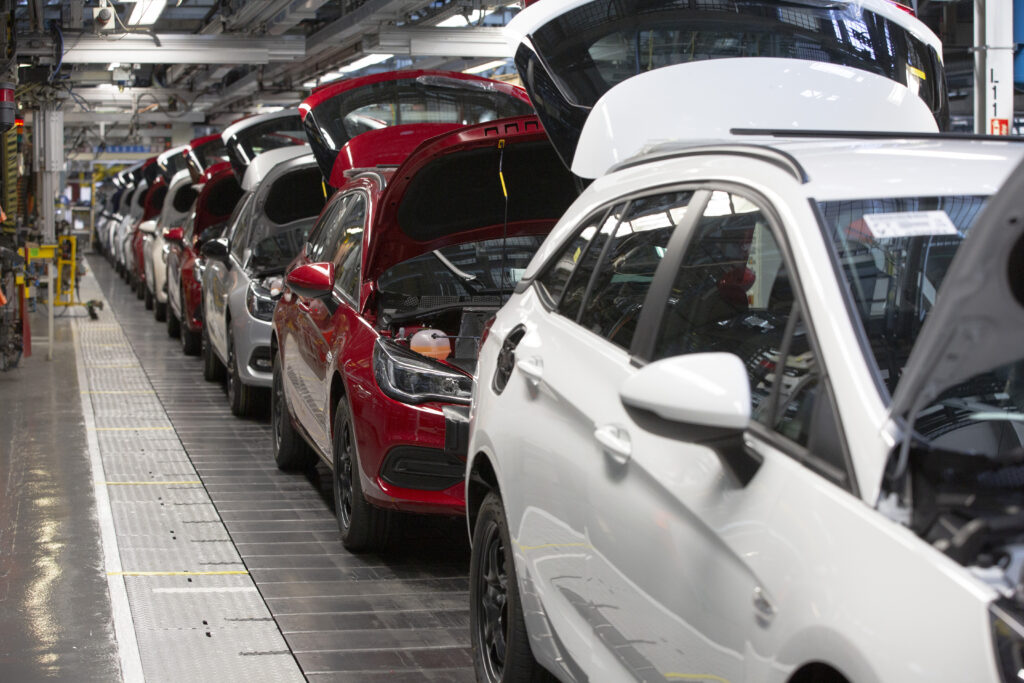
Starmer has argued that the customs union route would mean hard conversations with workers in the car industry after Britain secured a U.K.-U.S. tariff deal last summer, a person with knowledge of his thinking said.
“When you read anything from any economically literate commentator, the customs union is not their go-to,” added the senior Labour official quoted above. “Keir is really strong on it. He fully believes it isn’t a viable route in the national interest or economic interest.”
The Single Marketeers (a.k.a. the government)
Starmer and his allies, then, want to park the customs union and get closer to the single market.
Paymaster General Nick Thomas-Symonds has long led negotiations along these lines through Labour’s existing EU “reset.” He and Starmer recently discussed post-Brexit policy on a walk through the grounds of the PM’s country retreat, Chequers.
Working on the detail with Thomas-Symonds is Michael Ellam, the former director of communications for ex-PM Gordon Brown, now a senior civil servant in the Cabinet Office. Ellam is “a really highly regarded, serious guy” and attends regular meetings with Brussels officials, said a second person who speaks regularly to No. 10.
A bill is due to be introduced to the U.K. parliament by summer which will allow “dynamic” alignment with new EU laws in areas of agreement. Two people with knowledge of his role said the bill will be steered through parliament by Cabinet Office Minister Chris Ward, Starmer’s former aide and close ally, who was by his side when Starmer was shadow Brexit secretary during the “Brexit wars” of the late 2010s.
Starmer himself talked up this approach in a rare long-form interview this week with BBC host Laura Kuenssberg, saying: “We are better looking to the single market rather than the customs union for our further alignment.” While the PM’s allies insist he simply answered a question, some of his MPs spy a need to seize back the pro-EU narrative.
The second person who talks regularly to No. 10 argued a “relatively small … factional leadership challenge group around Wes” is pushing ideas around a customs union, while Starmer wants to “not match that but bypass it, and say actually, we’re doing something more practical and potentially bigger.”
A third Labour MP was blunter about No. 10’s messaging: “They’re terrified and they’re worrying about an internal leadership challenge.”
Starmer’s allies argue that their approach is pragmatic and recognizes what the EU will actually be willing to accept.
Christabel Cooper, director of research at the pro-Labour think tank Labour Together — which plans polling and focus groups in the coming months to test public opinion on the issue — said: “We’ve talked to a few trade experts and economists, and actually the customs union is not all that helpful. To get a bigger bang for your buck, you do need to go down more of a single market alignment route.”
Nick Harvey, CEO of the pro-EU pressure group European Movement UK, concurred: “The fact that they’re now talking about a fuller alignment towards the single market is very good news, and shows that to make progress economically and to make progress politically, they simply have to do this.”
But critics point out there are still big questions about what alignment will look like — or more importantly, what the EU will go for.
The bill will include areas such as food standards, animal welfare, pesticide use, the EU’s electricity market and carbon emissions trading, but talks on all of these remain ongoing. Negotiations to join the EU’s defense framework, SAFE, stalled over the costs to Britain.
Menon said: “I just don’t see what [Starmer] is spelling out being practically possible. Even at the highest levels there has been, under the Labour Party, quite a degree of ignorance, I think, about how the EU works and what the EU wants.
“I’ve heard Labour MPs say, well, they’ve got a veterinary deal with New Zealand, so how hard can it be? And you want to say, I don’t know if you’ve noticed, but New Zealand doesn’t have a land border with the EU.”
The Swiss Bankers
Then there are Europhile MPs, peers and campaigners who back aligning with the single market — but going much further than Starmer.
For some this takes the form of a “Swiss-style” deal, which would allow single market access for some sectors without rejoining the customs union.
This would plough through Starmer’s red lines by reintroducing EU freedom of movement, along with substantial payments to Brussels.
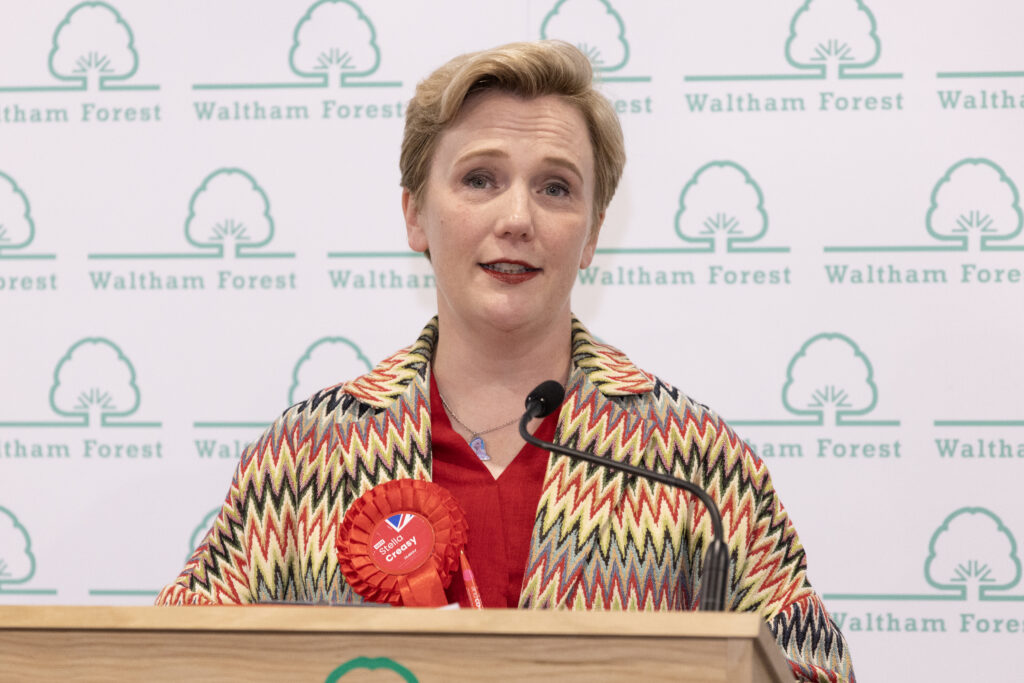
But Stella Creasy, chair of the Labour Movement for Europe (LME), argued that promising a Swiss-style deal in Labour’s next election manifesto (likely in 2029) would benefit the economy — far more than the “reset” currently on the table. She said: “If you could get a Swiss-style deal and put it in the manifesto … that would be enough for businesses to invest.”
Creasy said LME has around 150 MPs as members and holds regular briefings for them. While few Labour MPs back a Swiss deal — and various colleagues see Creasy as an outlier — she said MPs and peers, including herself, plan to put forward amendments to the dynamic alignment bill when it goes through parliament.
Tom Baldwin, Starmer’s biographer and the former communications director of the People’s Vote campaign (which called for a second referendum on Brexit), also suggests Labour could go further in 2029. “Keir Starmer’s comments at the weekend about aligning with — and gaining access to — the single market open up a whole range of possibilities,” he said. “At the low end, this is a pragmatic choice by a PM who doesn’t want to be forced to choose between Europe and America.
“At the upper end, it suggests Labour may seek a second term mandate at the next election by which the U.K. would get very close to rejoining the single market. That would be worth a lot more in terms of economic growth and national prosperity than the customs union deal favoured by the Lib Dems.”
A third person who speaks regularly to No. 10 called it a “boil the frog strategy.” They added: “You get closer and closer and then maybe … you go into the election saying ‘we’ll try to negotiate something more single markety or customs uniony.’”
The Rejoiners?
Labour’s political enemies (and some of its supporters) argue this could all lead even further — to rejoining the EU one day.
“Genuinely, I am not advocating rejoin now in any sense because it’s a 10-year process,” said Creasy, who is about as Europhile as they come in Labour. “Our European counterparts would say ‘hang on a minute, could you actually win a referendum, given [Reform UK Leader and Brexiteer Nigel] Farage is doing so well?’”
Simon Opher, an MP and member of the Mainstream Labour group closely aligned with Burnham, said rejoining was “probably for a future generation” as “the difficulty is, would they want us back?”
But look into the soul of many Labour politicians, and they would love to still be in the bloc — even if they insist rejoining is not on the table now.
Andy Burnham — the Greater Manchester mayor who has flirted with the leadership — remarked last year that he would like to rejoin the EU in his lifetime (he’s 56). London Mayor Sadiq Khan said “in the medium to long term, yes, of course, I would like to see us rejoining.” In the meantime Khan backs membership of the single market and customs union, which would still go far beyond No. 10’s red lines.
The Issues-Led MPs
Then there are the disparate — yet overlapping — groups of MPs whose views on Europe are guided by their politics, their constituencies or their professional interests.
To Starmer’s left, backbench rebels including Richard Burgon and Dawn Butler backed the push toward a customs union by the opposition Lib Dems. The members of the left-wing Socialist Campaign Group frame their argument around fears Labour will lose voters to other progressive parties, namely the Lib Dems, Greens and SNP, if they fail to show adequate bonds with Europe. Some other, more centrist MPs fear similar.
Labour MPs with a military background or in military-heavy seats also want the U.K. and EU to cooperate further. London MP Calvin Bailey, who spent more than two decades in the Royal Air Force, endorsed closer security relations between Britain and France through greater intelligence sharing and possibly permanent infrastructure. Alex Baker, whose Aldershot constituency is known as the home of the British Army, backed British involvement in a global Defense, Security and Resilience Bank, arguing it could be key to a U.K.-EU Defence and Security Pact. The government opted against joining such a scheme.
Parliamentarians keen for young people to bag more traveling rights were buoyed by a breakthrough on Erasmus+ membership for British students at the end of last year. More than 60 Labour MPs earlier signed a letter calling for a youth mobility scheme allowing 18 to 30-year-olds expanded travel opportunities on time limited visas. It was organized by Andrew Lewin, the Welywn Hatfield MP, and signatories included future Home Office Minister Mike Tapp (then a backbencher).
Labour also has an influential group of rural MPs, most elected in 2024, who are keen to boost cooperation and cut red tape for farmers. Rural MP Steve Witherden, on the party’s left, said: “Three quarters of Welsh food and drink exports go straight to the EU … regulatory alignment is a top priority for rural Labour MPs. Success here could point the way towards closer ties with Europe in other sectors.”
The Not-So-Secret Europhiles (a.k.a. all of the above)
Many Labour figures argue that all of the above are actually just one mega-group — Labour MPs who want to be closer to Brussels, regardless of the mechanism.
Menon agreed Labour camps are not formalized because most Labour MPs agree on working closely with Brussels. “I think it’s a mishmash,” he said. But he added: “I think these tribes will emerge or develop because there’s an intra-party fight looming, and Brexit is one of the issues people use to signal where they stand.”
A fourth Labour MP agreed: “I didn’t think there was much of a distinction between the camps of people who want to get closer to the EU. The first I heard of that was over the weekend.”
The senior Labour official quoted above added: “I don’t think it cuts across tribes in such a clear way … a broader group of people just want us to move faster in terms of closeness into the EU, in terms of a whole load of things. I don’t think it fits neatly.”
For years MPs were bound by a strategy of talking little about Brexit because it was so divisive with Labour’s voter base. That shifted over 2025. Labour advisers were buoyed by polls showing a rise in “Bregret” among some who voted for Brexit in 2016, as well as changing demographics (bluntly, young voters come of age while older voters die).
No. 10 aides also noted last summer that Farage, the leader of the right-wing populist party Reform UK, was making Brexit less central to his campaigning. Some aides (though others dispute this) credit individual advisers such as Tim Allan, No. 10’s director of communications, as helping a more openly EU-friendly media strategy into being.
The Blue Labour Holdouts
Not everyone in Labour wants to hug Brussels tight.
A small but significant rump of Labour MPs, largely from the socially conservative Blue Labour tribe, is anxious that pursuing closer ties could be seen as a rejection of the Brexit referendum — and a betrayal of voters in Leave-backing seats who are looking to Reform.
One of them, Liverpool MP Dan Carden, said the failure of both London and Brussels to strike a recent deal on defense funding, even amid threats from Russia, showed Brussels is not serious.
“Any Labour MP who thinks that the U.K. can get closer to the single market or the customs union without giving up freedoms and taking instruction from an EU that we’re not a part of is living in cloud cuckoo land,” he said.
A similar skepticism of the EU’s authority is echoed by the Tony Blair Institute (TBI), led by one of the most pro-European prime ministers in Britain’s history. The TBI has been meeting politicians in Brussels and published a paper translated into French, German and Italian in a bid to shape the EU’s future from within.
Ryan Wain, the TBI’s senior director for policy and politics, argued: “We live in a G2 world where there are two superpowers, China and the U.S. By the middle of this century there will likely be three, with India. To me, it’s just abysmal that Europe isn’t mentioned in that at all. It has massive potential to adapt and reclaim its influence, but that opportunity needs to be unlocked.”
Such holdouts enjoy a strange alliance with left-wing Euroskeptics (“Lexiteers”), who believe the EU does not have the interests of workers at its heart. But few of these were ever in Labour and few remain; former Leader Jeremy Corbyn has long since been cast out.
At the same time many Labour MPs in Leave-voting areas, who opposed efforts to stop Brexit in the late 2010s, now support closer alignment with Brussels to help their local car and chemical industries.
As such, there are now 20 or fewer MPs holding their noses on closer alignment. Just three Labour MPs, including fellow Blue Labour supporter Jonathan Brash, voted against a bill supporting a customs union proposed by the centrist, pro-Europe Lib Dems last month.
Where will it all end?
For all the talk of tribes and camps, Labour doesn’t have warring Brexit factions in the same way that the Tories did at the height of the EU divorce in the 2010s. Most MPs agree on closer alignment with the EU; the question is how they get there.
Even so, Menon has a warning from the last Brexit wars. Back in the late 2010s, Conservative MPs would jostle to set out their positions — workable or otherwise. The crowded field just made negotiations with Brussels harder. “We end up with absolutely batshit stupid positions when viewed from the EU,” said Menon, “because they’re being derived as a function of the need to position yourself in a British political party.”
The saving grace could be that most Labour MPs are united by a deeper gut feeling about the EU — one that, Baldwin argues, is reflected in Starmer himself.
The PM’s biographer said: “At heart, Keir Starmer is an outward-looking internationalist whose pro-European beliefs are derived from what he calls the ‘blood-bond’ of 1945 and shared values, rather than the more transactional trade benefits of 1973,” when Britain joined the European Economic Community.
All that remains is to turn a “blood-bond” into hard policy. Simple, right?



Follow