



By TIM ROSS, MARION SOLLETTY,
DAN BLOOM and NETTE NÖSTLINGER
in London
Illustrations by Natália Delgado/POLITICO
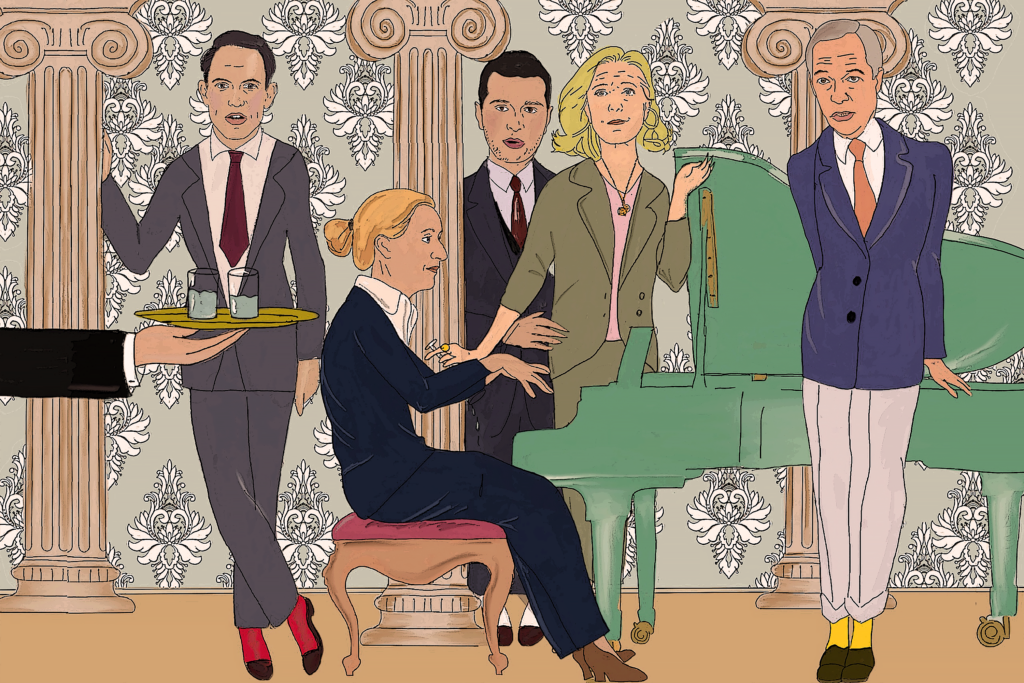
Far-right politicians in Brussels and their cousins in Britain, France and Germany are hungrier than ever for power and prepared to do whatever it takes to win — even if that means wearing a suit and tie.
Out are the scandal-prone eccentrics in peculiar clothing, who have come to define some of these parties in the past. In are clean-cut 30-somethings with millions of TikTok followers, and policy wonks with deliberately modest plans intended to show voters they can be trusted.
From London to Berlin, they are cutting back on wine-soaked lunches, dressing like camera-ready mainstream politicians, and keeping their distance from the Kremlin, since being Vladimir Putin’s friend just isn’t fashionable these days. They’re getting clever about political tactics, too.
Across Europe, the far right is turning pro.
Far-right parties have made major advances in national politics over the last decade across Europe, and their success remains largely driven by a backlash against migration. They are now ahead in polls in Germany, France and the U.K. and in recent years have taken power in Italy, Finland and Czechia, among other places, with a policy agenda that often involves expelling hundreds of thousands of migrants.
They achieved a big breakthrough moment in the European Parliament this month, when the most powerful official in Brussels, European Commission President Ursula von der Leyen, won a vote on cutting climate rules with help from some far-right lawmakers.
As the Patriots of Europe and Europe of Sovereign Nations far-right groups celebrated a victory for their more professional approach, von der Leyen’s centrist allies howled with anguish. One even drew a parallel with politicians who abetted Adolf Hitler’s rise to power.
The critical question now — for both far-right politicians and their centrist opponents alike — is whether populist right challengers can convert their poll leads into winning elections. The answer may lie in how effectively they can smarten up their ramshackle operations — even borrowing the tactics of the elite insiders they despise — as they bid for power.
Dressing up
One leading disrupter on the right will be a familiar figure to Brussels insiders.
Nigel Farage, the U.K.’s pro-Brexit rabble-rouser, has been a thorn in the side of the EU since his days as a member of the European Parliament. According to the polls, he would win a general election and become British prime minister if a vote were held today.
An election is not expected until 2029 but Farage is making the weather in U.K. political debate and never misses a chance to leverage his friendship with U.S. President Donald Trump, whose inauguration he attended earlier this year.
Trump’s MAGA movement offers many of Europe’s far-right politicians an extra level of international credibility. Trump and other senior figures in his administration have backed far-right politicians in Germany, Romania, Italy and France. They haven’t, however, always repaid his support with victories or even competence.
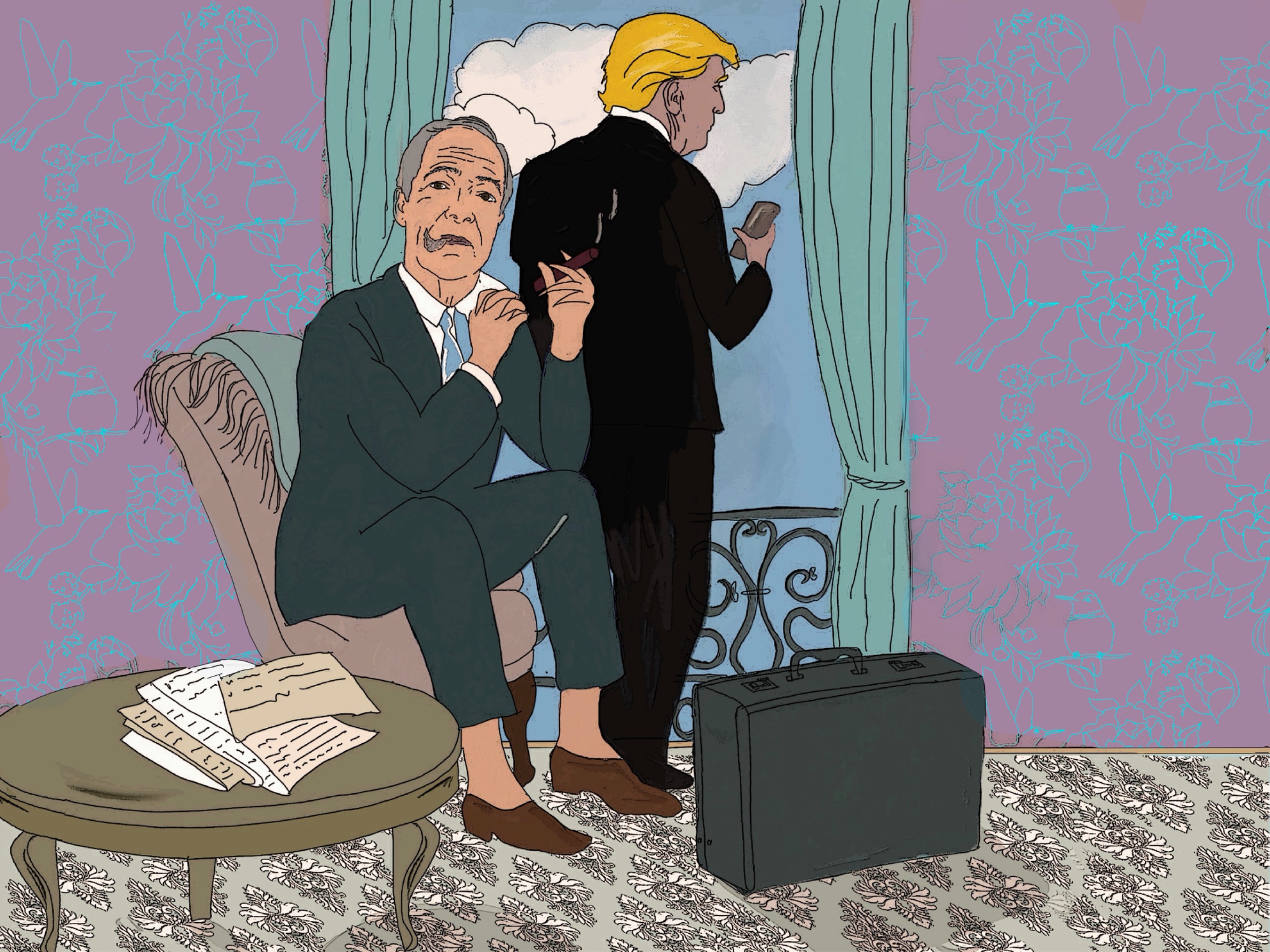
Last year, Farage was totally unprepared for the British election and only decided to stand as a candidate two weeks after the campaign began. Despite the shambolic start, he won a seat in Parliament, as did four of his party colleagues, and led his Reform UK to its best ever result, with 4.1 million votes. Then he vowed to professionalize the party’s operation in an effort to put it on a path to government.
“We’re going to professionalize the party, we’re going to democratize the party and those few bad apples that have crept in will be gone,” he said.
For Farage, who spent decades being photographed with a pint of beer in one hand and a cigarette in the other, that meant building a different, less alcohol-fueled brand, among other things.
“He’s certainly cut down on booze, if not the fags,” said one person who knows Farage (using British slang for cigarettes).
A second person who knows Farage said: “He’s not given up the booze, but he certainly doesn’t drink as much as he used to. He doesn’t have the time. The work rate has just gone through the roof.”
At Reform’s annual conference in the U.K. in September, however, plenty of activists were still drinking during the daytime and there were fractious scenes in the bar as the nights wore on.
Farage is less often photographed in country jackets and flat caps these days than in the past, instead favoring the conventional politician’s navy suit for his set-piece speeches.
Slick Tok
In France, the far right has deliberately smartened up its image as it has won more support in recent years. After the 2022 election, when Marine Le Pen’s National Rally went from 8 to 89 lawmakers in the National Assembly in a historic breakthrough, Le Pen gave strict instructions to her new troops, including a dress code, reflected in the party’s back to school picture. Her initiative was dubbed la stratégie de la cravate — the tie strategy.
Jordan Bardella, the 30-year-old president of the National Rally, is perhaps the slickest of all the far-right leaders in European frontline politics these days. With his trim physique, neat hair and sharp suits, he’s become a template for others.
Take Belgium’s Tom Van Grieken, the leader of the far-right Flemish Interest party. He has a rule that he and his team need to be “radical but not trashy.” His hair is always neatly combed, and he wears a boyish grin on his face when talking to voters or the media.
Van Grieken has acknowledged that while some voters are reluctant to back his side, they like him well enough. “What I do see as my own merit, if you can put that down modestly, is that I’ve broken through the social cordon,” he has previously told POLITICO.
Social media also counts heavily for these candidates. Like Bardella, who has 2.2 million followers, Farage and Van Grieken have both made a concerted attempt to win over voters on TikTok, with some success.
Farage became an unlikely hit on the video-sharing platform last year when a video of him bellowing “Boring!” at hecklers became a viral meme. Van Grieken’s party made sure every campaign at last year’s election in Belgium was turned into a TikTok post.
Cleaning house
It’s one thing for leaders to look the part, but a major risk for far-right parties across the region has long been wayward comments from prejudiced politicians and unreliable grassroots activists. Numerous examples have emerged of individuals voicing racist or homophobic views, or behaving in other unacceptable ways — often on video or social media.
The Patriots of Europe, the far-right grouping in the European Parliament, adopted a vetting process to make sure it is not admitting scandal-prone MEPs. The checks have led to three candidates being rejected as too extreme or unsuitable. After becoming the third-largest force in the EU Parliament last year, the Patriots established a whipping operation, and added communications and press departments, too.
But there’s still work to be done.
A racism scandal during last year’s U.K. election briefly knocked Reform’s campaign off course and only last month, MP Sarah Pochin triggered an outcry when she complained about “adverts full of black people, full of Asian people.”
In France, Marine Le Pen’s National Rally was forced to bat away accusations of racist behavior in June. Prospective candidates now go through a thorough vetting process that includes social media checks and interviews by some of the party’s top brass.
The housecleaning in the party’s rank-and-file is the latest effort in Le Pen’s drive to detoxify its image after she took over from her father Jean-Marie Le Pen, whose antisemitic outbursts and inflammatory positions had long kept the party in the fringe of French politics.
Kremlinology
After coming second with a record 21 percent of the vote in February’s election, the Alternative for Germany (AfD) party is now nudging ahead of Chancellor Friedrich Merz’s conservative bloc in the polls. In some parts of the former Communist east Germany, the AfD enjoys 40 percent support.
Alice Weidel, one of two AfD leaders, is actively trying to distance her party from its perceived proximity to the Kremlin. Some of her own AfD colleagues had been planning to travel to Sochi, Russia to attend an international conference this month. Weidel was not happy.
“We shouldn’t continue like this,” she told reporters in the Bundestag when asked about the planned trip. “I myself would not travel there, nor would I recommend it to anyone.”
Weidel said she would change the party’s procedures for approving travel. One of the politicians, lawmaker Rainer Rothfuß, eventually canceled his trip, which had originally included a planned meeting with Kremlin loudmouth Dmitry Medvedev. Another AfD lawmaker, MEP Hans Neuhoff, and a regional politician still went ahead anyway.
As part of its cleanup act, the AfD is replacing an extremist youth group with a centrally controlled new body, and has demanded its lawmakers in parliament sign up to a new code of conduct that requires them to show a united and “moderate” face to the world.
Putin’s pull on far-right politicians isn’t limited to Germany. Candidates for high office in Italy, Romania and France, among other places, have all been attacked for their links to Moscow. In the U.K., Farage has tried to move on from past comments expressing admiration for Putin as “an operator,” though not as a person.
Melonization
For many on the populist right, Italian Prime Minister Giorgia Meloni is seen as a template for how to win power from a hardline position — and keep it. Contrary to centrists’ fears before she was elected, Meloni has kept Italy solidly aligned to mainstream EU priorities, and has caused minimal trouble for von der Leyen and other centrists sitting at the summit table in Brussels. Despite privately expressing some war fatigue, she has not stood in the way of continuing European support for Ukraine.
While Meloni remains uncompromising on curbing migration and “woke” culture at home, many commentators and EU officials credit her with moving her Brothers of Italy party — which has its roots in post-war fascists — to more moderate positions, especially on international affairs and economics.
This is misleading, according to Nathalie Tocci, director of the Istituto Affari Internazionali, an independent international relations think tank in Rome. “The mistake that we make is saying the Meloni model is a model of the far right that moderates rather than the far right that is stealthily radicalizing the agenda,” she said. “There is a professionalization of a radical agenda. It doesn’t make it more moderate. It’s just more professional, and perhaps by becoming more professional it can become more effective — and that’s even more radical.”
In the U.K., Farage recently named Meloni among the leaders he knows and admires. Earlier this month he abandoned plans for huge tax cuts, warning that he would prioritize balancing the books first, in an effort to show Reform would be fiscally responsible in government.
How the pros turned far-right
It’s not just that the far right is turning professional — professional centrist politicians are embracing far-right policy ideas, too.
The British center-left Labour government’s sudden interest in rewriting asylum rules to crack down on illegal migrants is a direct attempt to counter Farage’s electoral threat. Migration is now a major preoccupation of centrist conservatives across Europe, with Merz in Germany also seeking to tighten the system under pressure from the AfD.
Far-right priorities have found their way into mainstream debates on climate rules and especially the future of the combustion engine car. Fears that manufacturing jobs will be hit, and businesses damaged, have driven a new wave of resistance to green measures on the center-right.
And of course the far right is already in government, often in coalition, in countries such as Finland, Belgium, Hungary and Italy. “We hear a lot from the center that ‘we are actually domesticating these far-right creatures and as we pull them into the system, hey look, they are moderating,’” said Tocci. “I profoundly disagree,” she said. “That really underestimates what the far right is about.”
Hanne Cokelaere, Ben Munster, Marianne Gros, Max Griera, Noah Keate and Karl Mathiesen contributed reporting.



Follow