



BRUSSELS — Only a few days ago, EU diplomats and officials were whispering furtively about the idea they might one day need to think about how to push back against Donald Trump. They’re not whispering anymore.
Trump’s attempt, as EU leaders saw it, to “blackmail” them with the threat of tariffs into letting him take the sovereign Danish island of Greenland provoked a howl of outrage — and changed the world.
Previous emergency summits in Brussels focused on existential risks to the European Union, like the eurozone crisis, Brexit, the coronavirus pandemic, and Russia’s invasion of Ukraine. This week, the EU’s 27 leaders cleared their diaries to discuss the assault they faced from America.
There can be little doubt that the transatlantic alliance has now been fundamentally transformed from a solid foundation for international law and order into a far looser arrangement in which neither side can be sure of the other.
“Trust was always the foundation for our relations with the United States,” said Polish Prime Minister Donald Tusk as he arrived for the summit in Brussels on Thursday night. “We respected and accepted American leadership. But what we need today in our politics is trust and respect among all partners here, not domination and for sure not coercion. It doesn’t work in our world.”
The catalyst for the rupture in transatlantic relations was the U.S. president’s announcement on Saturday that he would hit eight European countries with tariffs of 10 percent for opposing his demand to annex Greenland.
That was just the start. In an avalanche of pressure, he then canceled his support for the U.K. premier’s decision to hand over the Chagos Islands, home to an important air base, to Mauritius; threatened France with tariffs on Champagne after Macron snubbed his Board of Peace initiative; slapped down the Norwegian prime minister over a Nobel Peace Prize; and ultimately dropped his threats both to take Greenland by military force and to hit countries that oppose him with tariffs.
Here was a leader, it seemed to many watching EU officials, so wild and unpredictable that he couldn’t even remain true to his own words.
But what dismayed the professional political class in Brussels and beyond was more mundane: Trump’s decision to leak the private text messages he’d received directly from other world leaders by publishing them to his 11.6 million followers on social media.
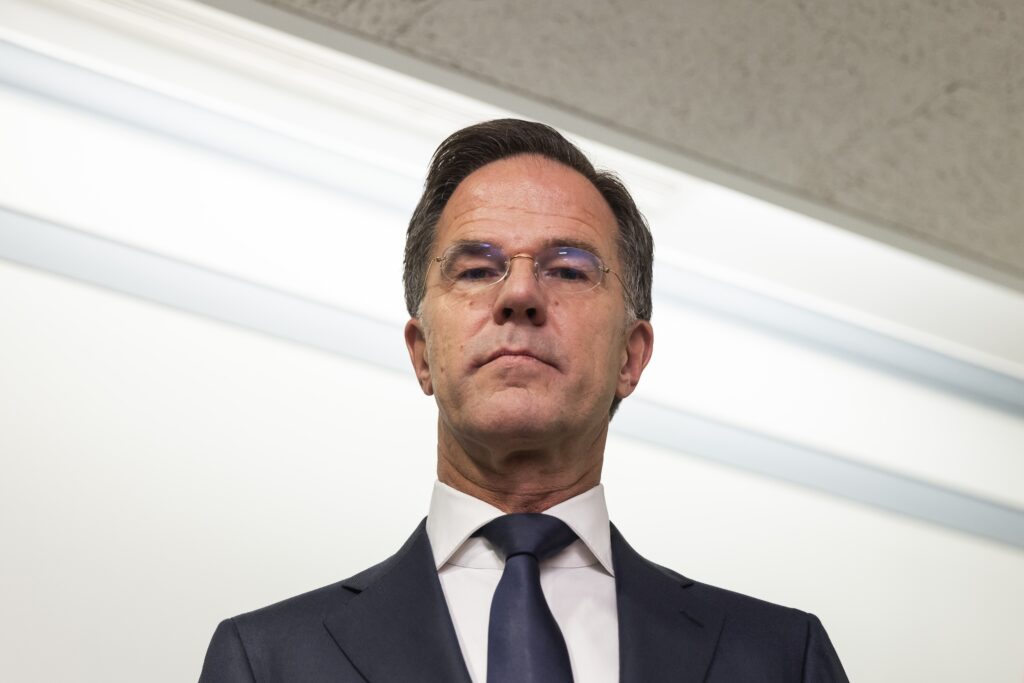
Trump’s screenshots of his phone revealed French President Emmanuel Macron offering to host a G7 meeting in Paris, and to invite the Russians in the sidelines. NATO Secretary-General Mark Rutte, who once called Trump “daddy,” also found his private text to Trump made public, in which he praised the president’s “incredible” achievements, adding: “Can’t wait to see you.”
Leaking private messages “is not acceptable — you just don’t do it,” said one senior diplomat, like others, on condition of anonymity because the matter is sensitive. “It’s so important. After this, no one can trust him. If you were any leader you wouldn’t tell him anything. And this is a crucial means of communication because it is quick and direct. Now everything will go through layers of bureaucracy.”
The value of direct contact through phone texts is well known to the leaders of Europe, who, as POLITICO revealed, have even set up their own private group chat to discuss how to respond when Trump does something inflammatory. Such messages enable ministers and officials at all levels to coordinate solutions before public statements have to be made, the same senior diplomat said. “If you don’t have trust, you can’t work together anymore.”
No more NATO
Diplomats and officials now fear the breakdown in personal trust between European leaders and Trump has potentially grave ramifications.
Take NATO. The military alliance is, at its core, a promise: that member countries will back each other up and rally to their defense if one of them comes under attack. Once that promise looks less than solid, the power of NATO to deter attacks is severely undermined. That’s why Denmark’s Prime Minister Mette Frederiksen warned that if Trump invaded the sovereign Danish territory of Greenland it would be the end of NATO.
The fact he threatened to do so has already put the alliance into intensive care, another diplomat said.
Asked directly if she could still trust the U.S. as she arrived at the Brussels summit, Frederiksen declined to say yes. “We have been working very closely with the United States for many years,” she replied. “But we have to work together respectfully, without threatening each other.”
European leaders now face two tasks: To bring the focus back to the short-term priorities of peace in Ukraine and resolving tensions over Greenland; and then to turn their attention to mapping out a strategy for navigating a very different world. The question of trust, again, underpins both.
When it comes to Ukraine, European leaders like Macron, Germany’s Friedrich Merz and the U.K.’s Keir Starmer have spent endless hours trying to persuade Trump and his team that providing Kyiv with an American military element underpinning security guarantees is the only way to deter Russian President Vladimir Putin from attacking again in future.
Given how unreliable Trump has been as an ally to Europe, officials are now privately asking what those guarantees are really worth. Why would Russia take America’s word seriously? Why not, in a year or two, test it to make sure?
The Post-Davos world
Then there’s the realignment of the entire international system.
There was something ironic about the setting for Trump’s assaults on the established world order, and about the identities of those who found themselves the harbingers of its end.
Among the snow-covered slopes of the Swiss resort of Davos, the world’s business and political elite gather each year to polish their networks, promote their products, brag about their successes, and party hard. The super rich, and the occasional president, generally arrive by helicopter.
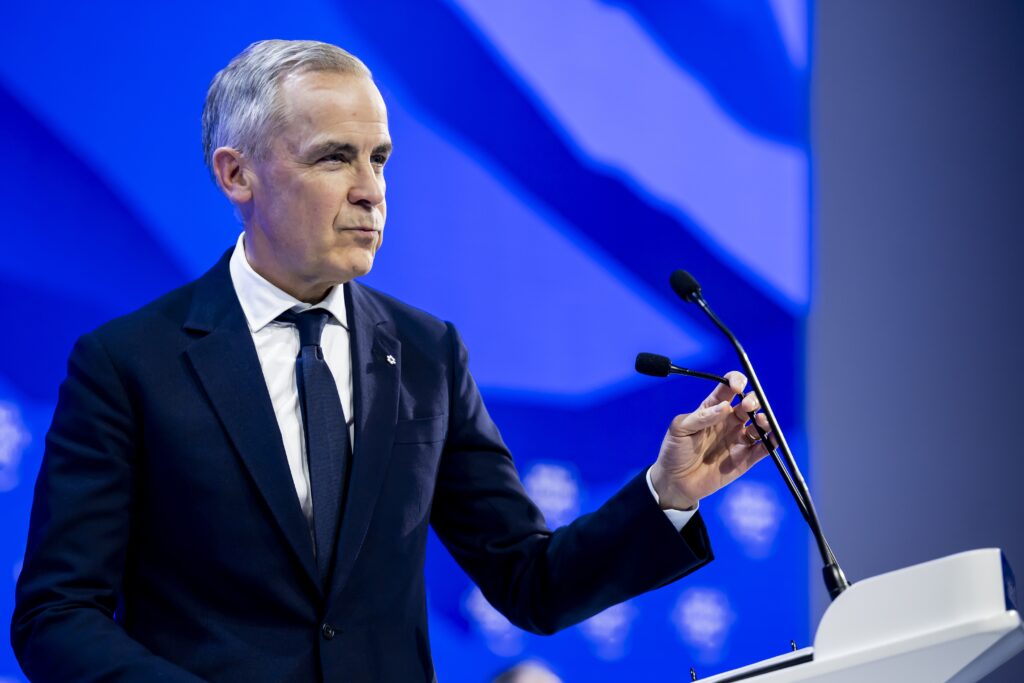
As a central bank governor, Mark Carney had been one of the classic Davos set and was a regular attendee: suave, a little smug, and seeming entirely comfortable among snow-covered peaks and even loftier clientele.
Now prime minister of Canada, this sage of the centrist liberal orthodoxy had a shocking insight to share with his tribe: “Today,” Carney began this week, “I’ll talk about the rupture in the world order, the end of a nice story, and the beginning of a brutal reality where geopolitics among the great powers is not subject to any constraints.”
“The rules-based order is fading,” he intoned, to be replaced by a world of “great power rivalry” in which “the strong do what they can, and the weak suffer what they must.”
“The old order is not coming back. We should not mourn it. Nostalgia is not a strategy.”
Carney impressed those European officials watching. He even quoted Finnish President Alexander Stubb, who has enjoyed outsized influence in recent months due to the connections he forged with Trump on the golf course.
Ultimately, Carney had a message for what he termed “middle powers” — countries like Canada. They could, he argued, retreat into isolation, building up their defenses against a hard and lawless world. Or they could build something “better, stronger and more just” by working together, and diversifying their alliances. Canada, another target of Trump’s territorial ambitions, has just signed a major partnership agreement with China.
As they prepared for the summit in Brussels, European diplomats and officials contemplated the same questions. One official framed the new reality as the “post-Davos” world. “Now that the trust has gone, it’s not coming back,” another diplomat said. “I feel the world has changed fundamentally.”
A good crisis
It will be up to European Commission President Ursula von der Leyen and her team to devise ways to push the continent toward greater self-sufficiency, a state that Macron has called “strategic autonomy,” the diplomat said. This should cover energy, where the EU has now become reliant on imports of American gas.
The most urgent task is to reimagine a future for European defense that does not rely on NATO, the diplomat said. Already, there are many ideas in the air. These include a European Security Council, which would have the nuclear-armed non-EU U.K. as a member. Urgent efforts will be needed to create a drone industry and to boost air defenses.
The European Commission has already proposed a 100,000-strong standing EU army, so why not an elite special forces division as well? The Commission’s officials are world experts at designing common standards for manufacturing, which leaves them well suited to the task of integrating the patchwork of weapons systems used by EU countries, the same diplomat said.
Yet there is also a risk. Some officials fear that with Trump’s having backed down and a solution to the Greenland crisis now apparently much closer, EU leaders will lose the focus and clarity about the need for change they gained this past week. In a phrase often attributed to Churchill, the risk is that EU countries will “let a good crisis go to waste.”
Domestic political considerations will inevitably make it harder for national governments to commit funding to shared EU defense projects. As hard-right populism grows in major regional economies, like France, the U.K. and Germany, making the case for “more Europe” is harder than ever for the likes of Macron, Starmer and Merz. Even if NATO is in trouble, selling a European army will be tough.
While these leaders know they can no longer trust Trump’s America with Europe’s security, many of them lack the trust of their own voters to do what might be required instead.



Follow