



BRUSSELS — Even after most member countries backed the EU’s landmark trade accord with Latin America, opponents of the deal in France, Poland and the European Parliament are still determined to derail or delay it.
As a result, even after European Commission President Ursula von der Leyen flies to Paraguay this Saturday to sign the accord with the Mercosur bloc after over 25 years of talks, it could still take months before we finally find out when, or even whether, it will finally take effect.
The culprit is the EU’s tortuous decision-making process: After the curtain came down on Friday on deliberations in the Council, the intergovernmental branch of the bloc, a new act will now play out in the European Parliament. Ratification by lawmakers later this year is the most likely outcome — but there will be high drama along the way.
“It has become irrational,” said an EU diplomat, speaking on condition of anonymity. “If the European Parliament refuses, we will have a European crisis.”
Proponents argue that the deal with Mercosur — which groups Argentina, Brazil, Paraguay and Uruguay — is the bloc’s best shot at rallying friends across the world as the EU tries to counter Donald Trump’s aggressive moves (the latest being the U.S. president’s threats to annex Greenland).
But more than 140 lawmakers are already questioning the legal basis of the agreement, concerned that it breaches the EU treaties. They want it sent to the Court of Justice of the EU for a legal review, which could delay it for as long as two years.
Political group leaders agreed before the Christmas break to submit this referral to a vote as soon as governments signed off on the deal. That vote is now expected at next week’s plenary, a official with the Parliament said.
Yet while the rebel MEPs have enough votes to call a floor debate, they likely lack the majority needed in the 720-seat Parliament to pass the resolution itself.
“I don’t think that the substance of the legal challenge is going anywhere. This is fabricated, it’s a lot of hot air — both in terms of environmental [and] health provisions, in terms of national parliaments. All of this has been tried and tested,” said David Kleimann, a senior trade expert at the ODI Europe think tank in Brussels.
Legal roadblocks
The challenge in the Parliament is only one front. The deal’s biggest opponents, Poland and France, are also fighting back.
Polish Agriculture Minister Stefan Krajewski said Friday he would push for the government to also submit a complaint to the Court of Justice.
“We will not let the deal go any further,” he said, adding that Poland would ask the court to assess whether the Mercosur pact is legally sound. On the same day, protesting farmers spilled manure in front of his house.
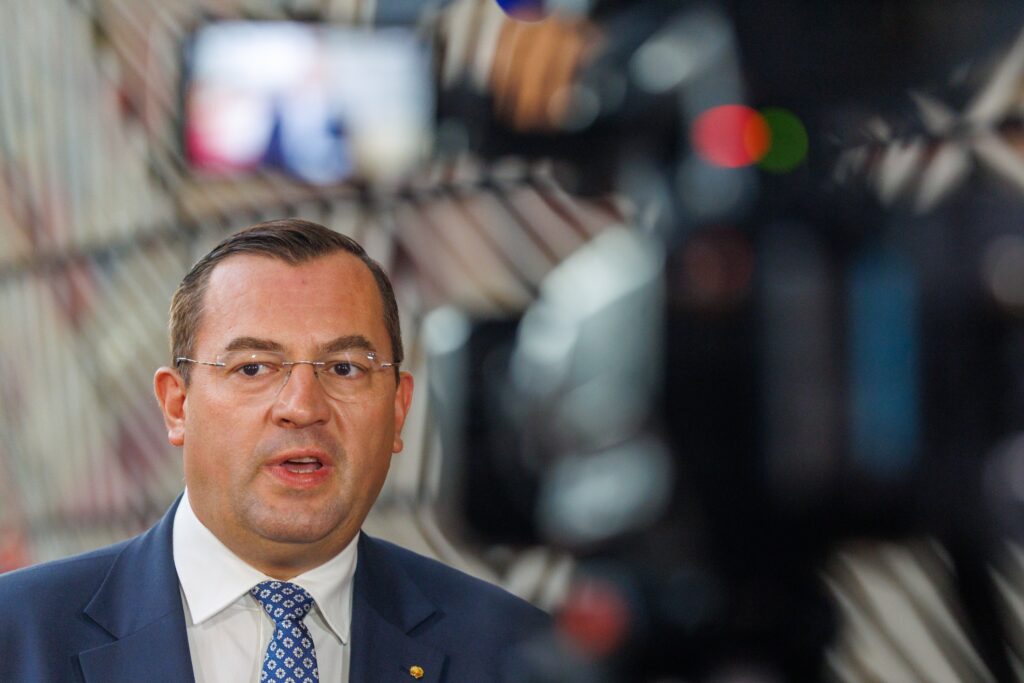
Polish MEP Krzysztof Hetman, a member of the center-right European People’s Party and a political ally of Krajewski, said the referrals of the Parliament and of member states would play out separately with the same aim in mind.
“If one succeeds, the other might not be necessary,” he said, adding that while the court considers the complaint, the deal would effectively be on ice.
French President Emmanuel Macron, meanwhile, is under huge pressure from his political opponents to do more to stall the deal. France, Poland, Austria, Ireland and Hungary voted against the deal last week while Belgium abstained. That left the anti-Mercosur camp shy of the blocking minority needed to kill the deal.
On Wednesday, the National Assembly will vote on two separate no-confidence motions submitted by the far-right National Rally and the far-left France Unbowed.
Even if opposition to the Mercosur deal remains unanimous, the two motions have little to no chance of toppling the French government: The left is unlikely to back the National Rally text, while the center-left Socialists are withholding support for the France Unbowed motion. But nothing can be ruled out in France’s fragmented parliament.
Reality check
Even some of the rebel MEPs admit their challenge is unlikely to succeed — and that the Parliament might still back the overall deal in a vote later this year.
“It will be very difficult now that the Council has approved it,” said Hetman, the Polish MEP. “The supporters of the agreement know this, which is why they sabotaged the vote on the referral in November and December.”
Others opponents still see a chance to topple it, and are optimistic that the legal challenge can gather enough support.
“We want to delay the Mercosur adoption process as long as possible,” Manon Aubry, co-chair of The Left group, told POLITICO before the Christmas break. She also saw signs that a majority of MEPs could come out against the deal: “I bet there are even more MEPs willing to make sure that the agreement is fully in line with the treaties.”
If the judicial review is rejected, the Parliament would hold a yes-no vote to ratify the trade agreement, without being able to modify its terms.
Such a vote could be scheduled in the May plenary at the earliest, Bernd Lange, the chair of the chamber’s trade committee, told POLITICO. Lange, a German Social Democrat, said he was confident of a “sufficient” majority to pass the deal.
Pedro López de Pablo, a spokesperson for the EPP — von der Leyen’s own political family and the EU’s largest party — vowed there was a majority for the agreement in the EPP and dismissed the legal maneuvering.
“It is clear that such a move is politically motivated to delay the implementation of the deal rather than the product of a legal analysis,” he said.
Giorgio Leali contributed to this report.



Follow