




SACRAMENTO, Calif. (AP) — Mai Vang wouldn’t be born for another seven years when Bob Matsui was first elected to Congress from California in 1978. By the time Matsui died in 2005 and was replaced by his widow, Doris Matsui, Vang was still studying biology and sociology in college.
Now a member of the Sacramento City Council, Vang, 40, is mounting the first serious challenge that 81-year-old Matsui has faced since she began representing the area two decades ago. Vang is among a nationwide cadre of young Democrats who are trying to oust some of their party’s most stalwart figures in Washington, channeling angst that an aging generation of lawmakers is unable or unwilling to mount a bare-knuckles opposition to President Donald Trump.
“I’m not waiting for permission,” Vang said. “Because our communities are under attack, and we need leaders in this moment that understand the day-to-day struggles of our working families, and I believe that I could be the leader in this moment.”
In Trump’s first term, grassroots Democrats focused their ire on the Republican president. But now, after President Joe Biden’s reluctance to step aside in 2024 at age 81 helped pave the way for Trump’s return to the White House, many see their party’s own veterans as part of the problem.
2 MIN READ
1 MIN READ

5 MIN READ
At a supporter’s house near downtown Sacramento last month, Vang chatted with about two dozen people, mostly young professionals who sipped wine or craft beer and cheered when she committed to dismantling U.S. Immigration and Customs Enforcement.
“No more wash, rinse and repeat,” said Abbie Morrissey, who works at the University of California, Davis, and attended Vang’s event. “We need to find young, engaged, energetic people that understand their young, engaged and energetic populations.”
Matsui, who was born in a Japanese internment camp during World War II, said she’s fought Trump’s strict immigration policies and delivered billions of dollars for her district.
“Experience isn’t about clinging to power,” she said in a statement. “It’s about being effective when the stakes are highest for our families.”
Matsui ended 2025 with a financial advantage, reporting $785,000 in the bank, compared with $200,000 for Vang.
Civil rights leader faces an economic populist
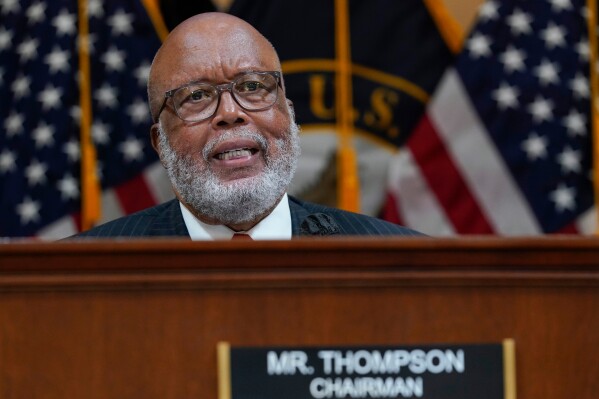
Evan Turnage had barely learned to walk when Rep. Bennie Thompson, a civil rights leader, was first elected to Congress from Mississippi.
Now Thompson, 78, is one of the most senior Black lawmakers on Capitol Hill, and Turnage, 33, is challenging him in the state’s Democratic primary. Turnage, who is also Black, is an antitrust lawyer who previously worked for top Senate Democrats in Washington, including Elizabeth Warren of Massachusetts.
Channeling Warren’s economic populism, Turnage said Mississippi needs a representative who will fight back against what he sees as predatory corporations.
“We have got to finally secure civil rights and economic rights for the people of this state,” Turnage said. “Mr. Thompson has done a good job with being a part of the Civil Rights Movement, but what about the economic rights?”
Winning those battles requires more than accumulating seniority on Capitol Hill, he said, and the modern era demands leaders who understand how social media and artificial intelligence are transforming life.
“Just steadily doing the committee work with your head down behind the scenes is not how we’re gonna get the transformational change that we need here in this district,” Turnage said.
Still, Turnage has struggled to raise significant money, which could make it hard for him to get his message out and overcome Thompson’s incumbency advantage. He ended the year with just $54,000, while Thompson had $1.7 million in his campaign account.
Thompson formerly chaired the House committee that investigated the Jan. 6, 2021, attack on the U.S. Capitol by a mob of Trump’s supporters. In responding to the launch of Turnage’s campaign last month, Thompson said he is confident his record will speak for itself.
“Elections were created to give people the ability to make a choice,” he said. “I trust the voters of the district.”
A congressman is challenged by a former intern
Some level of generational change is already coming in the next Congress, no matter what. Former House Speaker Nancy Pelosi, 85, of California, and her longtime deputy, Maryland’s Steny Hoyer, 86, are retiring from Congress when their current terms end. So are Reps. Jerry Nadler, 78, of New York, and Jan Schakowsky, 81, of Illinois. All had served for decades and decided to retire rather than face primary challengers.
But others want to stay. Rep. Steve Cohen, 76, of Tennessee, is running for an 11th term. He’s up against Justin Pearson, 31, who was a sixth grader promising better school lunches as president of the student government when Cohen was first elected to Congress. He later interned for Cohen.
Pearson was one of two Black Democrats expelled from the Tennessee Legislature by Republicans after leading a gun control protest inside the state Capitol building. He was quickly reinstated by local officials and later reelected.
“With all due respect to Steve, he’s been in office for 43 years, and he has done the best that he can possibly do, and the status quo is still what it is,” Pearson said, tallying up Cohen’s time in the state legislature and in Congress.
Democrats have held their party back by hanging around too long, he said, citing Biden, California Sen. Dianne Feinstein and Supreme Court Justice Ruth Bader Ginsberg. The aging justice didn’t resign while Barack Obama was president and died at age 87 during Trump’s first term, allowing the Republican to replace her with a conservative.
“Time and time again, we are seeing people who are staying in positions of power who are good people but who are no longer doing it for the benefit of their constituencies but for themselves,” Pearson said. “And that’s wrong. And that’s not fair to us or fair to our community.”
A polio survivor, Cohen has won nearly every election with more than 70% of the vote. He’s already survived a significant challenge when Willie Herenton, Memphis’ first Black mayor, ran against him in the Democratic primary in 2010. At the end of 2025, Cohen had $1.8 million on hand, while Pearson trailed with $350,000.
Cohen complimented Pearson’s potential but said age shouldn’t be the criterion for judging a lawmaker. He said Pelosi, Hoyer and Rep. James Clyburn of South Carolina have done some of their best work after turning 70, as did the late Reps. John Lewis of Georgia and Elijah Cummings of Maryland.
He also said he’s never been status quo, saying he was known as the “liberal lion” when he was a state senator.
“I’ve always been an iconoclast,” Cohen said in an interview.
Former mayor takes on a House veteran
In Connecticut, several Democrats in their 30s and 40s are challenging 77-year-old Rep. John Larson for the party’s endorsement at Connecticut’s Democratic state convention in May.
Larson, a fixture in state politics, has represented the Hartford and central Connecticut-based 1st Congressional District since 1999. Concerns about his health and age intensified last year after he abruptly stopped speaking during a speech on the House floor. His office later said the 13-term lawmaker had suffered a complex partial seizure.
Larson has said medication helps control the condition and he is fit to seek a 14th term. Still, he is facing serious Democratic opposition for the first time in his congressional career.
Former Hartford Mayor Luke Bronin, 46, is widely viewed as the leading challenger, buoyed by his name recognition and fundraising. A Rhodes scholar, lawyer and U.S. Navy Reserve officer, Bronin was a sophomore at Yale when Larson was first elected to Congress. He ended 2025 with $1.5 million in the bank, compared with Larson’s $1 million.
Bronin has said the Democratic Party’s reluctance to embrace generational change, highlighted by Biden’s aborted reelection campaign, played a major role in his decision to challenge Larson, arguing that long-tenured leadership has weakened the party at a critical moment.
“I’m running because I think our country is in crisis and the Democratic Party has been too weak and too cautious to meet this moment,” Bronin said. “Part of meeting this moment means getting new members of Congress, new Democratic leaders who have the energy and courage and clarity of mission that this moment demands.”
When he recently visited a food hall in Hartford, a couple closer in age to Larson than Bronin said they still think it’s time to replace the veteran lawmaker.
“He’s done a good job, and we appreciate everything he’s done, but it’s time for new blood, for new ideas,” said Dan Schnaidt, 73, a Democrat who lives in the district.
Schnaidt’s wife, Cynthia Tucker, 73, said Larson has been a great member of Congress but it’s time for a change.
“Go out on a high note, and let somebody new come in,” she said.
Larson is leaning on his progressive credentials and touting his experience as a virtue.
“Another Wall Street-funded corporate lawyer using this office as a stepping stone is not the kind of change this district needs,” Larson’s campaign manager, Gerry Gerratana, said in a statement. “It deserves a progressive champion like John Larson who grew up in the district, understands the challenges people face because he’s seen them firsthand, and has a proven record of taking on Trump.”
___
Bates reported from Jackson, Miss., Haigh from Hartford, Conn., and Mattise from Nashville, Tenn. Associated Press writer Jonathan J. Cooper in Phoenix contributed to this report.



Follow