



LONDON — Peter Mandelson spent four decades helping build Britain’s Labour establishment. Now it’s decisively cutting him adrift.
Former colleagues in the Cabinet and Labour Party officialdom lined up to blowtorch Britain’s former ambassador to the U.S. on Tuesday after newly released files suggested he leaked sensitive government financial discussions to the convicted sex offender Jeffrey Epstein in 2009.
“The latest revelations are materially different to the unpleasant sleaze of previous revelations,” David Blunkett, a former home secretary under Tony Blair, told POLITICO. “This is about conduct in a public office, betrayal of colleagues and a dereliction of duty.”
Geoff Hoon, Blair’s former defense secretary, told GB News it was “very disturbing,” while Labour grandee Harriet Harman told BBC radio: “I was of the view that Peter Mandelson was untrustworthy from the 1990s.”
Prime Minister Keir Starmer sacked the so-called “prince of darkness” as Britain’s envoy to Washington in September as the extent of his friendship with Epstein became clear. But to many former colleagues, Monday’s revelation that Mandelson allegedly disclosed internal emails went much further — and will trigger, they believe, the end of his time in public life.
Mandelson declined to comment for this piece. He has previously said he was wrong to have continued his association with Epstein and apologized “unequivocally” to Epstein’s victims.
Starmer said on Saturday that he had “nothing more to say” on Mandelson. That didn’t last. Smelling public outrage, the PM told his Cabinet Tuesday that the fresh allegations were “disgraceful.”
Mandelson, 72, quit his seat for life in the House of Lords on Tuesday after Starmer — having earlier declined to do so — said ministers would draft a law to remove him from the upper house. Police are reviewing whether the allegations could amount to misconduct in a public office.
Ex-Prime Minister Gordon Brown — who brought Mandelson back into government in 2008 — issued a statement tearing into the “shocking” revelations, and revealing he asked civil servants to investigate Mandelson’s communications with Epstein in September. Brown also contacted police Tuesday.
One former diplomat, granted anonymity to speak undiplomatically, called the flurry of statements a “public lynching.” They added: “He’s going now through Dante’s seven circles of hell, and every time it looks like he’s reached the bottom, another circle appears.”
One of British politics’ greatest survivors, Mandelson has not arrived at the last circle yet.
Several of his close personal allies kept their counsel when contacted on Tuesday. Former Prime Minister Tony Blair has not yet decided to comment. Another of Labour’s most senior figures told POLITICO that they had no publishable comment.
But Luke Sullivan, who was a junior special adviser in the late 2000s, and later became Starmer’s political director in opposition, said: “I cannot tell you how angry people are.”
Another former aide from the New Labour years, granted anonymity to speak frankly, added: “Bloody hell, it is worse than we thought. People feel justifiably sad and angry. This is not a story of people turning on him. It’s more like a Greek tragedy — Peter has been brought down by his fatal flaw, and it’s a flaw that people were always aware of.”
At the heart of power
Whenever Labour reached a turning point in its recent history, Mandelson was somehow there.
Pairing a smooth-talking style with ruthless maneuvering behind the scenes, he began as the party’s communications director in 1985 and embarked on a mission with then-leader Neil Kinnock to drag his party back from the left. He became MP for Hartlepool in 1992, playing a key role in Blair’s 1994 election as party leader and Labour’s 1997 general election landslide.
He was never far from scandal, resigning from the Cabinet first in 1998 over a loan he took from a colleague, then again in 2001 in a row over a passport application from an Indian billionaire.
Yet his attraction to power and strategic skills made his return inevitable. In 2008, already back as Britain’s EU trade commissioner, he repaired ties with Brown, who had recently become prime minister, in an hour-long private meeting in Brussels, before returning to the heart of government. The next year, when Cabinet minister James Purnell resigned and called on Brown to stand aside, Mandelson is said to have come into No. 10 and persuaded the rebels to back down.
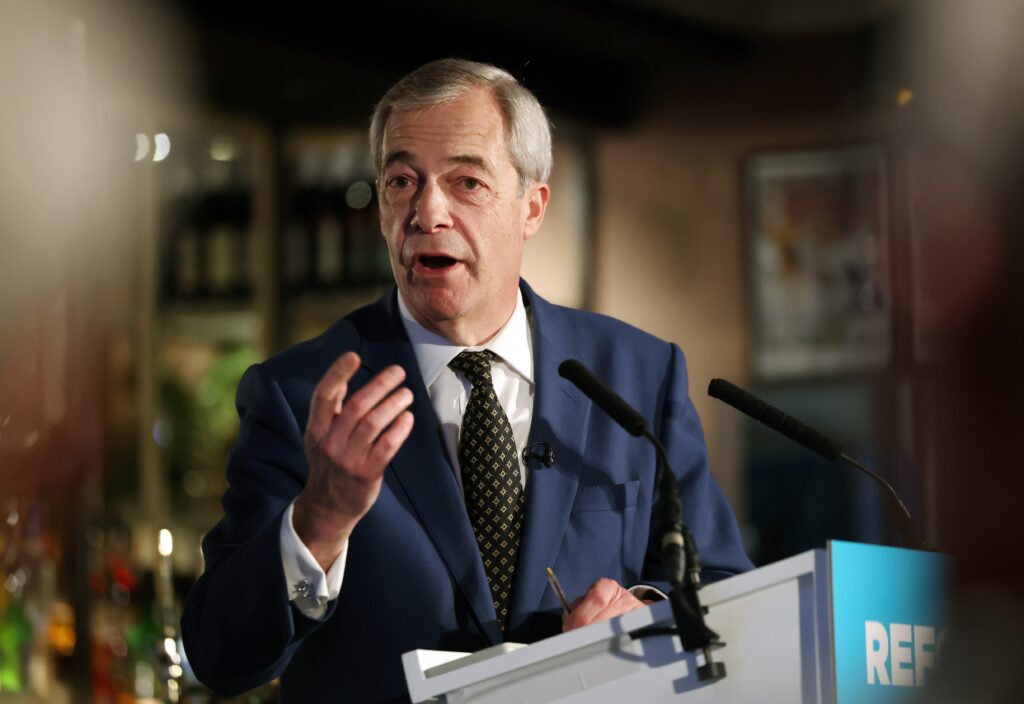
Nigel Farage, leader of the populist right-wing party Reform UK, said on Tuesday: “He’s very articulate. He’s highly intelligent. He’s incredibly well-briefed, probably the best networker in Westminster in the last 30 years.”
“[On] the actual subject, the brief … I’d never heard anybody as impressive in all my 20 years in the European Parliament. The guy is very, very bright, but clearly has a taste for money, and has a taste for bad company.”
Labour went on to lose the 2010 election — though by a slimmer margin than many expected — and Mandelson co-founded a lobbying firm, Global Counsel. (The firm began cutting ties with him last year.) But in the late 2010s, he returned to politics, striking up a close professional relationship with Morgan McSweeney, now Starmer’s chief of staff. Along with other Labour aides, the pair attended dinners at the south London home of the Labour peer Roger Liddle to discuss how best to wrestle Labour back (again) from the left.
His advice became more valued in the run-up to the 2024 election. He even co-presented a podcast, produced by The Times newspaper, called “How To Win An Election.”
And late in 2024 — at the suggestion of McSweeney, despite concerns elsewhere in government — Mandelson bagged his biggest prize yet: the ambassadorship to Washington.
Starmer jokingly compared Mandelson to Donald Trump in a February 2025 speech at the embassy: “You can sense that there’s a new leader. He’s a true one-off, a pioneer in business, in politics. Many people love him. Others love to hate him. But to us, he’s just … Peter.”
Turning on Mandelson
In four decades, Mandelson made plenty of enemies who are now glad to see his demise. The difference with this scandal may be the reaction of those close to him.
Wes Streeting, Starmer’s telegenic health secretary, who shares many aspects of Mandelson’s politics and is widely expected to be a future leadership contender, was at some of the Liddle dinners. He told the BBC: “This is a betrayal on so many levels. It is a betrayal of the victims of Jeffrey Epstein that he continued that association and that friendship for so long after his conviction. It is a betrayal of just not one, but two prime ministers.”
Privately, Mandelson is said to believe he was simply casting around for advice during the worst financial crisis since the 1930s. He told the Times: “There was no reason to shun his advice, but I was too trusting.” He added: “Work has always defined me. Everything else has always been an add-on. So I will find things to do.”
But one serving Labour official in government said the revelations were “qualitatively (and quantitatively) worse” than what was known before. A second Labour official added: “The latest revelations have put him beyond what most people are willing to accept.”
One person who speaks to No. 10 regularly said: “There are people who have known him for a long time who are very hurt and angry. He has upset people.
“He had a much reduced reservoir of support coming into this anyway, and the question is — who is going to touch him now?”
A person who knows Mandelson well drew a distinction between the reaction to his sacking in September, when some colleagues felt concern for Mandelson on a “human level because of the very public nature of his sacking,” and the “shock and real anger” at the revelations of the last few days.
“It felt like a kick in the gut to read it and has brought his behavior as minister into question in a way no one could possibly have imagined,” they said.
Sullivan said: “People thought that he had been characteristically not as frank as he could be with his relationship with Epstein … but I don’t think people had clocked just quite how big the significance of those revelations [Monday] are.
“Any one of those, if it had come out at the time, would have brought the government down. I was a very junior Spad in the last Labour government. [With] Gordon Brown, you could hear the anger in his statement.”
“I think the potential ramifications of this not just for the Labour Party but for politics and politicians in general could be understated. It is serious,” Sullivan added.
The former diplomat quoted above added: “People are genuinely astonished at the sort of stuff he told Epstein. He always had a reputation of being relatively indiscreet, but some of that stuff, I mean, why Epstein? I don’t know why Epstein seemed to have had such a grip on him.”
John McTernan, who served as a senior aide during the New Labour years, said: “It turns out that Peter’s actions are those of an avaricious man — which makes it really sad, because he did so much to make Labour electable, not once but twice.”
Where does it go from here?
Britain’s opposition Conservative Party is likely to apply fresh pressure on Wednesday by formally demanding that ministers release the details of Mandelson’s vetting for the ambassador post.
Foreign Secretary Yvette Cooper revealed in September that Mandelson was not subjected to full national security vetting until after his appointment had been announced.
One government official said: “If there wasn’t any real vetting until after the appointment, that could be very damaging in my view.”
Labour officials also smell danger in the fact that Gordon Brown asked the government to investigate Mandelson’s communications on Sept. 10 — a day before Starmer resolved to sack Mandelson as ambassador. The Labour Party has said disciplinary action was underway against Mandelson before he resigned his party membership on Sunday, but has not said when it began — days, weeks, or months ago.
One former Labour official said: “The problem for the government as a whole and the civil service is Gordon clearly clocked something had gone on, had some concerns, and raised them last September, and it’s unclear exactly what has happened to dig it out.”
No. 10 went nuclear in its response on Tuesday, saying the government was investigating and had contacted the police. Starmer’s spokesperson said: “An initial review of the documents released in relation to Jeffrey Epstein by the U.S. Department of Justice has found that they contain likely market-sensitive information surrounding the 2008 financial crash and official activities thereafter to stabilize the economy.
“Only people operating in an official capacity had access to this information, [with] strict handling conditions to ensure it was not available to anyone who could potentially benefit from it financially. It appears these safeguards were compromised.
“In light of this information, the Cabinet Office has referred this material to the police.”
Starmer and McSweeney can maintain that they — like the rest of the press and British public — knew nothing of the emails revealed this week when they appointed Mandelson. Whether they can prevent the saga raising questions about their judgment may be another matter.



Follow