



LONDON — Britain’s pubs are in distress. The beer-loving Nigel Farage has spied an opening.
The Reform UK leader and his chief whip Lee Anderson are set to unveil a raft of new policies Tuesday meant to support struggling publicans — and punch a Labour bruise.
It comes days after Chancellor Rachel Reeves — under pressure from a highly-organized pubs industry — was forced to U-turn on plans from her budget and announce a three-year relief package for the U.K.’s ailing hospitality sector.
Farage isn’t alone — the government’s other rivals are setting out pub-friendly policies too, and are helping to push the plight of the British boozer up the political agenda.
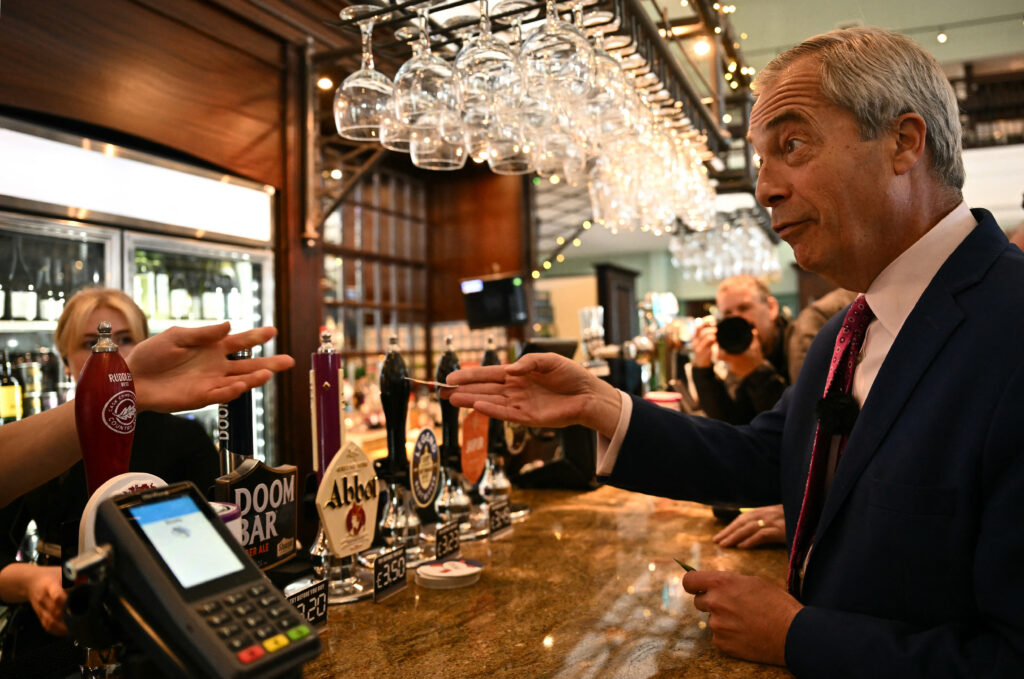
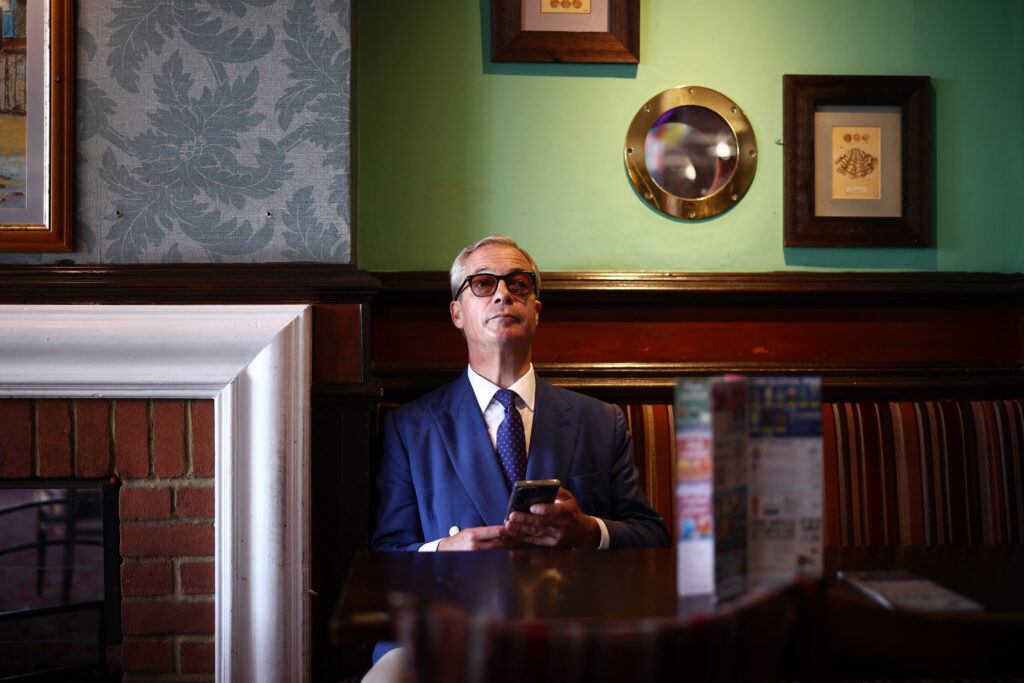
But it’s the latest populist move by the right-wing outfit, whose leader often posts pictures from the pub on social media and has carefully cultivated an ale-drinking man-of-the people persona, to capture the attention of an electorate increasingly soured on Labour’s domestic efforts.
‘Genuine piss artist’
Reform will on Tuesday lift the lid on a five-point plan to “save Britain’s pubs,” promising a slew of tax cuts for the sector — including slashing sales tax VAT to 10 percent, scrapping the employer National Insurance increase for the hospitality sector, cutting beer duty by 10 percent, and phasing out business rates for pubs altogether.
The party will also pledge to change “beer orders” regulation, which sees large pub companies lock landlords into contracts that force them to buy beer from approved suppliers at much higher prices than the open market.
Reform says the plan would be funded through social security changes — reinstating a two-child cap on universal credit, a move the party claims would save around £3 billion by 2029-30.
“Labour has no connection to how real life works,” Farage said earlier this month as he lambasted government plans to lower the drink drive limit.
One of the British pub industry’s biggest names thinks Farage could have a genuine opening with voters on this front. The Reform boss has “got the massive advantage in that he’s a genuine piss artist,” Tim Martin, the outspoken owner of the British pub chain JD Wetherspoons, said.
“He genuinely likes a sherbet, which, when it comes to pubs, people can tell that, whereas I don’t think [they do] with the other party leaders,” he said.
The pub boss recounted watching as Farage “whacked down two pints and had two cigarettes” ahead of an appearance on BBC Question Time in which Martin also featured, as other politicians hovered over their briefing notes.
Green MP Siân Berry is less impressed with Farage’s pub shtick, however. She accuses him of “playing into a stereotype of pubs as spaces for older white men to sit and drink.”
“Most people who run a pub business these days know that it needs to be a family space,” she said.
Show us the policy
Either way, Farage is exploiting an opening left by Labour, which riled up some pubs with its planned shake-up of business rates.
“When the Labour government came in, the pub industry was already weak — and they piled on more costs,” said Wetherspoons’ boss Martin.
Since Labour won power in 2024 Reeves has also hiked the minimum wage employers must pay their staff, increased employer national insurance contributions, and raised beer duties.
While the industry cautiously welcomed Reeves’ business rate U-turn last month, they say there’s still more to do.
“This will make a significant difference, as three quarters of pubs are now going to see their bills staying the same or going down,” Andy Tighe, the British Beer and Pub Association (BBPA)’s strategy and policy director, said of the U-turn — but “it doesn’t solve everything,” he added.
“For most operators, it’s those big sorts of taxes around business rates, VAT, duty, employment-related taxes that make the real difference, ultimately, to how they think about the future,” he said.
A U.K. Treasury spokesperson said: “We are backing Britain’s pubs — cutting April’s business rates bills by 15 percent followed by a two year freeze, extending World Cup opening hours and increasing the Hospitality Support Fund to £10 million to help venues.
“This comes on top of capping corporation tax, cutting alcohol duty on draught pints and six cuts in interest rates, benefiting businesses in every part of Britain,” they added.
Also pitching
The dangers of upsetting the pub industry have not been lost on Labour’s political opponents. Politicians of all stripes are keen to engage with the industry, Tighe says.
“Pubs matter to people and that’s why I think political parties increasingly want to ensure that the policies that they’re putting forward are pub-friendly,” he said.
The Tories say they will abolish business rates for pubs, while the Liberal Democrats have pledged to cut their VAT by 5 percent.
The Greens’ Berry also wants to tackle alcohol advertising which she says pushes people to drink at home. “A pub is a different thing in a lot of ways, it is more part of the community — drinking second,” the left-wing party’s representative said. “I think the evidence base for us is not to be anti-pub, but it might be against advertising alcohol.”
Industry bigwigs like Martin have consistently argued that pubs are being asked to compete with supermarkets on a playing field tilted against them.
“They must have tax equality with supermarkets, because they can’t compete with supermarkets, which are much stronger financial institutions than pubs,” he said, citing the 20 percent VAT rate on food served in pubs — and the wider tax burden pubs face.
Gloomy outlook
The plight of the local boozer appears to be occupying British voters too.
Polling from the think tank More in Common conducted in August 2025 found almost half of Brits (44 percent) go to the pub at least once a month — and among people who voted Labour in 2024 that rises to 60 percent.
The same polling found nearly half (48 percent) of Farage’s supporters in 2024 think pubs in their local area have deteriorated in recent years — compared to 31 percent of Labour voters.
!function(){“use strict”;window.addEventListener(“message”,(function(a){if(void 0!==a.data[“datawrapper-height”]){var e=document.querySelectorAll(“iframe”);for(var t in a.data[“datawrapper-height”])for(var r=0;r<e.length;r++)if(e[r].contentWindow===a.source){var i=a.data["datawrapper-height"][t]+"px";e[r].style.height=i}}}))}();
“Reform voters are more likely than any other voter group to believe that their local area is neglected,” Louis O’Geran, research associate at More in Common, said.
“These tangible signs of decline — like boarded up pubs and shops — often come up in focus groups as evidence of ‘broken Britain’ and drive support for Reform,” he added.
The job now for Farage, and his political rivals, is to convince voters their local watering hole is safe in their hands.



Follow