



Ramzan Kadyrov — the Chechen strongman best known for his mix of ruthless repression and performative bravado on social media — is reportedly suffering from kidney failure, according to Ukrainian intelligence.
If true, his condition raises the prospect of renewed instability in a region long kept in check by brute force, just as Russian President Vladimir Putin’s war on Ukraine enters its fifth year.
Whether the reports are correct is anyone’s guess. The flamboyant 49-year-old has been declared near death before, only to reappear in public, sometimes looking ill, but still very much alive.
Yet there’s reason to pay close attention.
Chechnya was the proving ground for Putin’s early use of overwhelming military force to eliminate opponents and install a loyal proxy.
Kadyrov’s rule rests on a deeply personal pact with the Kremlin — one that operates beyond formal law or oversight. What follows after him will test that arrangement at a moment of unusual strain for Moscow.
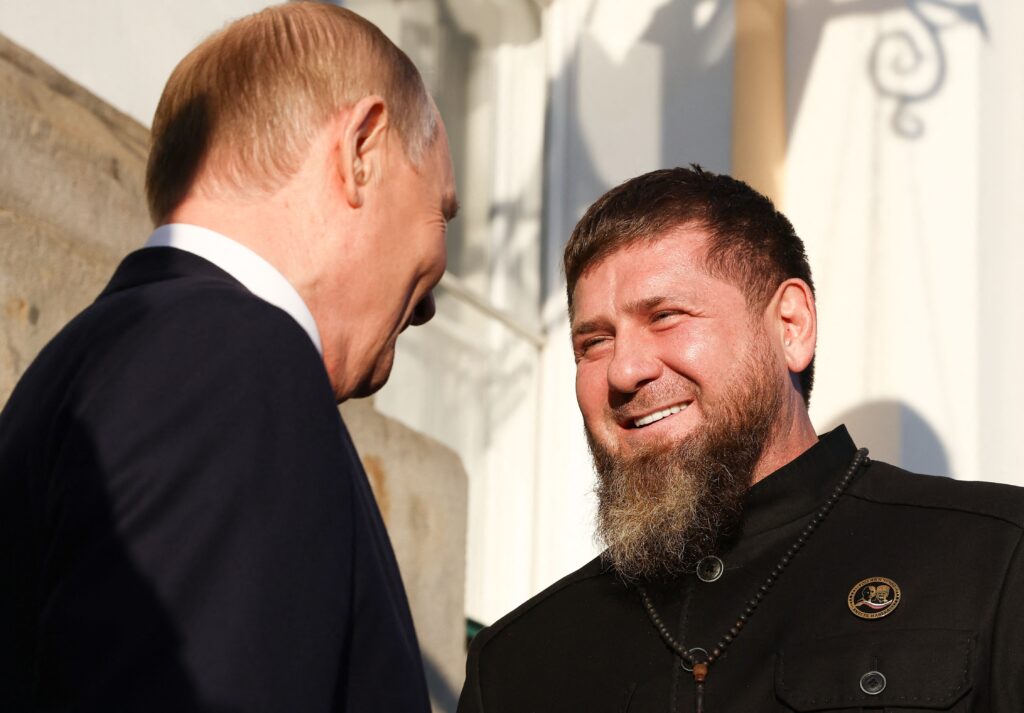
Putin’s fixation on Chechnya dates back to 1999, when — newly installed as acting prime minister — he vowed to hunt down those he blamed for a series of Moscow apartment bombings, promising to pursue the “terrorists” “even into the outhouse.”
The ensuing military campaign, known as the Second Chechen War, turned the little-known, pale-faced former KGB chief into a household name, setting him up to win the next presidential election.
In a twist worthy of “Game of Thrones,” Putin tilted the balance of the brutal conflict by brokering a deal with Ramzan Kadyrov’s father, Akhmat Kadyrov, a former rebel leader. When Akhmat was assassinated in 2004, Ramzan inherited the bargain: power in exchange for absolute loyalty.
Buffered by generous federal subsidies, Kadyrov went on to rule Chechnya with a level of brutality that raised eyebrows even in an increasingly repressive Russia, presiding over, among other abuses, the abduction, torture and killings of dozens of men suspected of being gay.
A frequent presence on social media and platforms like Instagram, TikTok and Telegram, Kadyrov has spent much of the past two decades building a reputation as a mercurial and ruthless despot.
In the past year, he has posted a video of himself pumping iron to refute reports that he’s suffering from pancreatic cancer, dared revelers who attended an “almost naked” party to join soldiers on the front line as punishment and claimed that Elon Musk gifted him a Cybertruck, complete with a machine gun turret, for use in Ukraine. After Musk denied giving him the truck, Kadyrov accused the Tesla boss of having remotely disabled the vehicle.
‘TikTok fighters’
Putin’s brutality in Ukraine — marked by Moscow’s bombing of civilian sites and the torture of prisoners of war under the pretext of a targeted military operation — mirrors in many ways his early campaign in Chechnya.
But for Kadyrov’s reputation, it has done more harm than good, said Mikhail Komin, an expert on Russian politics and a research fellow at the Center for European Policy Analysis.
The vocal militarism that Kadyrov had built into a brand “is now an absolute trend among the majority of the [Russian] elite,” said Komin. In today’s Russia, Putin’s entire entourage plays the part Kadyrov once monopolized.
Compounding the problem, Kadyrov’s fighters failed to live up to their fearsome reputation. They did little to stall the Ukrainian counteroffensive in the fall of 2022 and later proved ineffective during a daring Ukrainian incursion into Russia’s Kursk region.
What should’ve been a moment for the so-called kadyrovtsy to prove their worth instead swiftly earned them the derisive nickname “TikTok fighters” — impressive on screen but ultimately fake.
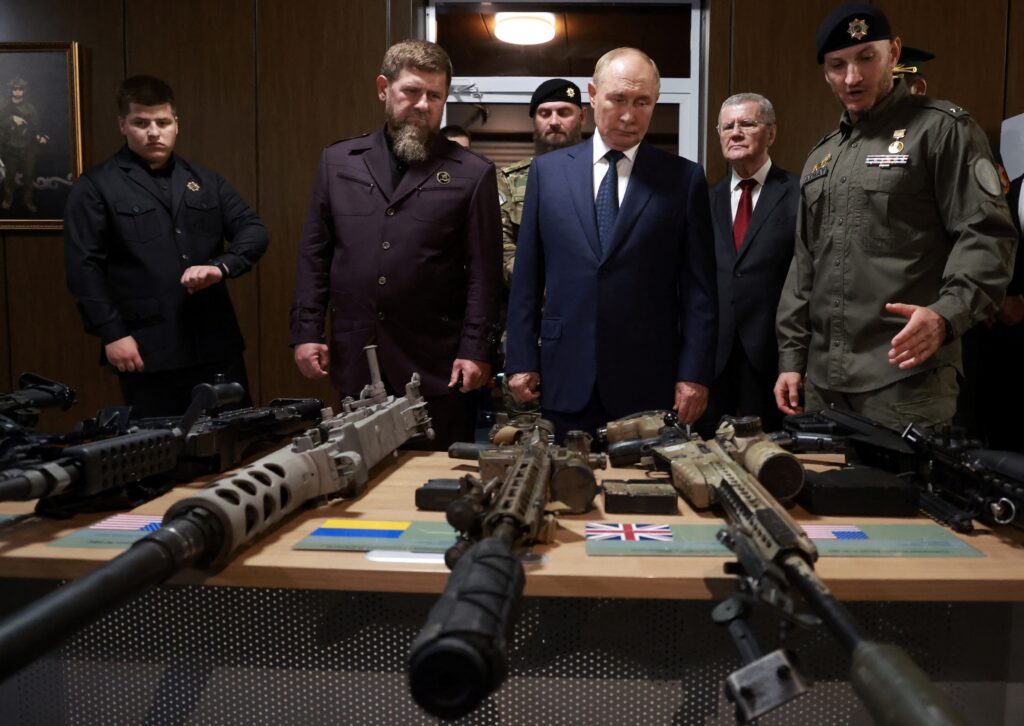
“It undermined the forceful myth that had been created around him,” said Ruslan Aisin, a political analyst and expert on the region. “It turned out that he had little to offer other than just loud statements.”
None of this has deterred Kadyrov from seeking the spotlight. He has publicly inserted himself into an explosive dispute over Wildberries, the Russian equivalent of Amazon, and more recently irritated officials by openly calling for a public vote to be rigged so that a Chechen landmark would appear on the new 500-ruble banknote.
Kadyrov’s bluster, combined with reports of his declining health, has made him a “headache” for the Kremlin, Komin said.
In late December, the Russian outlet Novaya Gazeta Europe reported that the Chechen leader had to be urgently hospitalized during a trip to Moscow. Citing Ukrainian military intelligence, Ukrainian media last week said Kadyrov is being treated at a private clinic in Grozny for kidney failure.
As on previous occasions, Kadyrov has responded to the rumors by posting videos of himself in action on social media, seeking to correct the impression that anything is wrong.
Asked about his health during a live broadcast in December, he acknowledged suffering occasional “nervous breakdowns,” which he attributed to worries about Chechen fighters in Ukraine. In the same broadcast, however, he said he planned to run again for office in regional elections in September 2026.
After Kadyrov
Nonetheless, Russia pundits and independent media alike say there are signs that a power transition may be underway.
In early January, Kadyrov appointed his 20-year-old son, Akhmat Kadyrov, as acting deputy prime minister. Though Akhmat is still a decade shy of being eligible to run for office — Russian law requires regional heads to be at least 30 — some see the move as further evidence that Kadyrov is laying the groundwork for a dynastic-style handover.
Beyond his son, Kadyrov has appointed at least 95 relatives to government or government-linked positions, according to the Russian investigative outlet Proekt, surpassing even Putin, which the investigation alleged to have placed 27 relatives in similar roles.
Moscow, some Kremlin watchers suggest, appears to favor a different successor, perhaps a figure like Apti Alaudinov, who leads Chechnya’s forces in Ukraine, and who has frequently appeared on Russian state television.
“The very fact that there are different scenarios makes the situation for the Kremlin more difficult,” said Komin.
Despite predictions among some in Russia and abroad of a return to instability in Chechnya, experts caution against overestimating the risks for Putin.
Kadyrov’s retreat from the stage would be “unpleasant and complex, but not a real threat,” to the regime, said Komin.
Putin has done in Chechnya what he clearly wants to do in Ukraine, clamping down on dissent and consolidating power to such a degree that the Kremlin will likely be able to manage a power transition.
“With Putin’s help, Kadyrov has created a ruling system, a ‘collective Kadyrov,’ that can exist in Chechnya without him,” Aisin said. “It’ll just mean the Kremlin won’t be dependent anymore on one person.”
And that, he added, could even be to Moscow’s benefit.



Follow