



LONDON — Donald Trump has triggered turmoil at the BBC at exactly the time its upstart right-wing rival is feeling bullish.
Trump’s defamation lawsuit against Britain’s public service broadcaster — finally filed late Monday after weeks of build-up — continues a drama that has already cost the BBC two of its most senior leaders.
But even if the legal action over a controversial edit of Trump’s Jan. 6, 2021, speech before the Capitol riot fails in extracting the U.S. president’s $10 billion demand from the BBC, it’s offering a boost to a newcomer Trump’s MAGA movement sees as ideologically aligned: GB News.
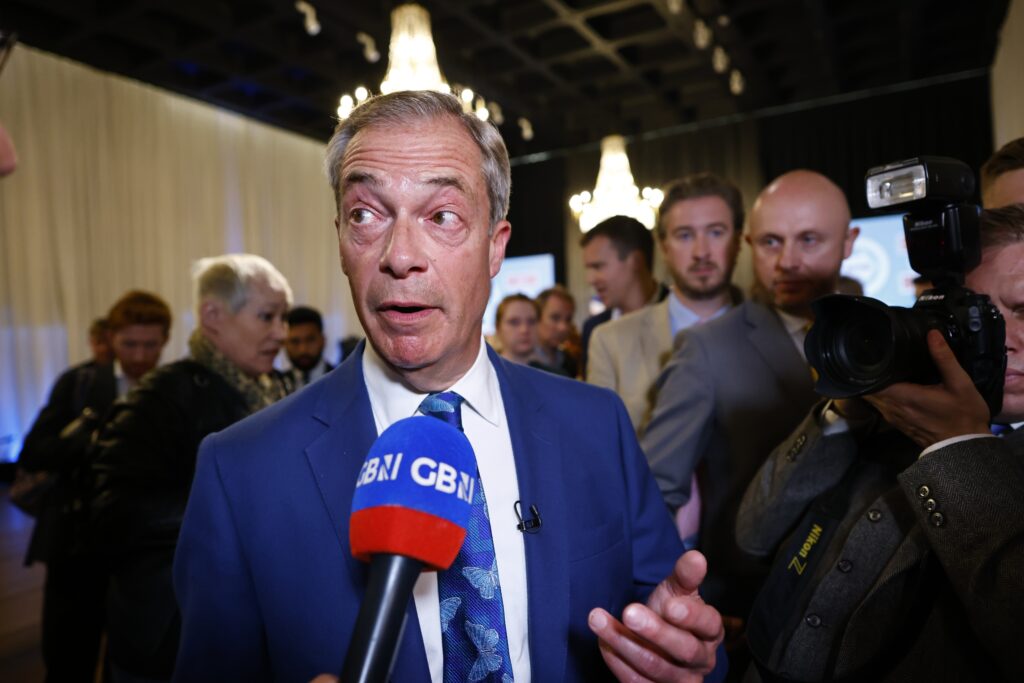
The outlet, which boasts Trump ally Nigel Farage among its hosts, has defied a shaky start by building a loyal audience, snagging big political interviews, and branching out to include a Washington bureau which now broadcasts a nightly show.
The channel pitches itself as a break from the liberal consensus — and Trump’s fresh attack on the BBC’s reputation offers GB News another chance to flaunt its wares.
“In the past, the BBC retained relevance through a moral authority derived from a sense of total objectivity,” said James Frayne, a former British government adviser who gave evidence on trust in broadcasters to the House of Lords Communications and Digital Committee in 2024.
“That authority just doesn’t exist anymore. This row with Trump is just another nail in the BBC’s coffin and it ensures that the likes of GB News are now viewed as channels of perfectly equivalent legitimacy.”
On the march
GB News launched in June 2021 to great fanfare — and plenty of skepticism. There were doubts it would survive after a rocky start beset by technical problems and the departure of star presenter Andrew Neil, a highly-respected veteran of BBC broadcasting who lasted just eight shows before quitting.
Almost five years on, and the channel is making steady viewership inroads in some key slots. It boasted a ratings success against its rivals on budget day, one of the big political moments of the year, and has a growing online audience.
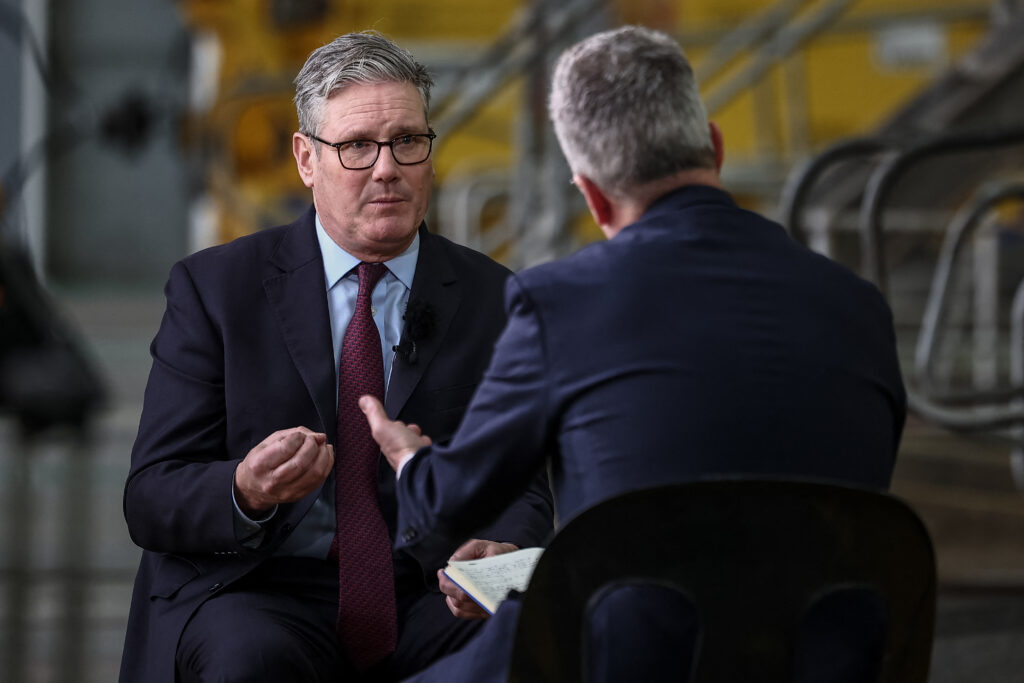
Politicians are taking note. Center-left Labour Prime Minister Keir Starmer is routinely interviewed by Political Editor Christopher Hope, a veteran Westminster lobby journalist who traveled with the PM for a migration-focused trip to Albania in May.
Starmer’s ministers usually speak to GB News during a morning broadcast round, and GB News’ relationship with Trump’s team has also stepped up rapidly since the channel launched a shoestring U.S. operation in the summer.
Host Bev Turner landed a place in the press pool for the U.S. president’s trip to his Scottish golf course at Turnberry over the summer, and charmed him with questions critical of the U.K. government. “Who are you with?” Trump asked. “Because you’re asking such nice questions.”
Four months later she was granted an interview with Trump.
Hope says the channel has aspirations to grow further, and argues that it has a strong sense of its audience. “We know who they are, and how we can serve them,” he says. “I think these are people who feel overlooked by the political main parties. They feel let down. They feel Brexit was something they voted for, hasn’t been done properly, and these are all people I think, were Trump a U.K. politician, he’d be appealing to them.”
And that’s helped GB News grow quickly in tandem with popular support for Farage’s Reform Party.
Former GB News producer Liam Deacon, who is now consultant at London public affairs firm Pagefield, said: “Trump taking GB News seriously has been useful in that it’s made them feel like a prestigious brand. But they also thrive as an underdog, so it’s not critical.”
Stirring the pot
Criticism of the BBC is nothing new, but the broadcaster has been under pressure in recent months over more than just its Trump edit, with its coverage of the war in Gaza coming under particular criticism. That’s allowed GB News to position itself as a fresh alternative, even though television viewers in the UK have other options, including Sky News, and radio stations such as LBC.
“It’s hard to appreciate what a phenomenon GB News is if your life is mostly London-based,” said Frayne. “It’s becoming the channel of choice for working-class England. It’s not just in people’s homes, you see it on in the background in countless pubs and small businesses in every town you go to.”
He added: “The BBC has become non-existent in many of these places.”
Others are watching the outlet with skepticism and alarm. Tom Chivers of the Media Reform Coalition, a non-partisan research group which campaigns for public interest media, acknowledged that outlets like GB News “matter a lot to politicians” — but pointed out that it still has a relatively small audience share.
“I think what we come back to is why these kinds of outlets are established in the first place,” he argued. “It’s not about providing alternative sources of news, or about catering to audiences that feel underserved. It’s actually about powerful political elites — whether that’s Nigel Farage or [senior Conservative] Jacob Rees-Mogg or all these other people connected with GB News — who already have quite significant power across politics and media, ensuring that their place at the table, their voice on your screens and on your radio and so on, is permanent, is entrenched.”
“I think GB News has achieved what it set out to do, which is to become this kind of focal point of political influence for a particular element of the right wing in the U.K.,” he added. “And really it’s up to politicians to decide if they want to be led by that kind of agenda, or if they want to make sure that there is a source like the BBC which provides a more well-rounded, accurate, impartial, objective approach to news and so on.”
GB News, which counts hedge fund manager Paul Marshall among its backers, is yet to make money. GB News Limited made a post-tax loss of £33.4 million in 2024, down from a £42.4 million loss in 2023, according to its latest accounts.
The channel — which has at times been rapped on the knuckles by the country’s broadcast regulator over impartiality concerns — has also faced an organized advertising boycott campaign. This may in part explain its push for U.S. eyeballs. One person with knowledge of the channel’s strategy, granted anonymity to speak freely, said : “Even a tiny slice of the American market would be massive. If they can get any advertising from the American side, they’ll be winning.”
The rival outlet has avoided gloating about the BBC’s current woes. Hope said GB News does “believe in the BBC” — even if it thinks the public broadcaster should do things differently.
“Where I sit as a political editor, there’s no jubilation [about the BBC’s woes.] It’s another story. It’s a story which we ask other politicians about.”
But Jennifer Nadel, a former BBC journalist who now leads the U.K. think tank Compassion In Politics, thinks the BBC’s rivals will seek to exploit its current Trump-inflicted disarray.
“It represents an opportunity for the BBC’s enemies to capitalize and further undermine it, and I think they’re doing it for two reasons — aside from the commercial advantages of weakening their main competitor, it also serves their political ends, and it should really be of concern for us all, because when trust in the BBC weakens, it isn’t replaced by something better,” she argued.
Yet Conservative peer Tina Stowell, who chaired a House of Lords inquiry into the future of news, argued that the BBC — which has apologized for its initial coverage but vowed to defend itself against the U.S. president’s lawsuit — should be more open about its own shortcomings, regardless of where its rivals sit.
“The BBC created the situation in which it now finds itself,” she argued. “The bigger danger isn’t President Trump’s lawsuit, but the BBC’s unwillingness to accept the systemic cause of this and other editorial failings; and a misplaced belief that the broadcaster is a victim distracting it from understanding and addressing the reasons why it is pushing some audiences away.”
Noah Keate contributed reporting.



Follow