



“Laws that exist only on paper achieve nothing.” This is not a slogan. It reflects the reality described by small-scale fishers and points to a wide gap between European Union commitments and delivery on the water. More than a decade after the last reform of the Common Fisheries Policy (CFP), the EU is once again debating whether to rewrite this policy, even though the CFP’s framework is fit for purpose and delivers sustainable fisheries — when properly applied.
What continues to fail is its implementation. The clearest example is the legal commitment to end overfishing by 2020, a deadline still unmet.
If Europe delays action until after another lengthy reform, it risks losing the next generation of fishers and hollowing out coastal economies.
Nowhere is this gap more visible than in the Mediterranean, and particularly in Cyprus and Greece, where stocks are further weakened by the accelerating effects of the climate crisis and the spread of invasive species. The Mediterranean remains the most overfished sea in the world, and small-scale fishers feel these consequences directly. Yet, Cypriot fishers are not asking for weaker rules or a new policy. They are asking for effective enforcement of existing legislation, and support from national authorities. Without these, the future of fisheries as a profession is at stake. If Europe delays action until after another lengthy reform, it risks losing the next generation of fishers and hollowing out coastal economies.
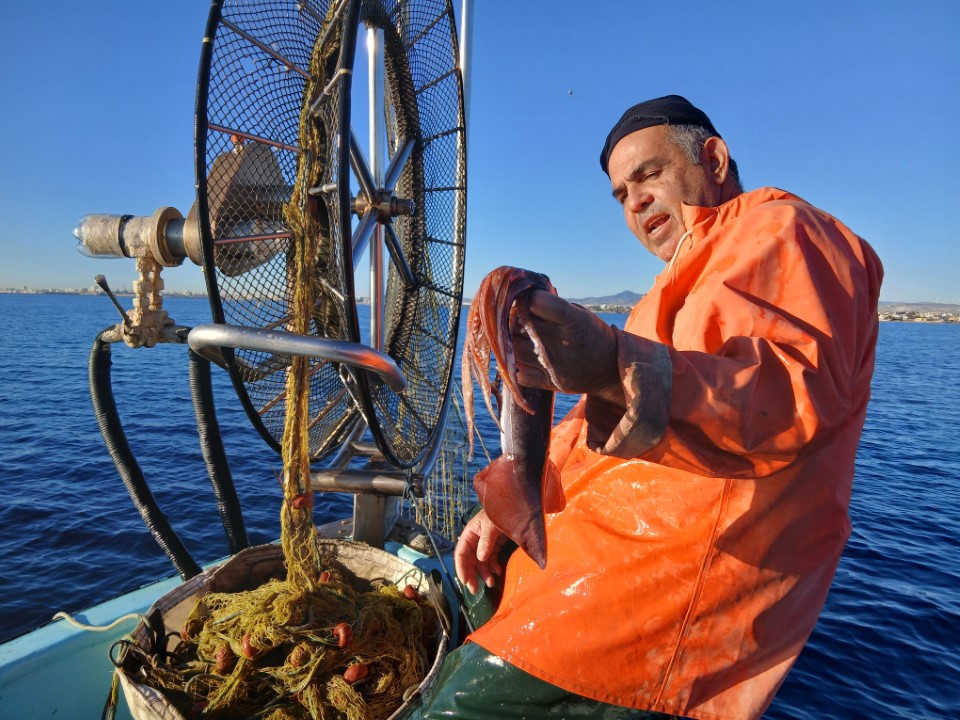
The experience of Cypriot and Greek fishers mirrors a broader European issue. Before reopening the CFP, Europe should take stock of the real gap, which lies not in the law itself, but in its uneven implementation and enforcement. Calls for reform are driven by familiar pressures: environmental safeguards are increasingly framed as obstacles to economic viability and fleet renewal. Reform is presented as a way to modernize vessels and cut red tape.
But this framing overlooks lessons from the past. Europe has been here before. Excess capacity and weak controls pushed fish stocks to the brink of collapse, forcing painful corrections that cost public money and livelihoods. For small-scale fishers in the Mediterranean, these impacts are not theoretical. They are experienced daily, through declining catches, rising costs and increasing uncertainty.
The Common Fisheries Policy delivers when implemented
Evidence shows that where the CFP has been implemented, it delivers. According to European Commission assessments, the share of stocks subject to overfishing in the North-East Atlantic fell from around 40 percent in 2013 to just over 22 percent by 2025. In the Mediterranean, the figure dropped from 70 percent to 51 percent over the same period. These improvements are closely linked to the application of science-based catch limits, effort restrictions and capacity controls under the CFP.
Europe has been here before. Excess capacity and weak controls pushed fish stocks to the brink of collapse, forcing painful corrections that cost public money and livelihoods.
Economic and social data tell the same story. EU fishing fleets have become more efficient and more profitable over the past decade. Vessels now generate higher average incomes, with wages per full-time fisher rising by more than a quarter since 2013. In its 2023 policy communication, the Commission concluded that the CFP remains an adequate legal framework, with the real gap lying in its application and enforcement.
Those involved in the 2013 reform understand why this matters. The revised policy marked a clear shift away from overcapacity and short-term decision-making toward a science-based approach. The European Commission’s own assessments show that this approach delivered results where it was applied. Parts of the EU fleet became more profitable, labor productivity improved and several fish stocks recovered. The CFP remains the EU’s strongest tool for reversing decline at sea.
Implementation results in progress; reform leads to instability and uncertainty
Strengthening the CPF’s implementation would deliver tangible benefits, including greater stability for fishers and coastal communities, avoiding years of legislative uncertainty, and allowing faster progress toward sustainability objectives. Firm and consistent implementation can enhance economic resilience while restoring ocean health, without the delays and risks that come with reopening the legislation. Given the time and resources required, another round of institutional reform is neither efficient nor necessary. Priority should instead be given to effectively delivering the agreed CFP commitments.

Cypriot Presidency of the Council: a moment for delivery
This debate unfolds as Cyprus assumes the EU Council Presidency, at a moment when choices made in Brussels carry immediate consequences at sea. Holding the Presidency brings responsibility as well as opportunity. It offers a chance to help frame the discussion toward making existing rules work in practice, while addressing current implementation challenges. This is where the credibility of the CFP will be tested.
Sustainability and livelihoods move together, or not at all.
Reopening the CFP now may send the wrong signal. It may suggest that missed deadlines carry no consequence and that agreed-upon rules are optional. For fishers, it would prolong uncertainty at a time when stability is already fragile. For Europe, it would undermine trust in its ability to deliver.
The EU was not conceived to generate endless processes or delay action through repeated legislative cycles. Its purpose is to deliver common solutions to shared problems, and to support people and communities where national action falls short. The last reform of the CFP was built on a simple principle: healthy fish stocks are the foundation of viable fisheries. Sustainability and livelihoods move together, or not at all. This principle is already reflected in Europe’s agreed framework. The task now is to act on it.
Fisheries are a clear test of that promise. The law is already in place. The tools already exist. What Europe needs now is the political resolve to deliver on the commitments it has already made.
Disclaimer
POLITICAL ADVERTISEMENT
- The sponsor is OCEANA
- The ultimate controlling entity is OCEANA
More information here.



Follow