



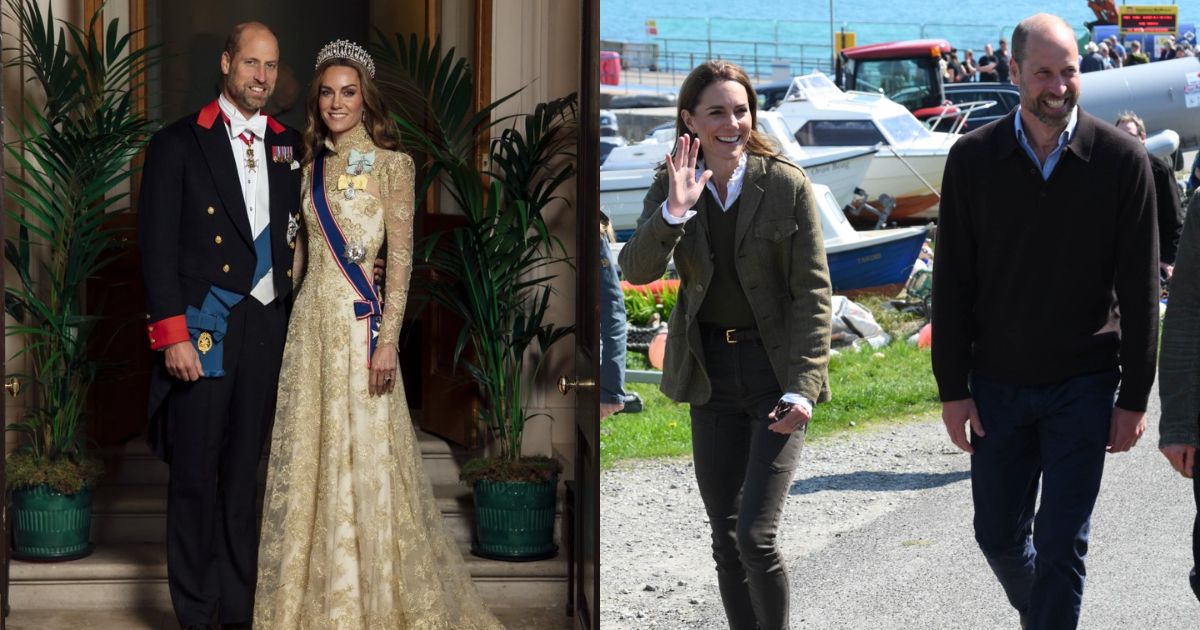
The British royal family remains one of the most closely watched families in the world, and much of its global fascination centers on its women. Ideally, when we think of the royal family, an automatic sense of sophistication comes to mind.
From Queen Elizabeth II to Princess Diana, Kate Middleton, and Meghan Markle, royal women have shaped family fashion conversations and media narratives for decades.
From barn jackets and tweed skirts to welly boots, exquisite ornaments, tiaras, and hair scarves, royal fashion is an exclusive genre of its own, often copied, adapted, and recreated by millions around the globe.
Mastering a modern yet modest countryside-chic dressing style, like Kate Middleton’s, takes practice and often requires resources and luck.
Yet this obsession reflects a broader pattern of how women, regardless of status, are subjected to relentless judgment based on appearance. In the case of the royals, many widely reported “fashion rules” are either misunderstood or entirely fictional.
It’s always nice to have a timeline cleanse. So here’s what REAL royals look like when they dress up for a gala event, sans tiaras (for the most part). The vast majority of the time, royals always strive to look elegant, timeless, sophisticated and regal. I think most of the… pic.twitter.com/YOc4UEgzYU
— Royal News Network (@RNN_RoyalNews) October 7, 2024
According to The List, while guidelines do exist for formal occasions, there is no publicly available rulebook governing royal dress. Instead, traditions are passed down informally or guided by older generations.
What is interesting is that conventional royal dressing protocols may seem difficult to understand or follow, but royal fashion experts such as Victoria Arbiter and journalist Elizabeth Holmes, author of “HRH: So Many Thoughts on Royal Style,” have repeatedly said mastering the lookbook is not that hard.
Thanks to numerous media outlets speculating on various details, dressing like a royal family member might feel like an amateur learning to perform with fire in a circus but that is not necessarily the case.
Here are some of the most common myths about what British royal women supposedly should be wearing but are actually choices, not hard-and-fast rules.
To begin with, wearing pantyhose is not mandatory. However, Queen Elizabeth II was famously devoted to pantyhose, leading many to assume they were a royal requirement. That belief gained traction when Meghan Markle appeared without hosiery at public events, causing public backlash.
However, Markle has since stepped down from her royal duties and moved to the United States. Journalist Elizabeth Holmes explained that stockings were a personal preference of the late queen, not an official rule.
Another old myth is that royal women must never show their thighs. This rule is not mandatory today. However, the goal is to be modern yet modest, and it’s truly not just about length. Dresses that fall above the knee are completely acceptable when styled appropriately.
Kate Middleton has worn thigh-length dresses on multiple occasions, including during her pregnancy. Princess Diana famously embraced shorter hemlines, including her iconic “revenge dress.”
Consequently, thigh-high slits are often assumed to be off-limits due to pre-existing perceptions of royal modesty, yet both Kate Middleton and Meghan Markle have styled them with different tops and footwear over the years. The main factor is balance, and choosing slits that allow comfort and elegance is the answer to it.
The next one is a common myth; many believe that royal women may only wear neutral nail polish stems from Queen Elizabeth’s fondness for Essie’s Ballet Slippers. However, it is a choice, not a mandatory rule.
I read about the revenge dress worn by Princess Diana. She wore a black, revealing dress after her divorce from Prince Charles, and it became known as the “revenge dress.” In the royal family, she was not allowed to show that much skin or wear something like a black, revealing… pic.twitter.com/mqlCW198CM
— Prateekaaryan 𝕏 (@AaryanPrateekX) August 19, 2025
Kate Middleton has been photographed wearing bright red nail polish, including during Easter services. Princess Eugenie has experimented with nail art.
As long as the nails remain polished, clean and germ-free, all is well. Next one might be vague, but it’s widely believed tthat royal women must always wear dresses or skirts. This is completely false.
According to Town&Country, Princess Diana helped normalize tailored trousers and owned them like nobody else. Princess Kate has also been spotted in flared jeans, simple tights and retro boots. She has also worn puffer jackets with suede combat boots, giving the modern outfit a retro twist.
Today, from big appearances to official launches, colorful trousers, solid tights, and jeans have become a symbol of modern royal style rather than a strict sign of breaking protocol.
Therefore, while old traditions will always influence royal fashion, most so-called “rules” are myths that are spread by media speculation. Britain’s royal family has always been known for their style, and the women today continue to redefine elegance and style on their own terms.



Follow