



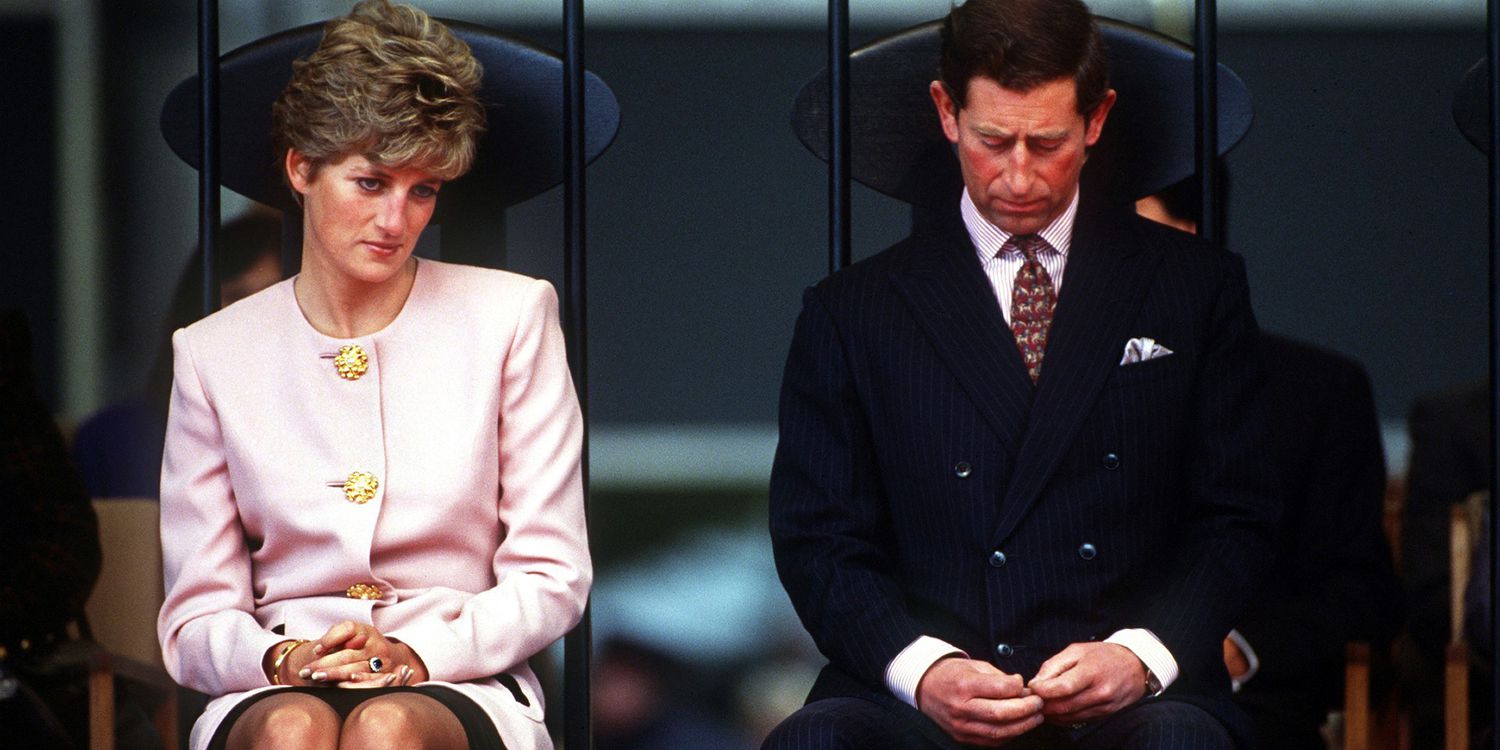
- Prince Charles and Princess Diana married on July 29, 1981, and ultimately separated in 1992 before divorcing in 1996.
- Throughout their marriage, both Charles and Diana carried out extramarital affairs, perhaps most notably Charles’ long standing affair with the former Camilla Parker Bowles (who is now Queen Camilla).
- Despite this, there was a different, surprising reason that Diana believed her marriage to the former Prince of Wales failed, according to a royal biographer who also personally knew Diana.
When one thinks of the chief reason behind the demise of Prince Charles and Princess Diana’s marriage, many people’s first inclination would be to blame the former Camilla Parker Bowles—now Queen Camilla—who carried on an extramarital affair with the future king for years.
Sure, that didn’t help—as Diana famously said in her 1995 Panorama interview, “There were three of us in this marriage, so it was a bit crowded”—but royal biographer Ingrid Seward said there was another factor at play. Seward had a close friendship with the late Princess of Wales, spending time with her just weeks before her death on August 31, 1997 at just 36 years old.
“She said to me just before she died, it wasn’t Camilla,” Seward told Hello!’s “A Right Royal Podcast.”
Express Newspapers/Archive Photos
Photo by Getty Images
Quoting Diana, Seward said, “It wasn’t Camilla that ruined our marriage. It was the people around Charles”—referring to palace staff and courtiers that were always at hand.
“And I could never unpick that comment and quite understand what it meant,” Seward added. “But I also remember Diana’s father saying how tricky the royal household was.”
Of royal staffers, Seward posed the question on the show, “Are they just a load of overinflated egos in the royal household, or are they really trying to help?”
Getty Images
Photographer Denis O’Regan—who has written a book coming out in July about his experiences photographing David Bowie—shared that the palace tried to block a photo of Bowie and Diana to “dampen speculations” on Diana’s love life, according to The Telegraph. O’Regan shot the photograph after Bowie’s concert at Wembley Stadium in June 1987, after which Diana—then 25 years old—had shyly asked O’Regan whether the rock star would want a picture with her.
“I think he would,” the photographer replied, adding that “I thought it was so funny”—seeing that Diana was one of, if not the, most famous women in the world. O’Regan called the Princess of Wales “so sweet,” but added that the day after the concert, Kensington Palace called “saying don’t use the pictures.”
Getty
Getty Images
You see, Diana had attended said concert with Army Major James Hewitt, who she began a five-year affair with beginning in 1986. “Word had gone out about James Hewitt,” O’Regan said. “So that’s when it kind of erupted. It was interesting, on a number of levels.”
“They just didn’t want Diana in the press,” the photographer continued, adding, “It was really [that] they didn’t want to fuel the fire.” He added, “So the more pictures that weren’t out there the better, because someone would have said, ‘This is her at the show that she turned up to with James Hewitt,’ even though I didn’t get the multimillion dollar shot of the two of them together, because no one knew who he was.”



Follow