


Sunday, 18 January, 2026
London, UK
Sunday, January 18, 2026 5:54 AM
overcast clouds 7.0°C
Condition: Overcast clouds
Humidity: 94%
Wind Speed: 13.0 km/h

The death of Ian Balding, the legendary horse trainer for Queen Elizabeth II, augurs the end of an era

https://substackcdn.com/image/fetch/$s_!3wTw!,f_auto,q_auto:best,fl_progressive:steep/https:/sallybedellsmith.substack.com/api/v1/post_preview/184902092/twitter.jpg?version=4

The Queen was passionate about thoroughbred racing, but will King Charles III and Prince William carry on the royal tradition?
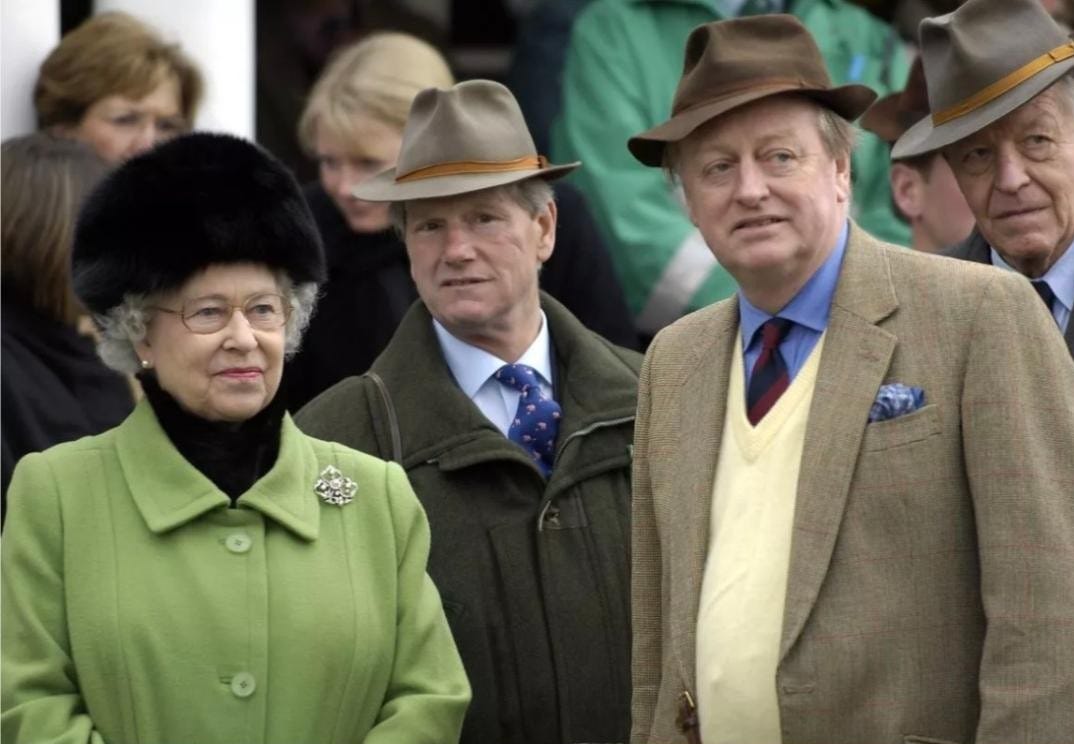
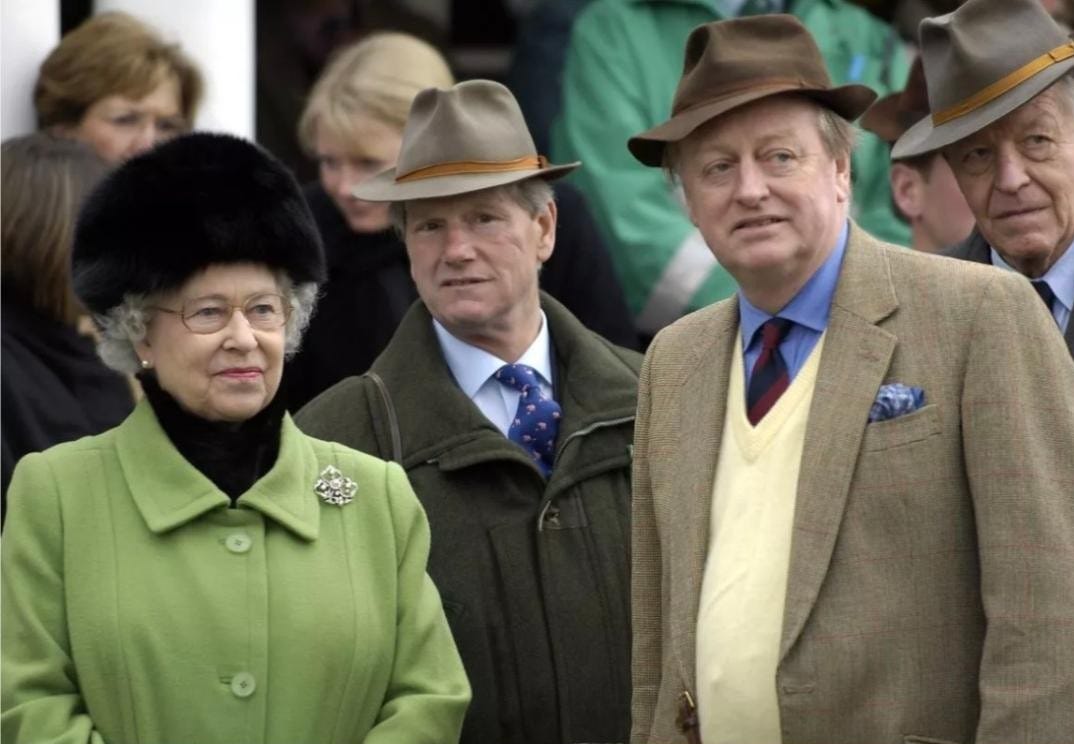
The Queen, her trainer Ian Balding, her daughter-in-law Camilla’s first husband, Andrew Parker Bowles, and Sir Michael Oswald, the manager of the Royal Stud at Sandringham, at the races in 2005

“Horses are the greatest levelers in the world,” Queen Elizabeth II once said. For the monarch who exemplified regal dignity and unflagging duty, her time spent with horses reflected a side largely unseen by the public: an owner who was earthy, detail-oriented, and decisive. Since the announcement in early January that Ian Balding had died at age 87, I’ve been thinking of how much horse breeding, training, and racing occupied the late Queen’s life, and wondering about the current status and future prospects for a royal tradition stretching back to the sixteenth century. Balding was a mainstay for her, training her horses from 1964 to his retirement in 2002.

I’ve shared my knowledge with Royals Extra readers about three other important figures in the Queen’s thoroughbred enterprises: Sir Michael Oswald, the longtime manager of the Royal Stud on the monarch’s Sandringham Estate in Norfolk (Inside the Royal Stud at Sandringham), The 7th Earl of Carnarvon (“Porchey”), the Queen’s long-serving racing manager (In its final season, The Crown returns to the Queen’s friendship with “Porchey,” her racing manager for thirty years), and Monty Roberts, the California cowboy who taught the Queen his techniques for non-violent horse training (Thinking about “The Cowboy and The Queen”).

Balding’s obituaries emphasized his preeminence as the trainer who guided Mill Reef, owned by the wealthy American patrician Paul Mellon, to victory in Britain’s most prestigious races. His relationship with the Queen was another source of pride for Balding. He gave her the satisfaction of watching her horses win at the track, as well as the pleasure of inspecting them in their stalls at his Park House Stables and seeing them train for competition at his Kingsclere property on the Hampshire Downs.
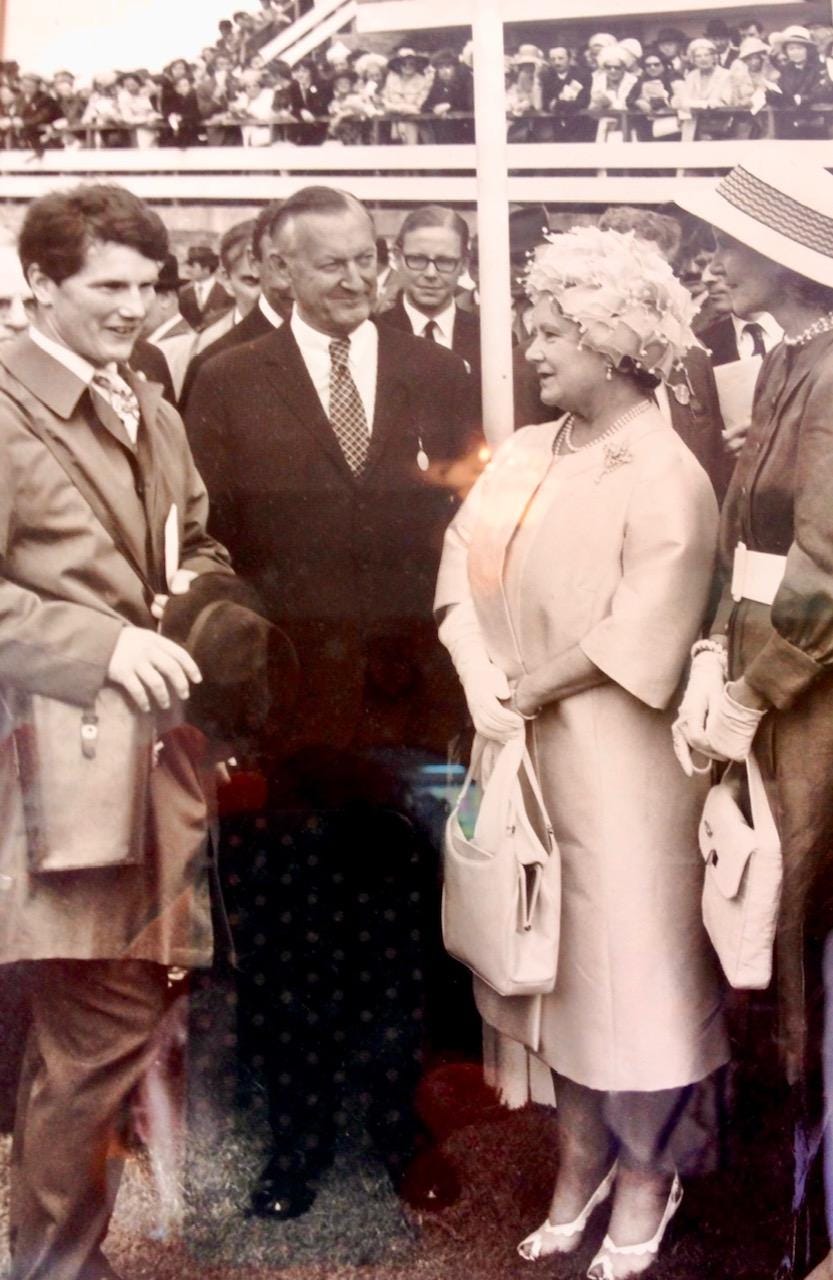
Ian Balding with Paul Mellon, Queen Elizabeth the Queen Mother, and Bunny Mellon after Mill Reef won the Epsom Derby in 1971

In late March 2009 I spent the better part of a day with Balding at Kingsclere, where he described the Queen’s interest in the training process, which would last until her death in September 2022. He shared amusing as well as revealing anecdotes about the monarch and Prince Philip, whose curiosity about thoroughbreds proved short-lived. More recently I’ve heard some encouraging news about the way King Charles III and Queen Camilla are managing their thoroughbreds. But there is little indication that Prince William and Catherine, The Princess of Wales, have much if any interest in breeding and racing, which raises questions about its future with the royal family.


ROYALS EXTRA BY SALLY BEDELL SMITH is a reader-supported publication offering exclusive insights into the British royal family. To receive new posts, please consider becoming a subscriber. If you wish to read posts in full and dig into my extensive archive, I hope you will support my work by signing up for a paid subscription for $60 a year or $6 a month.

LP Staff Writers

Writers at Lord’s Press come from a range of professional backgrounds, including history, diplomacy, heraldry, and public administration. Many publish anonymously or under initials—a practice that reflects the publication’s long-standing emphasis on discretion and editorial objectivity. While they bring expertise in European nobility, protocol, and archival research, their role is not to opine, but to document. Their focus remains on accuracy, historical integrity, and the preservation of events and individuals whose significance might otherwise go unrecorded.

Categories

Follow

    Newsletter

    Subscribe to receive your complimentary login credentials and unlock full access to all features and stories from Lord’s Press.

    As a journal of record, Lord’s Press remains freely accessible—thanks to the enduring support of our distinguished partners and patrons. Subscribing ensures uninterrupted access to our archives, special reports, and exclusive notices.

    LP is free thanks to our Sponsors

    Privacy Overview

    Privacy & Cookie Notice

    This website uses cookies to enhance your browsing experience and to help us understand how our content is accessed and used. Cookies are small text files stored in your browser that allow us to recognise your device upon return, retain your preferences, and gather anonymised usage statistics to improve site performance.

    Under EU General Data Protection Regulation (GDPR), we process this data based on your consent. You will be prompted to accept or customise your cookie preferences when you first visit our site.

    You may adjust or withdraw your consent at any time via the cookie settings link in the website footer. For more information on how we handle your data, please refer to our full Privacy Policy