



LONDON — Keir Starmer is off to China to try to lock in some economic wins he can shout about back home. But some of the trickiest trade issues are already being placed firmly in the “too difficult” box.
The U.K.’s trade ministry quietly dispatched several delegations to Beijing over the fall to hash out deals with the Chinese commerce ministry and lay the groundwork for the British prime minister’s visit, which gets going in earnest Wednesday.
But the visit comes as Britain faces growing pressure from its Western allies to combat Chinese industrial overproduction — and just weeks after Starmer handed his trade chief new powers to move faster in imposing tariffs on cheap, subsidized imports from countries like China.
For now, then, the aim is to secure progress in areas that are seen as less sensitive.
Starmer’s delegation of CEOs and chairs will split their time between Beijing and Shanghai, with executives representing City giants and high-profile British brands including HSBC, Standard Chartered, Schroders, and the London Stock Exchange Group, alongside AstraZeneca, Jaguar Land Rover, Octopus Energy, and Brompton filling out the cast list. Starmer will be flanked on his visit by Trade Secretary Peter Kyle and City Minister Lucy Rigby.
Despite the weighty delegation, ministers insist the approach is deliberately narrow.
“We have a very clear-eyed approach when it comes to China,” Security Minister Dan Jarvis said Monday. “Where it is in our national interest to cooperate and work closely with [China], then we will do so. But when it’s our national security interest to safeguard against the threats that [they] pose, we will absolutely do that.”
Starmer’s wishlist will be carefully calibrated not to rock the boat. Drumming up Chinese cash for heavy energy infrastructure, including sensitive wind turbine technology, is off the table.
Instead, the U.K. has been pushing for lower whisky tariffs, improved market access for services firms, recognition of professional qualifications, banking and insurance licences for British companies operating in China, easier cross-border investment, and visa-free travel for short stays.
With China fiercely protective of its domestic market, some of those asks will be easier said than done. Here’s POLITICO’s pro guide to where it could get bumpy.
Championing the City of London
Britain’s share of China’s services market was a modest 2.7 percent in 2024 — and U.K. firms are itching for more work in the country.
British officials have been pushing for recognition of professional qualifications for accountants, designers and architects — which would allow professionals to practice in China without re-licensing locally — and visa-free travel for short stays.
Vocational accreditation is a “long-standing issue” in the bilateral relationship, with “little movement” so far on persuading Beijing to recognize U.K. professional credentials as equivalent to its own, according to a senior industry representative familiar with the talks, who, like others in this report, was granted anonymity to speak freely.
Britain is one of the few developed countries still missing from China’s visa-free list, which now includes France, Germany, Italy, Spain, the Netherlands, Switzerland, Australia, New Zealand, Japan, Saudi Arabia, Russia and Sweden.
Starmer is hoping to mirror a deal struck by Canadian PM Mark Carney, whose own China visit unlocked visa-free travel for Canadians.
The hope is that easier business travel will reduce friction and make it easier for people to travel and explore opportunities on the ground — it would allow visa-free travel for British citizens, giving them the ability to travel for tourism, attend business conferences, visit friends and family, and participate in short exchange activities.
Smoothing financial flows
The Financial Conduct Authority’s Chair Ashley Alder is also flying out to Beijing, hoping to secure closer alignment between the two countries’ capital markets. He’ll represent Britain’s financial watchdog at the inaugural U.K-China Financial Working Group in Beijing — and bang the drum for better market connectivity between the U.K. and China.
Expect emphasis on the cross-border investments mechanism known as the Shanghai-London and Shenzhen-London Stock Connect, plus data sovereignty issues associated with Chinese companies jointly listing on the London Stock Exchange, two figures familiar with the planning said.
The Stock Connect opened up both markets to investors in 2019 which, according to FCA Chair Ashley Alder, led to listings worth almost $6 billion.
“Technical obstacles have so far prevented us from realizing Stock Connect’s full potential,” Alder said in a speech last year. Alder pointed to a memorandum of understanding being drawn up between the FCA and China’s National Financial Regulatory Administration, which he said is “critical” to allow information to be shared quickly and for firms to be supervised across borders. But that raises its own concerns about Chinese use of data.
“The goods wins are easier,” said a senior British business representative briefed on the talks. “Some of the service ones are more difficult.”
Tapping into China’s biotech boom
Pharma executives, including AstraZeneca’s CEO Pascal Soriot, are among those heading to China, as Britain tries to burnish its credentials as a global life sciences hub — and attract foreign direct investment.
China, once known mainly for generics — cheaper versions of branded medicine that deliver the same treatment — has rapidly emerged as a pharma powerhouse. According to ING Bank’s global healthcare lead, Stephen Farrelly, the country has “effectively replaced Europe” as a center of innovation.
ING data shows China’s share of global innovative drug approvals jumped from just 4 percent in 2014 to 27 percent in 2024.

Several blockbuster drug patents are set to expire in the coming years, opening the door for cheaper generic competitors. To refill thinning pipelines, drugmakers are increasingly turning to biotech companies. British pharma giant GSK signed a licensing deal with Chinese biotech firm Hengrui Pharma last July.
“Because of the increasing relevance of China, the big pharma industry and the U.K. by definition is now looking to China as a source of those new innovative therapies,” Farrelly said.
There are already signs of progress. Science Minister Patrick Vallance said late last year that the U.K. and China are ready to work together in “uncontroversial” areas, including health, after talks with his Chinese counterpart. AstraZeneca, the University of Cambridge and Beijing municipal parties have already signed a partnership to share expertise.
And earlier this year, the U.K. announced plans to become a “global first choice for clinical trials.”
“The U.K. can really help China with the trust gap” when it comes to getting drugs onto the market, said Quin Wills, CEO of Ochre, a biotech company operating in New York, Oxford and Taiwan. “The U.K. could become a global gold stamp for China. We could be like a regulatory bridgehead where [healthcare regulator] MHRA, now separate from the EU since Brexit, can do its own thing and can maybe offer a 150-day streamlined clinical approval process for China as part of a broader agreement.”
Slashing whisky tariffs
The U.K. has also been pushing for lowered tariffs on whisky alongside wider agri-food market access, according to two of the industry figures familiar with the planning cited earlier.
Talks at the end of 2024 between then-Trade Secretary Jonathan Reynolds and his Chinese counterpart ended Covid-era restrictions on exports, reopening pork market access.
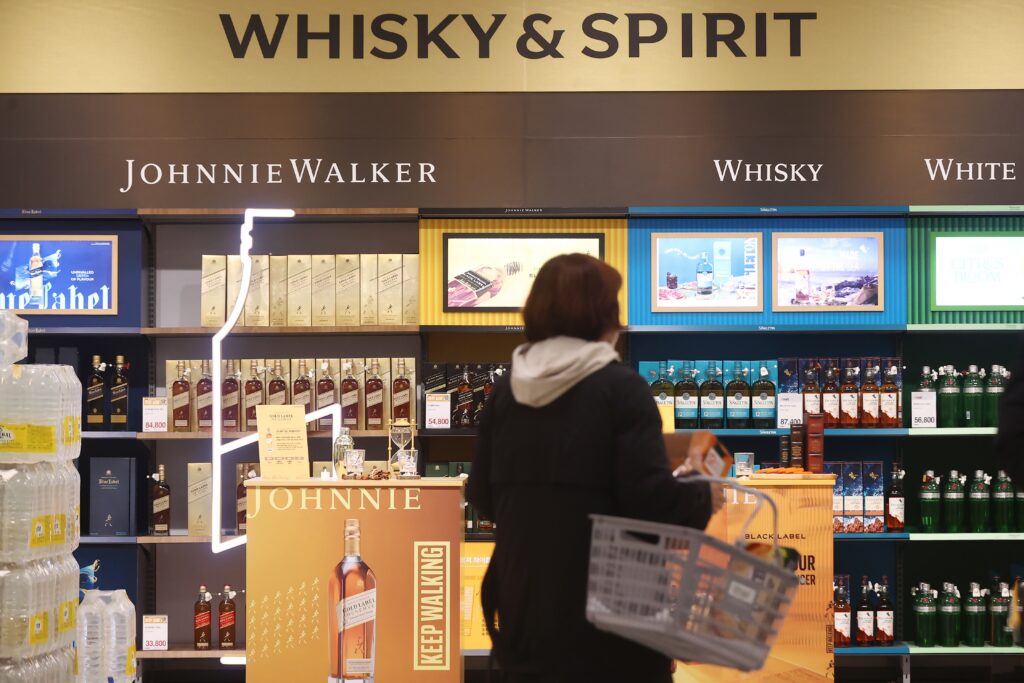
But in February 2025 China doubled its import tariffs on brandy and whisky, removing its provisional 5 percent tariff and applying the 10 percent most-favored-nation rate.
“The whisky and brandy issue became China leverage,” said the senior British business representative briefed on the talks. “I think that they’re probably going to get rid of the tariff.”
It’s not yet clear how China would lower whisky tariffs without breaching World Trade Organization rules, which say it would have to lower its tariffs to all other countries too.
Industrial tensions
The trip comes as the U.K. faces growing international pressure to take a tougher line on Chinese industrial overproduction, particularly of steel and electric cars.
But while the U.K.’s allies in the European Union and the U.S. have imposed tariffs on Chinese EVs, the U.K. has resisted pressure to do so.
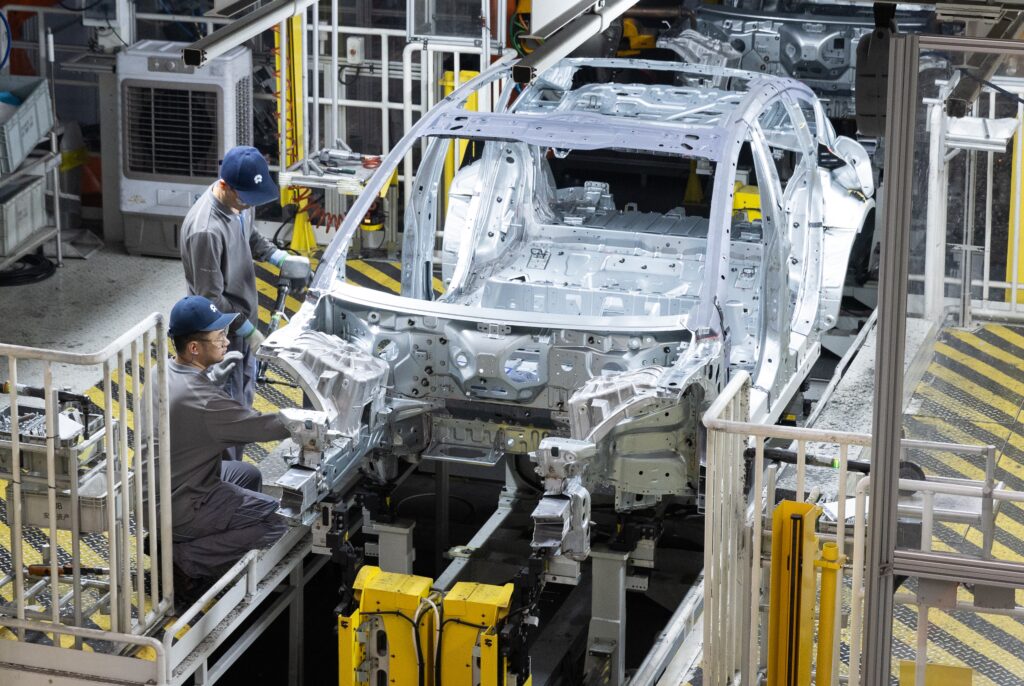
There’s a deal “in the works” between Chinese EV maker and Jaguar Land Rover, said the senior British business representative briefed on the talks quoted higher, where the two are “looking for a big investment announcement. But nothing has been agreed.” The deal would see the Chinese EV maker use JLR’s factory in the U.K. to build cars in Britain, the FT reported last week.
“Chinese companies are increasingly focused on localising their operations,” said another business representative familiar with the talks, noting Chinese EV makers are “realising that just flaunting their products overseas won’t be a sustainable long term model.”
It’s unlikely Starmer will land a deal on heavy energy infrastructure, including wind turbine technology, that could leave Britain vulnerable to China. The U.K. has still not decided whether to let Ming Yang, a Chinese firm, invest £1.5 billion in a wind farm off the coast of Scotland.



Follow