



LONDON — Rachel Reeves wanted the world to know her upcoming budget would be a big deal.
The U.K. chancellor took the unusual step last month of flashing a warning signal that she would break a Labour manifesto pledge and hike income tax in a bid to reset Britain’s stagnant economy.
At an unusual 8 a.m. press conference in Downing Street, Reeves said she wanted to “put the national interest first” and lend a hand to “chancellors in the future,” while cutting the £2.9 trillion government debt pile — the annual interest on which costs more than £100 billion.
It would have marked a historic shift in approach — and the first rise in the U.K.’s basic rate of income tax for five decades.
Amid flatlining growth since the 2008 financial crash — and to avoid political fights — British chancellors have long pretended that small tweaks to taxes can keep pace with huge public service demands.
Parts of the state have been starved of funds while ever more cash is shifted towards health and welfare. Gaps have been plugged with borrowing — inching debt higher. Spending on buildings and infrastructure plummeted in the decade after the crash.
The result has been drift. And a sense that nothing in Britain quite works.
“We’ve been running a 21st-century welfare state on a 20th-century tax base,” said David Aikman, director of independent macroeconomic think tank the National Institute of Economic and Social Research.
Britain’s existing model appears to have reached its limit — not least after the double hits of a global pandemic and the war in Ukraine. Covid led to spending spikes on health and welfare support, while Putin’s full-scale invasion saw subsidized household energy bills and a drive to repower Britain’s languishing armed forces.
Borrowing costs now leap at the slightest hint Britain’s delicate fiscal balance could come unstuck. Even footage of Reeves weeping in the House of Commons last summer rattled the markets.
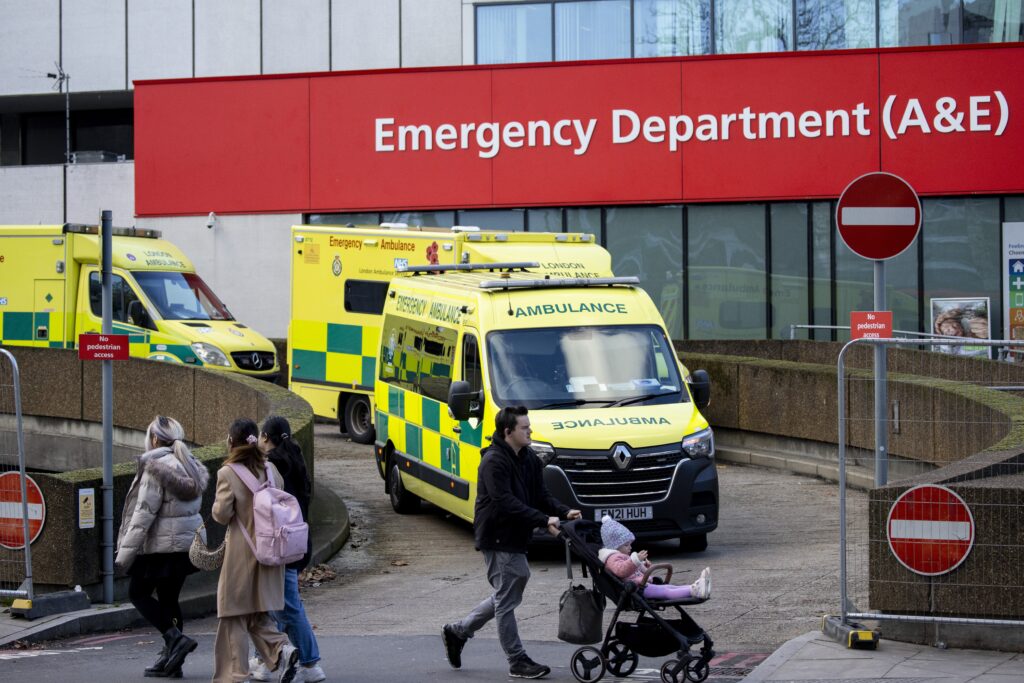
The long neglect of Britain’s public realm is showing scars. Prisons are full, courts have record backlogs, and the health service has massive waiting lists despite more funding than ever being poured into the NHS. Local government has lost around half its central grant and cannot keep up with demands on social care and special educational needs. Rows about public sector wages have led to marathon strikes. Britain’s armed forces are underpowered, living in substandard conditions, and struggling to get the right kit.
“With an ageing population driving up health and social care costs, new pressures on defense and resilience, and the lingering fiscal hangover from the pandemic, [the current] model is no longer sustainable,” argued Aikman.
Raising one of the big three taxes — income tax, VAT, or national insurance — would reap significant sums, but has long been considered too difficult a fight with voters and opposition parties.
So Reeves settled on a compromise: taking 2 percent off national insurance and adding 2 percent to income tax. The variables in their application could reap an immediate £6 billion annual windfall, according to the brains behind the proposal — not an enormous sum but a significant chunk. “She’s making sure the fiscal stance of this government reflects that we’re not in the politics of the 2010s anymore,” said one person familiar with the plans, granted anonymity like others in this piece to discuss internal government thinking.
‘Bottled’
But that was before Reeves dramatically changed her mind.
Little more than a week after the chancellor delivered her scene-setting speech in Downing Street, her income tax gambit was ditched. The decision was initially pinned on better-than-expected – albeit seldom-reliable – snapshot economic projections, which suggested that more cash will flow into government coffers after all, negating the need to pull the trigger.
Labour MPs sensed spin — and will hardly have been calmed by fresh reports this week that budget watchdogs will, in fact, downgrade Britain’s growth forecasts.
They worry Reeves has ducked her big chance for a game-changing budget amid wider disarray at the top of government.
Reports soon emerged that, amid acute pressure on his leadership despite a massive House of Commons majority, Prime Minister Keir Starmer had decided that breaching a manifesto promise could be career suicide. Starmer’s Cabinet openly debated the wisdom of taking what one person with knowledge of the discussions described as “unnecessary political risks.”
‘Different path’
The upshot is that Reeves will now revert to the usual approach — pulling levers on numerous smaller taxes in a bid to give herself more room for maneuver.
Those around the chancellor insist her level of ambition is undiminished. “Is this still a government determined to change this country’s fortunes? Yes,” a Treasury aide said. Reeves herself told the Times Magazine in recent days: “We can’t just carry on like this and muddle through. We have to make some decisions to get on a different path.”
Aides argue her path has been clear and unwavering throughout the budget preparation process — even as businesses lament a longer-than-usual run-up to the setpiece moment and an extraordinary number of leaks.
At the first scoping meeting Reeves held last summer, the chancellor set three priorities: reducing NHS waiting lists, tackling the cost of living, and paying down Britain’s debt. All three will still be addressed in the budget regardless of the specific tax-raising measures, aides claim.
People familiar with the plans also insist Reeves will generate enough revenue to keep the U.K.’s public finances stable until at least the end of the current parliament.
That means delivering a far higher fiscal buffer than the £10 billion she gave herself in autumn 2024 and spring 2025. Ministers accept that keeping this so-called “headroom” low only fuels speculation about tax rises, creating an unstable landscape for potential investors. And officials argue their pitch for an economic reset never hinged on the income tax plan — since the £6 billion sum it would have generated is low enough to be found via other means.
“It was never going to be a one lever thing,” one official said. “It was always going to be a number of choices.”
Either way, Reeves is now open to the charge she’s ducked the hardest choice — and left the British economy in tinkering mode.
“Rowing back from the proposal to raise income taxes suggests the government has stepped back from the chance for a proper fiscal reset — the sort of shift needed to put the public finances on a stable footing,” said Aikman.
“In its place, it looks as though we’re getting a pick-and-mix package that leans heavily on better-looking [forecasts.] While that’s politically understandable, it won’t be enough to put debt on a sustainable path — and the likely outcome is that we’ll be in for further fiscal resets this parliament.”



Follow