



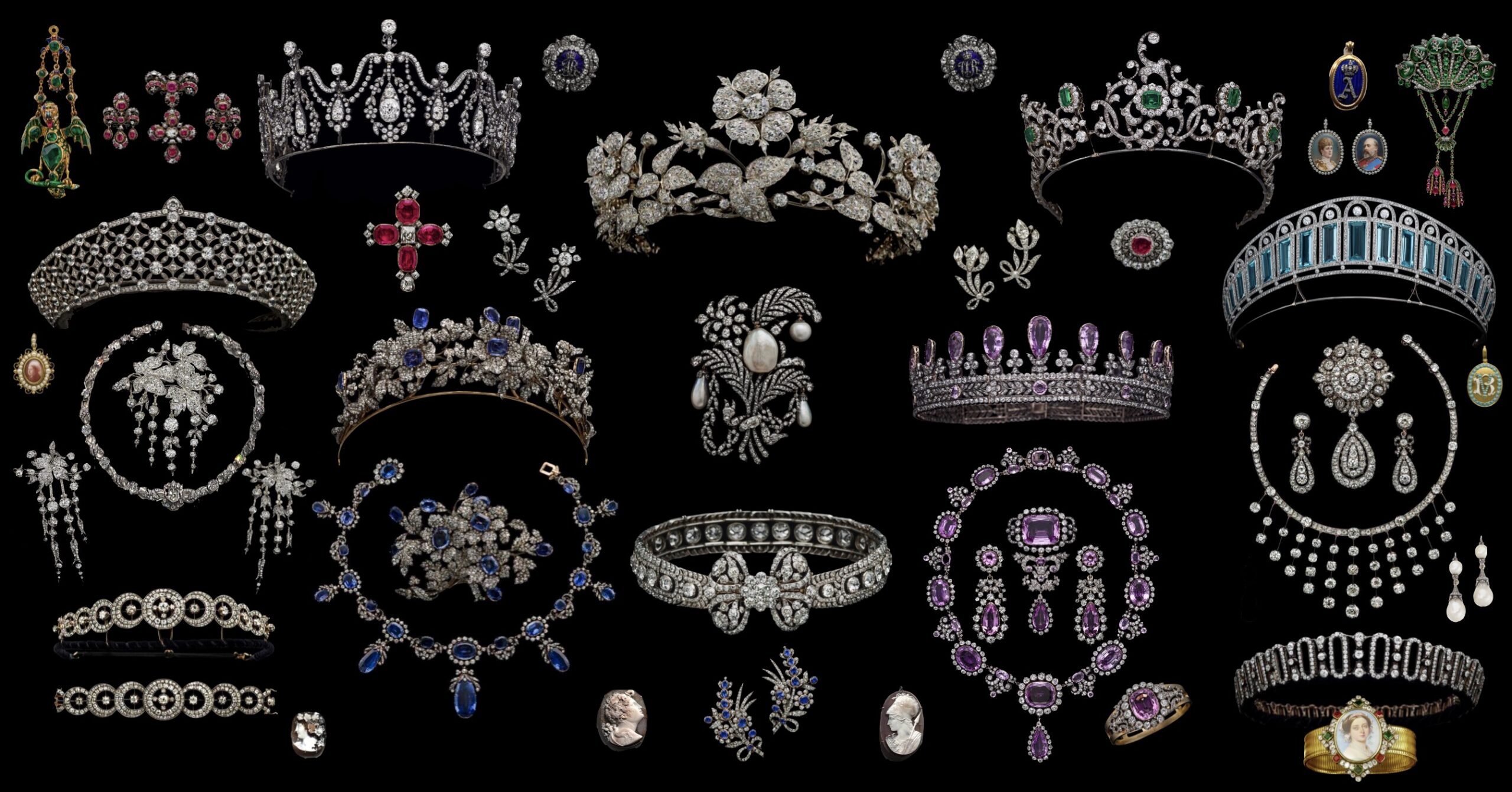
While much of the permanent collection from the V&A’s Jewellery Gallery is in Paris over the next few months, magnificent Jewels of Royal and Noble Provenance from Britain, Russia, Denmark and Germany have been loaned by the famed Albion Art Collection and are on display at the Victoria & Albert Museum in London until April 2026!
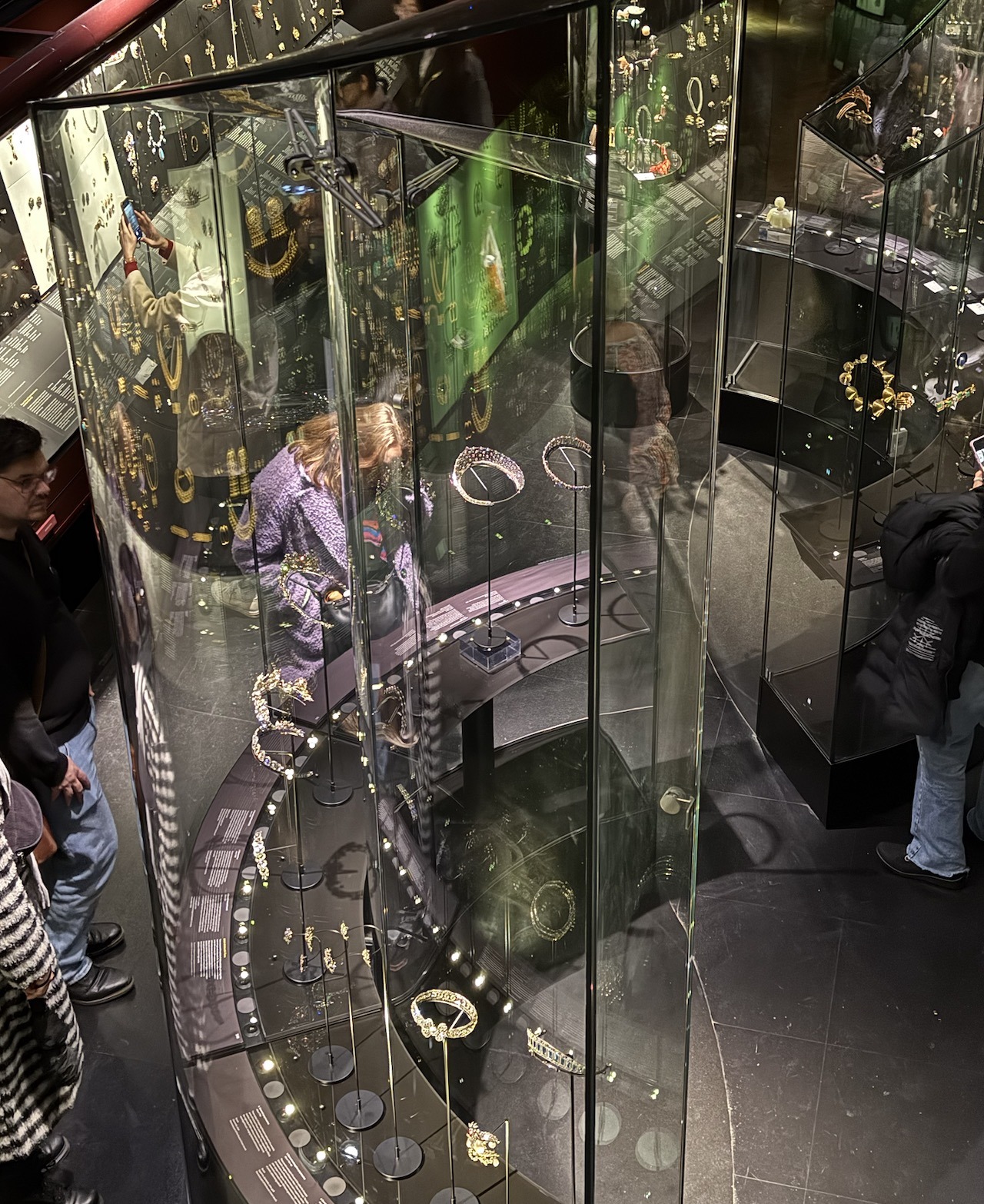
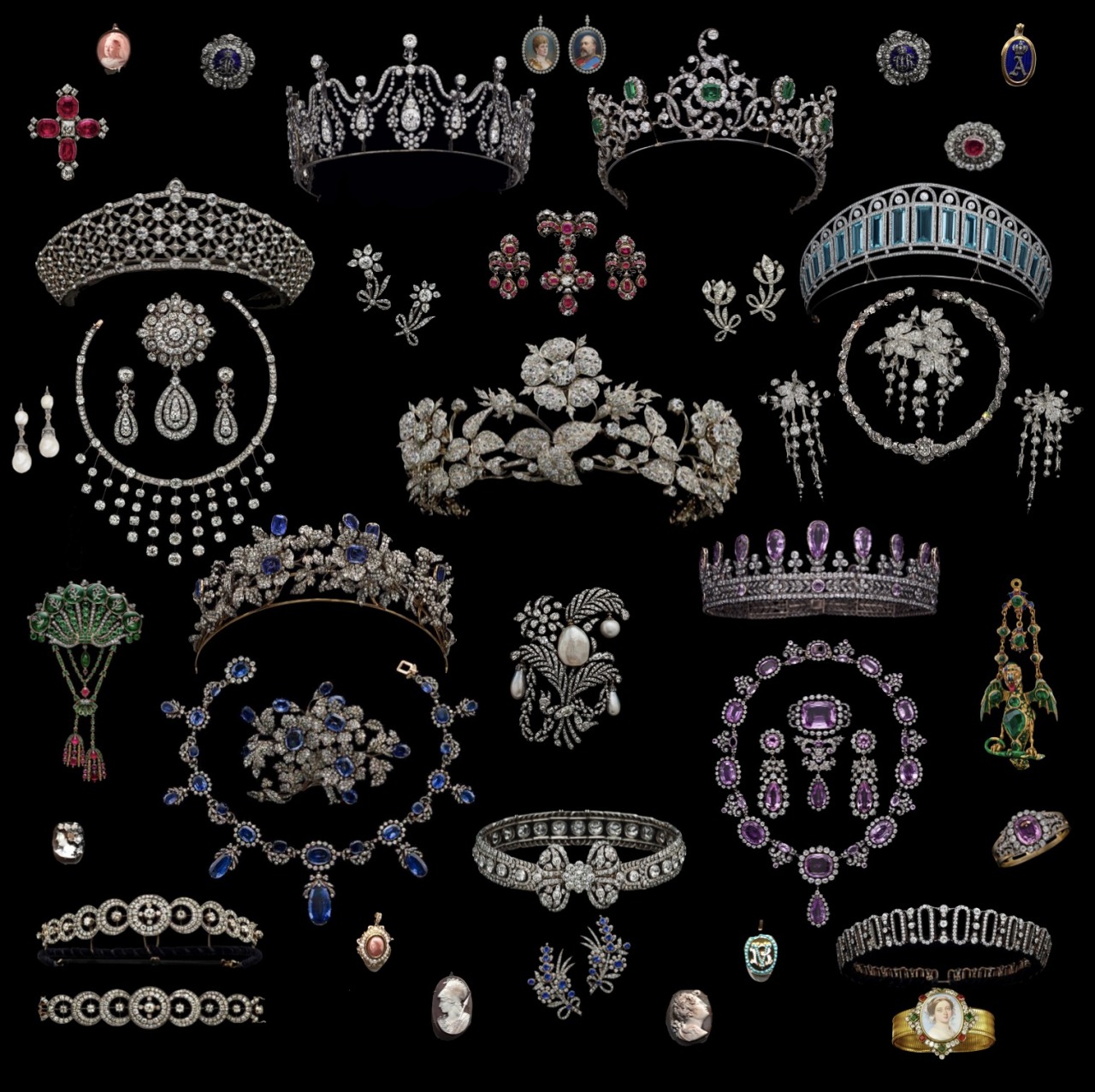
The Albion Art Collection headed by Kazumi Arikawa has loaned several magnificent Jewels of extraordinary Royal and Noble Provenance to the Jewellery Gallery at the Victoria & Albert Museum, where they will be displayed from December 2025 to April 2026.
It is rare to see a collection that spans so many periods, styles, and techniques while maintaining such exceptional quality. Shown together at the V&A, these jewels reveal the discerning eye behind their assembly and the belief that beauty can sustain the human spirit. As Arikawa reflected, ‘Truth is ever adorned by beauty.’ For him, the importance of jewellery is about beauty, emotion, and the possibility of touching something divine. The feeling he once experienced in the V&A galleries, his ‘heart-shaking moment,’ now comes full circle as his own collection enters the museum for this magnificent temporary display. ‘Divine Jewels’ invites us to look closely, slow down and rediscover the beauty of the world through the beauty of jewellery. invites us to look closely, to slow down, and to rediscover the beauty of the world through the beauty of jewels.
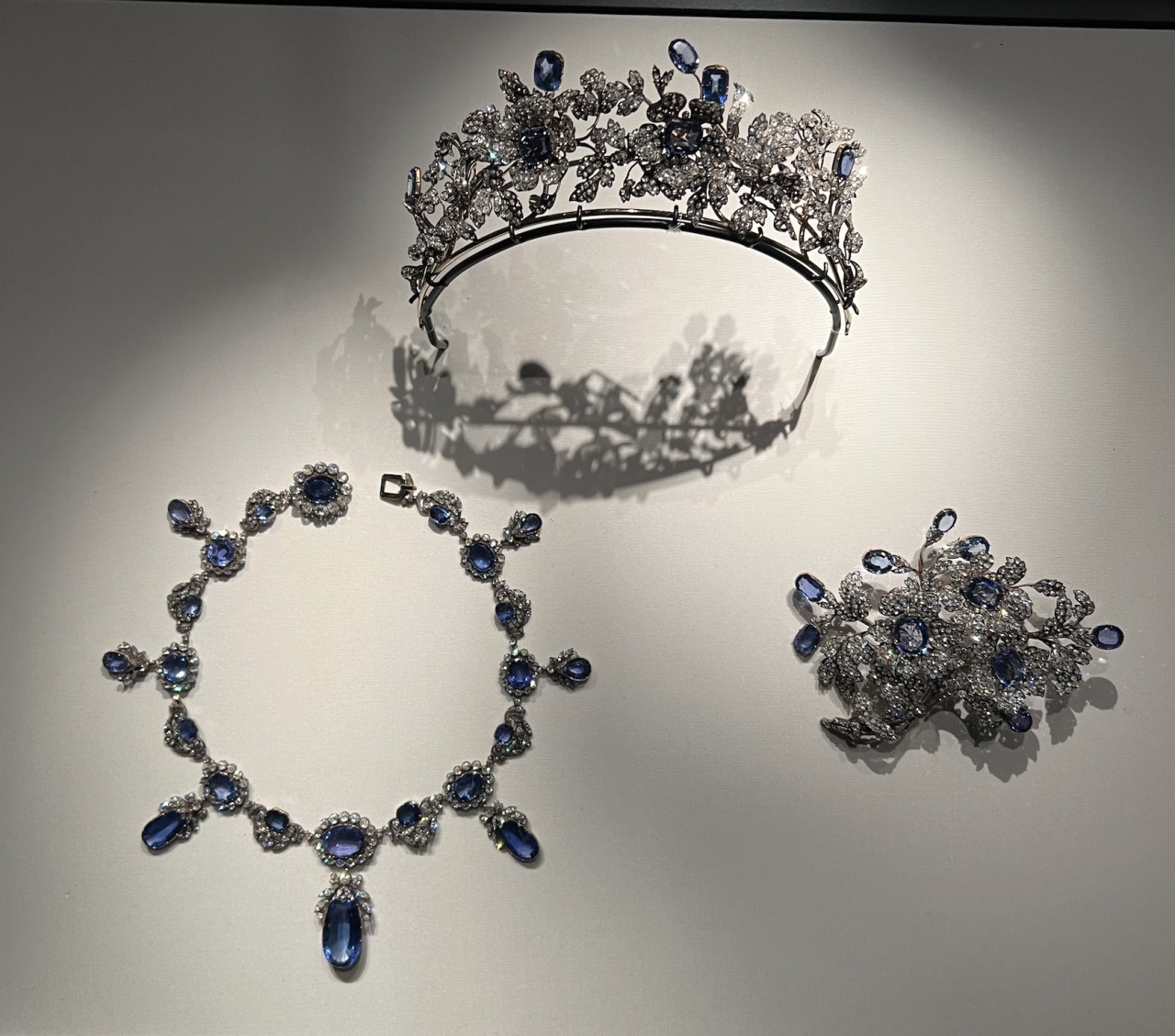
The Württemberg Sapphire Suite, comprising a floral tiara and a brooch, together with an associated necklace, composed of sapphires of various shapes, rose and old-cut diamonds, silver and gold, tiara detachable into four separate brooches, circa 1860s, originates from Princess Marguarete of Urach (1901-1975), Countess of Württemberg, from the Royal House of Württemberg, and was sold in Geneva in 2017, and more recently in 2023.
At grand state occasions, Württemberg princesses dazzled in the splendour of matching ensembles, also known as parures. Full parures could comprise a tiara, hair ornaments, earrings, necklace, brooches, and bracelets. Other highlights include a ruby suite made for Archduchess Maria Immaculata around 1900 by the Austrian jeweller Köchert, and a pink topaz parure worn by Princess Marie of Waldeck-Pyrmont, Crown Princess of Württemberg.
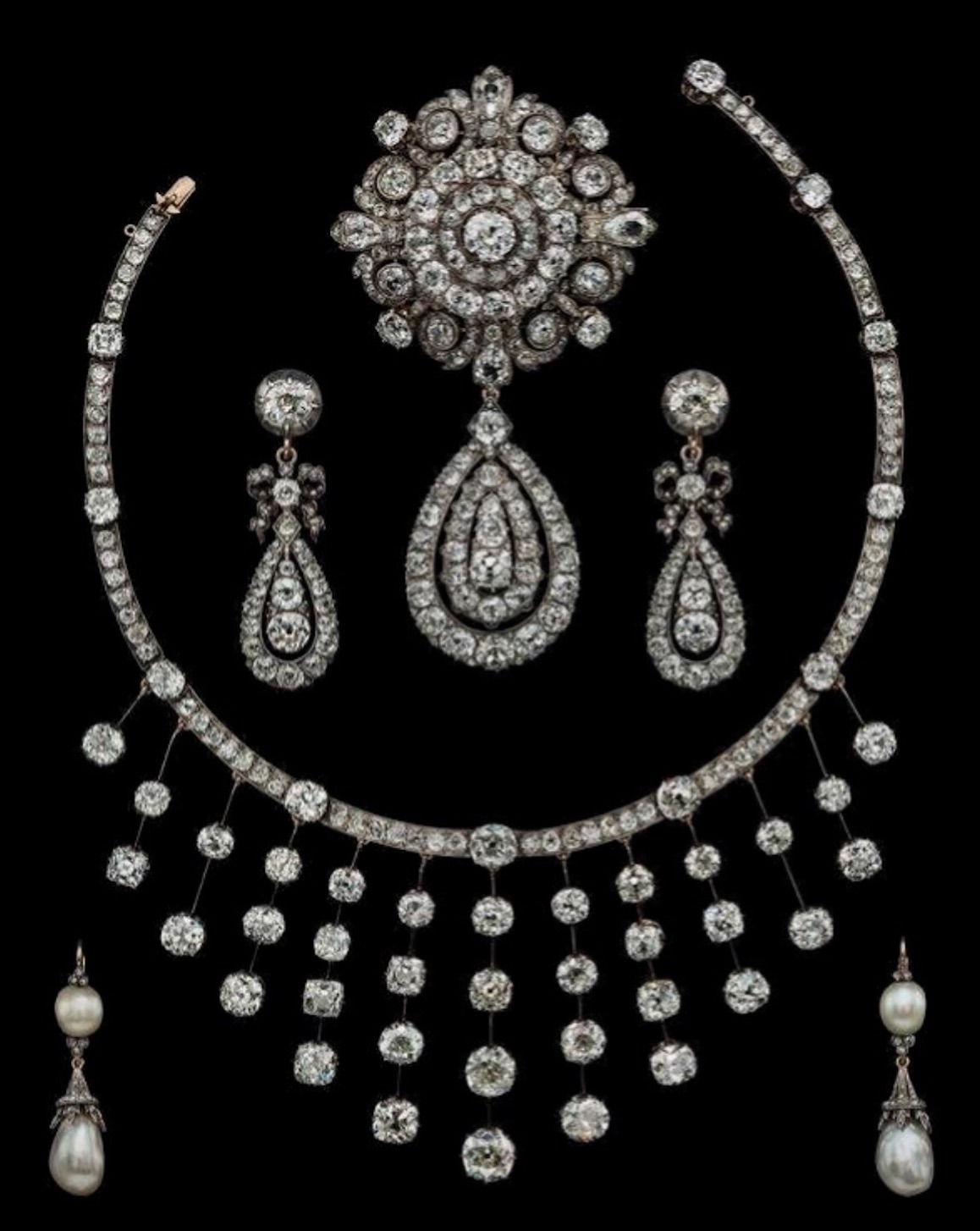
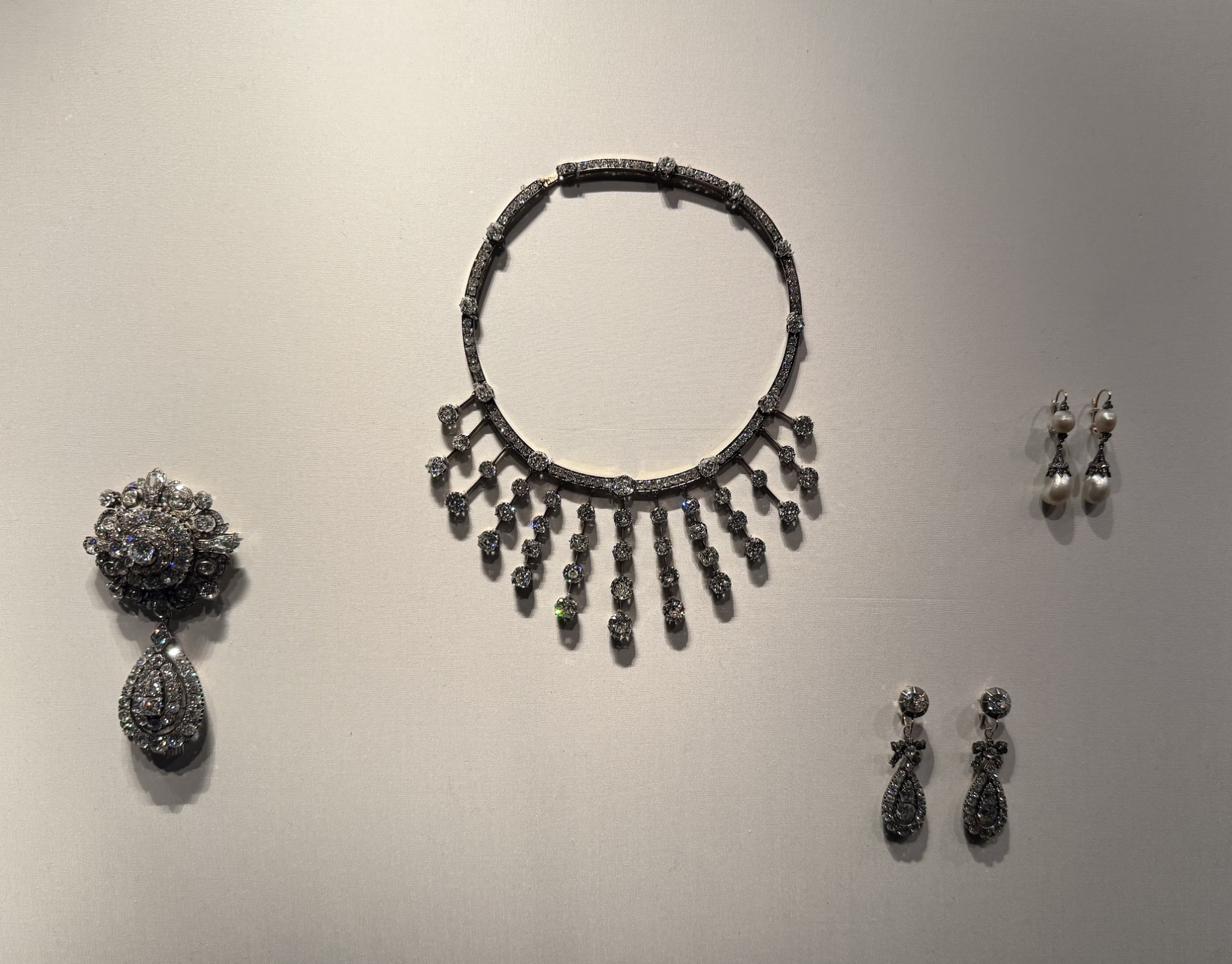
The Württemberg Diamond and Pearl Suite, comprising a fringe necklace, a pendent brooch, two pairs of earrings including one pair with natural pearls, circa 1890, was formerly in the Collection of Mathilde of Württemberg, Princess of Urach, Countess of Württemberg (1854-1907), daughter of Théodolinde of Beauharnais, Princess of Leuchtenberg (1814-1857), and Wilhelm of Württemberg, Count of Württemberg, Prince of Urach (1810-1869), thence by descent. The Suite was sold in Geneva in 2017, and more recently in 2023.
This set of diamond jewels was owned by Princess Mathilde of Urach, Countess of Württemberg and great -granddaughter of Joséphine de Beauharnais (1763-1814). In 1874 she married Don Paolo Altieri, Principe di Viano, heir to one of Rome’s oldest noble families. The set was kept in a customised tooled and gilded leather case, with the initial ‘M’ under a crown.
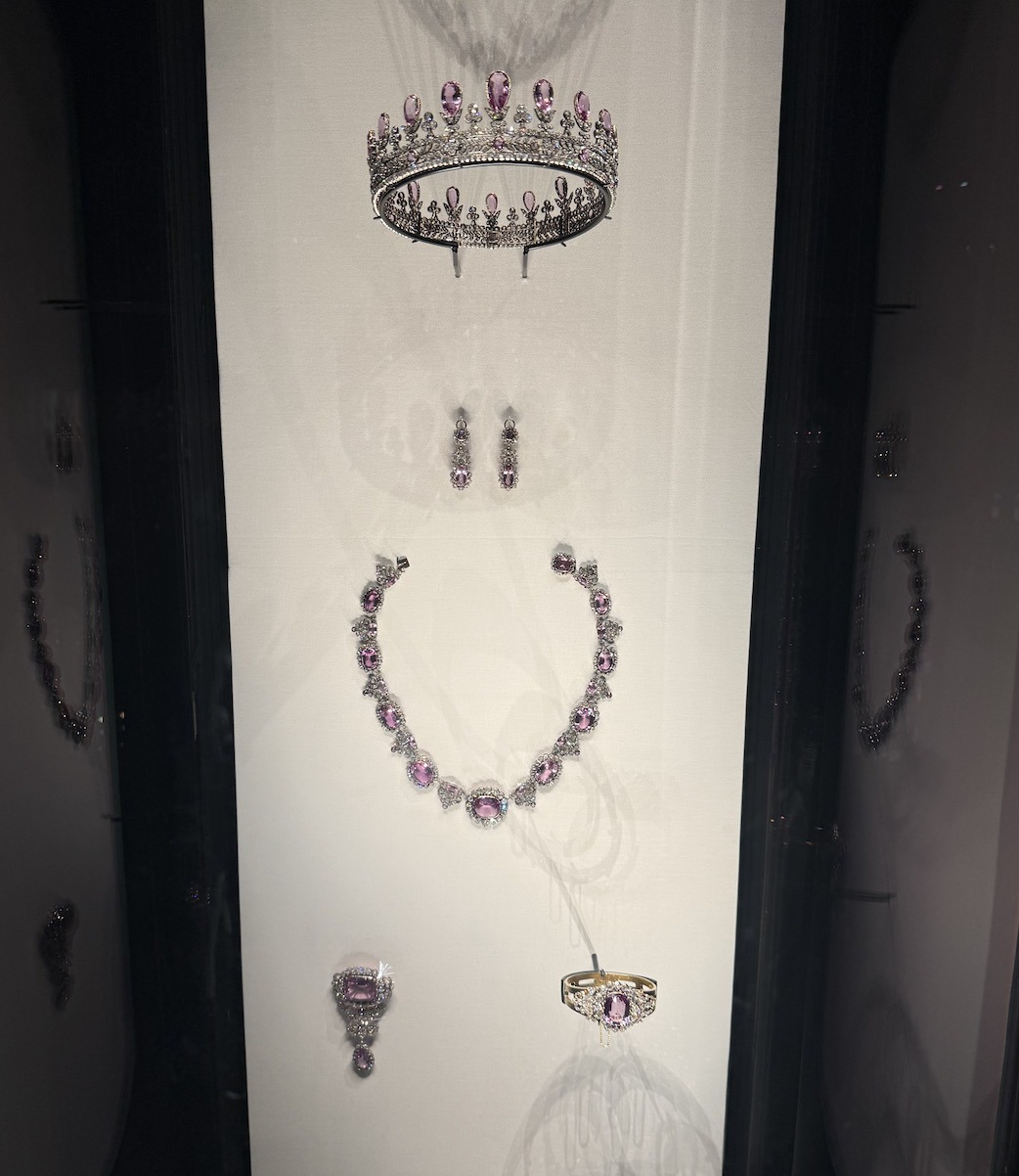
A magnificent Pink Topaz Parure originating from Queen Louise of Prussia and passing through seven generations of her descendants, all named Louise, which included Princess Louise of the Netherlands, Queen Louise of Sweden, Queen Lovisa of Denmark, Princess Louise of Schaumberg-Lippe, Princess Marie Louise of Prussia and finally Princess Louise of Prussia.
This Empire-style parure, set with topazes and diamonds, comprises a diadem, necklace, bracelet, brooch and pair of earrings. Suites of matching jewels like this were especially fashionable in Napoleonic France, when ladies would have worn coordinated sets featuring a single coloured gemstone. Topaz was particularly prized at this time, with the finest specimens originating from Russia or Brazil. This exceptional set was originally owned by Queen Louise of Prussia, a member of the Hohenzollern dynasty, and has been worn by seven generations of royalty since
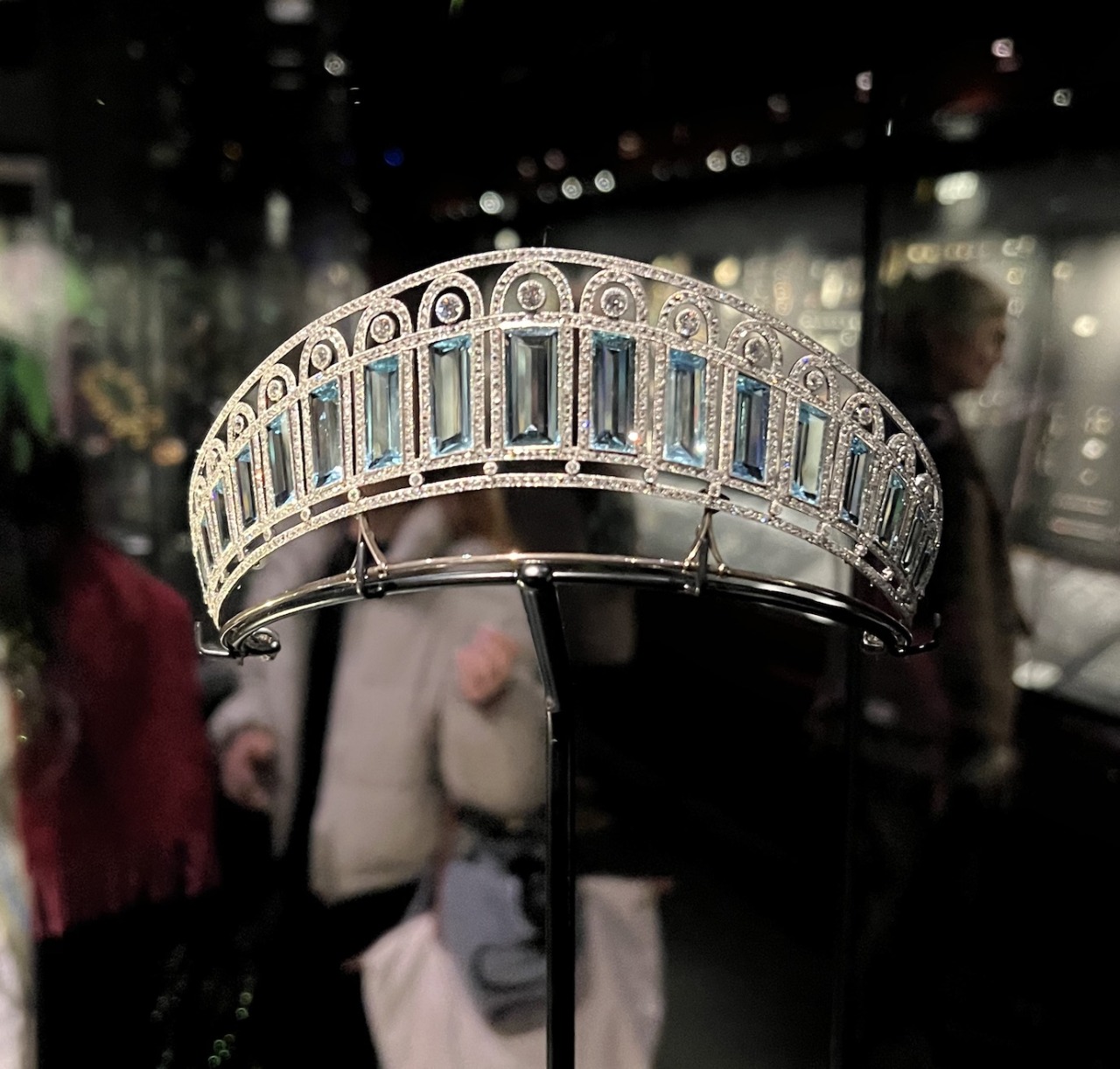
A Belle Epoque Style Imperial Russian Diamond and Aquamarine Tiara by Koch, circa 1910, which reportedly comes from the Russian Imperial Collection and was worn by Countess Astrid Bernadotte at her Wedding in 2017.
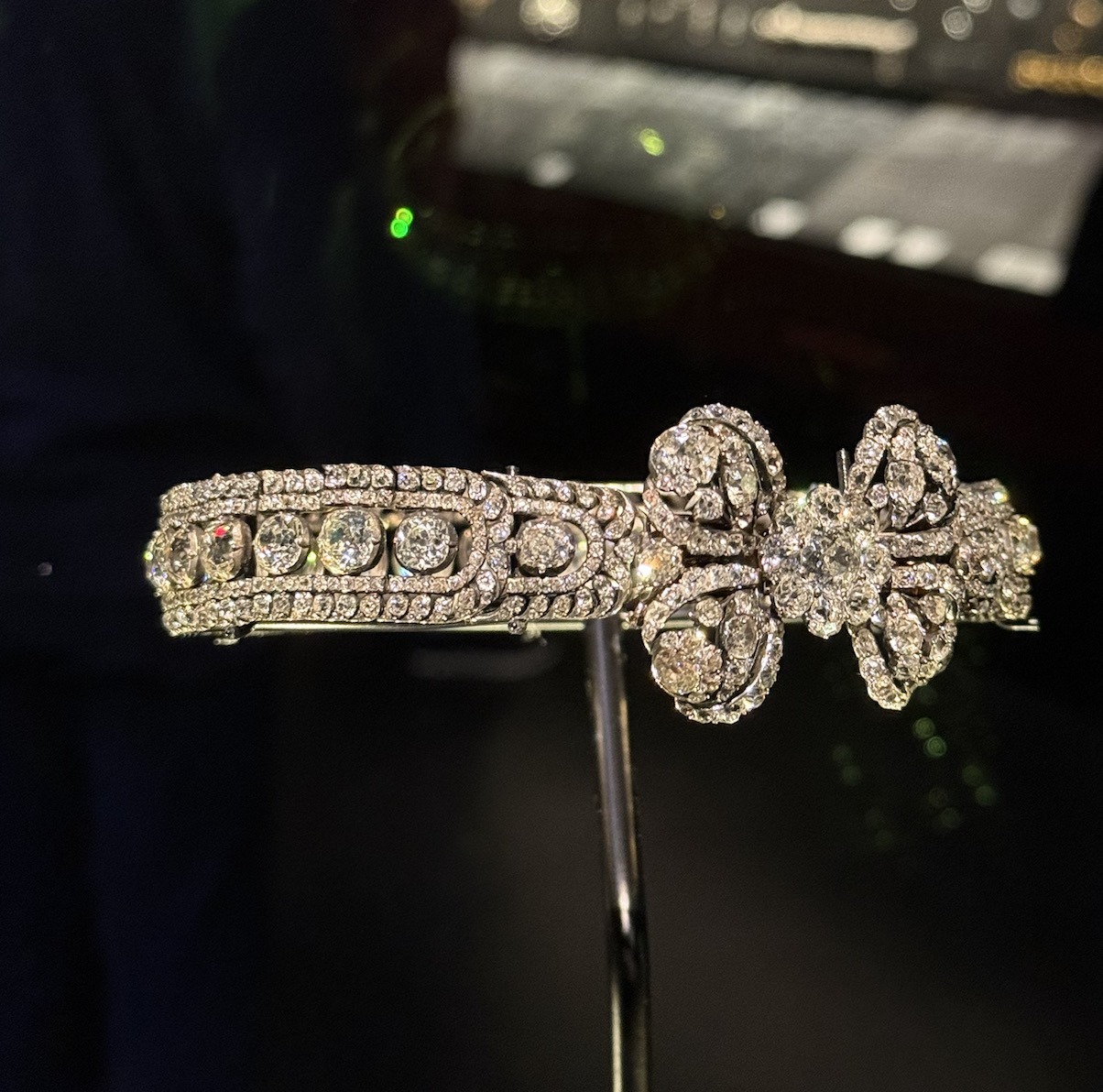
The magnificent Diamond Bow Choker Necklace from the Russian Crown Jewels, which was auctioned off at Sotheby’s in 2016.
This necklace and bow, which have survived from her Treasury, demonstrate that during the second half of the eighteenth century, the art of jewellery in Europe reached a summit of elegant design and execution never equalled since. However, since she commanded huge revenues and the mineral wealth of the Urals and there was no limit to what Catherine II could afford, her jewels seem that much grander and more imposing than those made elsewhere.
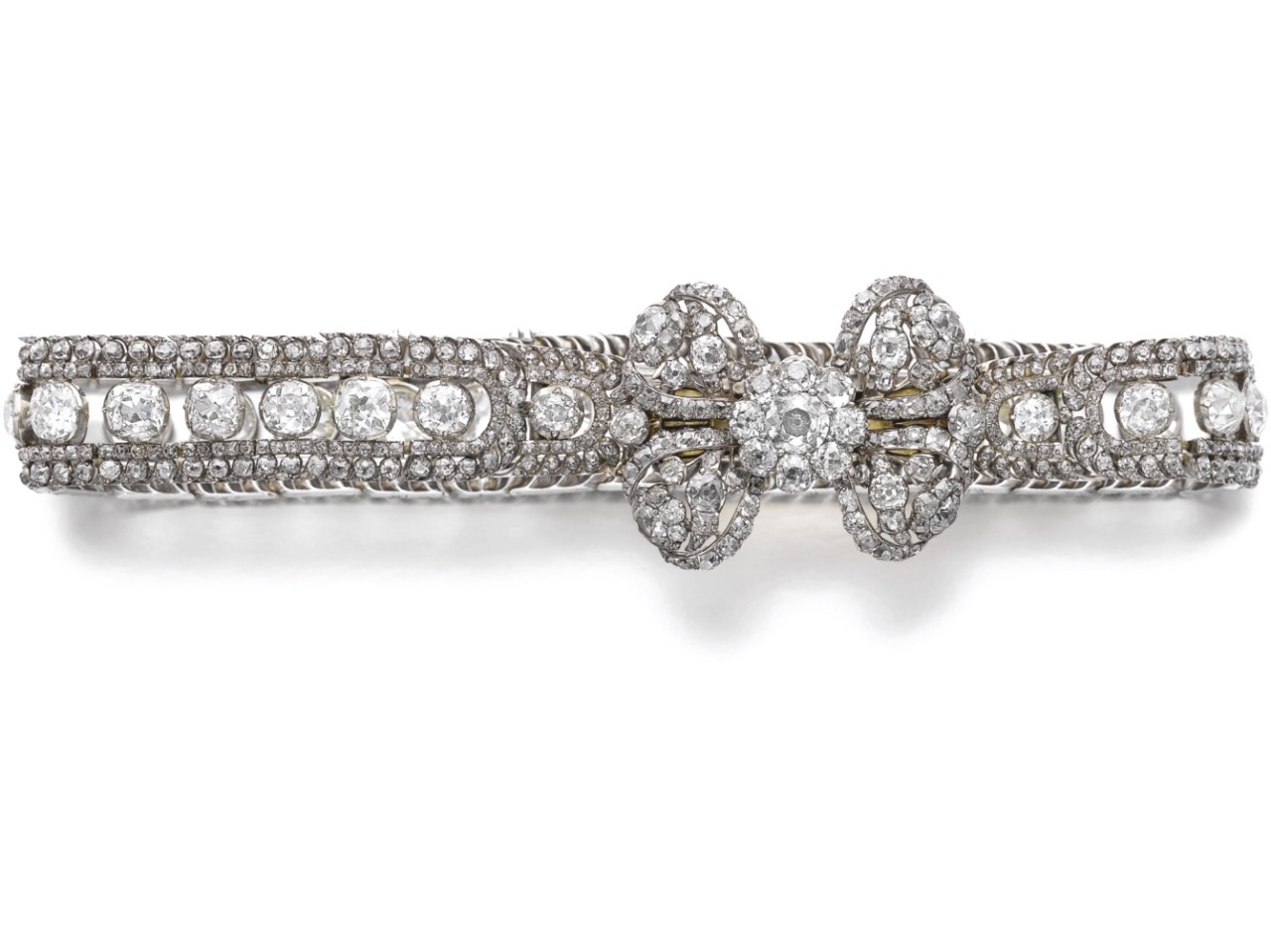
These two ornaments conjure up a picture in which escorted by six pet greyhounds, she would choose jewels for a state occasion in the Brilliant Room, and then move to her Chambre de Toilette next door. There a hairdresser might crown her piled up hair with a Russian style “kochochnik” tiara, aigrette or jewelled pins such as this bowknot, then a diamond necklace, would be placed round her neck, and in her picturesque loose sleeved Muscovite gown, she would proceed to a reception, a gala dinner or a court ball. These jewels gave her the incomparable aura of majesty, which set her apart from her subjects, and thereby ensured that everybody present would know exactly who she was, Catherine “the Great”.
In the 1925 catalogue, the diamonds in the necklace were described as ‘rare and antique stones, beautifully matched and the bow as ‘worthy to be exhibited in a museum” Such a jewel would have been made for an empress, like Catherine I (Catherine the Great), and reflects the imperial splendour of the Russian court.
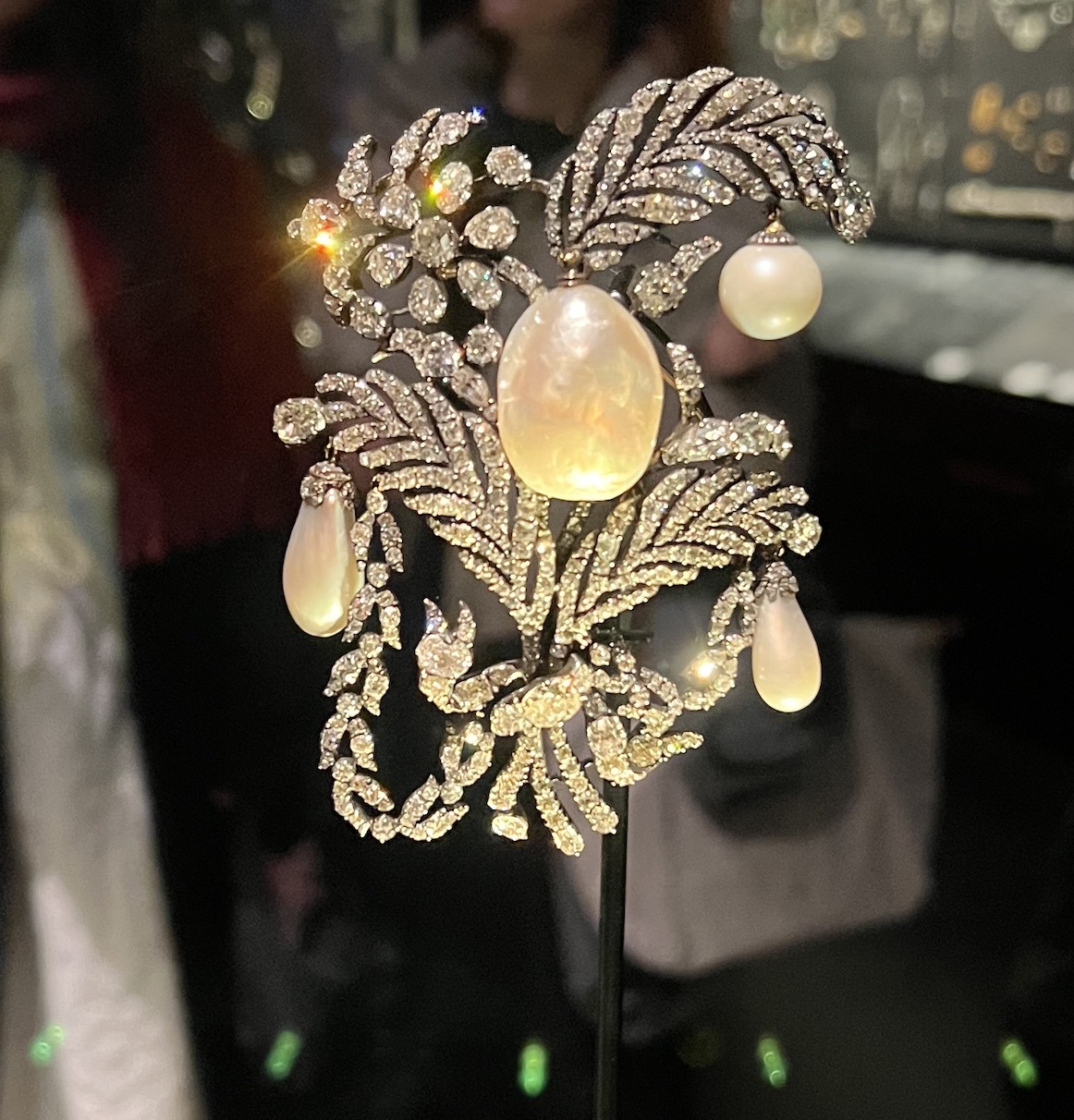
A Pearl and Diamond Brooch from around 1760, which would have been created under Empress Elizabeth or Catherine I (Catherine the Great). It takes the form of an aigrette, a hair ornament traditionally worn at court and often featuring feathers or sprays, and described In the 1925 catalogue as ‘a very artistle specimen of the jeweller’s art of the Elisabethan epoch’.
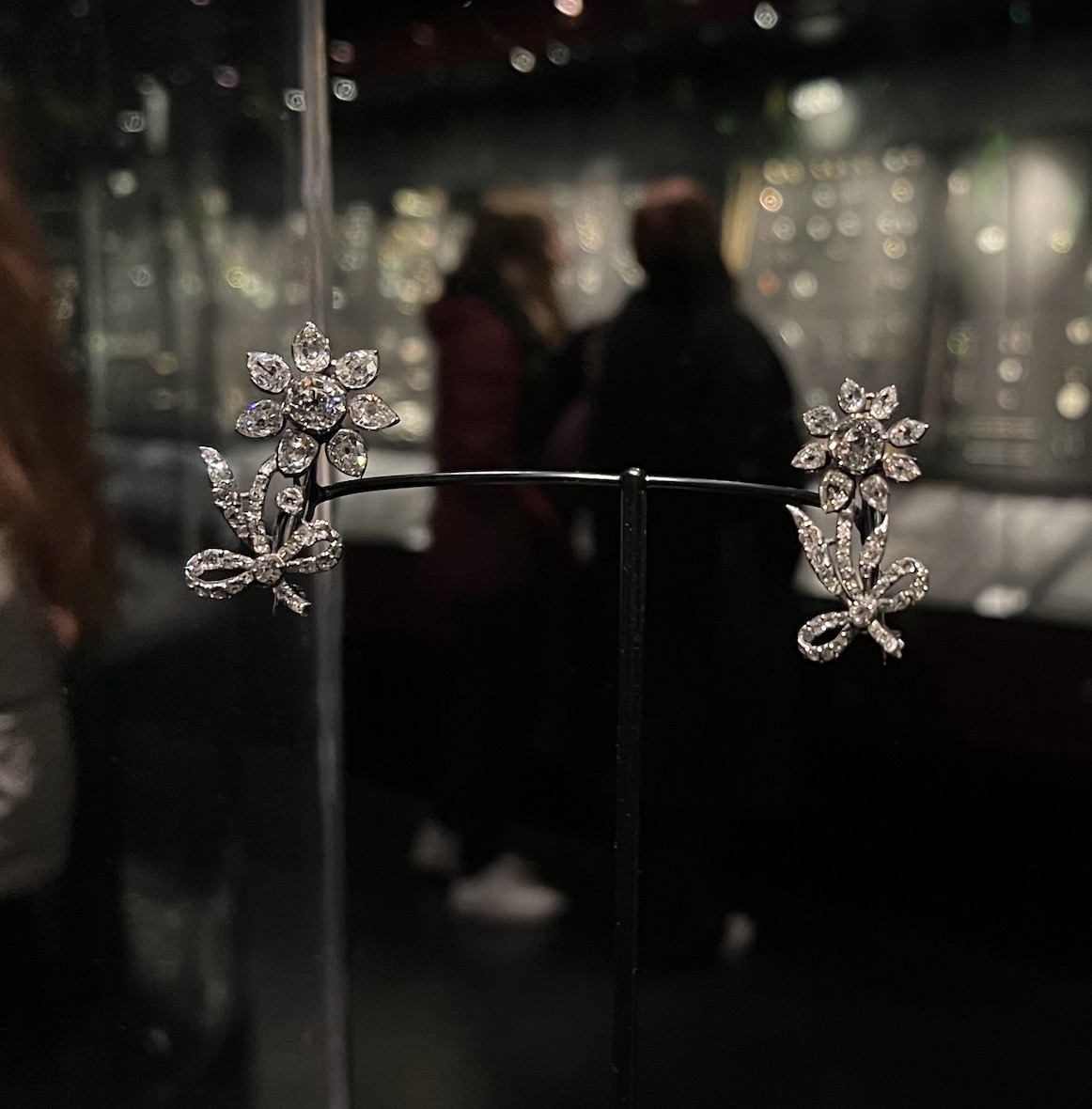
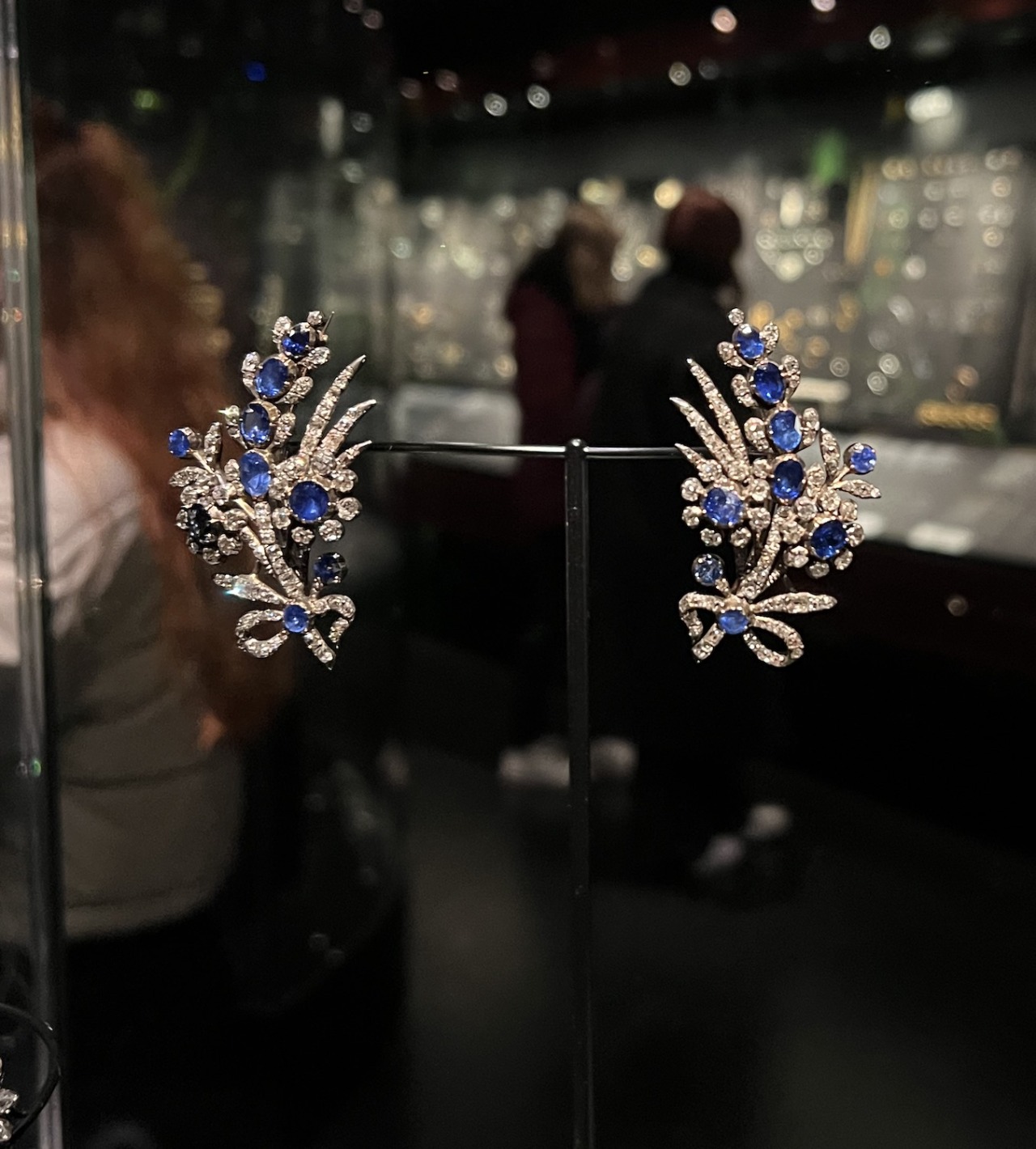
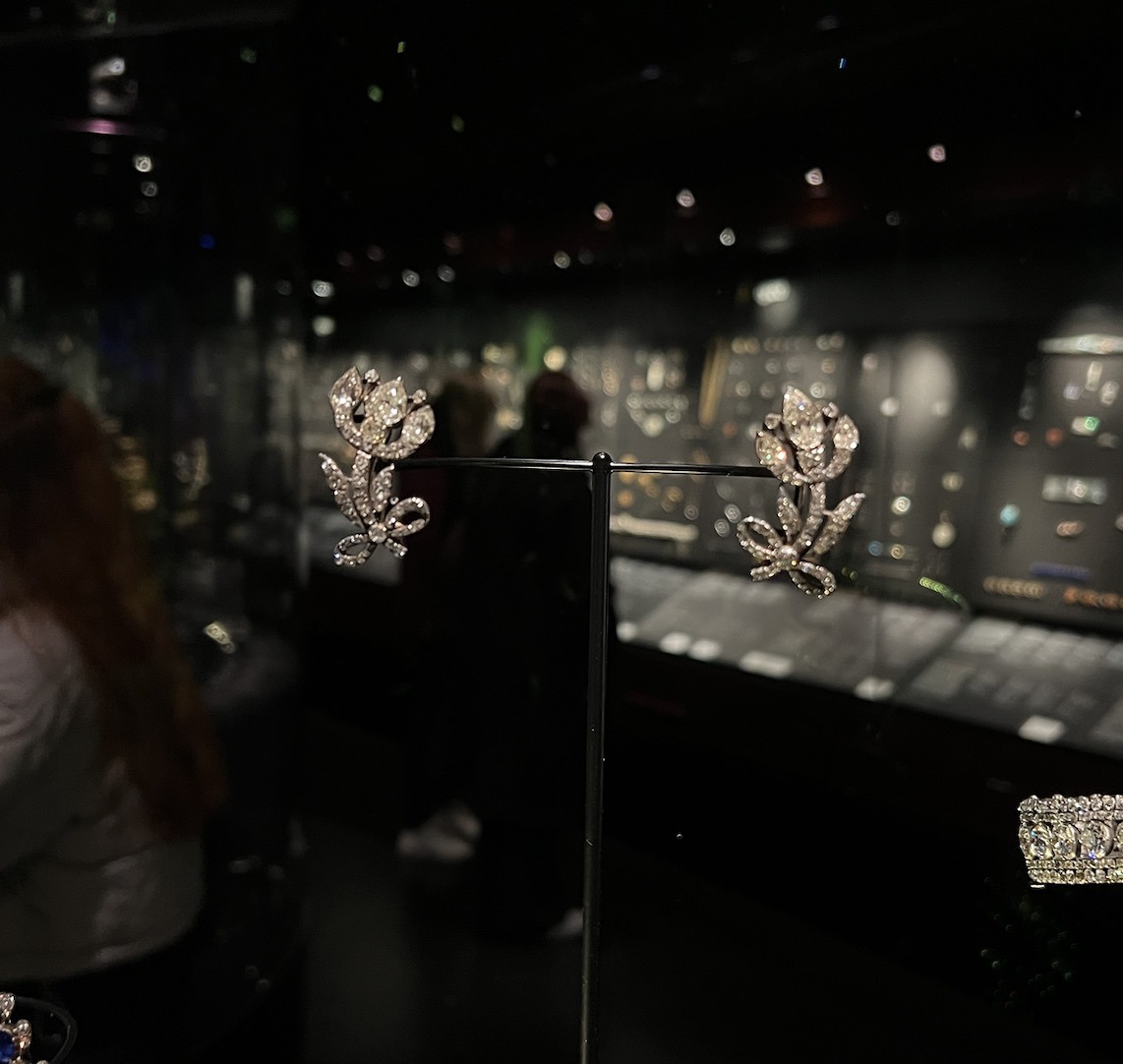
A pair of Diamond Spray Brooches shaped like tulips, a pair of Diamond and Sapphire Spray Brooches, and a pair of Diamond Spray Brooches all crafted for crafted for Empress Elizabeth and later belonging to Catherine the Great, they were also all previously part of the Russian Crown Jewels which were sold off by the Soviet Government a century ago.
These brooches were made by Louis David Duval of Geneva who was employed by Empress Ekaterina II of Russia from 1764, remaining in St. Petersburg for 34 years. The Empress (1762-96) used jewels to proclaim her status and authority, forming a magnificent collection. These flowers were worn on the rich fabric of her dress, to provide points of glitter. They are in the naturalistic style fashionable during the 1760’s as was the motif of the ribbon bow.
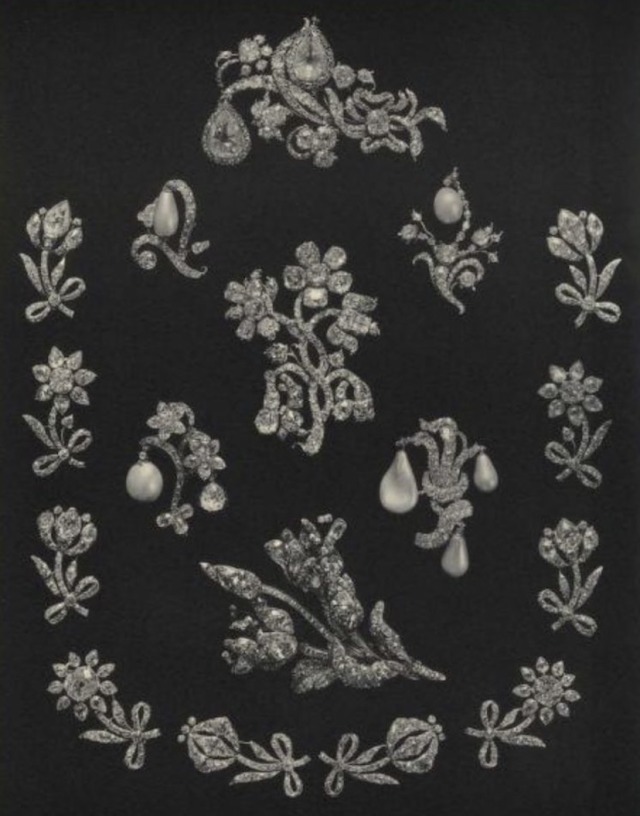
Representing the Romanoff style, as worn by the Empress Elizabeth (1709-1762) and her successor, Catherine II, known as “the Great”, these sprays have the best provenance of any eighteenth century jewellery. The Empresses would have pinned them to the rich fabric of their dresses to provide points of glitter. From 1764, realising that grand jewellery was an integral part of the Russian court tradition, the Empress Catherine transformed the Imperial Bedchamber in the Winter Palace into the Brilliant Room lined with glass cabinets containing her jewels, including this pair of diamond and pearl sprays. Because so much jewellery of this period was remodelled in the 19th century period, it is very rare to find pieces of this quality in their original condition.
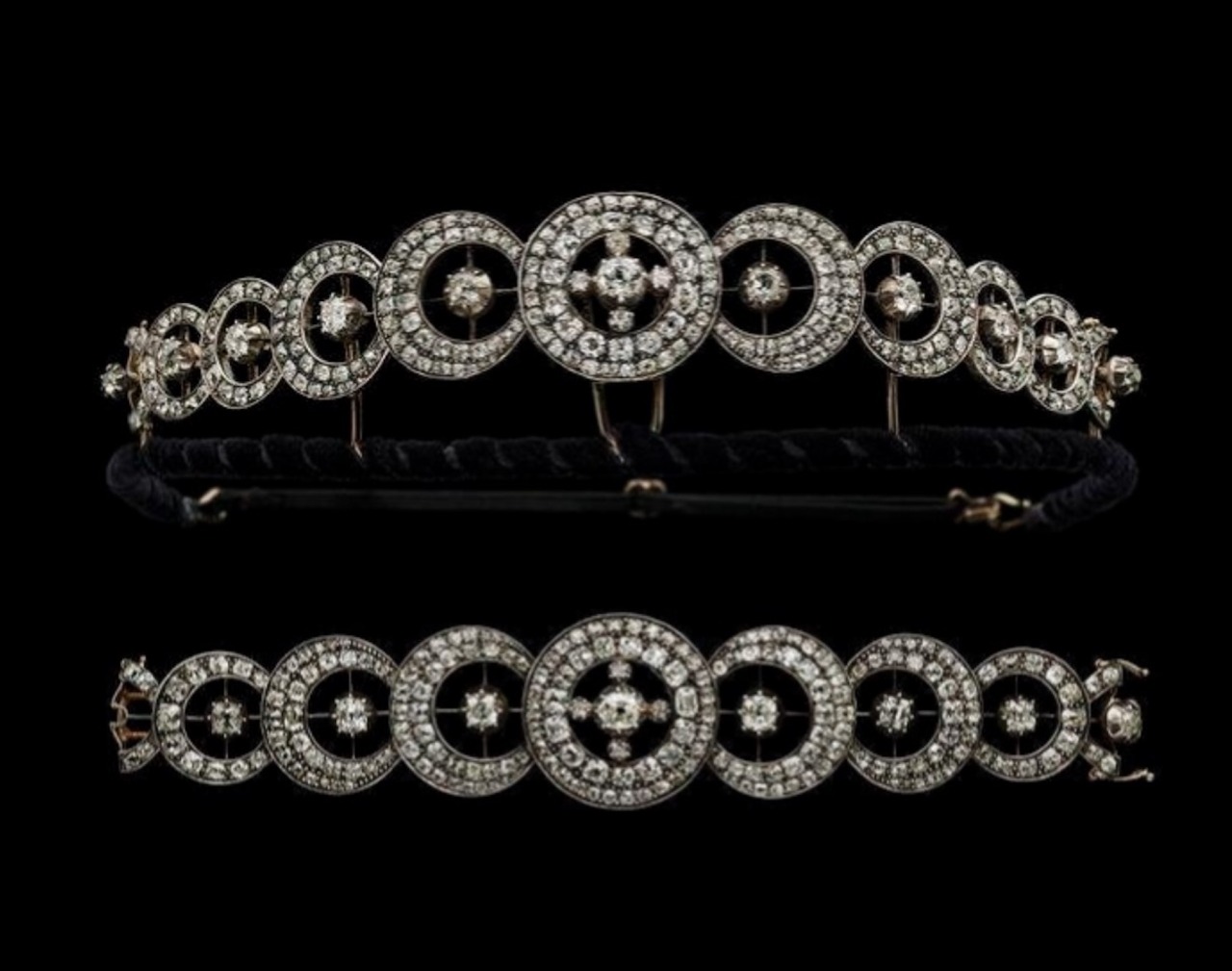
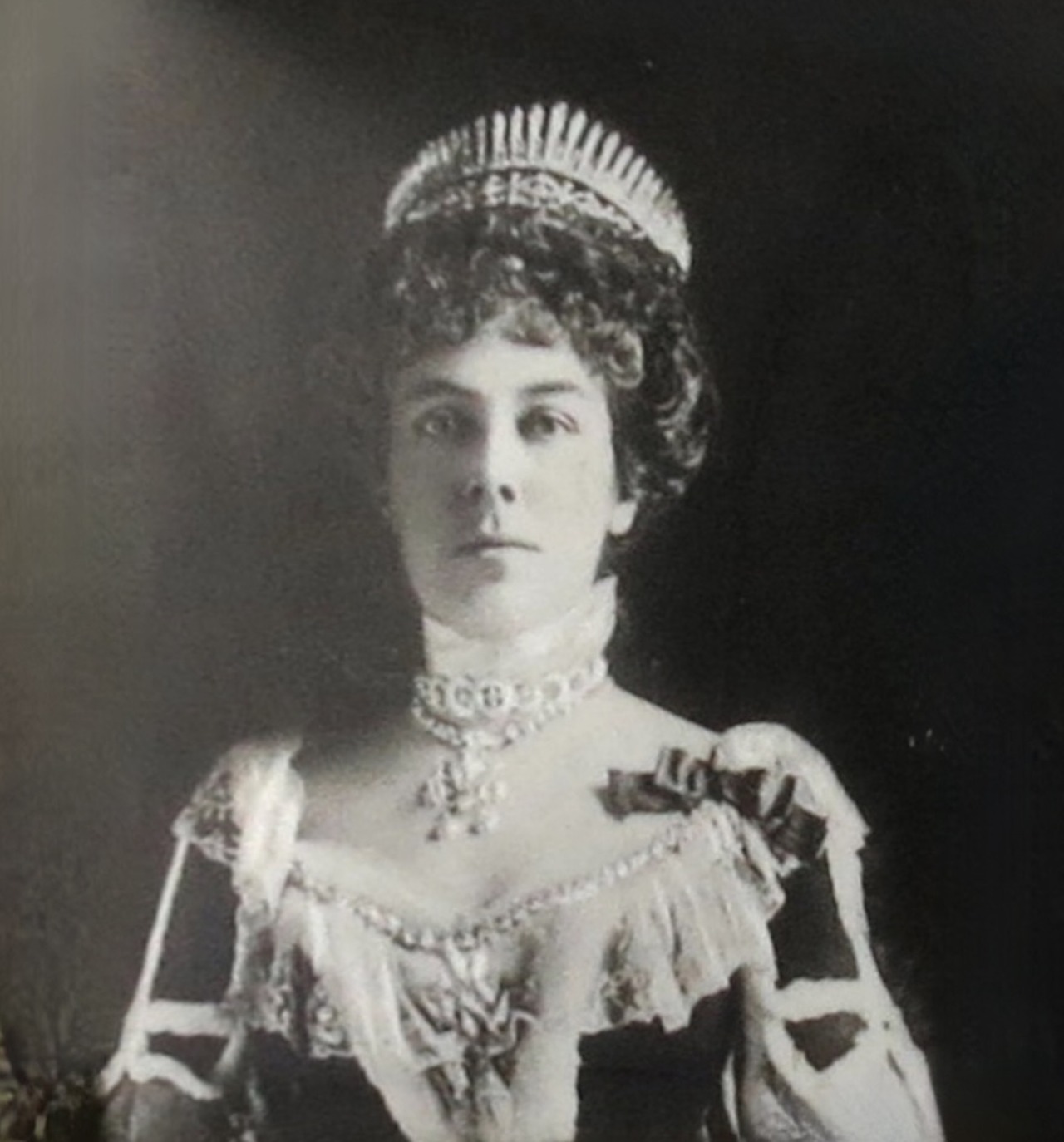
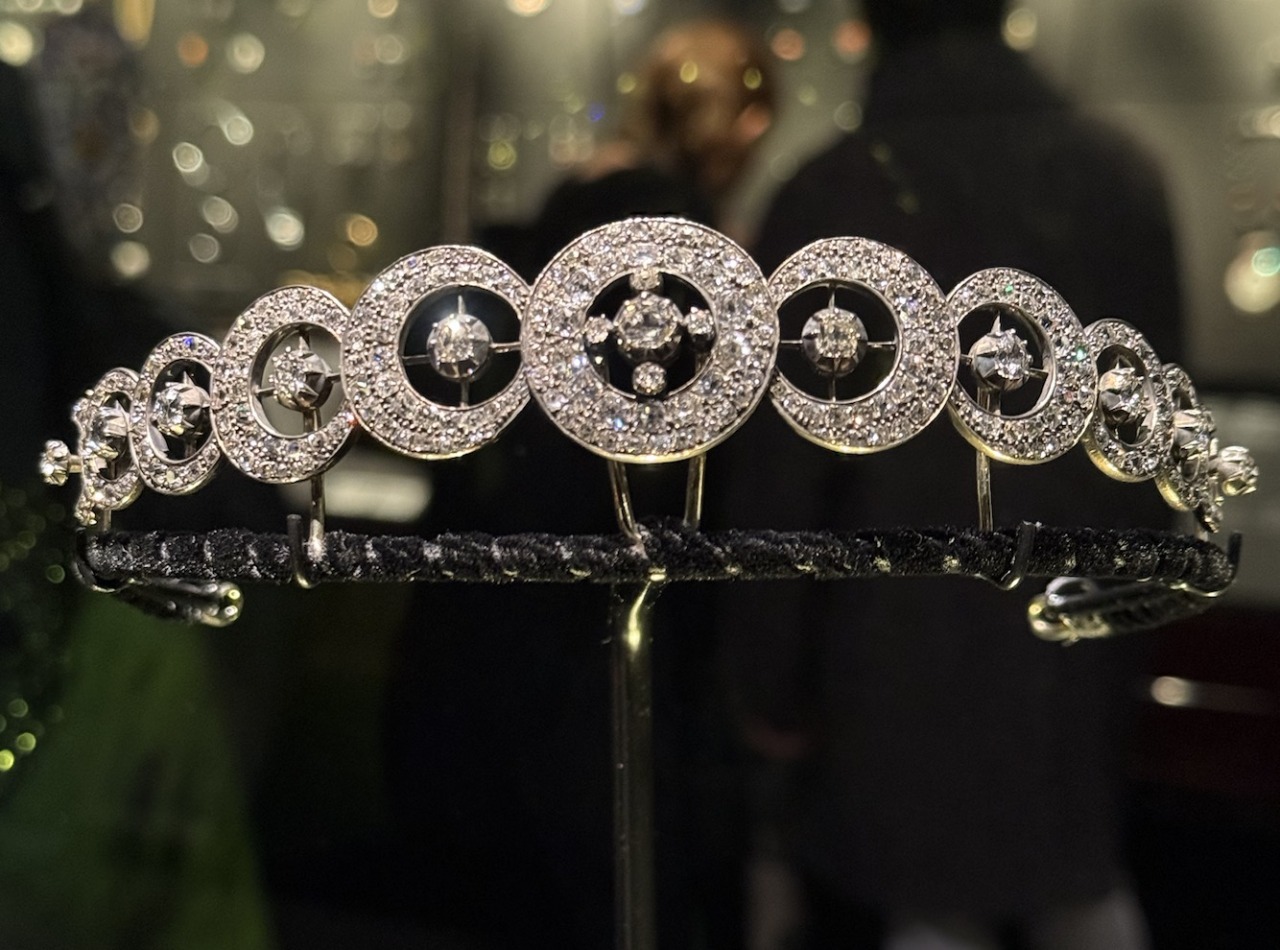
A Diamond Tiara and Bracelet of graduated hoops from around 1860, which can also be worn as a necklace, once belonged to Georgiana Elizabeth, the 4th Countess Howe, who wore it with the for the Howe Diamond Fringe Tiara for the Coronation of King Edward VII and Queen Alexandra at Westminster Abbey in 1902.
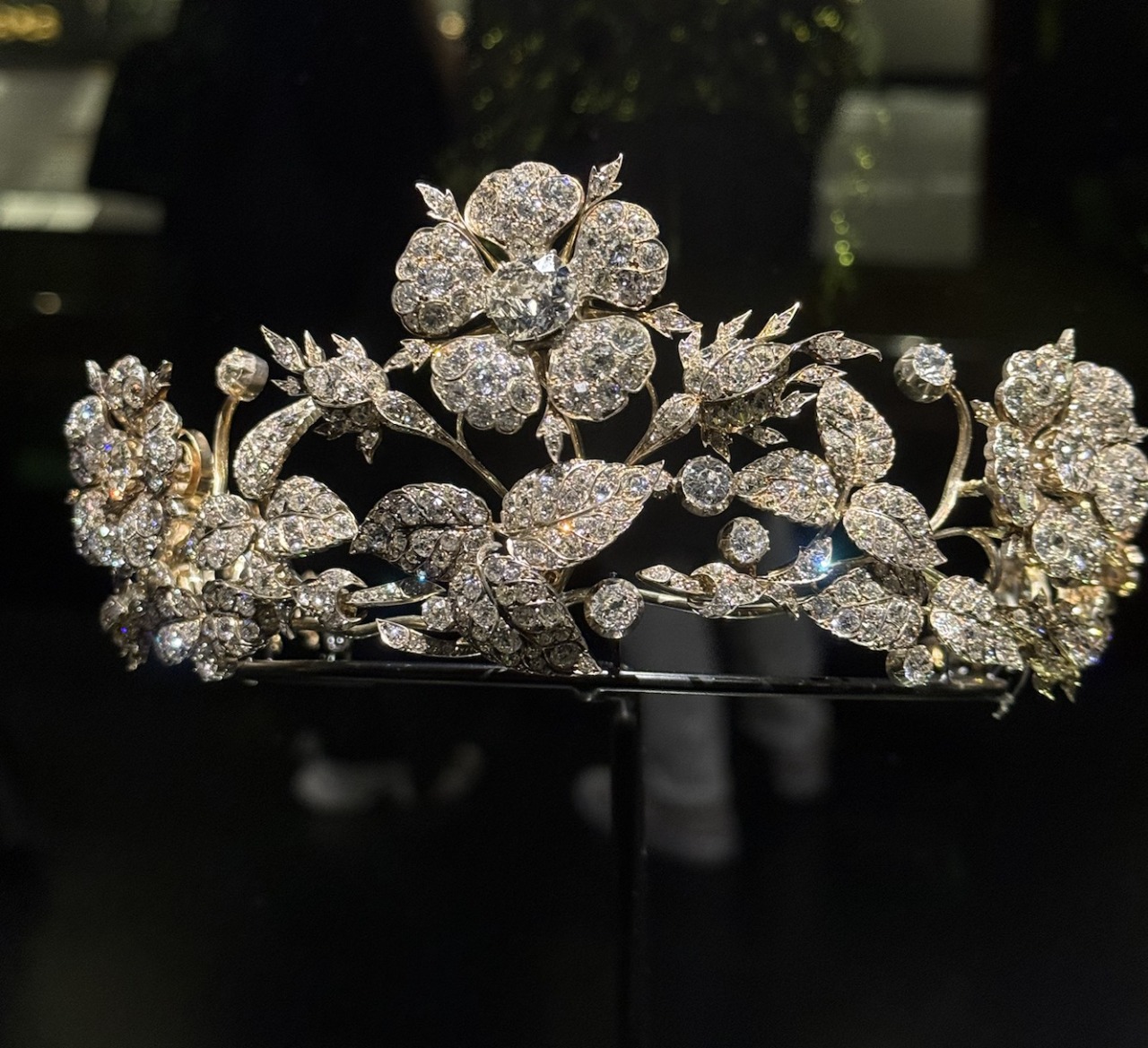
This magnificent Diamond Rose Tiara dates from around 1880 and was created by E Wolfe and Co as we discovered a few weeks ago.
Roses were especially beloved for their symbolism of love and romance making them popular with young brides The five wild roses here are mounted en tremblant on springs so they shiver with every movement. They can also be detached and worn as brooches a pair of earrings or a bracelet.
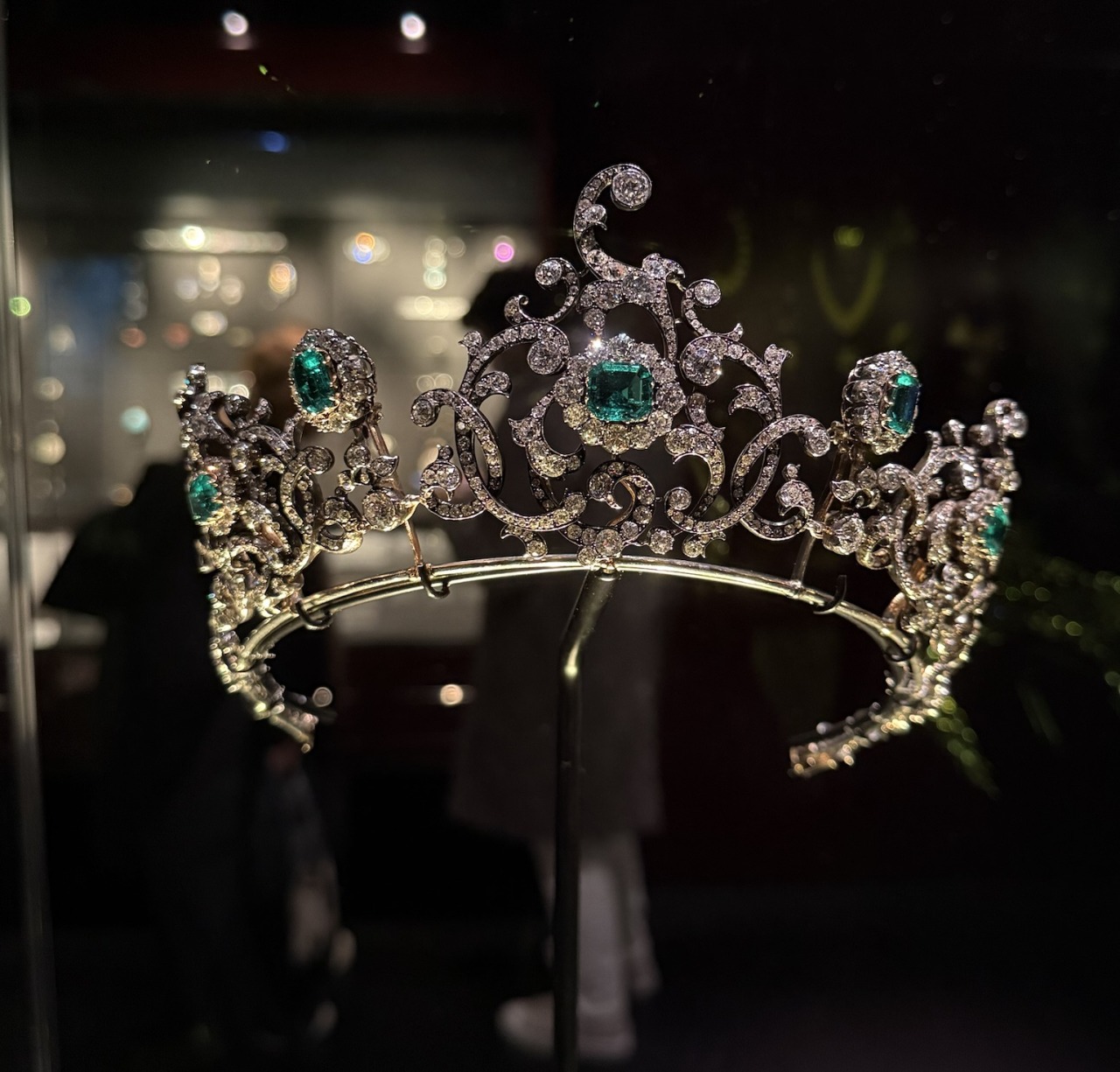
The Duchess of Devonshire’s Emerald and Diamond Tiara originates from the ‘Double Duchess’, Louise, Duchess of Manchester and later Devonshire, who according to family tradition, left the Tiara to her daughter, the Countess of Derby, who left it to her granddaughter, Priscilla Hastings, mother of the 17th Earl of Huntingdon.
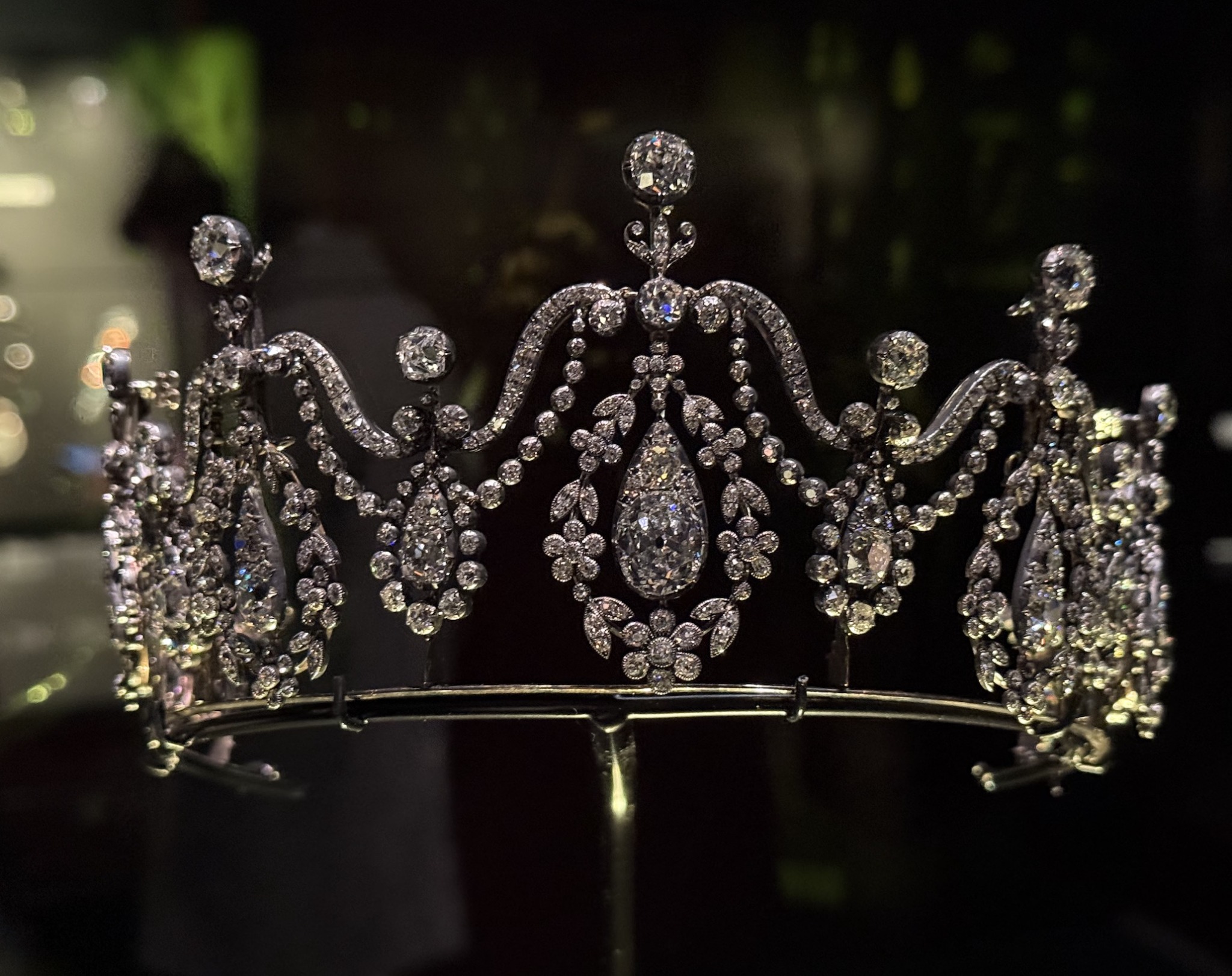
Lady Monson’s spectacular Diamond Tiara from around 1903 was made when American socialite Romaine Stone wed Augustus Monson, 9th Baron Monson. Designed in the Garland Style and decorated with delicate floral swags, it can be converted into a necklace.
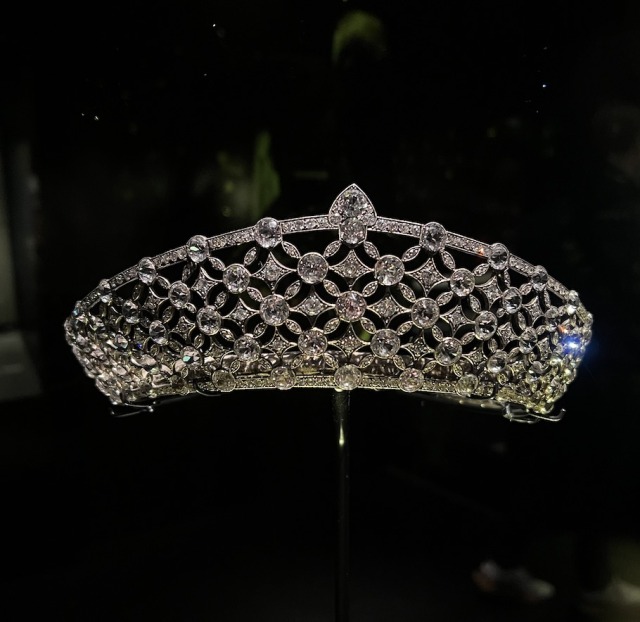
A White Sapphire and Diamond Tiara from around 1910, which once belonged to Margaret Leiter, Countess of Suffolk and Berkshire, an American Heiress who married Henry Howard, 19th Earl of Suffolk and Berkshire in 1904. It had previously gone on display at Wartskis in the 1990s.
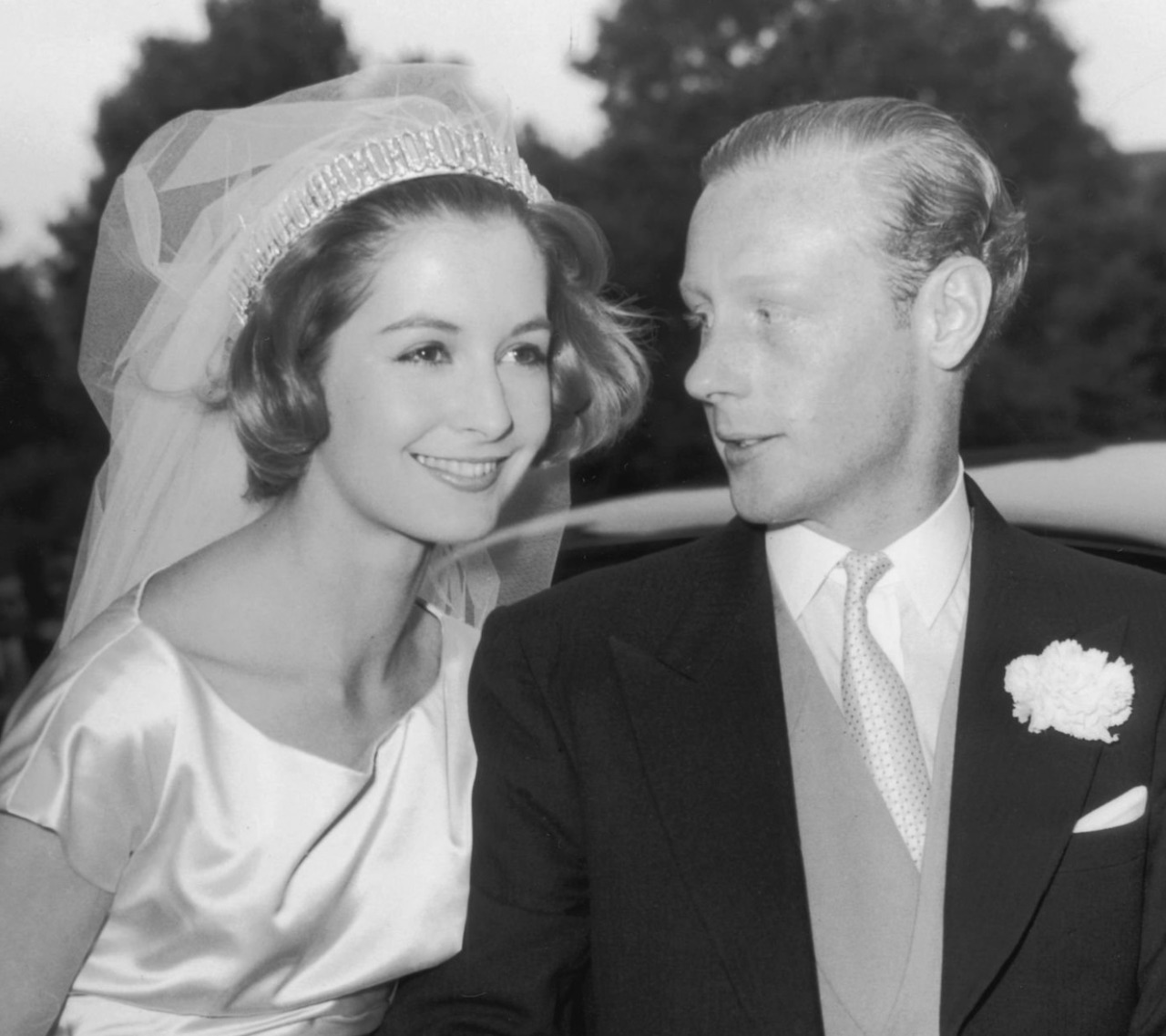
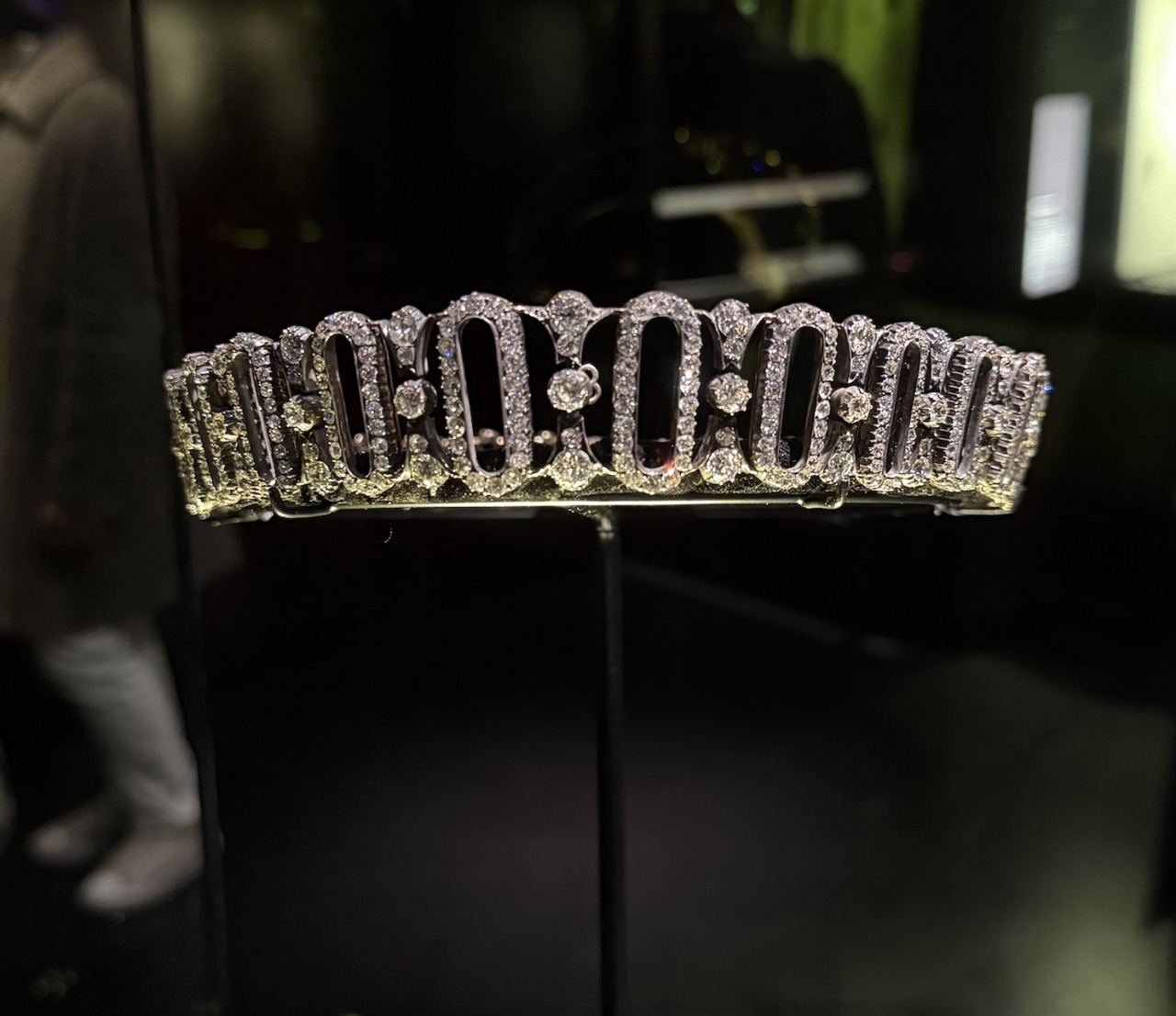
A Diamond Tiara given by the 6th Earl Spencer to his daughter, Lady Adelaide Spencer, for her wedding to the Hon. Sidney Peel in 1914, it was worn many times when she served as a Lady in Waiting to the Queen Mother. The Tiara was also worn by model Sandra Paul when she married Lady Adelaide’s nephew, Robin Douglas-Home, in 1959.
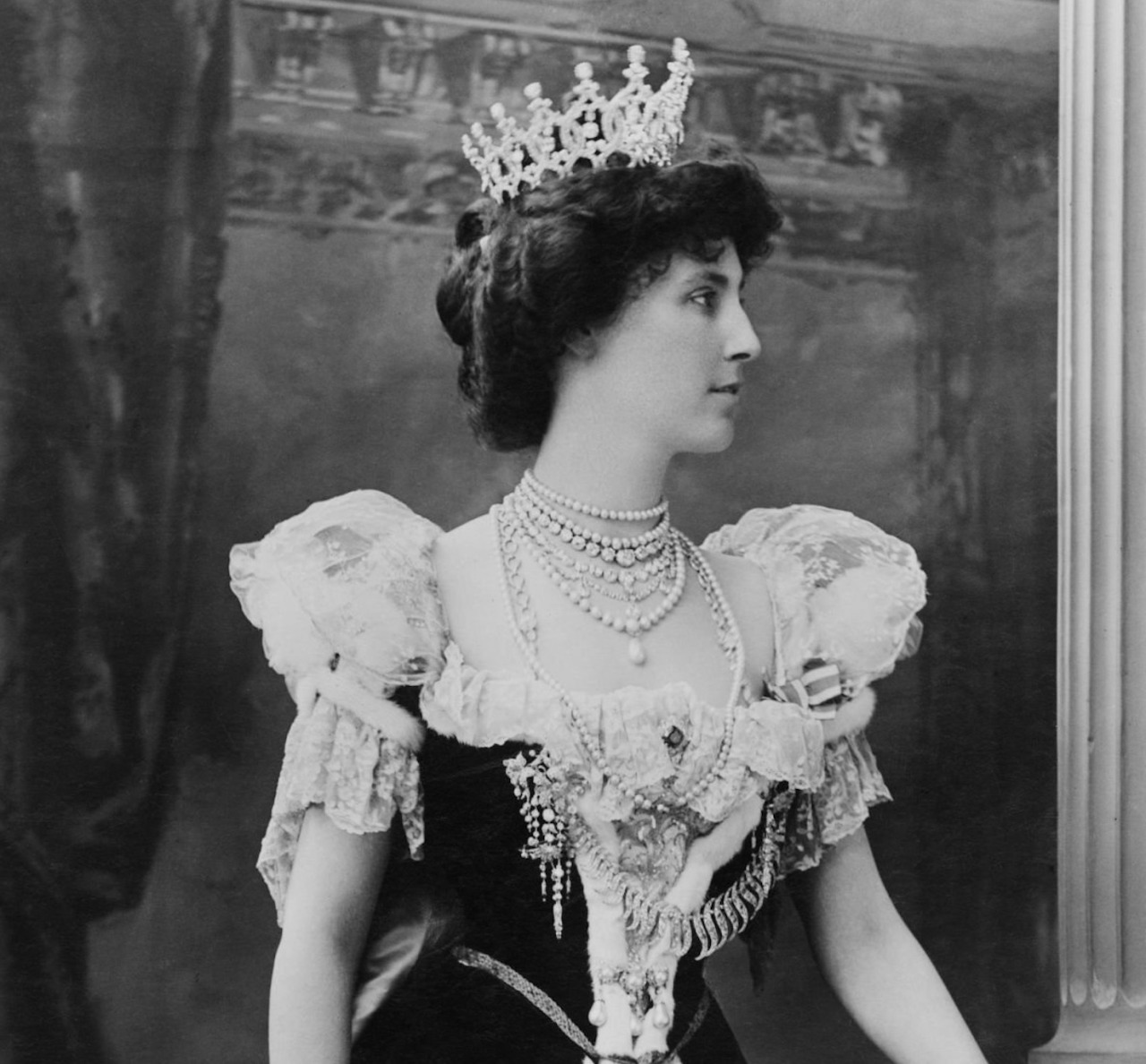
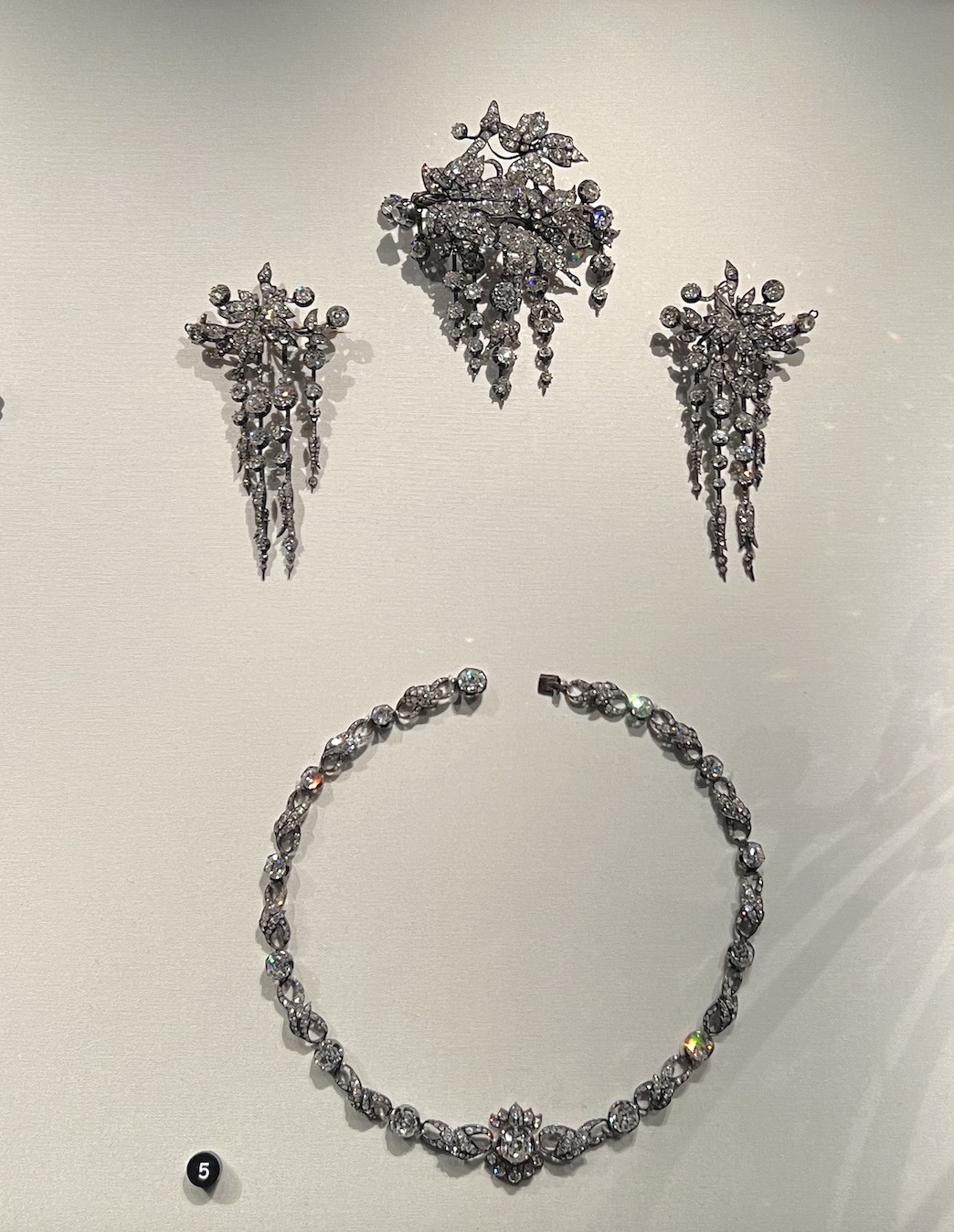
The Portland Diamond Parure, comprising a necklace and brooches with diamond drops, was worn by the Duchess of Portland at the Coronation of King Edward VII in 1902, and auctioned off in 2010.
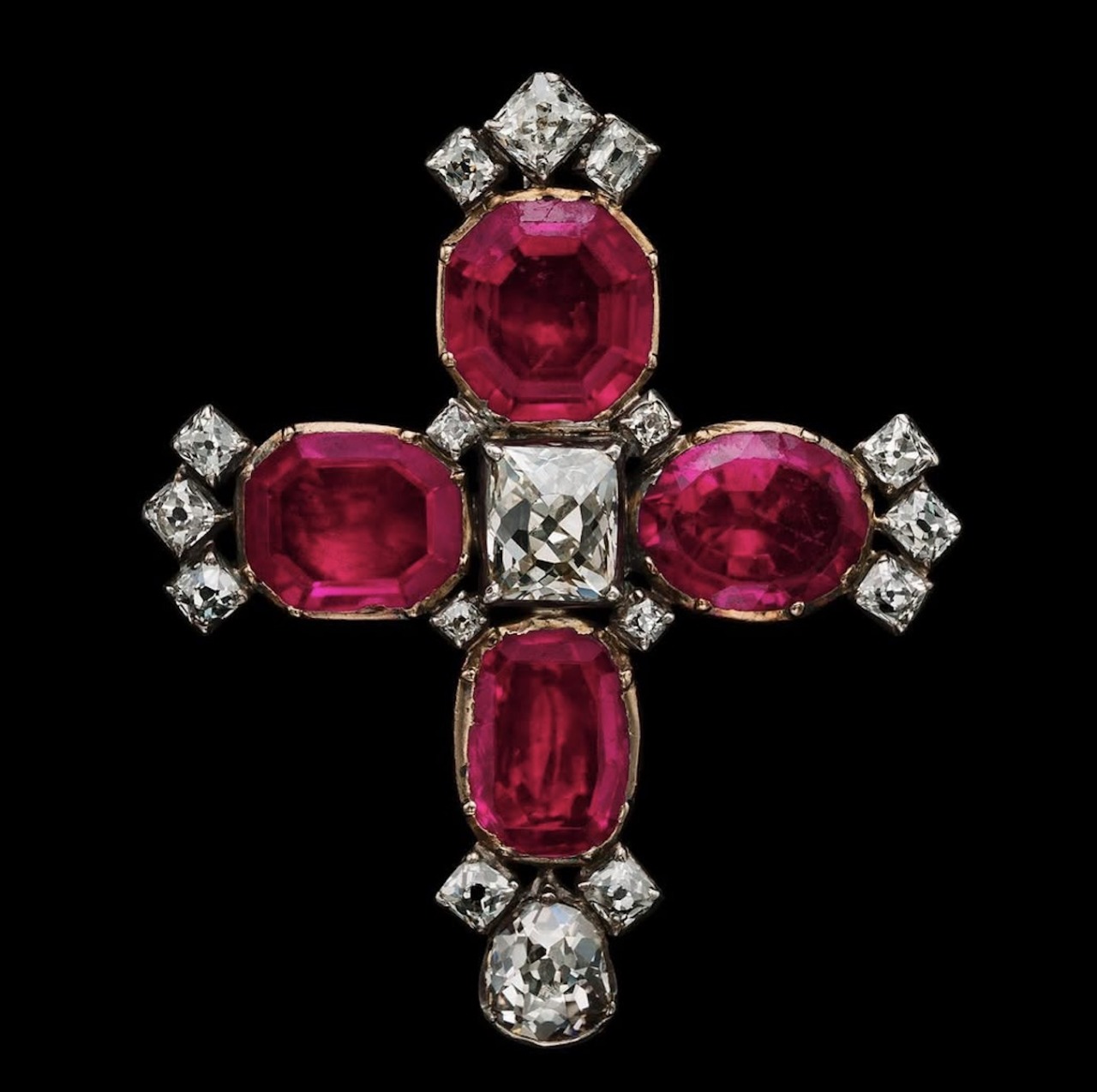
The Marlborough Cross belonged to Sarah Churchill, Duchess of Marlborough, a close confidante and Mistress of the Robes to Queen Anne, who gifted it to her daughter Mary, wife of the 2nd Duke of Montagu.
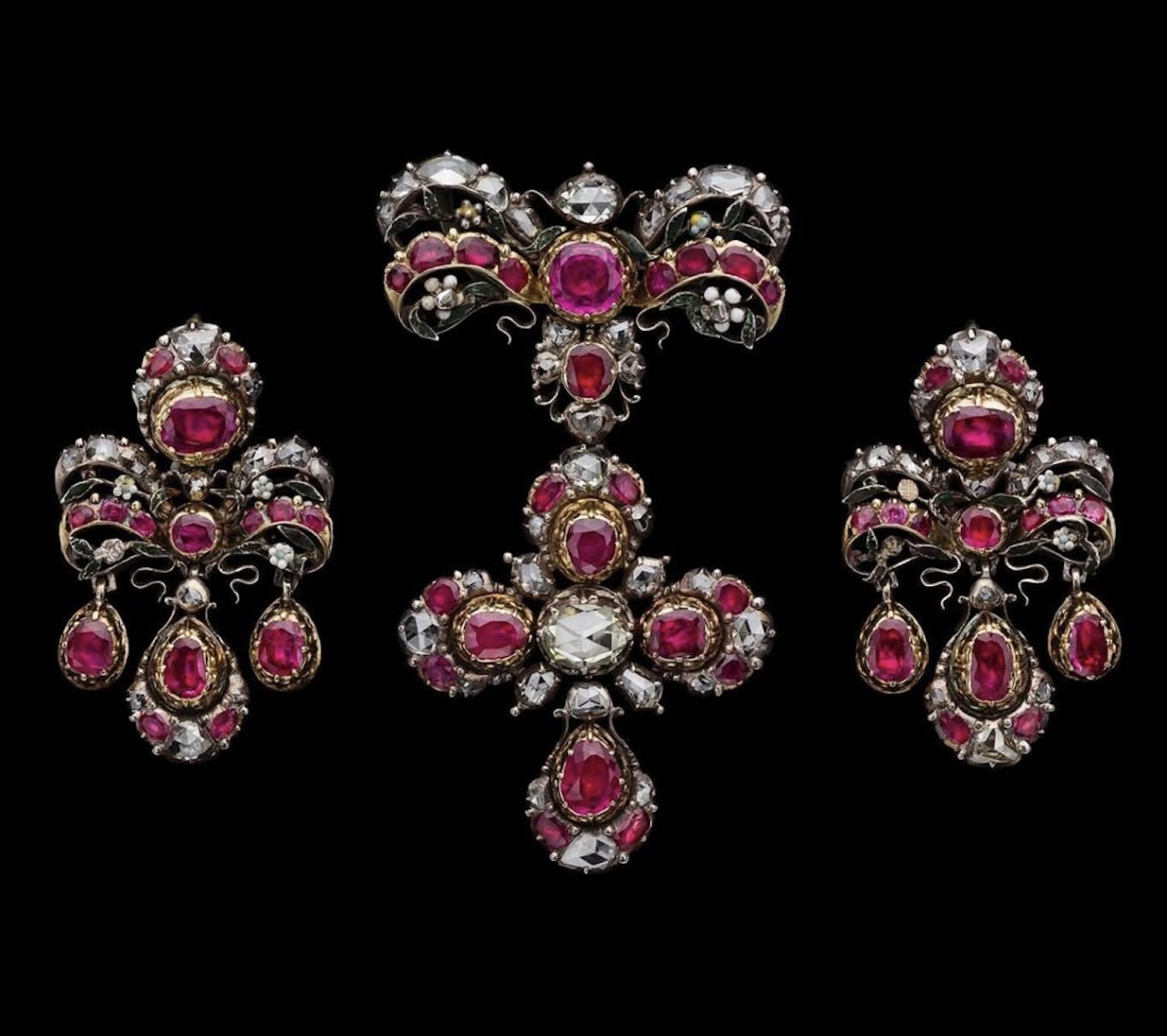
A Ruby and Diamond Breast Jewel and Earrings. Girandole-style jewels with their distinctive three-pendant drops were fashionable in the 17th century. This combination of rubies and rose-cut diamonds expresses the importance of these jewels. The set belonged to Richard Parsons 1st Viscount Rosse in the Peerage of Ireland, who married Lady Elizabeth Hamilton, niece of Sarah Churchill, Duchess of Marlborough.
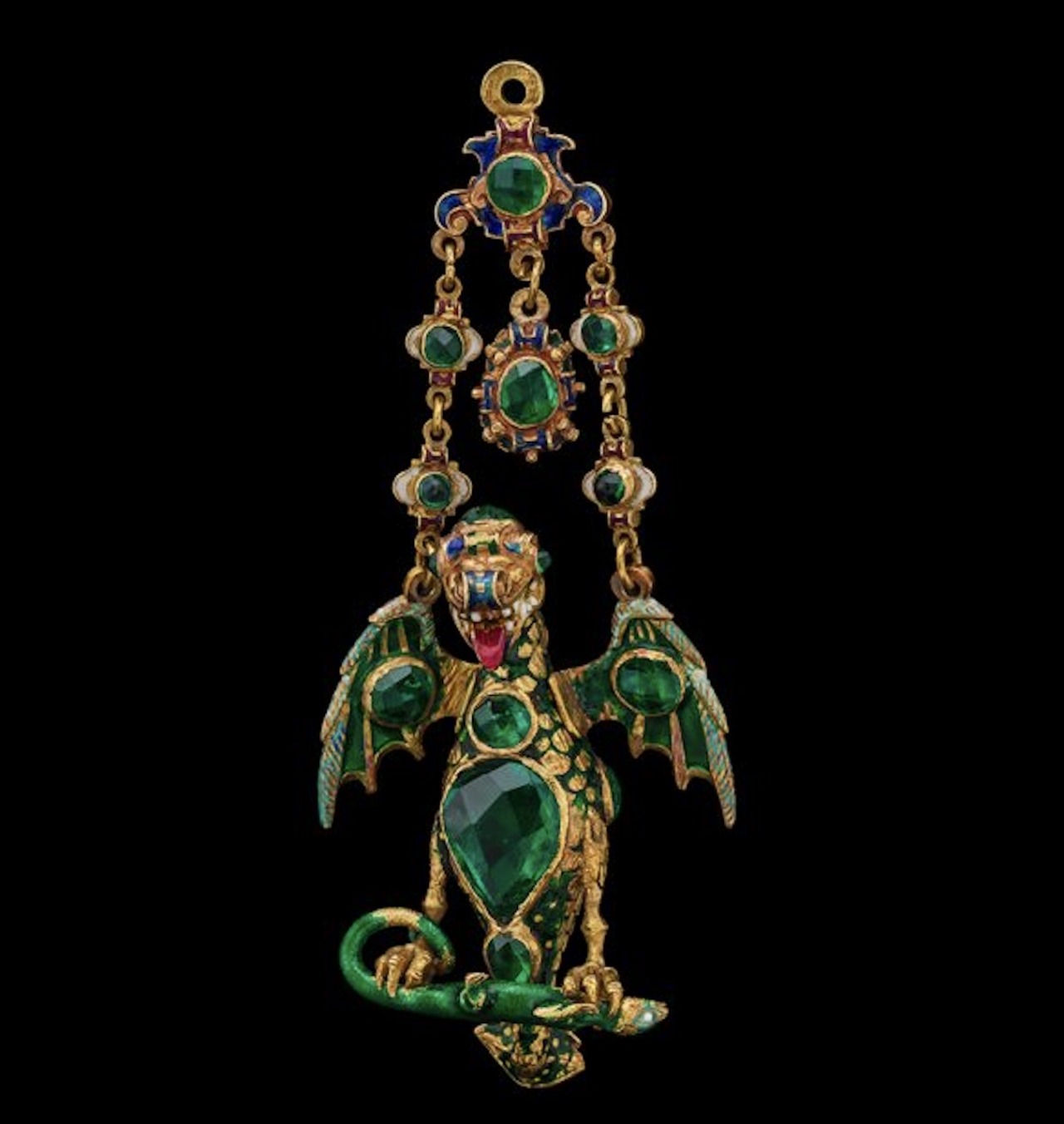
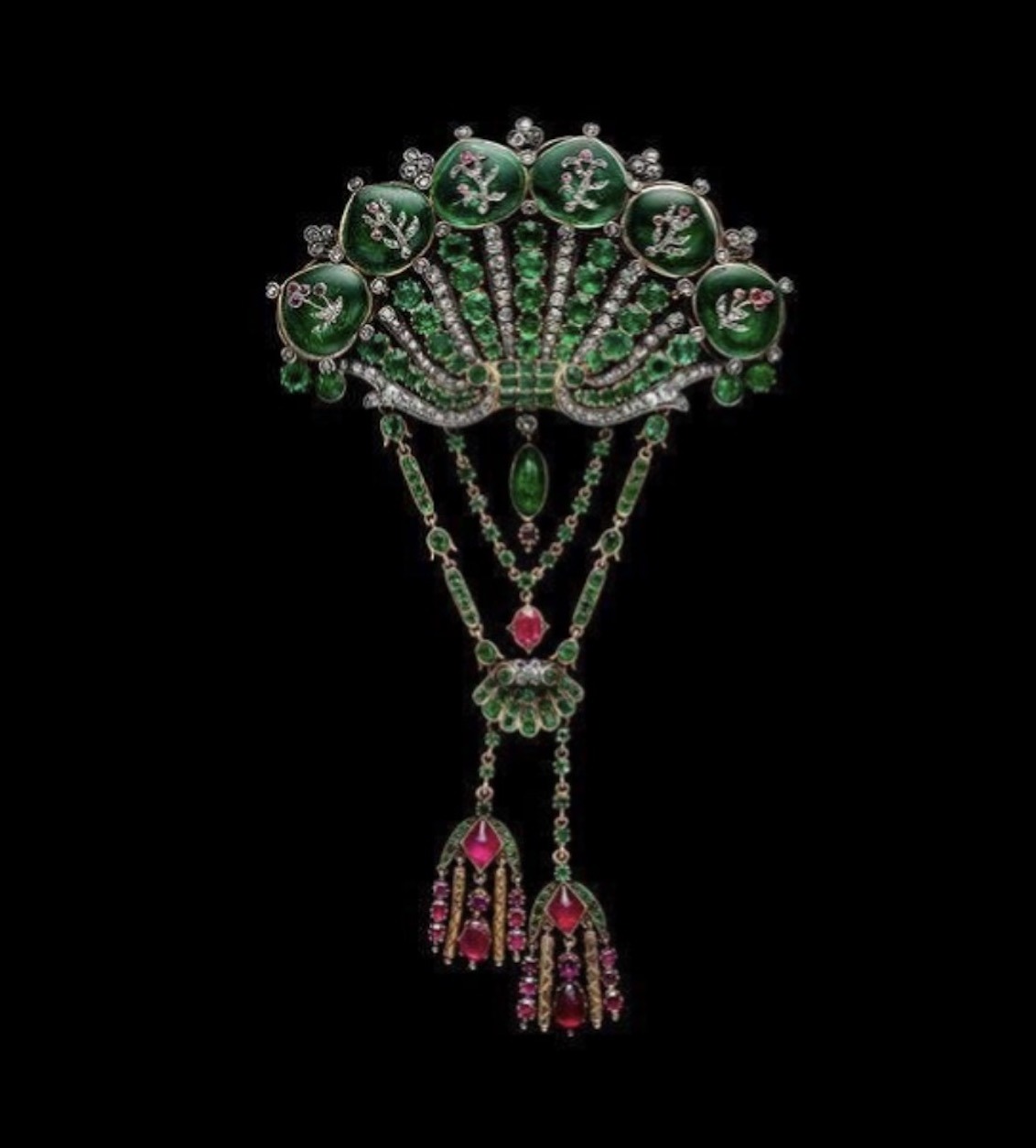
An Emerald and Ruby Brooch which was previously owned by Anne Rhys. 7th Duchess of Ciudad Rodrigo, a descendant of the Duke of Wellington, and a Dragon Pendant from around 1600 which once belonged to the 3rd Baron Rothschild.
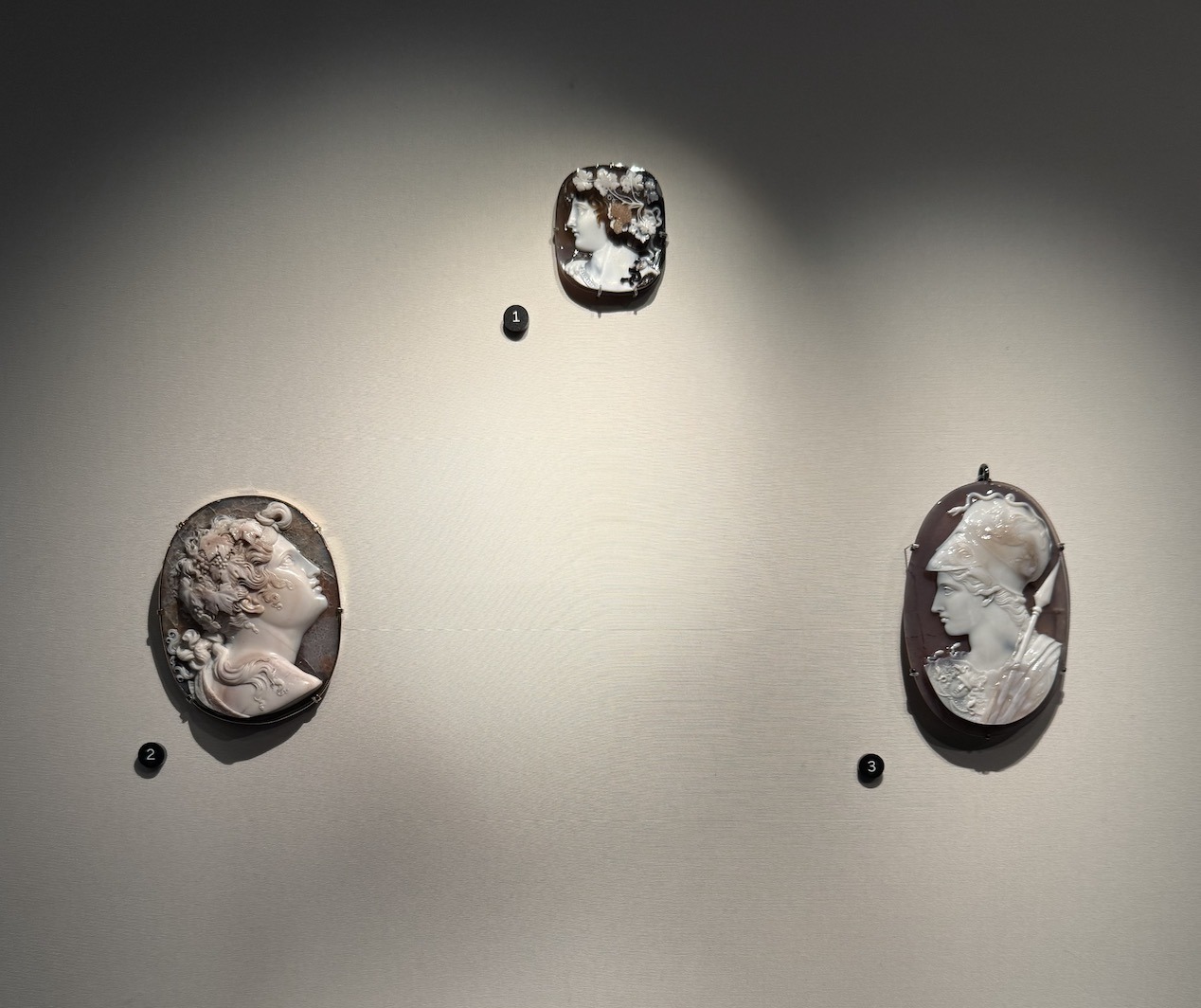
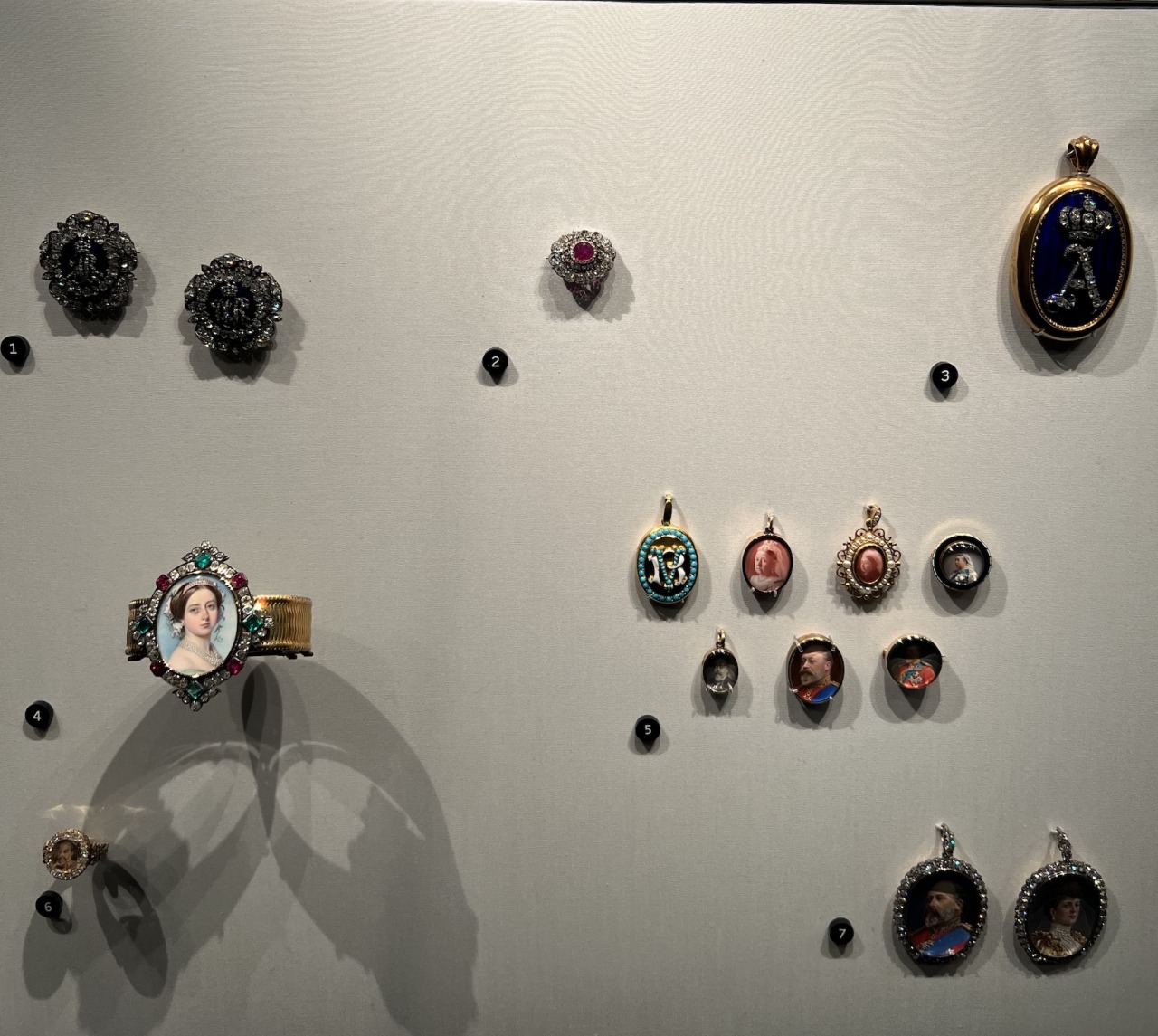
Also on display is a Ruby and Diamond Brooch previously owned by Princess Alexandra of Kent, a Bangle given by Queen Victoria to Queen Stephanie of Portugal in 1858, a pair of Diamond and Enamel Bracelet Clasps given by King William IV to his illegitimate son, Lockets, Pendants and Medallions once owned by owned by Princess Alexandra, Duchess of Fife, Presentation Locket given by Prince Albert, and Pendants and Rings with miniatures of King Edward VII and Queen Alexandra.
Divine Jewels are exhibited in the Jewellery Gallery at the Victoria & Albert Museum from December 2025 to April 2026!
Albion Jewels at the Victoria & Albert Museum
Royal and Noble Jewels at the Victoria and Albert Museum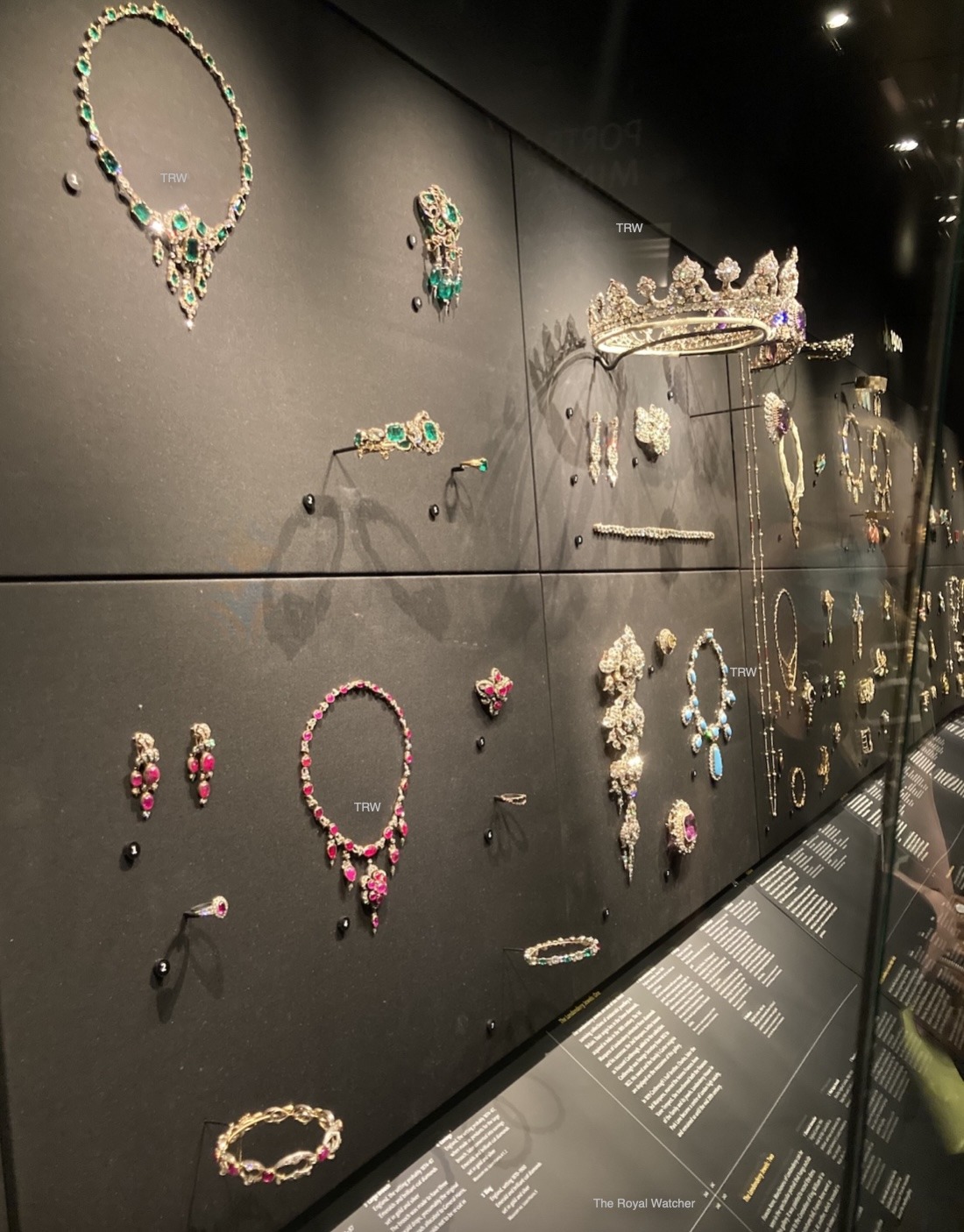
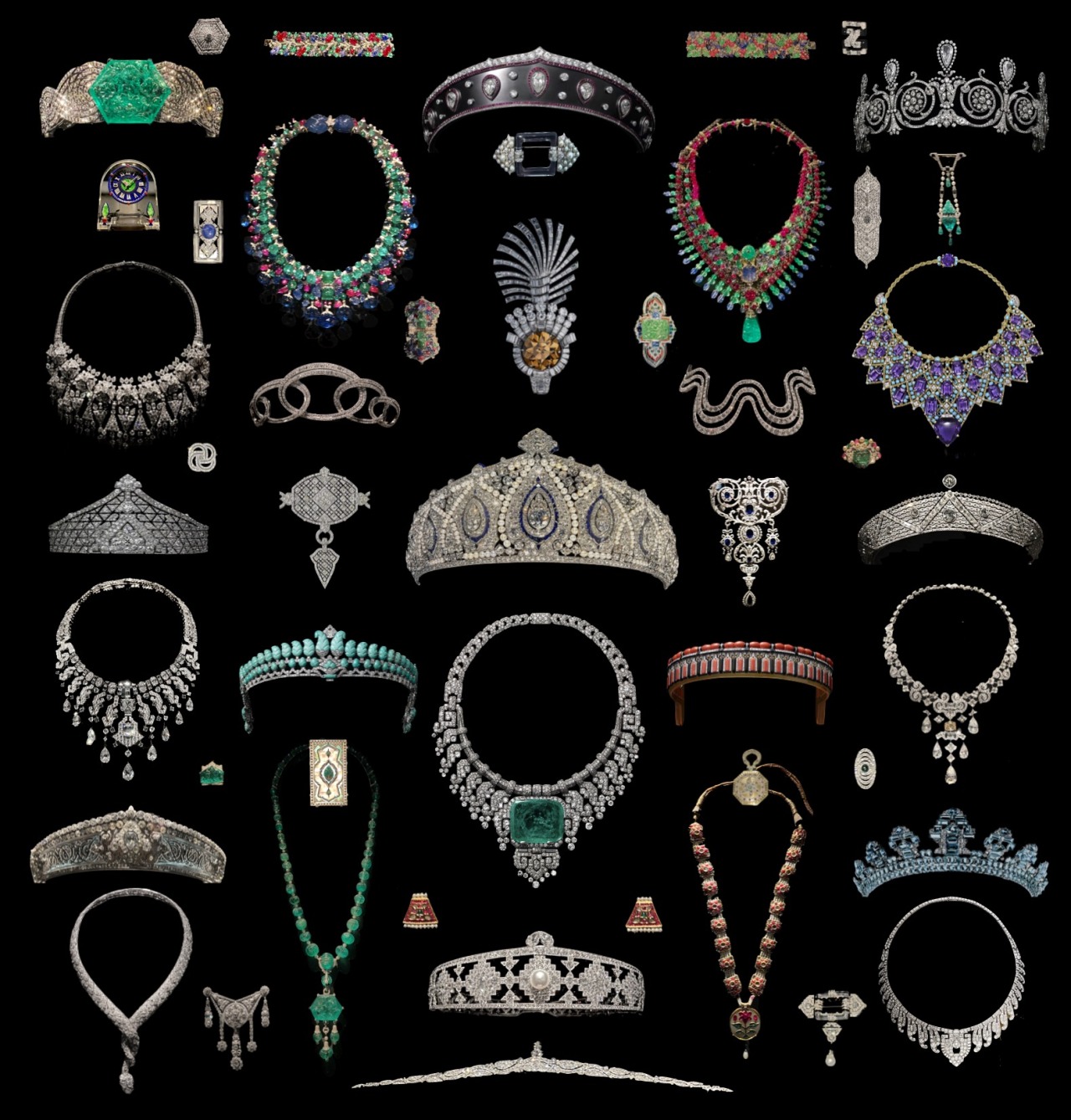
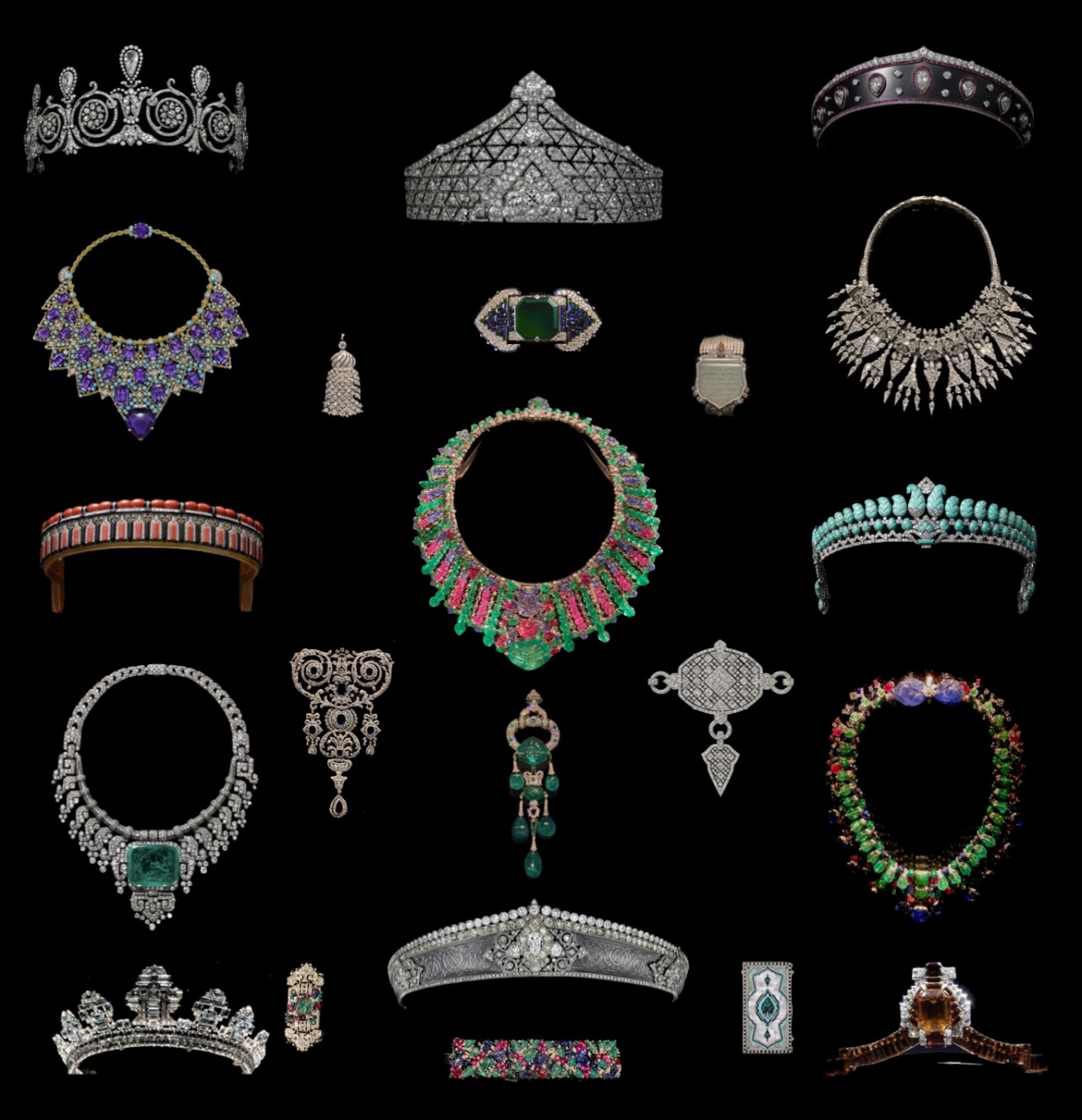
Cartier Exhibition at the Victoria & Albert Museum
‘Edwardians: Age of Elegance’
Köchert Exhibition at the Royal Palace of Gödöllő
Victoria Eugenia Exhibition at the Royal Palace of Madrid
Maison Chaumet in Paris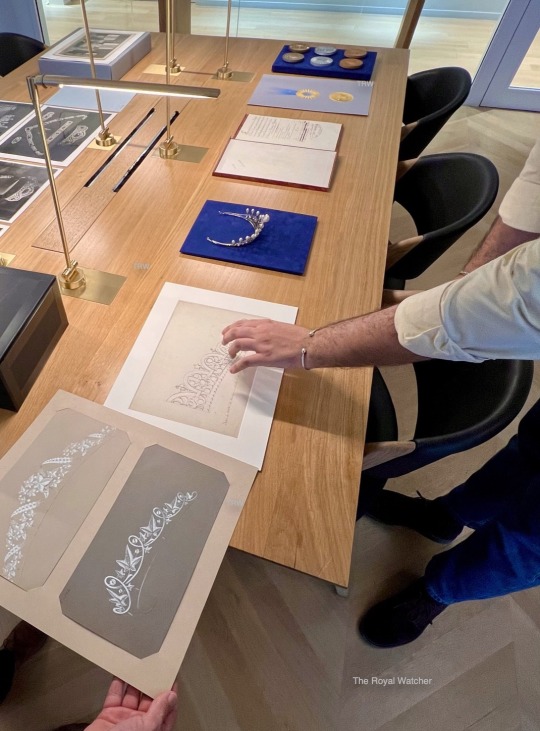
Royal and Noble Brooches at Wartski 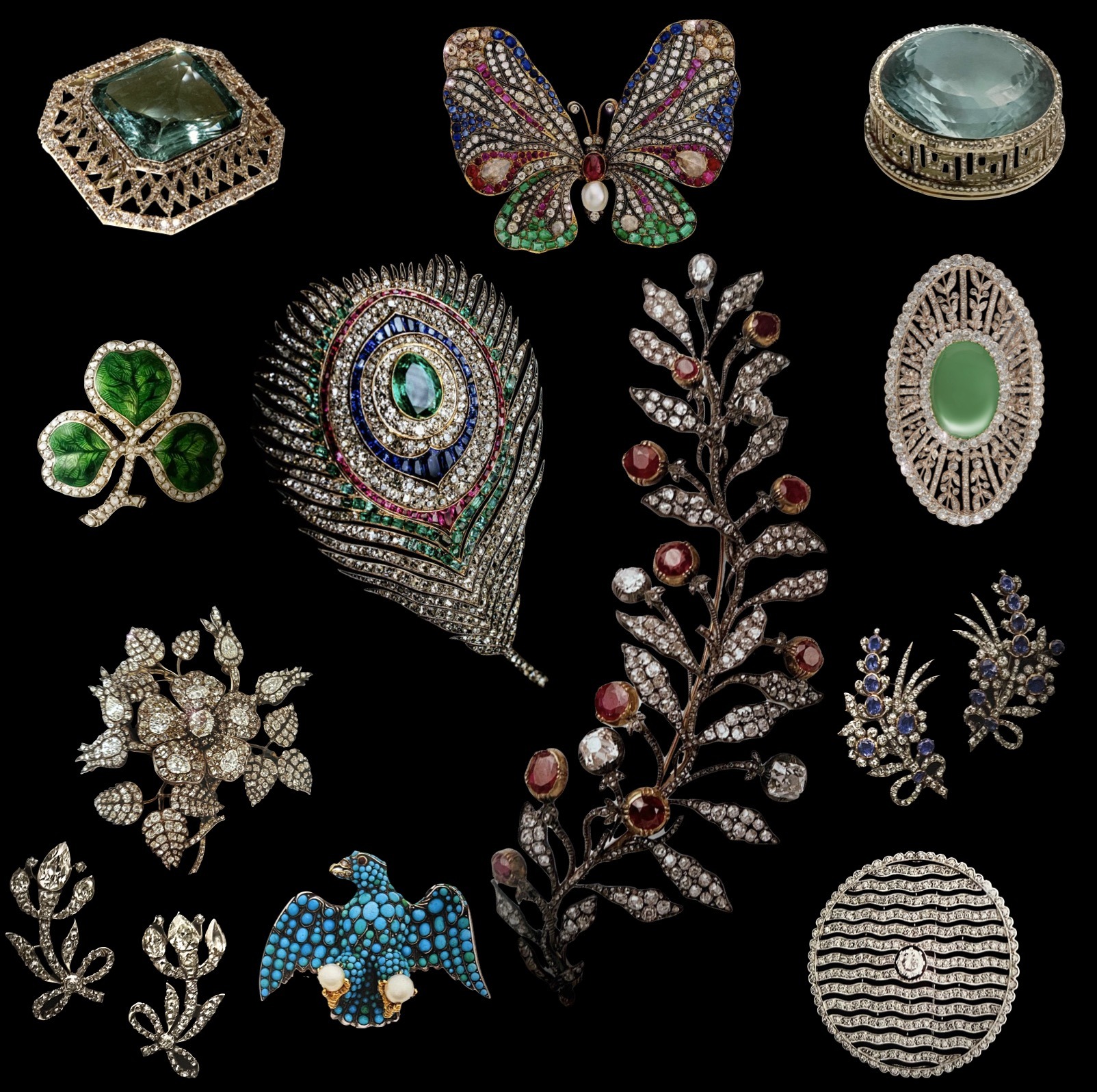



Follow