



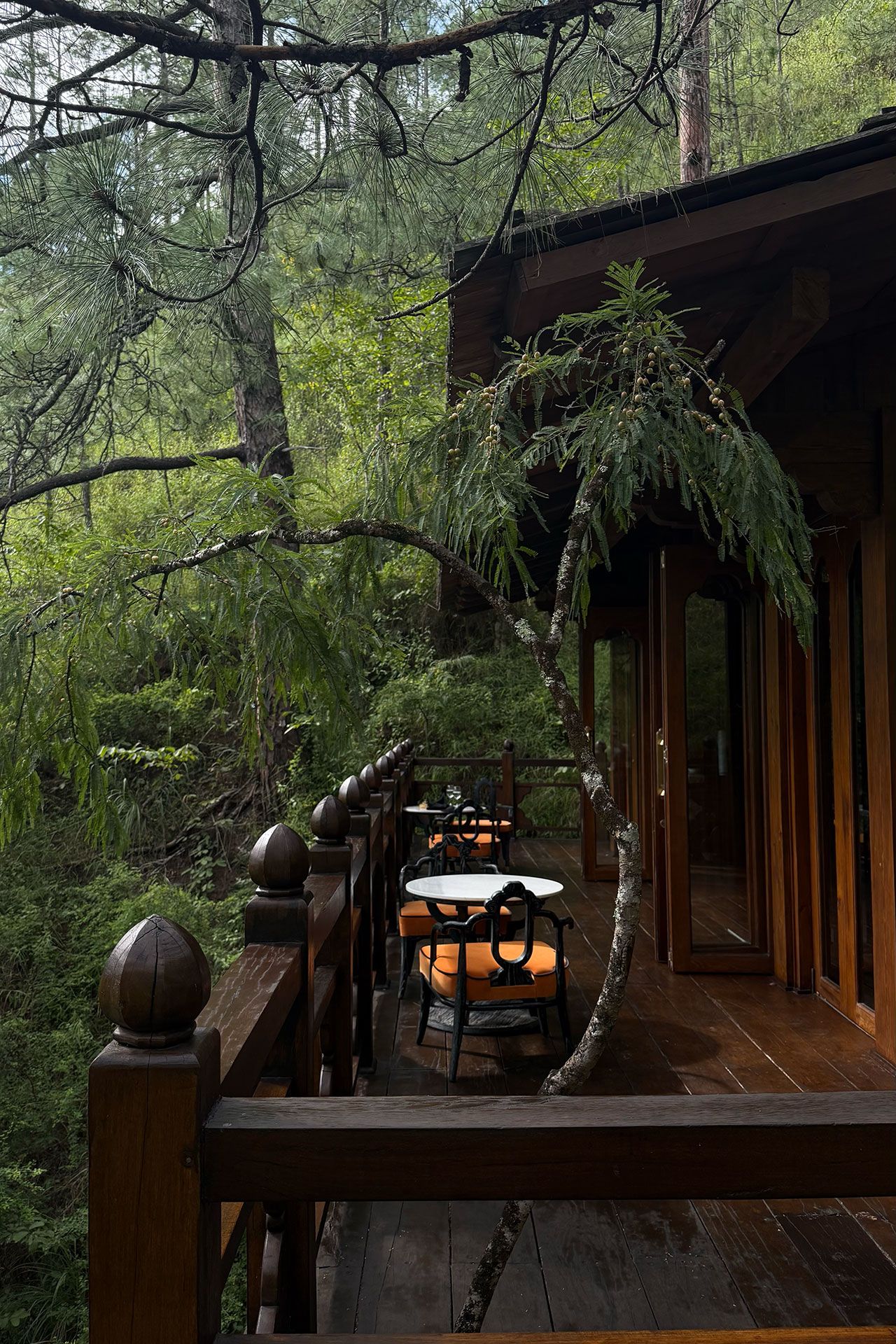
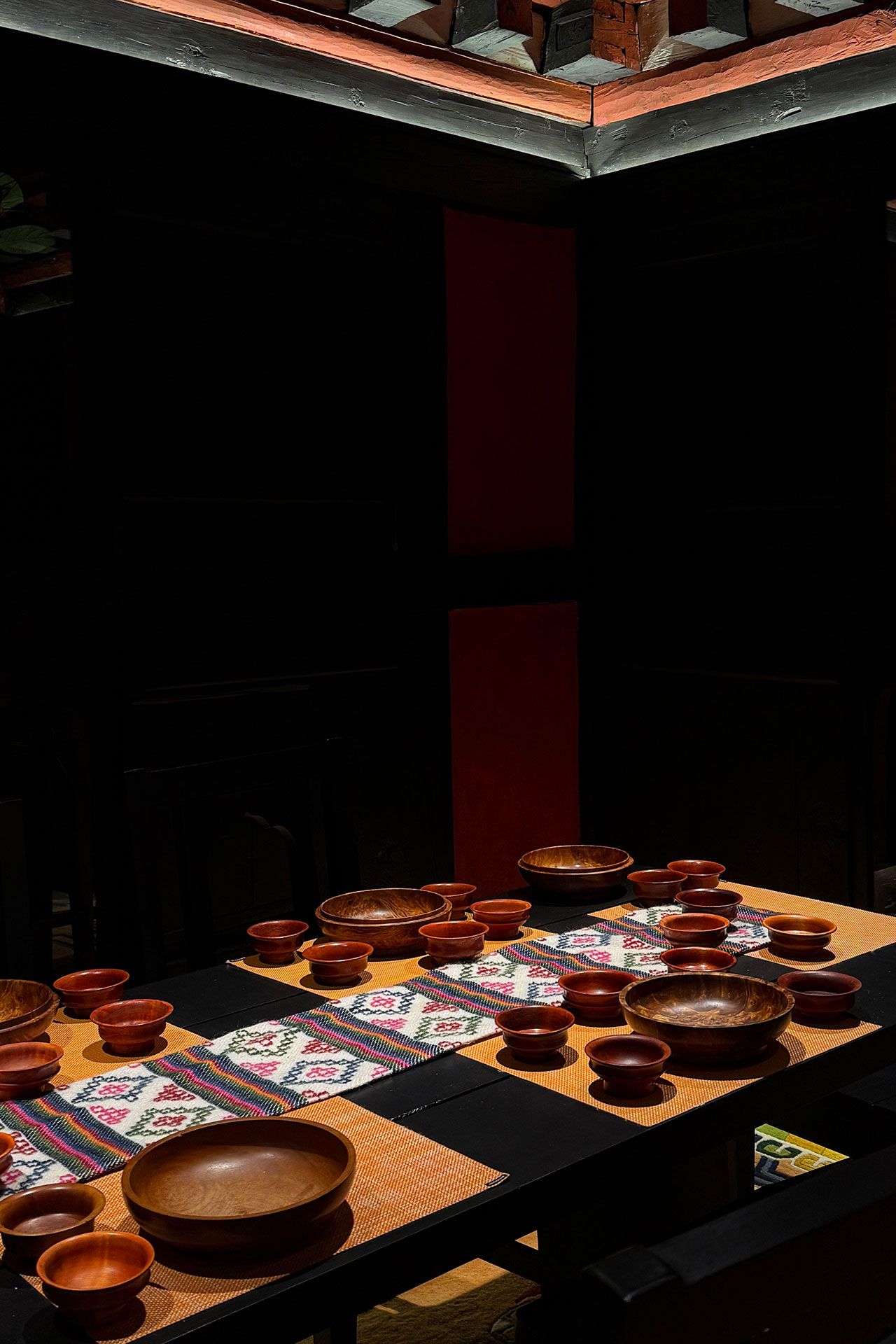
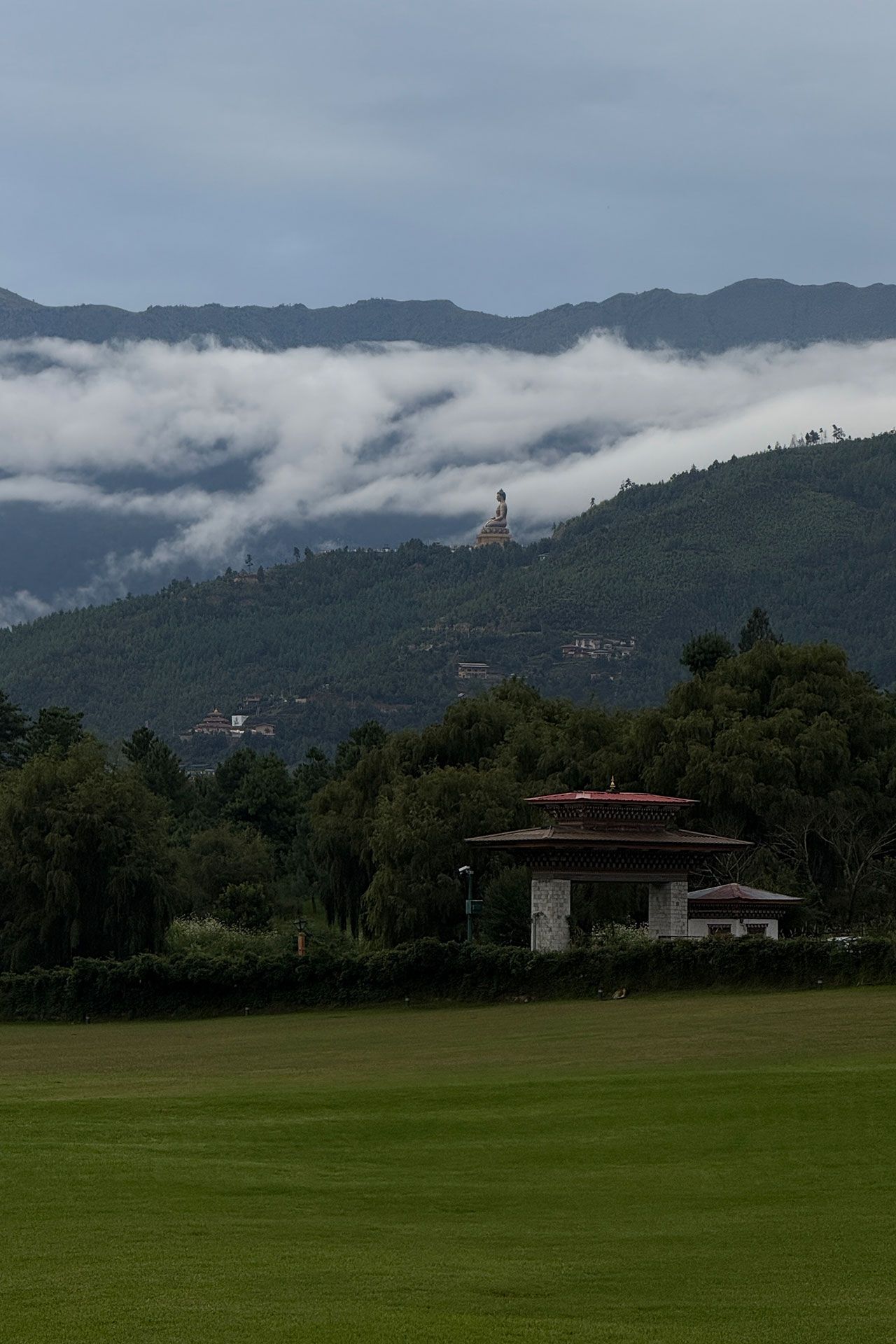
The sprawling property offers three restaurants and a tree house up at the top of the mountain where one could enjoy cuisine ranging from Indian to Italian, while looking out into the green vista. Besides the generous staff who catered to our every need, we were largely alone, which made every experience even more special, be it a session of archery (Bhutan’s national sport) using bamboo bows and complete with singing and dancing with every hit on target, to a private meditation or yoga session with the resident monk. Despite the grandeur of the landscape and its impressive monuments, every experience is incredibly intimate and encourages spiritual contemplation.
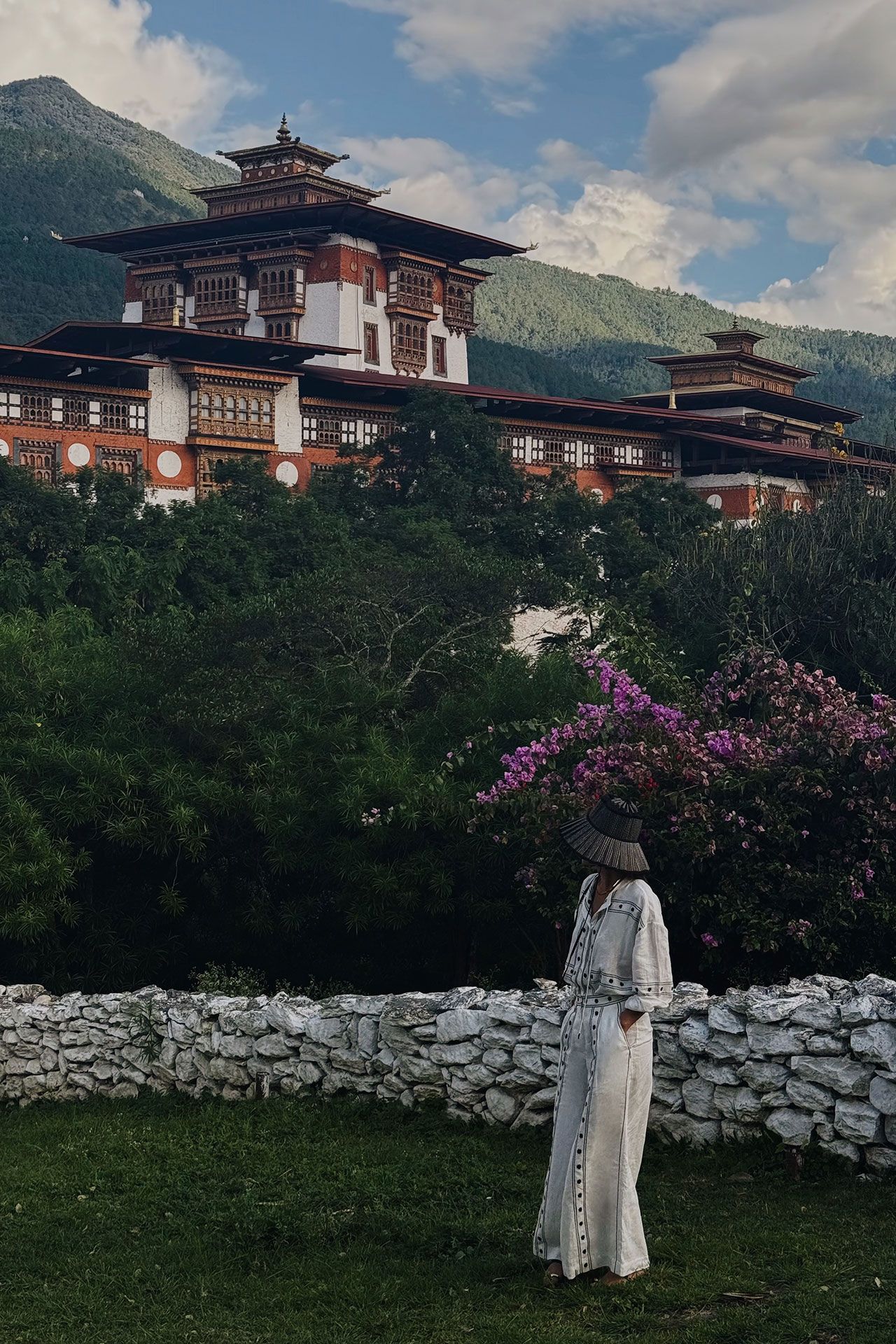
Even as we visited the resplendent temples and grand fortresses of the valley, it was rare to bump into other groups thanks to Bhutan’s strict tourism rules aimed at protecting the integrity of its culture by imposing high daily tourist taxes and visa rules. “When it comes to tourism, we value quality over quantity,” is how our beloved guide Bap so wisely summarised the country’s approach. For this reason, too, there was scarcely any children around and tourists tended to be couples, older families or medium-sized tour groups, making it ideal for honeymooners who wish for wholesome, adult-friendly experiences. For my husband and I who are at an age where we prefer leisurely lunches over boozy brunches and historic towns over hangovers, this was the perfect place for us.
Copyright 2025. All rights reserved.
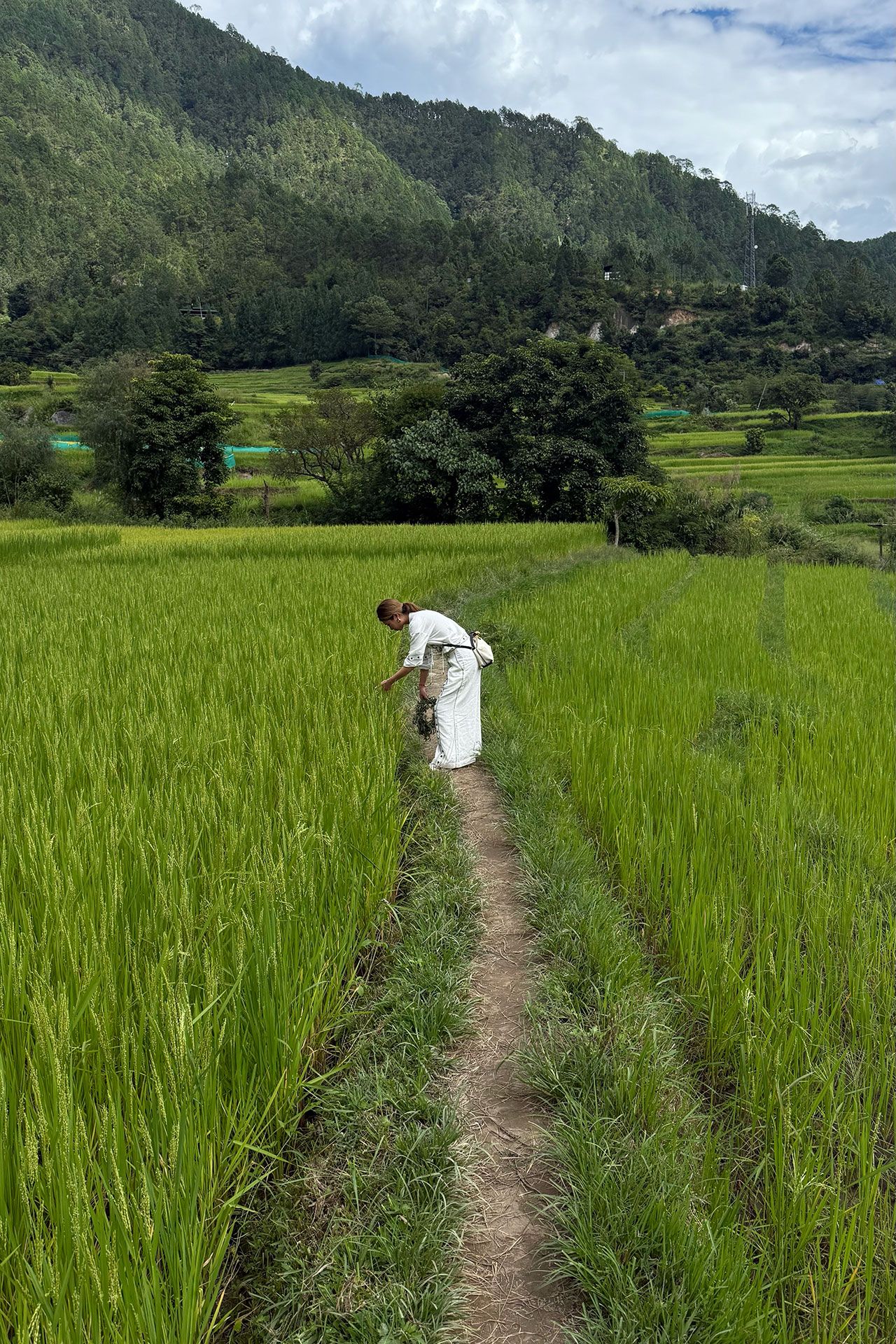
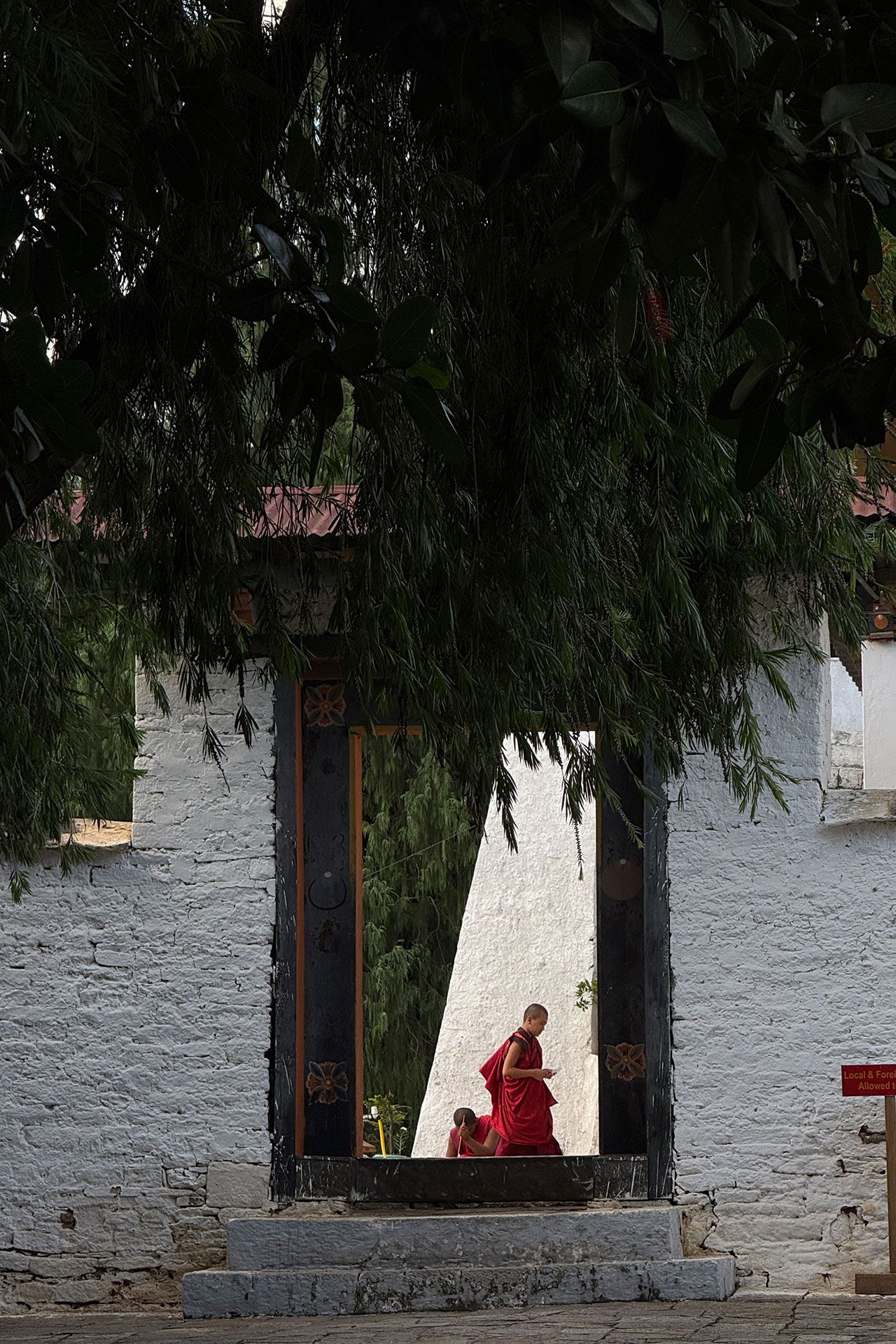
Over the course of three days, Bap took us on a hike through paddy fields, up to Khamsum Yulley Namgyal Chorten, a stunning, four-story hilltop temple filled with the most intricate mandalas of deities. Photos are not allowed inside temples so we, and the few other visitors, admired every detail with hushed reverence and only with our eyes (gasp). Prayer wheels often found in front of temples or dotted along the landscape are where people spread blessings as they spin the golden wheels clockwise—but not for themselves, for all other sentient beings. Buddhism teaches them that kindness towards others eventually will help bring good karma. Before I arrived in Bhutan, I was skeptical of its moniker as the “happiest country on earth” stemming from its philosophy of prioritizing its Gross National Happiness (GNH) over GDP or economic growth. And while I cannot attest to the happiness of all the people I met, they were certainly some of the most generous, and their kindness deeply moved us to reflect on our own needs, desires and responsibility to our environment.
One night as we were about to go to sleep, a furious storm rolled through the valley. Being in a canvas tent on the hillside, we felt every clap of thunder and crack of lightning as if it were above our very bed. The room shook as the tempest roared on, and while it was frightening at first, I couldn’t help but feel it was also incredibly cinematic and romantic, and it became one of the fondest memories of the trip that our husband and I now share.



Follow